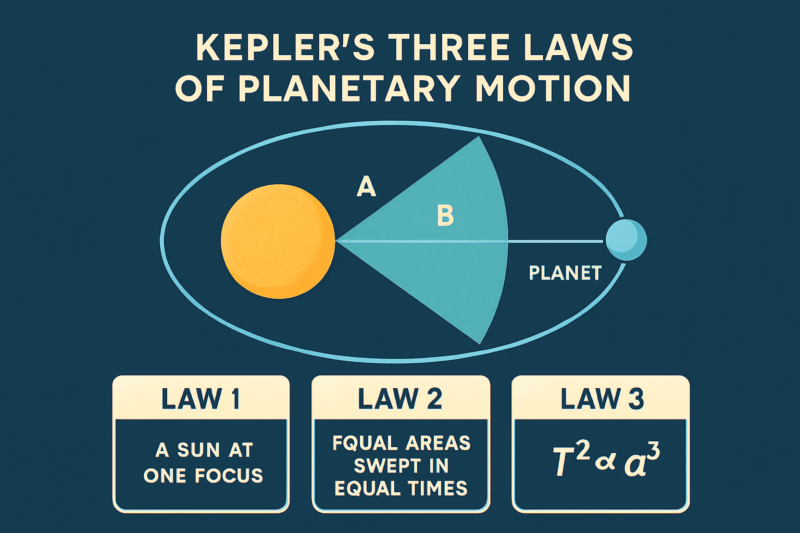
Kepler’s three laws describe elliptical orbits, equal areas in equal times, and the relation between orbital period and semi-major axis.
Physics
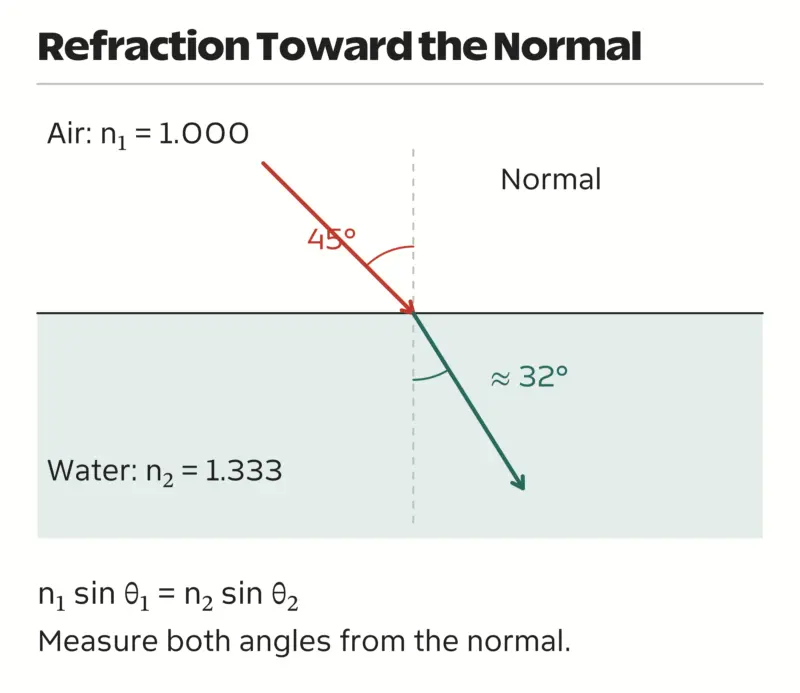
Snell’s law predicts how light changes direction at an interface. Learn the formula, angle convention, worked examples, critical angle, and total internal reflection.
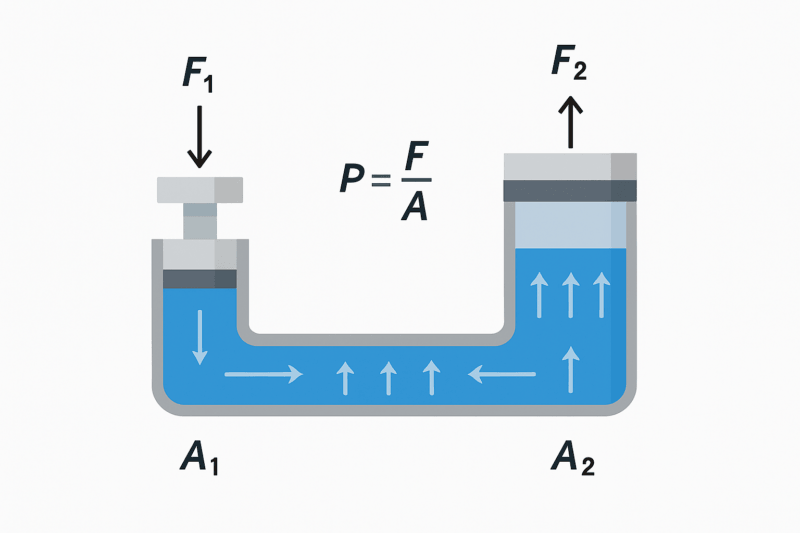
Pascal’s law states that pressure applied to a confined incompressible fluid is transmitted equally throughout. This study note covers the formula P = F/A, the hydraulic press and force multiplication F2 = F1·(A2/A1), conservation of energy via distance trade-off, a worked car-brake example, the depth-pressure formula, and applications in brakes, jacks, aircraft controls, and construction equipment.
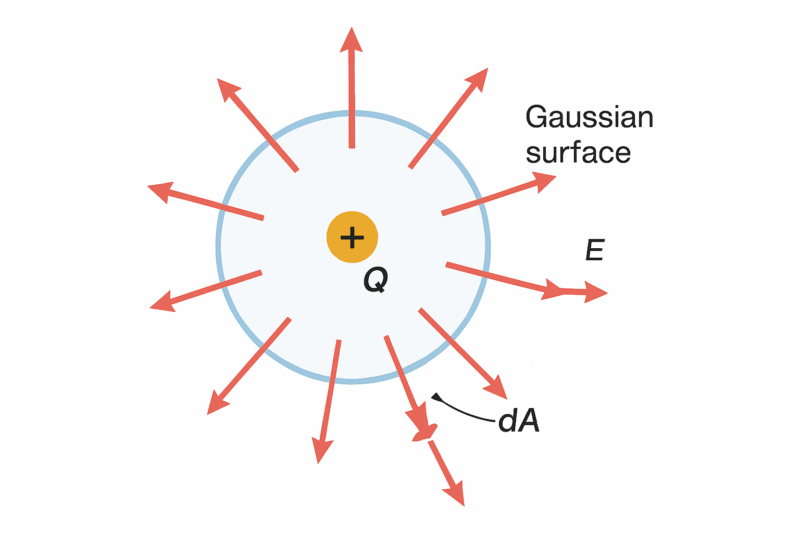
Gauss’s law relates electric flux through a closed surface to enclosed charge. Learn when symmetry makes it useful and solve the standard cases.
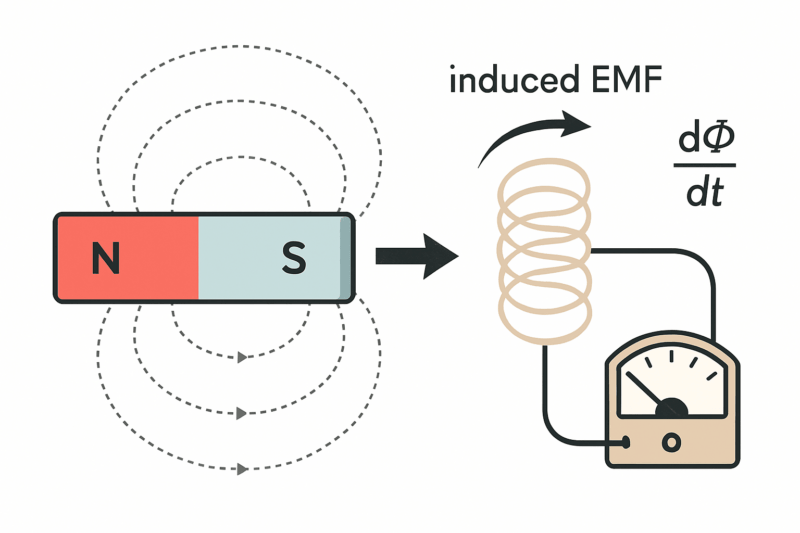
Faraday’s law states that a changing magnetic flux through a closed loop induces an EMF in that loop. This study note covers the formula ε = -dΦ/dt, Lenz’s law and the minus sign, the three ways to change flux, a worked example, and applications in generators, transformers, induction cooktops, microphones, and wireless charging.
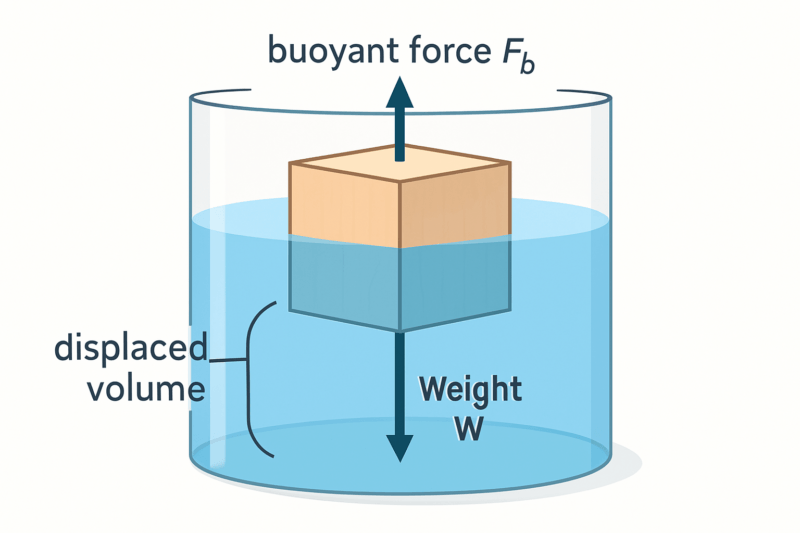
Archimedes’ principle states that the buoyant force on a submerged object equals the weight of the fluid it displaces. This study note covers the formula F_b = ρVg, why pressure differences produce buoyancy, conditions for floating and sinking, worked examples (wooden block, iceberg, apparent weight underwater), and applications in ship design, hydrometers, hot-air balloons, and submarines.
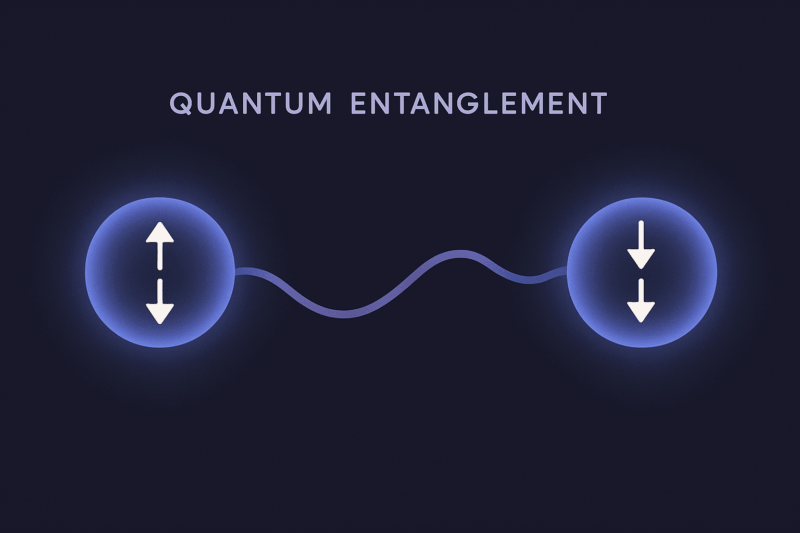
Quantum entanglement is when two or more particles share a quantum state such that measuring one instantly determines the other’s state. This study note covers what entanglement is, the EPR paradox and Bell’s theorem, the Aspect experiments and 2022 Nobel Prize, why entanglement doesn’t allow faster-than-light communication, modern applications (quantum computing, cryptography, teleportation, sensing), and the open conceptual interpretations.
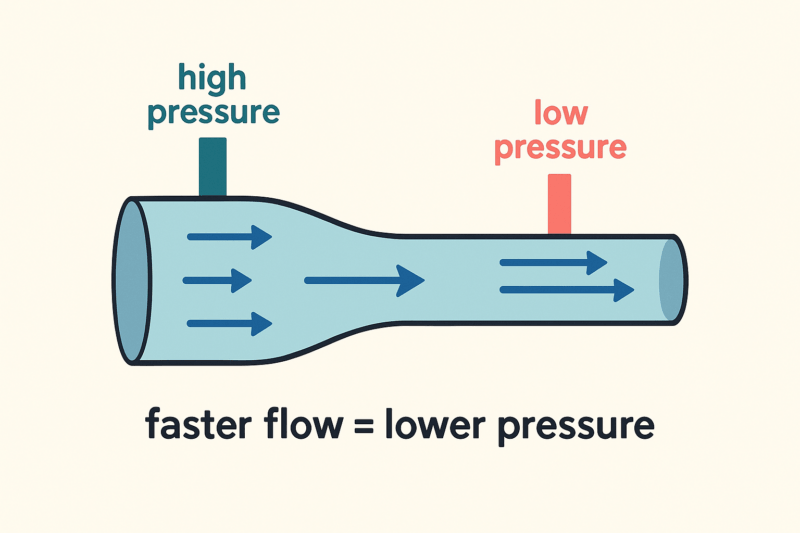
Bernoulli’s principle says that in a flowing fluid, faster flow means lower pressure. This study note covers the equation, the work-energy theorem origin, worked examples (Venturi tube, airplane wing, tornado roof damage), the four assumptions under which it applies, classic demonstrations (shower curtain, blown ping-pong ball, two-paper trick), and where it breaks down (compressible, viscous, unsteady, or cross-streamline flow).
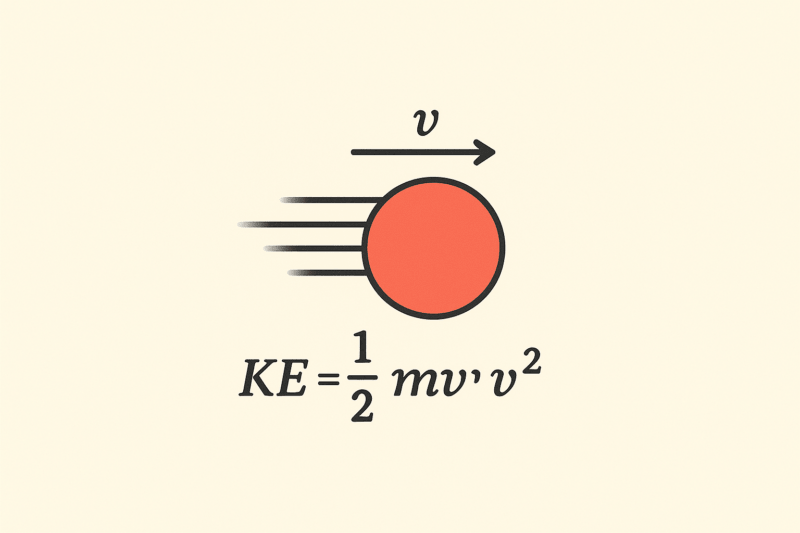
Kinetic energy KE = 1/2 m v² is the energy an object has due to its motion. This study note covers the equation, why the velocity-squared term matters (car safety, braking distance, wind power), the work-energy theorem derivation, frame dependence, rotational KE, conservation in elastic vs inelastic collisions, and the relativistic correction.
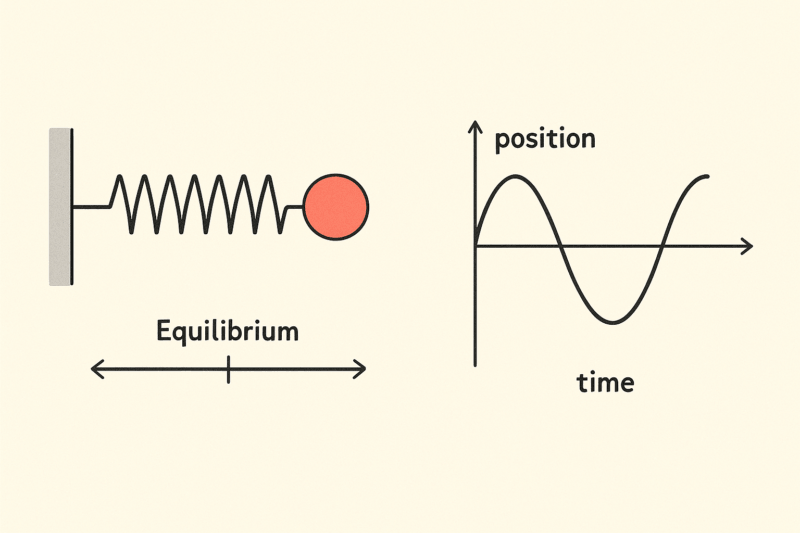
Simple harmonic motion (SHM) is the oscillation produced when restoring force is proportional to displacement. This study note covers the defining equation F = -kx, the sinusoidal solution x(t) = A cos(ωt + φ), period T = 2π√(m/k) and its independence from amplitude, velocity and acceleration, energy conservation, examples (pendulum, LC circuit, molecular vibrations), and damped/driven motion plus resonance.
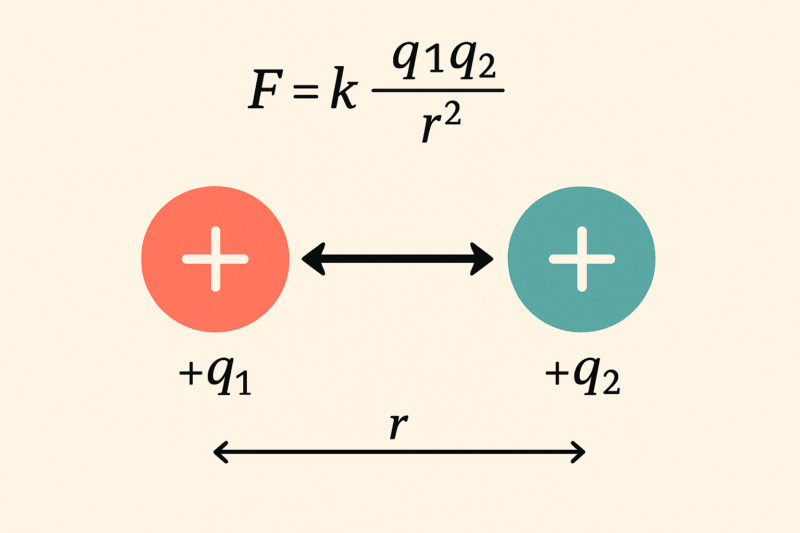
Coulomb’s law gives the electric force between point charges. Learn the formula, vector direction, superposition, media effects, and worked examples.
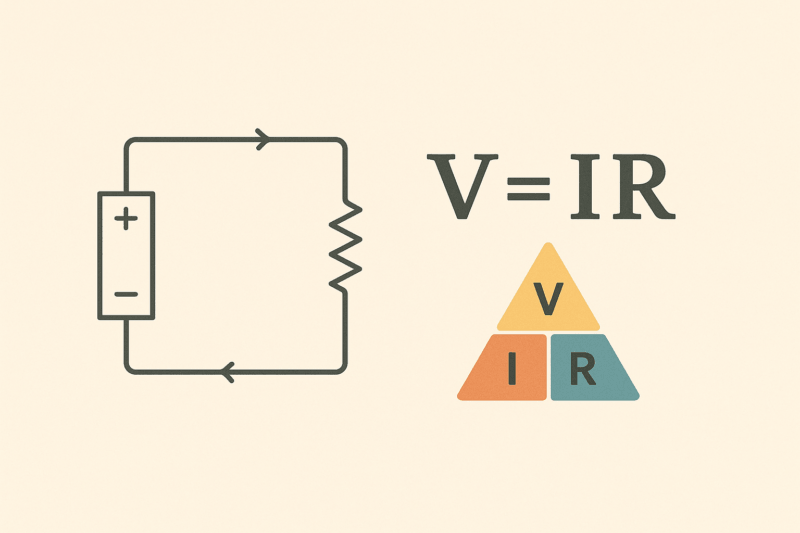
Ohm’s law V = IR is the foundational equation of DC circuit analysis. This study note covers the equation, units (volts, amperes, ohms), worked examples, the related power equation P = VI = I²R = V²/R, series vs parallel circuit combinations, and the situations where Ohm’s law breaks down (non-ohmic devices, superconductors, high frequencies, temperature-dependent resistance).