
How to Buy Crypto With Chime
Buying crypto with Chime is possible, but it works differently compared to using a traditional bank or a major credit card. Chime is not a conventional bank, and its policies around crypto-related payments can be confusing if you do not know what to expect.
If you are new to this topic, you may find yourself asking, “Can I buy Bitcoin with Chime?” The short answer is yes, but only through specific routes. This guide explains how Chime works with crypto platforms, which methods are most reliable, what restrictions apply, and how to avoid common problems that cause payments to fail.
How Chime works as a payment provider
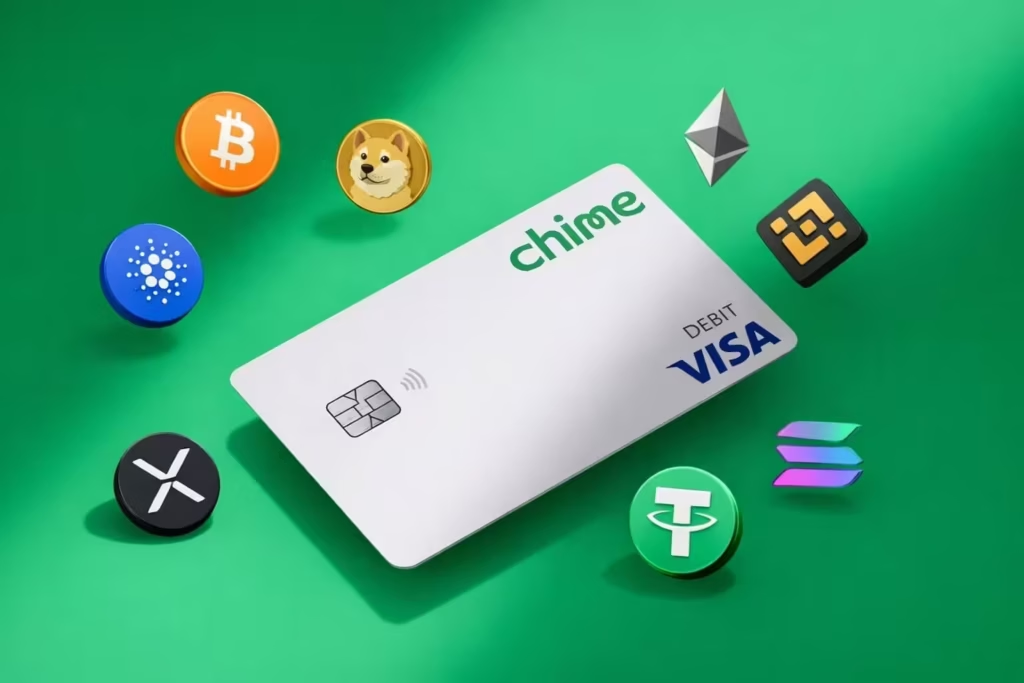
Chime is a financial technology company, not a traditional bank. It provides checking accounts and debit cards through partner banks, giving it greater control over transaction monitoring and merchant categories.
When it comes to crypto, Chime does not directly block all purchases. However, it applies strict filters based on the exchange, payment processor, and transaction type. Some crypto platforms work smoothly with Chime, while others are consistently declined.
The key point is that Chime debit cards usually work better than Chime bank transfers. Understanding this difference is essential before attempting any purchase.
Debit card vs bank transfer with Chime
Chime offers two main ways to move money:
- Chime Visa debit card
- Chime checking account transfers
For crypto purchases, the debit card is the most reliable method. Many exchanges accept Chime debit cards as standard Visa cards, allowing instant purchases.
Bank transfers are more limited. Some crypto platforms do not support ACH transfers from Chime at all. Others may accept deposits but delay processing or block withdrawals.
If speed and reliability matter, using the Chime debit card is usually the better choice.
Choosing a crypto platform that works with Chime
Not all exchanges work well with Chime. Before signing up, you should confirm that the platform:
- Accepts Visa debit cards
- Allows instant card-based crypto purchases
- Does not explicitly restrict fintech banks like Chime
Some exchanges openly state whether Chime is supported. Others rely on trial and error, which can lead to declined payments and temporary account reviews.
Platforms that already support US-based debit cards with clear compliance standards tend to have the highest success rate with Chime.
Account verification matters more with Chime.
Because Chime transactions are closely monitored, exchanges often require complete identity verification before allowing purchases.
This typically includes:
- Government-issued photo ID
- Address confirmation
- Account security setup
Skipping or delaying verification increases the chance of a declined payment. Completing verification first improves approval rates and reduces friction.
How the purchase process works with Chime
Once you have chosen a compatible exchange and completed verification, the buying process is straightforward.
First, select the crypto asset you want to buy. Bitcoin is usually supported across all major platforms.
Next, enter the amount you want to spend in USD. The exchange will show how much crypto you will receive after fees.
Then, enter your Chime debit card details. Since Chime cards are Visa-based, they are processed like standard debit cards.
Finally, confirm the transaction. Chime may send a real-time notification asking you to approve the charge. Once approved, the crypto is usually credited within minutes.
Fees to expect when using Chime
Buying crypto with Chime debit cards often incurs higher fees than with bank transfers.
These fees may include:
- Exchange processing fees
- Card payment fees
- Price spreads
Chime itself does not usually charge extra for debit card purchases, but the exchange does. Always review the final amount before confirming.
A trustworthy platform shows all costs upfront. If fees are unclear or only visible after payment, consider choosing a different exchange.
Transaction limits and daily caps
Chime debit cards come with spending limits, which can affect crypto purchases.
Typical limits include:
- Daily purchase caps
- Per-transaction limits
- Exchange-specific limits for new accounts
Even if the exchange allows a larger amount, Chime may block transactions that exceed its internal thresholds. If a payment fails, try a smaller amount rather than repeating the same transaction.
Repeated declines can trigger temporary blocks, so patience matters.
Why does Chime sometimes block crypto purchases?
Chime prioritizes fraud prevention. Crypto-related transactions are considered higher risk due to chargebacks and scams.
Common reasons for blocks include:
- First-time purchases on a new exchange
- Large transaction amounts
- Multiple failed attempts
- Incomplete account verification
Most blocks are automatic and temporary. Confirming the transaction through the Chime app often resolves the issue.
Security best practices when using Chime
Using a debit card for crypto purchases requires strong account security.
Make sure to:
- Enable all security features on the exchange
- Use a unique password
- Activate two-factor authentication
- Monitor your Chime account for alerts
Avoid making purchases on public Wi-Fi. Secure connections reduce the risk of data exposure and unauthorized activity.
What happens after you buy crypto
After the purchase, the crypto is stored in your exchange wallet.
From there, you can:
- Keep it on the platform for convenience
- Transfer it to a personal wallet
- Use it according to the platform’s supported features
If you plan to move crypto off the exchange, double-check wallet addresses carefully. Mistakes in transfers cannot be reversed.
Common mistakes to avoid with Chime
One common mistake is using ACH transfers when the exchange does not fully support Chime. This often leads to delays or failed withdrawals.
Another issue is ignoring limits. Attempting large purchases right away increases the chance of blocks.
Some users also try multiple exchanges at once after a decline. This can trigger broader payment restrictions.
Start with a small test purchase. Once confirmed, larger transactions usually go through more smoothly.
Alternatives if Chime does not work
If Chime debit card payments fail consistently, consider alternatives such as:
- A traditional bank debit card
- A different exchange with stronger Chime compatibility
- Linking Chime to a supported digital wallet, if available
Flexibility reduces frustration and helps avoid account reviews.
Is Chime a good choice for buying crypto
Chime works best for users who:
- Prefer debit cards over bank transfers
- Want fast purchases
- Are comfortable with moderate fees
- Value mobile-first banking
It may not be ideal for frequent large purchases or users who prefer direct bank rails.
FAQs
Can I buy Bitcoin with Chime?
Yes, you can buy Bitcoin with Chime, but only through specific methods. Chime debit cards work on most crypto exchanges that accept Visa. Bank transfers are less reliable since many platforms don’t fully support ACH transfers from fintech banks like Chime.
Should I use Chime debit card or bank transfer for crypto?
Use the Chime Visa debit card. It’s processed like a standard debit card on most exchanges and allows instant purchases. Bank transfers often fail, get delayed, or have withdrawal restrictions when using Chime.
Why does Chime block crypto purchases?
Chime prioritizes fraud prevention, and crypto transactions are flagged as higher risk. Common triggers include first-time purchases on new exchanges, large transaction amounts, multiple failed attempts, and incomplete account verification. Most blocks are temporary and can be resolved by confirming the transaction in the Chime app.
What fees should I expect when buying crypto with Chime?
Chime itself doesn’t charge extra for debit card purchases, but the crypto exchange will. Expect exchange processing fees, card payment fees, and price spreads. Debit card purchases typically cost more than bank transfers. Always review the final amount before confirming.
What are Chime’s transaction limits for crypto purchases?
Chime debit cards have daily purchase caps, per-transaction limits, and exchanges may impose additional limits for new accounts. If a payment fails, try a smaller amount instead of repeating the same transaction. Repeated declines can trigger temporary blocks on your account.
What should I do if Chime declines my crypto purchase?
First, check the Chime app for a notification asking you to approve the charge. If declined, try a smaller amount. Complete full identity verification on the exchange if you haven’t already. Avoid attempting multiple exchanges at once, as this can trigger broader payment restrictions.
What happens after I buy crypto with Chime?
After purchase, the crypto is stored in your exchange wallet. You can keep it there for convenience, transfer it to a personal wallet, or use it according to the platform’s features. If transferring to another wallet, double-check addresses carefully since mistakes cannot be reversed.
Is Chime a good choice for buying crypto?
Chime works well if you prefer debit cards over bank transfers, want fast purchases, and are comfortable with moderate fees. It’s not ideal for frequent large purchases or users who prefer direct bank transfers. Start with small test purchases to confirm compatibility with your chosen exchange.
Final thoughts
Buying crypto with Chime is possible, but preparation is essential. Understanding which platforms work, using the debit card rather than bank transfers, and completing verification early all improve success rates.
If you are asking, “Can I buy crypto with Chime?” the answer depends on how you approach it. With the right exchange, realistic expectations, and careful setup, Chime can be a practical way to access crypto without unnecessary complications.
Take your time, start small, and continually review fees and limits before confirming a purchase.