
7 Best Ways to Learn a New Language By Yourself
Do you want to learn a new language yourself but don’t know where to begin?
Perhaps you want to study a language but don’t want to sacrifice your social life by enrolling in an evening session. Or you’d prefer not to spend a fortune on a private teacher who is adamant about teaching you according to his guidelines.
So, what’s the other option? Is there a method for you to study a language on your own time, focusing on things that interest you? There is, indeed.
Best Ways to Learn a New Language
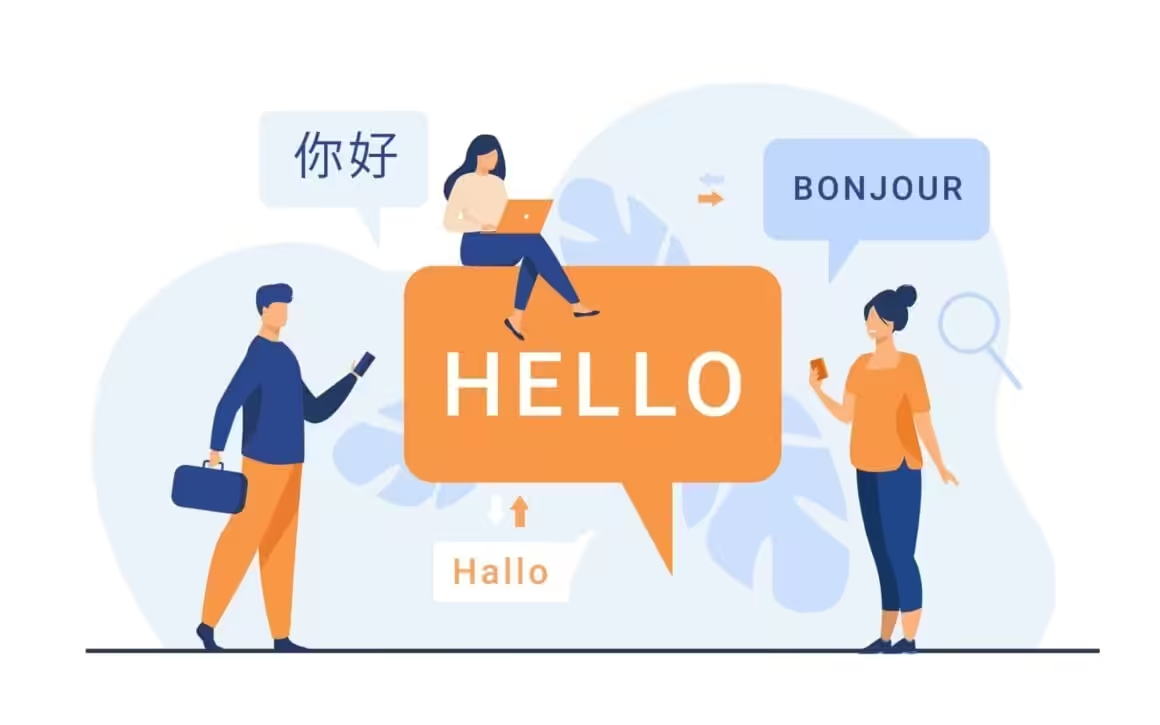
I have compiled the 7 best ways to learn a new language by yourself to make sure you can succeed.
Watch and listen to the native speaker.
Please note how people greet one another, how they say good morning and goodbye, what they say when they overeat or are late for a party, the pace with which they talk, the noises they make, and so on.
Listen and observe as much as possible. Soon, you’ll be able to pronounce at least some words in the language you choose to learn with the proper accent and sounds.
Learn the basic grammar rules from a grammar book
Select a grammar book for the language you are learning. Then, one by one, begin practicing grammatical rules from it. Live in the current tense first, then accept the past, and last plan for the future. Every day, experiment with a few regular and irregular verbs. Learn how to change the tense of verbs.
Purchase a practice book and study as if you were a youngster. When you write a sentence or a word accurately five times in a row, getting it incorrect is almost none.
Watch shows and movies in the language you want to learn.
Watching TV series and movies in the target language is a fantastic method to practice the language. It also teaches you a lot about the culture even before visiting the country. You expand your vocabulary and learn colloquial phrases, gestures, and dialects while having fun.
As you experience hearing more people speak your target language, you begin to think about it. You ultimately speak and comprehend it better. Try out some new words on your language exchange partner and observe how she reacts.
Look for a native speaker of the language.
Many individuals, including yourself, wish to learn new languages, and you may participate in language exchanges with these people. You may discover a native speaker of the target language by using one of the many free or low-cost online language learning apps and websites.
You can also meet individuals who wish to study the same language through local events or on social media. Begin by using Skype or another voice-over-internet-phone service.
Start speaking the language.
Begin speaking the language, regardless of whether you have bad grammar, unfinished sentences, missing articles, or a terrible accent. Don’t be embarrassed or hide behind the ease of not knowing a foreign language.
If you don’t have somebody to listen to you, record an audio message that you may play later for your language partner. When you overcome your aversion to speaking a new language, you are well on your way to learning a language.
Understand the proper learning sequence
It is critical to learn in the correct order. Begin with less. When I first started speaking Spanish, I would spout a series of garbled words devoid of articles, pronouns, and correct tenses. Then I went through and added the missing constructors one by one.
Select an online course or program that follows the order of learning a foreign language.
Don’t Overburden Your Mind.
When you get into a study groove, it might be tempting to do numerous language sessions back to back. Perhaps you believe you should study for two hours every day since that is how you studied at university. Unfortunately, this approach is ineffective.
The secret to success is to slow down your learning so that you can correctly commit terminology to your long-term memory. Studying for 15 minutes every day is the most effective way to become conversational.
Read: 4 Languages that will make your business more competitive
Best Language Learning Apps and Platforms
If you want a structured way to learn, these are the platforms I’d recommend. They follow proven learning sequences and let you progress at your own pace.

Rosetta Stone
- 25+ languages available
- Immersive, no-translation learning method
- Speech recognition for accent improvement
- Lifetime access option available
Preply
- 50+ languages with live tutors
- Flexible scheduling for any time zone
- Subscription plans with unlimited messaging
- Trial lesson available
Consistency beats intensity when learning a language. 15 minutes every day outperforms a two-hour cram session on weekends. Your brain needs repeated, spaced exposure to move new vocabulary into long-term memory. Build a daily habit before worrying about studying more.
Can I really learn a language by myself without a teacher?
Yes. Millions of people have reached conversational fluency through self-study. Apps like Rosetta Stone, grammar books, native content (films, podcasts), and language exchange partners can replace a traditional classroom. A teacher speeds things up, but self-study absolutely works with consistent effort.
How long does it take to learn a new language on your own?
It depends on your native language and the target language. The US Foreign Service Institute estimates 600-750 hours for similar languages (Spanish for English speakers) and 2,200+ hours for distant ones (Japanese, Arabic). At 15-30 minutes a day, conversational level in a similar language takes about 18-24 months.
What is the best free method to learn a language?
YouTube channels, free grammar books from your local library, language exchange apps like Tandem or HelloTalk, and Netflix with target-language subtitles are all free and genuinely effective. Combine listening, speaking, reading, and writing for the fastest progress.
How do I practice speaking a new language if I don’t know anyone who speaks it?
Use language exchange platforms like iTalki, HelloTalk, or Tandem to find native speakers who want to learn your language in exchange. Preply connects you with paid tutors for structured conversation practice. Even recording yourself speaking and listening back is surprisingly effective for catching errors.
Is it better to learn one language deeply or multiple languages at once?
Focus on one language at a time until you reach at least B1 level (basic conversational ability). Learning multiple languages simultaneously dilutes your attention and slows progress in both. Once you reach B1-B2, adding a related language becomes much easier because you already have the foundational patterns.
What is the hardest part of learning a new language alone?
Speaking practice. Without a teacher or language partner, it’s easy to avoid speaking and stick to safe activities like vocabulary drills and reading. But speaking is where fluency actually develops. Force yourself to produce the language, even if badly, from week one. That discomfort is where progress lives.
Conclusion
Learning a language on your own requires you to create your support network, which I know you can accomplish. So, go out there and learn that language!
Disclaimer: This site is reader-supported. If you buy through some links, I may earn a small commission at no extra cost to you. I only recommend tools I trust and would use myself. Your support helps keep gauravtiwari.org free and focused on real-world advice. Thanks. - Gaurav Tiwari