
Best Algebra Books for Beginners, High School & College Students
I’ve spent a good chunk of my academic life with algebra textbooks open on my desk. From basic equations in school to abstract algebra in my post-graduate years, I know firsthand that the right book makes all the difference. A bad algebra book will make you hate math. A good one will make you wonder why you ever struggled.
This list covers 30 algebra books I’ve reviewed and categorized by level: beginner, high school, and college. Whether you’re looking for the best algebra book or just starting with linear equations or grinding through polynomial functions for your university exams, there’s a book here that fits. I’ve included prices, what each book does well, and who it’s actually for.
You don’t need all 30. You need the right one for where you are right now. If you’re preparing for calculus, a strong algebra foundation isn’t optional. Same goes for statistical mechanics or any quantitative field. Algebra is the language everything else is written in.
Why Study Algebra?
Algebra isn’t just another subject you have to pass. It’s the foundation that every other branch of mathematics builds on. Want to learn calculus? You need algebra. Interested in data science or machine learning? Algebra. Planning to study physics, engineering, or economics? Algebra is the entry ticket.
Start with a workbook that matches your current level. If you can solve 60% of the exercises on the first try, you’re in the right difficulty zone. Too easy breeds boredom; too hard kills motivation.
Beyond academics, algebra trains your brain to think logically. It teaches you to break complex problems into manageable pieces, find patterns, and work toward solutions systematically. These skills transfer directly to programming, financial modeling, and everyday problem-solving. The fact that five letters (PV = nRT) can describe how all ideal gases behave is a testament to algebra’s power.
I see students avoid algebra because it looks intimidating. But once you find a book that explains concepts at your pace, with enough practice problems, the subject clicks. The satisfaction of simplifying a messy equation down to a clean answer is genuinely rewarding. If you’re also exploring other math subjects, check out my picks for inorganic chemistry books and study tools for college students.
Best Algebra Books for Beginners
These books are for anyone starting from scratch or rebuilding a shaky foundation. If you struggled with math in school, these picks won’t judge you for it. They start with the basics and build up gradually. Most include tons of practice problems with answers, which is exactly what you need when you’re learning algebra for the first time.
1. Algebra Essentials Practice Workbook with Answers
- Covers core topics with depth and clarity
- Includes practice problems and worked solutions
- Suitable for self-study and university courses
- Written by a recognized authority in the field
- Used in university courses worldwide
- Clear explanations supported by illustrative examples
- Comprehensive index and references for further study
- Available in paperback and Kindle editions
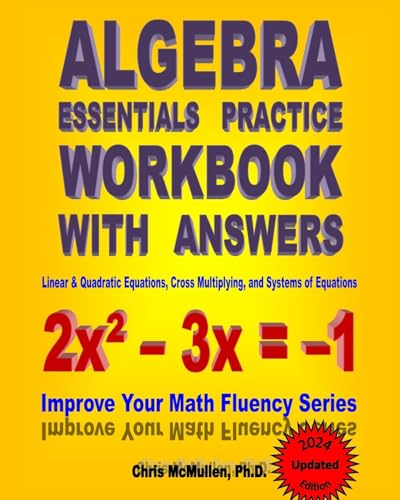
At $12.99, this is one of the cheapest ways to build algebra fluency. Chris McMullen designed this workbook around repetition, which is exactly how you get comfortable with linear and quadratic equations. You won’t find lengthy explanations here. Instead, you get hundreds of practice problems with answers in the back so you can check your work immediately.
I recommend this for anyone who understands basic algebra concepts but needs more reps. It covers linear equations, quadratic equations, cross multiplying, and systems of equations. If you’re the type who learns by doing rather than reading, this workbook is a better investment than a 500-page textbook. It’s also useful for brushing up before standardized tests.
2. No-Nonsense Algebra, 2nd Edition
- Covers core topics with depth and clarity
- Includes practice problems and worked solutions
- Suitable for self-study and university courses
- Written by a recognized authority in the field
- Used in university courses worldwide
- Clear explanations supported by illustrative examples
- Comprehensive index and references for further study
- Available in paperback and Kindle editions
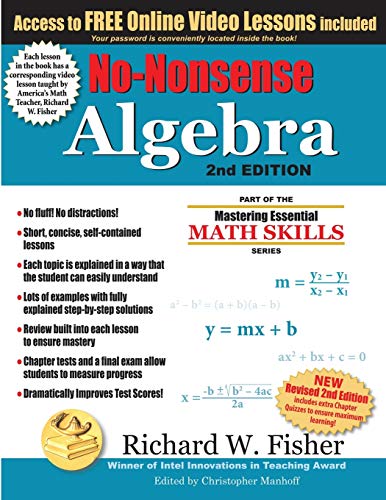
Richard Fisher’s approach is exactly what the title promises: no fluff, no tangents, just algebra. Each lesson includes a video link, clear written explanations, practice problems, and a review section. The structure works because it’s consistent. You always know what to expect, and that predictability helps when you’re struggling with new concepts.
The 2nd edition added online video tutorials, which makes this a hybrid learning experience. At $41.99 it’s pricier than a basic workbook, but you’re getting a complete self-teaching system. I’d pick this over the Algebra Essentials workbook if you need explanations alongside your practice problems. If you already understand the theory and just need drills, save your money and go with McMullen’s workbook instead.
3. The Humongous Book of Algebra Problems
The Humongous Book of Algebra Problems Humongous Books
- Covers core topics with depth and clarity
- Includes practice problems and worked solutions
- Suitable for self-study and university courses
- Written by a recognized authority in the field
- Used in university courses worldwide
- Clear explanations supported by illustrative examples
- Comprehensive index and references for further study
- Available in paperback and Kindle editions
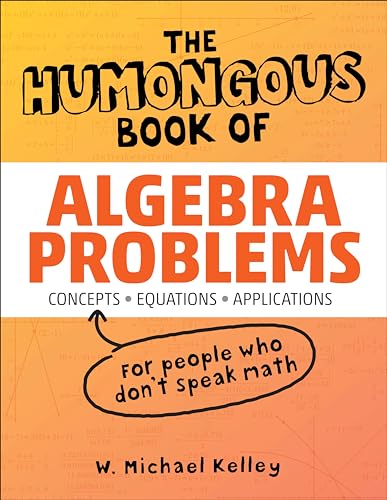
W. Michael Kelley took 1,000 algebra problems and added handwritten margin notes explaining every single step. That’s the whole pitch, and it works brilliantly. Most textbooks show you the solution and leave you guessing how they got there. This book fills in every gap. If you’ve ever stared at a solution in your textbook thinking “how did they jump from step 2 to step 5?”, this book is for you.
At $24.99 (down from a much higher retail price), it’s a steal. The problems cover everything from basic operations to complex graphing. I’d use this as a companion alongside your main textbook rather than a standalone resource. It doesn’t teach theory. It teaches you how to actually solve problems, which is arguably more useful during exam season.
4. Saxon Algebra 1/2, 3rd Edition
Saxon Algebra 1/2 3rd Edition Student Edition 2004
- Covers core topics with depth and clarity
- Includes practice problems and worked solutions
- Suitable for self-study and university courses
- Written by a recognized authority in the field
- Used in university courses worldwide
- Clear explanations supported by illustrative examples
- Comprehensive index and references for further study
- Available in paperback and Kindle editions
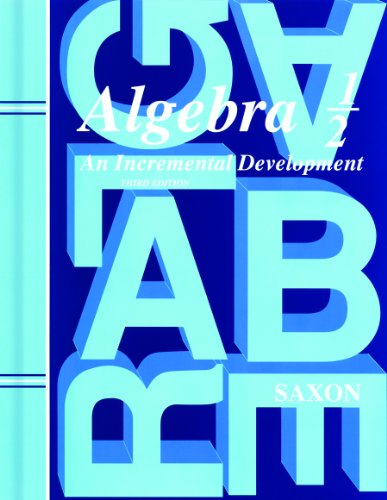
Saxon Math has a cult following among homeschoolers and for good reason. Their incremental approach introduces concepts gradually and constantly reviews earlier material so you don’t forget what you learned three chapters ago. This book bridges pre-algebra and algebra, making it perfect for students transitioning between the two.
The $203 price tag is steep, and I won’t pretend otherwise. This is a hardcover textbook built for a full academic year, not a quick study guide. If you’re homeschooling or need a structured, self-paced curriculum, Saxon delivers. If you just need a refresher or supplementary practice, the price doesn’t make sense. Look at McMullen or Kelley instead.
5. Intermediate Algebra: Concepts and Applications
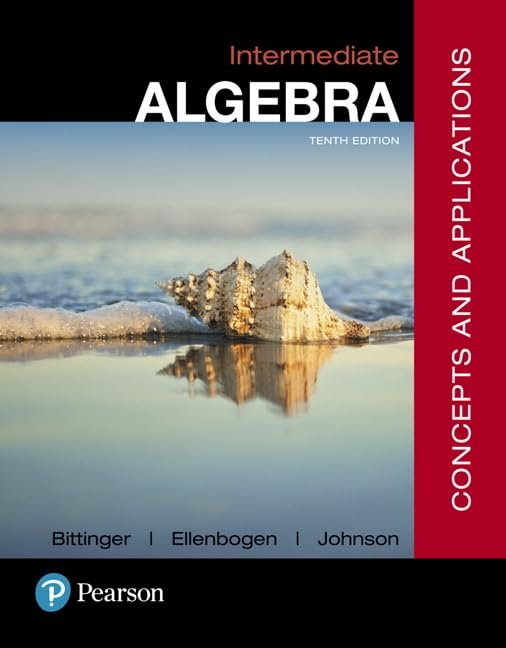
Intermediate Algebra Concepts and Applications
- Covers core topics with depth and clarity
- Includes practice problems and worked solutions
- Suitable for self-study and university courses
- Written by a recognized authority in the field
- Used in university courses worldwide
- Clear explanations supported by illustrative examples
- Comprehensive index and references for further study
- Available in paperback and Kindle editions
Bittinger’s Intermediate Algebra is a proper college-prep textbook. It covers everything from graphing linear equations to rational expressions and radical functions. The strength here is the step-by-step approach. Each section builds directly on the previous one, and the exercise sets are massive. You’ll never run out of practice problems.
At $266.65, this is textbook pricing. You’re paying for a comprehensive resource that many community colleges actually assign. If your school uses this book, buy it. If you’re self-studying, you can find earlier editions for a fraction of the cost, and the content difference is minimal. This sits at the boundary between beginner and high school level, so it works well for students transitioning upward.
6. Algebra I Workbook for Dummies
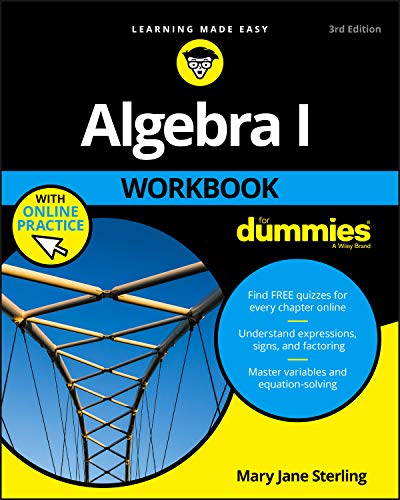
Algebra I Workbook For Dummies
- Covers core topics with depth and clarity
- Includes practice problems and worked solutions
- Suitable for self-study and university courses
- Written by a recognized authority in the field
- Used in university courses worldwide
- Clear explanations supported by illustrative examples
- Comprehensive index and references for further study
- Available in paperback and Kindle editions
Mary Jane Sterling’s “For Dummies” workbook does what the series always does: it breaks complex topics into small, digestible chunks without talking down to you. Each chapter focuses on one skill, gives you a clear explanation, and then hits you with practice problems. The tone is casual and encouraging, which matters when you’re already anxious about math.
At $24.99, it’s reasonably priced and covers all of Algebra I. I’d recommend this for adult learners returning to math after years away, or students who need a gentler introduction than a standard textbook. It won’t challenge advanced students, and that’s fine. It’s not trying to. It’s trying to get you from zero to competent, and it does that well.
7. McGraw-Hill Education Algebra II Review and Workbook
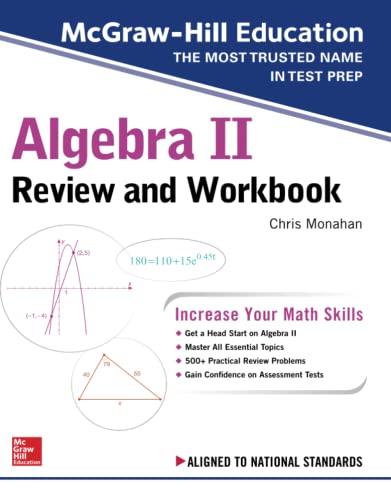
McGraw-Hill Education Algebra II Review and Workbook
- Covers core topics with depth and clarity
- Includes practice problems and worked solutions
- Suitable for self-study and university courses
- Written by a recognized authority in the field
- Used in university courses worldwide
- Clear explanations supported by illustrative examples
- Comprehensive index and references for further study
- Available in paperback and Kindle editions
Christopher Monahan’s Algebra II workbook covers the jump from basic algebra to more advanced topics like polynomials, logarithms, and trigonometric functions. At $15.00, it’s one of the most affordable Algebra II resources you’ll find. The format is straightforward: topic summary, worked examples, and practice exercises with answers.
This is a review workbook, not a primary textbook. If you’ve already been through Algebra II and need to sharpen up for the SAT, ACT, or a college placement exam, this is the right pick. If you’re encountering these topics for the first time, pair it with a more detailed textbook. McGraw-Hill’s quality control is reliable, so you won’t find errors tripping you up.
8. Practice Makes Perfect Algebra I Review and Workbook
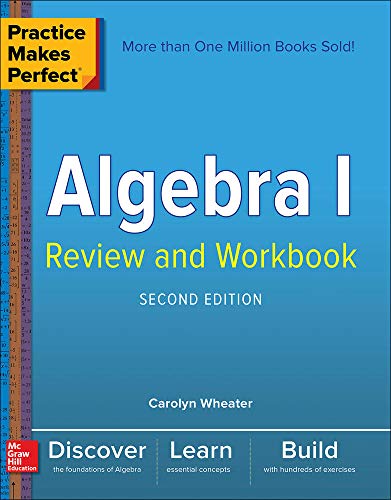
Practice Makes Perfect Algebra I Review and Workbook Second Edition
- Covers core topics with depth and clarity
- Includes practice problems and worked solutions
- Suitable for self-study and university courses
- Written by a recognized authority in the field
- Used in university courses worldwide
- Clear explanations supported by illustrative examples
- Comprehensive index and references for further study
- Available in paperback and Kindle editions
Carolyn Wheater’s workbook follows the same proven format as the rest of the “Practice Makes Perfect” series. You get concise topic reviews followed by exercises that gradually increase in difficulty. The second edition updated some content and added more practice problems. At $2.19, this is practically free and one of the best values on this entire list.
I’d pair this with any Algebra I textbook as supplementary practice. The explanations are brief but clear. The strength is the volume and variety of exercises. If you’re the type who needs to work through 50 problems before a concept sticks, this workbook delivers. It covers expressions, equations, inequalities, graphing, and everything else in a standard Algebra I curriculum.
9. Algebra: 100 Fully Solved Equations
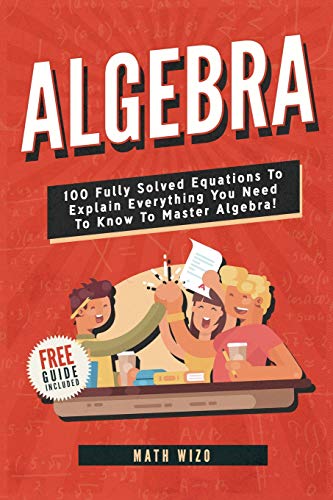
- Rational equations
- Linear equations
- Quadratic equations
- Cubic equations
- Multivariable equations
- Covers core topics with depth and clarity
- Includes practice problems and worked solutions
- Suitable for self-study and university courses
Math Wizo takes a different approach. Instead of teaching theory and assigning problems, this book presents 100 equations and walks you through every step of solving them. It covers rational equations, linear equations, quadratic equations, cubic equations, and multivariable equations. Each solution is fully explained so you can see the logic behind every step.
At $9.99, it’s affordable and focused. This isn’t a textbook, and it doesn’t pretend to be. It’s a targeted resource for people who learn best by studying worked solutions. I’d use it alongside a more comprehensive book. Think of it as 100 private tutoring sessions condensed into one slim volume.
10. Algebra Word Problems Made Simple
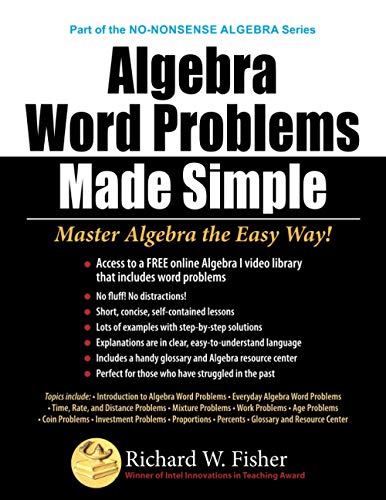
Algebra Word Problems Made Simple Master Algebra the Easy Way!
- Covers core topics with depth and clarity
- Includes practice problems and worked solutions
- Suitable for self-study and university courses
- Written by a recognized authority in the field
- Used in university courses worldwide
- Clear explanations supported by illustrative examples
- Comprehensive index and references for further study
- Available in paperback and Kindle editions
Word problems are where most algebra students hit a wall. You know the formulas, you can solve equations, but the moment someone says “a train leaves Chicago at 3pm,” your brain shuts down. Richard Fisher wrote this book specifically for that problem. It teaches you how to translate English into algebra, which is a skill most textbooks gloss over.
At $24.99, it’s reasonably priced for a specialized resource. I’d recommend this as a supplement, not a standalone text. Work through your main algebra book first, then use this to conquer the word problem sections that show up on every exam. The step-by-step approach builds real confidence, and the practice problems are thoughtfully designed to increase in complexity gradually.
Best Algebra Books for High School Students
High school algebra gets serious. You’re dealing with quadratic functions, logarithms, trigonometric equations, and systems of equations that have real-world applications. These books are designed for students who have the basics down and need to level up. Several of these also double as SAT/ACT prep resources, which makes them doubly useful. If you prefer digital learning alongside textbooks, check out these math apps and digital tools for students.
11. Practical Algebra: A Self-Teaching Guide
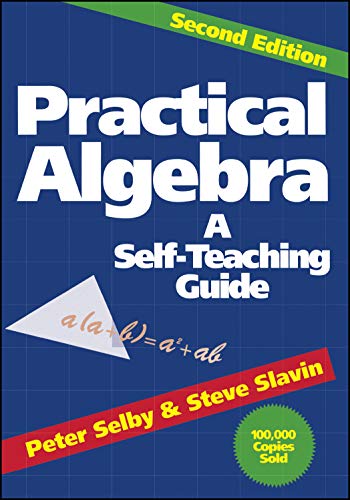
Practical Algebra A Self-Teaching Guide Second Edition
- The fundamental approach and application of algebra to solving problems
- A comprehensive understanding of the number system
- Factoring algebraic expressions
- Monomials and polynomials
- Handling algebraic fractions
- Covers core topics with depth and clarity
- Includes practice problems and worked solutions
- Suitable for self-study and university courses
Peter Selby and Steve Slavin designed this book for self-study, and it shows. Every concept is broken into small steps with checkpoints along the way. You’ll cover the fundamentals of the number system, factoring, algebraic fractions, monomials, polynomials, and more. The self-teaching format means you can work through it at your own pace without a teacher looking over your shoulder.
At $21.95, it’s affordable and comprehensive for a self-study guide. I’d recommend this for high school students who want to get ahead or adults returning to math. The second edition is well-organized and the explanations are clear without being condescending. If you’re the type who prefers learning independently, this beats sitting in a classroom.
12. High School Algebra II Unlocked (Princeton Review)
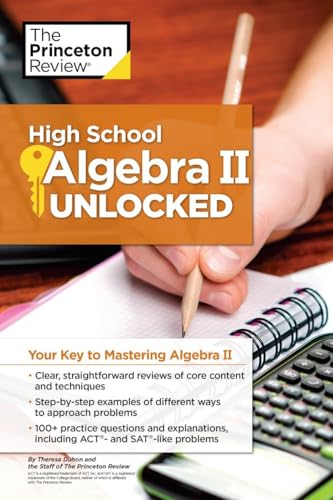
High School Algebra II Unlocked Your Key to Mastering Algebra II High School Subject Review
- Statistical modeling
- Trigonometric equations
- Logarithmic functions and operations
- Graphing and solving systems of equations
- Complex numbers and polynomials
- Covers core topics with depth and clarity
- Includes practice problems and worked solutions
- Suitable for self-study and university courses
The Princeton Review brings their test-prep expertise to this Algebra II guide. It covers statistical modeling, trigonometric equations, logarithmic functions, graphing systems of equations, and complex numbers. The explanations are polished and the practice problems mirror what you’ll see on standardized tests.
At $16.99, it’s a solid value. Princeton Review books are consistently well-structured, and this one follows their proven format. If you’re preparing for the SAT or ACT alongside your Algebra II coursework, this kills two birds with one stone. The focus on test-style problems gives you an edge that pure textbooks don’t. Pair it with a workbook for extra practice reps.
13. Math for the Ages: SAT and High School Math
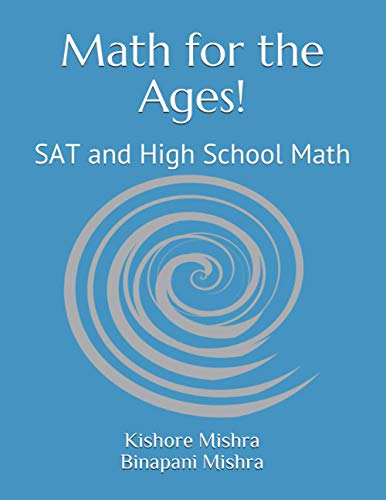
Math for the Ages! SAT and High School Math
- Covers core topics with depth and clarity
- Includes practice problems and worked solutions
- Suitable for self-study and university courses
- Written by a recognized authority in the field
- Used in university courses worldwide
- Clear explanations supported by illustrative examples
- Comprehensive index and references for further study
- Available in paperback and Kindle editions
Kishore Mishra wrote this book specifically for SAT prep, but it covers all the high school math you need alongside that. If you’re a student trying to study for the SAT while keeping up with your regular math coursework, this saves you from buying two separate books. The price at $24.61 is reasonable for what you get.
The approach is practical and exam-focused. You won’t find long theoretical discussions here. What you’ll find are the concepts you actually need, explained clearly, with the types of problems you’ll actually face on test day. For students who are short on time and need to maximize results, this is efficient.
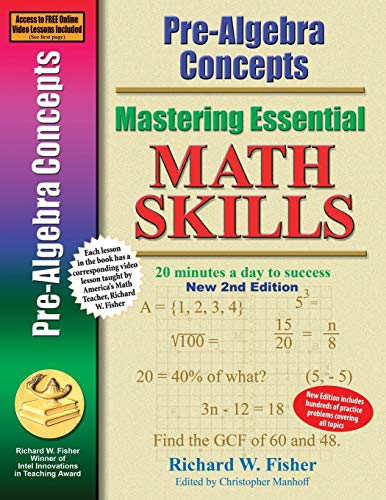
14. Pre-Algebra Concepts (Mastering Essential Math Skills)
- Solving algebraic equations
- Algebraic word problems
- Graphing equations
- Statistics
- Probability
- Covers core topics with depth and clarity
- Includes practice problems and worked solutions
- Suitable for self-study and university courses
Richard Fisher strikes again with this pre-algebra workbook designed around the “20 minutes a day” concept. It covers solving algebraic equations, algebraic word problems, graphing equations, statistics, and probability. If your high schooler is struggling because their pre-algebra foundation has gaps, this book fills them in without the shame of going back to a “beginner” resource.
At $25.99, you’re paying for a structured daily practice system. The 2nd edition includes online video tutorials, making it a self-contained learning package. I think the 20-minutes-a-day format is smart because it’s sustainable. Most students burn out when they try to cram 3 hours of math practice. Short, consistent sessions actually work better for retention.
15. Carson Dellosa Algebra 2 Workbook
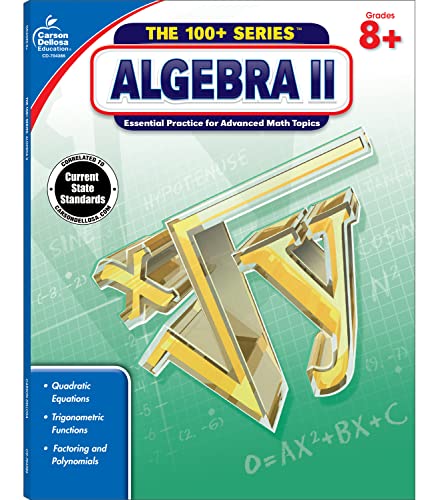
Carson Dellosa | Algebra 2 Workbook | 8th-10th Grade 128pgs The 100+ Series™ Volume 1
- Features quadratic equations, trigonometric functions, and factoring and polynomials
- For grades 8+
- Features quadratic equations, trigonometric functions, and factoring and polynomials
- For grades 8+
- Covers core topics with depth and clarity
- Includes practice problems and worked solutions
- Suitable for self-study and university courses
- Written by a recognized authority in the field
This workbook targets grades 8-10 and covers quadratic equations, trigonometric functions, factoring, and polynomials. At 128 pages and $12.99, it’s compact and affordable. The 100+ Series format is designed for supplementary practice, not primary instruction. Each page gives you a concept reminder followed by exercises.
I’d recommend this for students who need extra practice alongside their regular textbook. It’s not comprehensive enough to be your only Algebra 2 resource, but as a supplement, it’s hard to beat at this price point. Teachers also like these workbooks for homework assignments and in-class practice sessions.
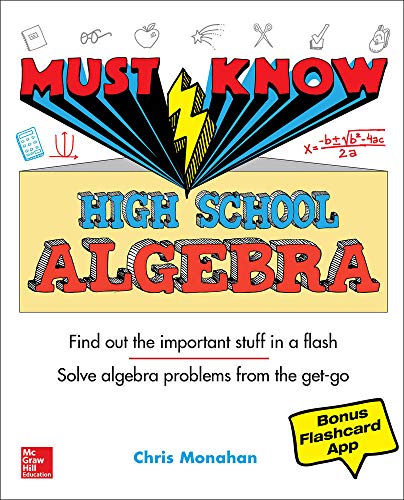
16. Must Know High School Algebra
- Covers core topics with depth and clarity
- Includes practice problems and worked solutions
- Suitable for self-study and university courses
- Written by a recognized authority in the field
- Used in university courses worldwide
- Clear explanations supported by illustrative examples
- Comprehensive index and references for further study
- Available in paperback and Kindle editions
Christopher Monahan’s “Must Know” guide distills high school algebra down to the essential concepts. The format is built around “must know” ideas that anchor each chapter, followed by clear explanations and practice problems. At $20.99, it sits in a sweet spot between budget workbooks and expensive textbooks.
What I like about this approach is the focus on what’s actually important. Not every algebra topic carries equal weight on exams. This book helps you prioritize. If you’re behind in your coursework and need to catch up fast, the “must know” framework tells you exactly where to spend your study time.
17. High School Algebra II: A Comprehensive Review
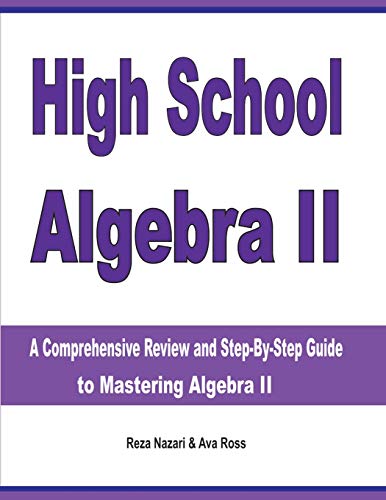
High School Algebra II A Comprehensive Review and Step-by-Step Guide to Mastering Algebra II
- Covers core topics with depth and clarity
- Includes practice problems and worked solutions
- Suitable for self-study and university courses
- Written by a recognized authority in the field
- Used in university courses worldwide
- Clear explanations supported by illustrative examples
- Comprehensive index and references for further study
- Available in paperback and Kindle editions
Reza Nazari’s step-by-step guide covers all of Algebra II with a focus on clear, methodical explanations. At $12.99, it’s one of the most affordable comprehensive Algebra II resources available. The “Effortless Math” series has built a reputation for breaking down complex topics into manageable steps, and this book continues that tradition.
I’d recommend this for students who prefer a structured, linear approach to learning. You work through chapters in order, and each one builds on the last. The practice problems are well-calibrated, starting easy and ramping up. If you want a single book that covers all of Algebra II without breaking the bank, this is a strong pick.
18. 101 Involved Algebra Problems with Answers
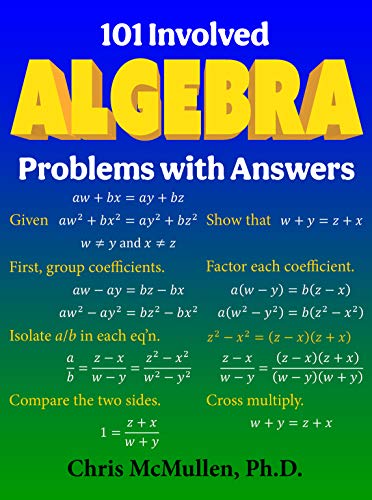
101 Involved Algebra Problems with Answers
- Applying algebra to derive equations
- Variables in the denominator
- Inequalities
- The equation for a straight line
- Simplifying expressions
- Covers core topics with depth and clarity
- Includes practice problems and worked solutions
- Suitable for self-study and university courses
Chris McMullen’s “101 Involved” series is for students who are past the basics and want a challenge. These aren’t routine plug-and-chug problems. They require you to apply algebra to derive equations, handle variables in denominators, work with inequalities, and simplify complex expressions. Each problem is fully solved, so you can study the approach even when you get stuck.
At $5.99 for the Kindle edition, this is absurdly cheap for 101 challenging problems with detailed solutions. I’d recommend this after you’ve finished your main Algebra textbook and want to test whether you actually understand the material. It’s the difference between thinking you know algebra and proving it to yourself.
19. The Fun Way to Learn Algebra
- An expert instructional video introduces each lesson. It is essential to watch this video!
- Success with the two practice problems enables the app user to access the ten lesson exercises.
- An expert instructional video introduces each lesson. It is essential to watch this video!
- Success with the two practice problems enables the app user to access the ten lesson exercises.
- Covers core topics with depth and clarity
- Includes practice problems and worked solutions
- Suitable for self-study and university courses
- Written by a recognized authority in the field
This is a digital-first learning experience rather than a traditional book. Each lesson starts with an expert instructional video, followed by practice problems that unlock exercises. The gamified approach works well for students who struggle to stay engaged with traditional textbooks. You have to succeed at practice problems before moving forward, which prevents the common mistake of skipping ahead before you’re ready.
The format won’t work for everyone. If you prefer physical books and handwriting your solutions, look elsewhere. But for students who learn better through interactive, video-based instruction, this offers something no textbook can. It’s particularly effective for visual learners who need to see concepts demonstrated before practicing them.
20. Painless Algebra (Barron’s)
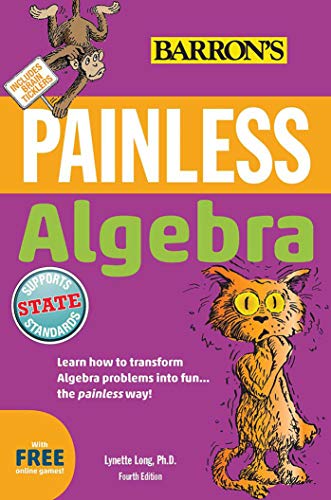
Painless Algebra Barron s Painless
- Covers core topics with depth and clarity
- Includes practice problems and worked solutions
- Suitable for self-study and university courses
- Written by a recognized authority in the field
- Used in university courses worldwide
- Clear explanations supported by illustrative examples
- Comprehensive index and references for further study
- Available in paperback and Kindle editions
Barron’s “Painless” series has been around for decades, and for good reason. Lynette Long takes the anxiety out of algebra with a friendly, conversational tone and plenty of humor. At $9.99, it’s affordable enough to buy on a whim. The book covers all the standard Algebra I topics with clear explanations, real-world examples, and “Brain Ticklers” that test your understanding without the stress of a formal quiz.
I’d recommend this for students who have genuine math anxiety. Sometimes the barrier isn’t intelligence, it’s fear. This book addresses that head-on. The writing style makes you feel like you’re talking to a friendly tutor, not reading a cold textbook. If you’ve already got confidence in math, you’ll find this too basic. But for students who freeze up at the sight of variables, it’s exactly right.
Best Algebra Books for College Students
College algebra textbooks are expensive. That’s not news. But you need them, especially if you’re headed into engineering, computer science, economics, or any STEM field. These books cover advanced topics like polynomial functions, exponential and logarithmic equations, systems of nonlinear equations, and mathematical modeling. I’ve included both premium textbooks and more affordable alternatives. Pairing any of these with free resources like the best math YouTube channels can fill in gaps that textbooks sometimes leave.
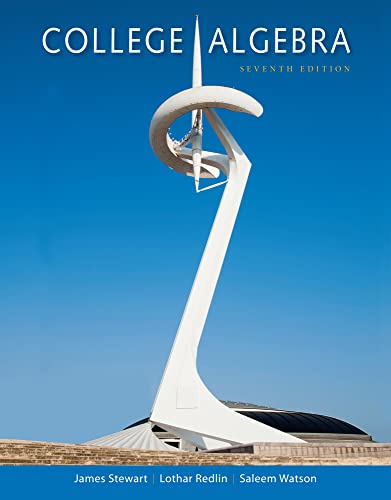
21. College Algebra (Stewart, Redlin, Watson)
- Covers core topics with depth and clarity
- Includes practice problems and worked solutions
- Suitable for self-study and university courses
- Written by a recognized authority in the field
- Used in university courses worldwide
- Clear explanations supported by illustrative examples
- Comprehensive index and references for further study
- Available in paperback and Kindle editions
This is one of the most widely assigned college algebra textbooks in the US, and it’s earned that position. Stewart, Redlin, and Watson explain concepts clearly with excellent visual aids, real-world applications, and a massive exercise library. The problem sets range from basic to challenging, so you can calibrate your practice to your skill level.
At $312.95, the sticker shock is real. But if your professor assigned this book, you need it. Previous editions are significantly cheaper and cover nearly identical material. The differences between the 5th and 7th editions, for example, are mostly cosmetic. Shop used or rent if you can.
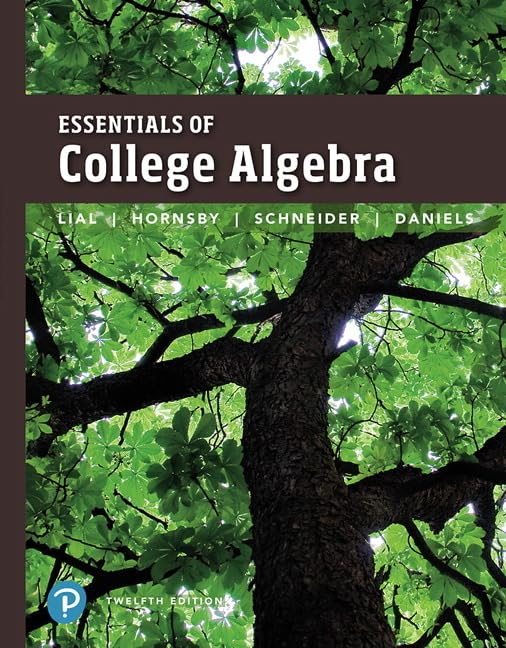
22. Essentials of College Algebra
- Covers core topics with depth and clarity
- Includes practice problems and worked solutions
- Suitable for self-study and university courses
- Written by a recognized authority in the field
- Used in university courses worldwide
- Clear explanations supported by illustrative examples
- Comprehensive index and references for further study
- Available in paperback and Kindle editions
Margaret Lial’s textbook focuses on the essential topics without the extras that pad out larger textbooks. If your college algebra course moves fast and you need a book that matches that pace, Lial delivers. The explanations are clear, the examples are well-chosen, and the exercise sets are large enough to provide real practice without being overwhelming.
At $213.32, it’s still expensive by normal book standards, but cheaper than Stewart’s text. Lial is known for writing accessible, student-friendly math textbooks. If you’re taking college algebra as a requirement and you’re not a math major, this is a less intimidating option than some of the heavier texts on this list.
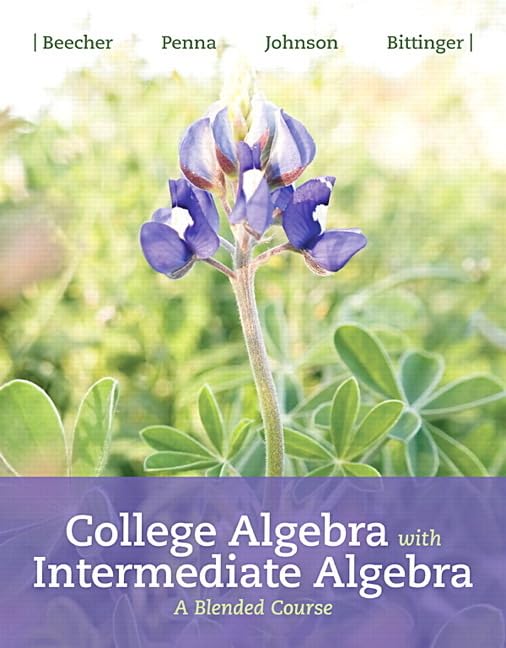
23. College Algebra with Intermediate Algebra: A Blended Course
College Algebra with Intermediate Algebra A Blended Course
- Covers core topics with depth and clarity
- Includes practice problems and worked solutions
- Suitable for self-study and university courses
- Written by a recognized authority in the field
- Used in university courses worldwide
- Clear explanations supported by illustrative examples
- Comprehensive index and references for further study
- Available in paperback and Kindle editions
Judith Beecher’s blended approach combines intermediate and college algebra into one course. If you placed into intermediate algebra but want to complete college algebra as quickly as possible, this textbook was literally designed for your situation. It eliminates the gap year between the two courses by weaving them together.
At $286.65, you’re paying for two courses in one book. When you look at it that way, the cost is actually reasonable. The Pearson platform that comes with it includes online homework tools, which most professors will use for grading. I’d recommend this only if your school’s program specifically uses it. Otherwise, stick with a standard college algebra text.
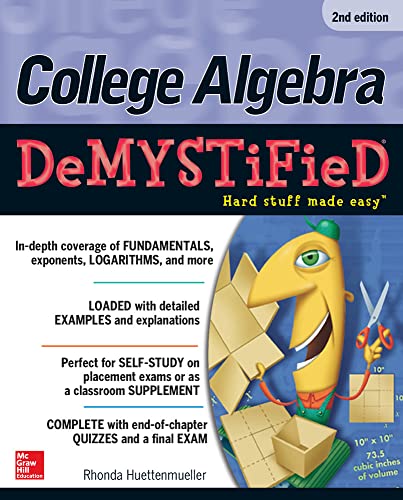
24. College Algebra DeMYSTiFieD
College Algebra DeMYSTiFieD 2nd Edition
- The x-y co-ordinate
- Exponents and logarithms
- Graphs of functions
- Nonlinear equations
- Functions
- Covers core topics with depth and clarity
- Includes practice problems and worked solutions
- Suitable for self-study and university courses
The DeMYSTiFieD series from McGraw-Hill is designed for self-study, and Rhonda Huettenmueller does an excellent job here. The book covers x-y coordinates, exponents and logarithms, graphs of functions, nonlinear equations, and more. Each chapter includes quizzes and a final exam so you can track your progress. The explanations assume you’re learning on your own, which means nothing is left unexplained.
At $22.00, this is the most affordable college-level algebra book on this list. I’d recommend it for students who want to self-study before their semester starts, or for anyone taking an online course who needs a clear reference alongside video lectures. It won’t replace an assigned textbook, but as a supplement, it’s outstanding value.
25. Algebra for College Students (Kaufmann & Schwitters)
- Covers core topics with depth and clarity
- Includes practice problems and worked solutions
- Suitable for self-study and university courses
- Written by a recognized authority in the field
- Used in university courses worldwide
- Clear explanations supported by illustrative examples
- Comprehensive index and references for further study
- Available in paperback and Kindle editions
Jerome Kaufmann and Karen Schwitters wrote a textbook that’s been through multiple editions for good reason. The explanations are detailed, the examples are worked thoroughly, and the problem sets are extensive. It covers all standard college algebra topics with a focus on building understanding rather than just memorizing procedures.
At $250.95, it’s firmly in textbook territory. The book works best in a classroom setting where a professor is guiding you through the chapters. As a self-study resource, it can feel dense. But if your instructor assigns it, you’re in good hands. The exercise variety alone makes it worth the price if you actually work through the problems.
26. College Algebra with Modeling and Visualization
College Algebra with Modeling and Visualization
- Covers core topics with depth and clarity
- Includes practice problems and worked solutions
- Suitable for self-study and university courses
- Written by a recognized authority in the field
- Used in university courses worldwide
- Clear explanations supported by illustrative examples
- Comprehensive index and references for further study
- Available in paperback and Kindle editions
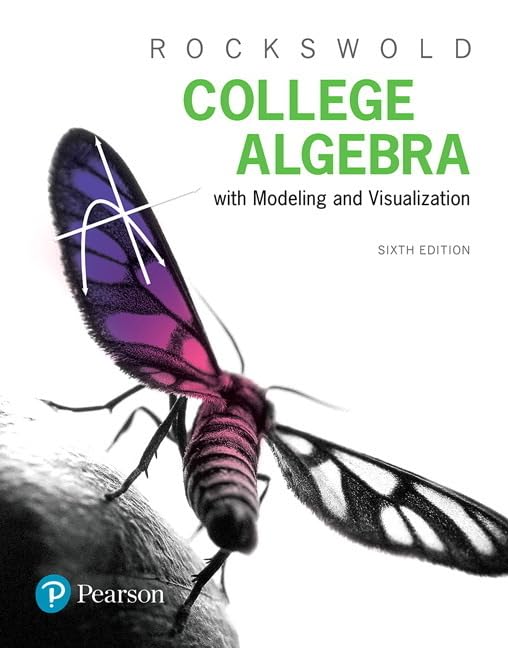
Gary Rockswold’s approach emphasizes real-world modeling and visualization, which sets it apart from more abstract algebra texts. If you learn better when you can see how algebra applies to actual problems, from population growth to financial projections, this textbook makes those connections explicit. The visual approach includes extensive graphing and data interpretation exercises.
At $273.32, it’s not cheap. But for students in applied fields like business, economics, or environmental science, the modeling focus is more relevant than pure abstract algebra. If your career won’t involve proofs but will involve data and models, Rockswold’s approach prepares you better than a traditional text.
27. College Algebra: Real Mathematics, Real People
College Algebra Real Mathematics Real People
- Covers core topics with depth and clarity
- Includes practice problems and worked solutions
- Suitable for self-study and university courses
- Written by a recognized authority in the field
- Used in university courses worldwide
- Clear explanations supported by illustrative examples
- Comprehensive index and references for further study
- Available in paperback and Kindle editions
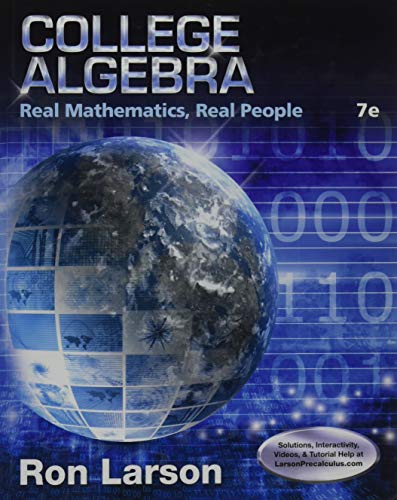
Ron Larson is one of the most prolific math textbook authors alive, and this book shows why. “Real Mathematics, Real People” connects every algebra concept to real-world applications. The production quality is high, with clear graphics, well-organized chapters, and an extensive online resource package. If you want a polished, professional learning experience, Larson delivers.
At $312.95, it’s one of the pricier options. But Larson’s books hold their resale value well, and older editions are widely available at steep discounts. The online resources that come with new copies are genuinely useful. I’d recommend this for students who want a premium textbook experience and plan to keep the book as a reference beyond their course.
28. College Algebra (Ratti and McWaters)
- Covers core topics with depth and clarity
- Includes practice problems and worked solutions
- Suitable for self-study and university courses
- Written by a recognized authority in the field
- Used in university courses worldwide
- Clear explanations supported by illustrative examples
- Comprehensive index and references for further study
- Available in paperback and Kindle editions
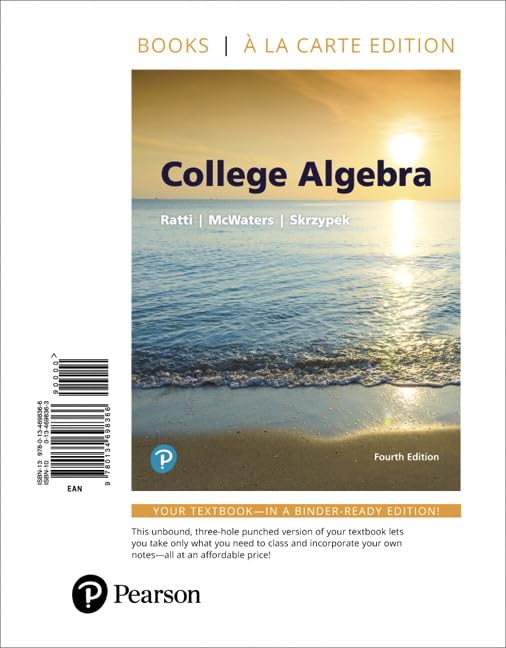
J.S. Ratti and Marcus McWaters offer a college algebra textbook with a strong focus on conceptual understanding. They include “Practice” and “Concept” problems that force you to think about why a method works, not just how. This approach produces deeper learning, though it requires more effort than a surface-level textbook.
At $193.32, it’s on the lower end of college textbook pricing. The emphasis on understanding over memorization makes it a good fit for students planning to continue into higher mathematics. If algebra is your terminal math course, you might prefer a more applied text like Rockswold’s. But if you’re heading into calculus, the conceptual foundation Ratti builds pays dividends later.
29. Functions and Change: A Modeling Approach to College Algebra
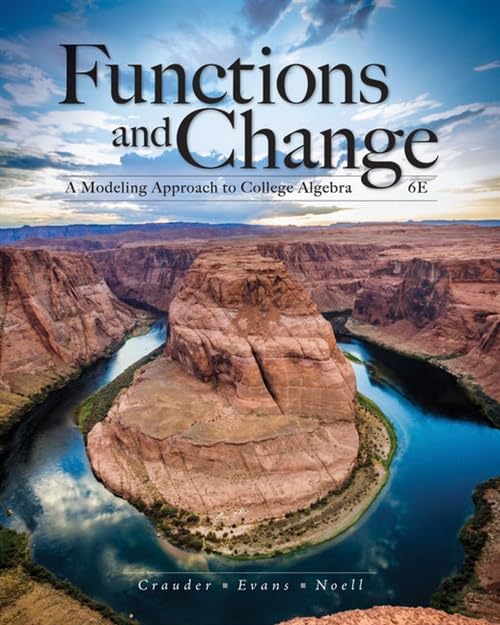
Functions and Change A Modeling Approach to College Algebra
- Covers core topics with depth and clarity
- Includes practice problems and worked solutions
- Suitable for self-study and university courses
- Written by a recognized authority in the field
- Used in university courses worldwide
- Clear explanations supported by illustrative examples
- Comprehensive index and references for further study
- Available in paperback and Kindle editions
Bruce Crauder’s textbook takes an unconventional approach by centering everything around functions and how they model change. If traditional algebra textbooks feel abstract and disconnected from reality, this one swings hard in the opposite direction. Every concept is introduced through a real-world context, and the math follows naturally from the application.
At $312.95, the price is standard for college textbooks. The modeling approach works best for students in social sciences, business, or biology where understanding rates of change matters more than algebraic manipulation for its own sake. It’s a niche pick, but for the right student, it’s more engaging than any traditional algebra text on this list.
30. Algebra and Trigonometry with Analytic Geometry
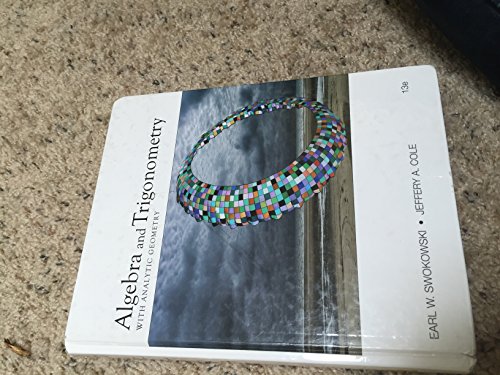
Algebra and Trigonometry with Analytic Geometry College Algebra and Trigonometry
- Best Statistical Mechanics Books for Physics Majors
- 10 Best Real Analysis Books for Math Majors
- 20 Best Calculus Books [Best Sellers Included]
- 20 Best General Relativity Books for Beginners
- 15 Best Measure Theory Books for Undergraduate and Graduate Students
- Covers core topics with depth and clarity
- Includes practice problems and worked solutions
- Suitable for self-study and university courses
This combined algebra and trigonometry text covers a massive amount of ground. If your program requires both subjects, buying one combined textbook is more efficient and usually cheaper than two separate books. The analytic geometry component adds coordinate geometry and conic sections, which connects algebra to visual, geometric reasoning.
At $375.95, it’s the most expensive book on this list. But you’re getting three subjects in one volume. Used copies of earlier editions are available for a fraction of the cost, and the core content hasn’t changed substantially. I’d only buy this new if your professor requires a specific edition for online homework codes. Otherwise, go used and save $200+.
Frequently Asked Questions
What’s the best algebra book for absolute beginners?
If you’re starting from zero, I’d recommend No-Nonsense Algebra by Richard Fisher. It includes video tutorials with every lesson, clear written explanations, and structured practice problems. For a cheaper option focused purely on practice, Chris McMullen’s Algebra Essentials Practice Workbook at $12.99 gives you hundreds of problems with answers. Both work well for self-study without a teacher.
Do I need a different algebra book for SAT/ACT prep?
Not necessarily. Most high school algebra books on this list cover the same material that appears on the SAT and ACT. However, if you want a book that specifically targets test-day question formats, the Princeton Review’s High School Algebra II Unlocked or Math for the Ages by Kishore Mishra are designed with standardized test prep in mind. They focus on the problem types you’ll actually encounter during the exam.
Are expensive college algebra textbooks worth the price?
The content in a $300 college algebra textbook isn’t dramatically different from what you’ll find in a $25 DeMYSTiFieD guide. You’re paying for online homework platform access, extensive exercise sets, and sometimes a required access code for your course. If your professor uses the textbook’s online platform for grading, you need the new edition. If not, buy a used copy of a previous edition and save $200+.
Can I learn algebra on my own without a teacher?
Absolutely. Several books on this list were designed specifically for self-study. Practical Algebra: A Self-Teaching Guide, College Algebra DeMYSTiFieD, and No-Nonsense Algebra all include self-check mechanisms so you can verify your understanding without an instructor. Pair any of these with free YouTube channels like Khan Academy or Professor Leonard for video explanations, and you have a complete self-study system.
What algebra book should I use before starting calculus?
If you’re preparing for calculus, you need strong intermediate-to-college-level algebra skills. Bittinger’s Intermediate Algebra or any of the college algebra textbooks in section three of this list will prepare you well. Focus especially on functions, graphing, polynomial operations, and rational expressions. These topics appear constantly in calculus, and weak algebra skills are the number one reason students fail calculus courses.
How many algebra books do I actually need?
One main textbook and one supplementary workbook is the ideal combination. Your textbook teaches the concepts. Your workbook gives you extra practice. Don’t buy five algebra books hoping that more books equals more learning. Pick one from your level category, add a practice workbook like McMullen’s or the Practice Makes Perfect series, and work through both completely. Consistency beats variety.
What’s the difference between Algebra I and Algebra II?
Algebra I covers fundamentals: solving linear equations, graphing lines, basic inequalities, and simple systems of equations. Algebra II builds on that with quadratic functions, polynomial equations, logarithms, exponential functions, sequences, and sometimes trigonometry. Think of Algebra I as learning the language and Algebra II as learning to write with it. Most students take Algebra I in 8th or 9th grade and Algebra II in 10th or 11th grade.
Which algebra book is best for homeschooling?
Saxon Algebra 1/2 is the gold standard for homeschool families. Its incremental approach with built-in review means you don’t need to be a math expert to guide your child through it. The lessons are structured so students can work independently, with periodic tests to check progress. It’s expensive at $203, but it replaces a full year of math curriculum. For a more affordable option, No-Nonsense Algebra with its included video tutorials also works well for homeschool settings.