
10 Best AI Chatbots like ChatGPT in 2026
I have tested every major AI chatbot on the market, and the gap between the best and the rest keeps widening. ChatGPT started the revolution, but you now have serious alternatives from Google, Anthropic, Meta, xAI, and several startups that do specific things better.
The problem? There are too many options. Some excel at creative writing, others at coding, and a few are built purely for research with citations. Picking the wrong one means you’re either overpaying or missing out on features that could save you hours every week.
I’ve spent months using each of these conversational AI chatbots for real work: drafting client proposals, debugging WordPress code, researching competitors, and writing content. Below is my honest ranking of the best AI chatbots and ChatGPT alternatives you should actually consider in 2026, with pricing, strengths, and who each one is best for.
The best AI chatbots like ChatGPT in 2026
- ChatGPT for all-around versatility and the largest ecosystem
- Claude for writing quality, long documents, and agentic coding
- DeepSeek R1 for a completely free, open-source alternative
- Microsoft Copilot for Microsoft 365 integration
- Gemini for Google Workspace users and voice assistance
- Meta AI for free casual use across WhatsApp and Instagram
- Grok for real-time X data and unfiltered personality
- Pi for personal conversations and emotional support
- Poe for accessing multiple AI models in one place
- Perplexity for research with cited sources
- Replika for AI companionship and emotional wellbeing
Don’t confuse these with AI Chatbot Apps built for business use cases like customer support and lead generation. For how businesses use chatbots, see my guide on conversational marketing with AI chatbots.
ChatGPT
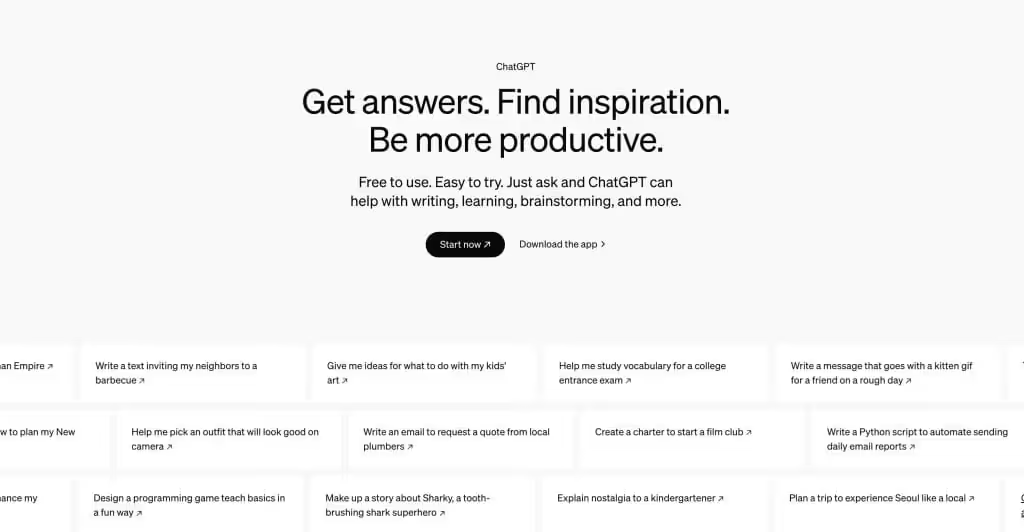
Best for: Everyone who wants one AI tool that handles writing, coding, image generation, research, and analysis. The most complete AI chatbot available.
Since its late 2022 launch, ChatGPT has led the AI chatbot space and never let go. Now powered by GPT-5.4 (March 2026), it’s faster, smarter, and more versatile than ever. Type your prompt, and it delivers human-like responses in seconds with automatic model routing that picks the right engine for your query.
OpenAI retired GPT-4o and all older models in February 2026, replacing them with the GPT-5 series. The current default model is GPT-5.2, which handles most everyday tasks. For complex reasoning and coding, GPT-5.4 is the new flagship with agentic coding capabilities and real-time model routing.
The free tier gives you GPT-5.2 with daily limits. Plus at $20/month unlocks GPT-5.4, faster responses, image generation, and priority access. Pro at $200/month removes nearly all limits for heavy users doing complex math, science, and programming tasks.
Where it falls short: the free tier gets restrictive during peak hours. Writing quality can feel generic compared to Claude. And the sheer number of features means the interface has gotten cluttered. But for sheer breadth of capability, nothing else comes close in 2026.
Price: Free tier available. Plus $20/month. Pro $200/month.
ChatGPT

Pros
- Most versatile AI chatbot available
- Excellent free tier for daily use
- Custom GPTs for specialized tasks
- Strong coding and analysis capabilities
Cons
- Plus required for best models
- Can hallucinate on niche topics
- Rate limits during peak usage
- Privacy concerns for sensitive data
Summary
The leading AI chatbot powered by GPT-5.4. ChatGPT excels at conversation, content creation, coding, analysis, and creative tasks. The free tier is generous and Plus unlocks the latest models with image generation and web browsing.
Claude
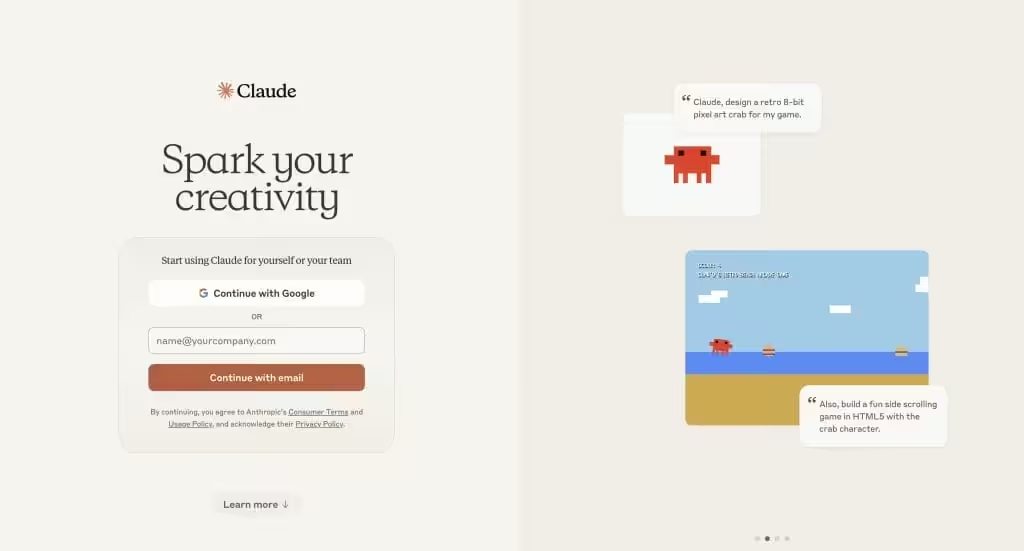
Best for: Writers, developers, and anyone who works with long documents. The writing quality is noticeably better than ChatGPT for nuanced, human-sounding content.
Claude redefines conversational AI with its natural dialogue flow, precision, and powerful interactive tools. Built on Anthropic’s latest Claude 4.6 family of models (Opus 4.6, Sonnet 4.6, and Haiku 4.5), Claude delivers unmatched versatility for both casual and professional use. With web search (added March 2025) and Claude Code, a dedicated coding assistant (GA May 2025), Claude has evolved far beyond a simple chatbot.
The 200K token context window is the standout feature. You can paste an entire book, codebase, or research paper and ask questions about it. Opus 4.6 extends this to 1M tokens in beta. Artifacts let you transform prompts into dynamic dashboards, animations, or games right inside the chat. And Claude Code lets the AI write, test, and debug code autonomously in your terminal.
| Model | Best For | Highlights |
|---|---|---|
| Haiku 4.5 | Quick chats, real-time tasks | Lightning-fast responses, low latency (Oct 2025) |
| Sonnet 4.6 | Balanced everyday use | Near-Opus coding and document comprehension (Feb 2026) |
| Opus 4.6 | Complex projects & agentic tasks | 1M token context (beta), 14.5-hour sustained agentic task horizon (Feb 2026) |
The free tier lets you explore basic features including Artifacts and document uploads. Pro at $20/month unlocks priority access and extended capabilities. Max plans at $100 and $200/month give heavy users significantly more throughput.
Where Claude falls short: no native image generation, fewer third-party integrations than ChatGPT, and the free tier can be restrictive during peak demand. But for writing quality and long-context work, nothing else comes close.
Price: Free tier available. Pro $20/month. Max $100-200/month.
Claude

Pros
- Most natural conversational tone
- Exceptional long-form reasoning
- 200K context window for large documents
- Strong safety and accuracy focus
Cons
- Web search available but limited on free tier
- Pro subscription for heavy usage
- Fewer integrations than ChatGPT
- Can be overly cautious
Summary
The most human-like AI chatbot with exceptional reasoning and a 1M token context window. Claude excels at nuanced conversations, long-form analysis, agentic coding, and creative writing. Built with safety-first design by Anthropic.
DeepSeek R1
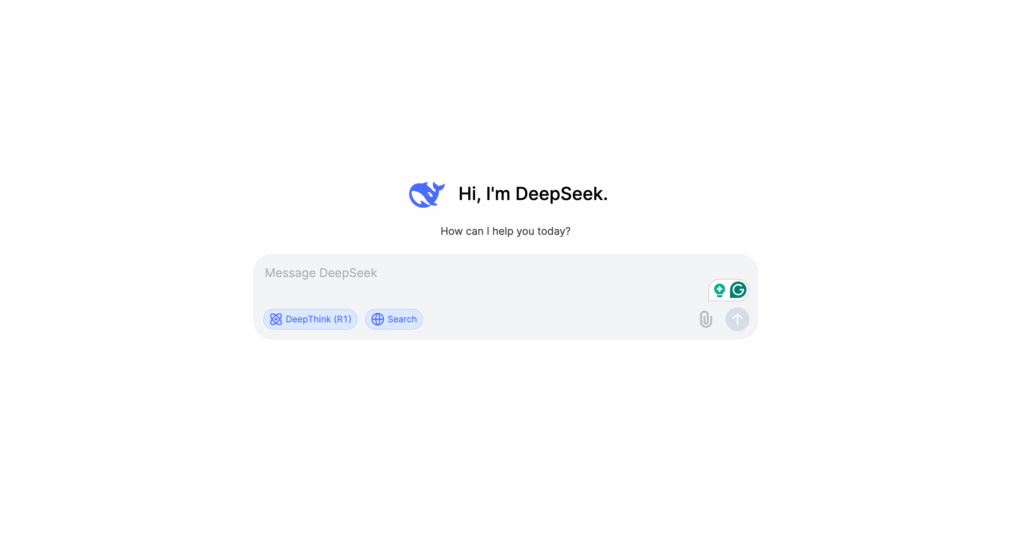
Best for: Developers and researchers who want a powerful, completely free AI chatbot with open-source models they can self-host.
DeepSeek R1 took the world by storm when it launched on January 10, 2025, quickly becoming the most downloaded free app globally. Developed by Chinese AI lab DeepSeek, it made headlines for its remarkably cost-effective training, reportedly built for a fraction of what competitors spent. That efficiency famously caused Nvidia’s market cap to drop by $600 billion in a single day.
The models are released under the MIT License, meaning developers and businesses can use, modify, and deploy them freely. The R1 model excels at step-by-step reasoning, math, and coding tasks, rivaling models from OpenAI and Google on key benchmarks. The latest DeepSeek V3.2 (December 2025) continues to push boundaries with multimodal capabilities across text, images, and code.
The chatbot at chat.deepseek.com is entirely free with no subscription required. That’s one of the most generous offerings in the AI space. Developers can access the API at extremely competitive pricing, significantly undercutting OpenAI and Anthropic. And since the models are open-weight, you can download and run them locally for complete data privacy.
The tradeoff: DeepSeek’s conversational quality isn’t as polished as ChatGPT or Claude for general chat. It’s strongest for technical tasks like coding, math, and structured research. If you need creative writing or a friendly conversational partner, the other options on this list are better picks.
Price: Completely free. API access at competitive rates. Self-hosting available.
DeepSeek R1

Pros
- Excellent for deep research and data analysis
- Strong reasoning capabilities
- Good at structured professional outputs
- Competitive pricing
Cons
- Less conversational than ChatGPT
- Smaller ecosystem and integrations
- Newer with less track record
- Limited creative writing capabilities
Summary
A breakthrough AI tool focused on deep search, data analysis, and professional research. DeepSeek R1 excels at interpreting complex data and providing structured, research-grade outputs for professionals.
Microsoft Copilot
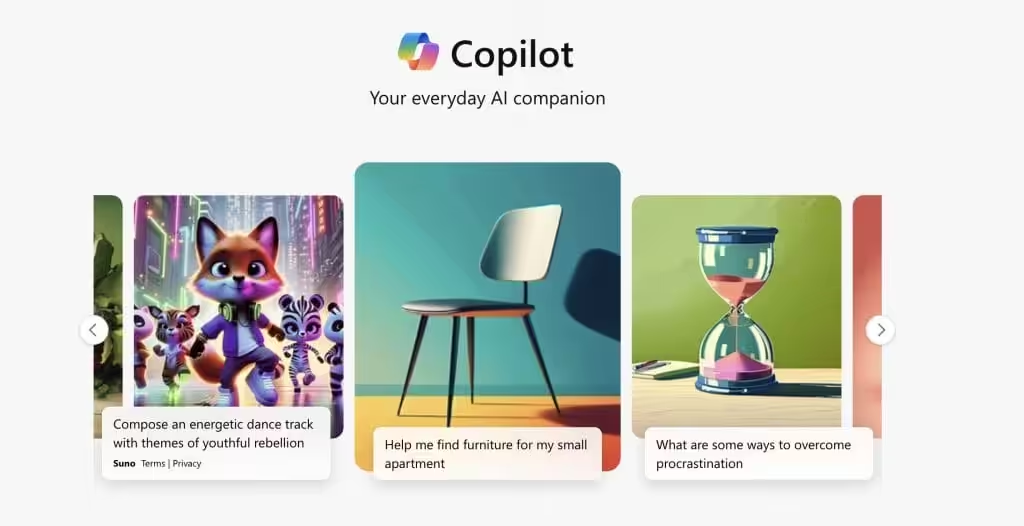
Best for: Microsoft 365 power users who want AI embedded directly in Word, Excel, PowerPoint, Outlook, and Teams.
Microsoft Copilot is powered by the GPT-5 series (GPT-5.2 for general tasks, GPT-5.4 for complex reasoning) with a Prometheus routing layer that automatically picks the best model for each query. Its multimodal capabilities handle audio, video, and text inputs, outputting text, images, and audio.
The free tier is surprisingly generous. It includes access to current events, web browsing with citations, image generation with DALL-E, and document uploads. Think Deeper (advanced reasoning) and Voice features are now free and unlimited. For many people, the free Copilot covers everything they need.
Copilot Pro at $20/month adds priority access and AI features in personal Microsoft 365 apps. Business plans at $18-30/user/month bring AI into the entire organization with admin controls and compliance features.
The honest take: as a standalone chatbot, Copilot’s conversational depth is below ChatGPT and Claude. The tone can feel corporate. But the Microsoft 365 integration is unmatched. If your work already lives in Word, Excel, and Teams, Copilot meets you where you are.
Price: Free tier available. Pro $20/month. Business $18-30/user/month.
Microsoft Copilot

Pros
- Free GPT-5 series powered chatbot
- Cited sources for every response
- Deep Microsoft 365 integration
- Built-in image generation with DALL-E
Cons
- Conversation depth below ChatGPT
- Can feel corporate in tone
- Best features locked to Microsoft ecosystem
- Response length can be limited
Summary
Microsoft’s AI chatbot powered by the GPT-5 series with deep integration into the Microsoft ecosystem. Copilot provides cited web search results, image generation, and seamless Office 365 integration. Free to use with a browser.
Gemini
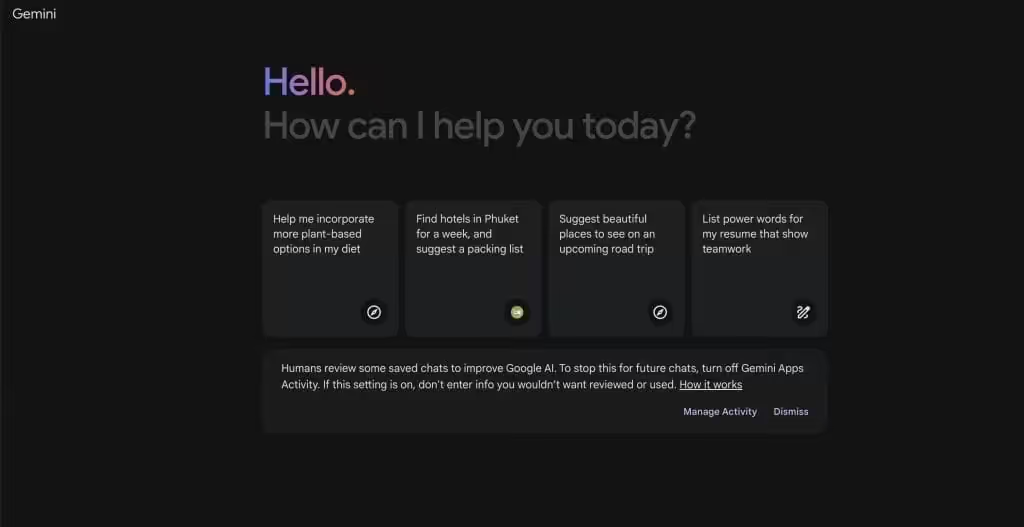
Best for: Google Workspace users who want AI integrated with Gmail, Docs, Calendar, and Drive. Also the best AI voice assistant replacement for Google Assistant.
Formerly known as Google Bard, Gemini is now powered by the Gemini 3.1 family, including 3.1 Pro for complex reasoning and 3.1 Flash Lite for fast everyday queries. It provides footnoted answers, browses the internet, and generates images within the chatbot interface.
Gemini has officially replaced Google Assistant as Google’s default voice assistant. Gemini Live holds human-like, multi-turn verbal conversations on complicated topics, available on both Android and iOS. The Google Workspace integration lets it access your Gmail, Docs, Drive, YouTube, Flights, and Hotels seamlessly.
The free tier is generous. AI Plus at $7.99/month is the cheapest paid tier from any major provider. AI Pro at $19.99/month unlocks Deep Research, full Workspace integration, and the most capable 3.1 Pro model.
Where Gemini trails the competition: conversational quality and creative writing still feel less natural than ChatGPT and Claude. The Deep Research feature can produce surface-level results. But the Google ecosystem integration and voice assistant capabilities are unmatched.
Price: Free tier available. AI Plus $7.99/month. AI Pro $19.99/month.
Gemini

Pros
- Deep Google Search integration for factual answers
- Multimodal analysis of images and documents
- Free with generous usage
- Excellent Google Workspace integration
Cons
- Responses can lack personality
- Creative writing below ChatGPT and Claude
- Advanced features need Google One AI Premium
- Occasional factual inconsistencies
Summary
Google’s conversational AI with deep search integration and multimodal capabilities. Gemini provides footnoted answers, analyzes images and documents, and integrates with Google Workspace for productivity.
Meta AI (Llama)
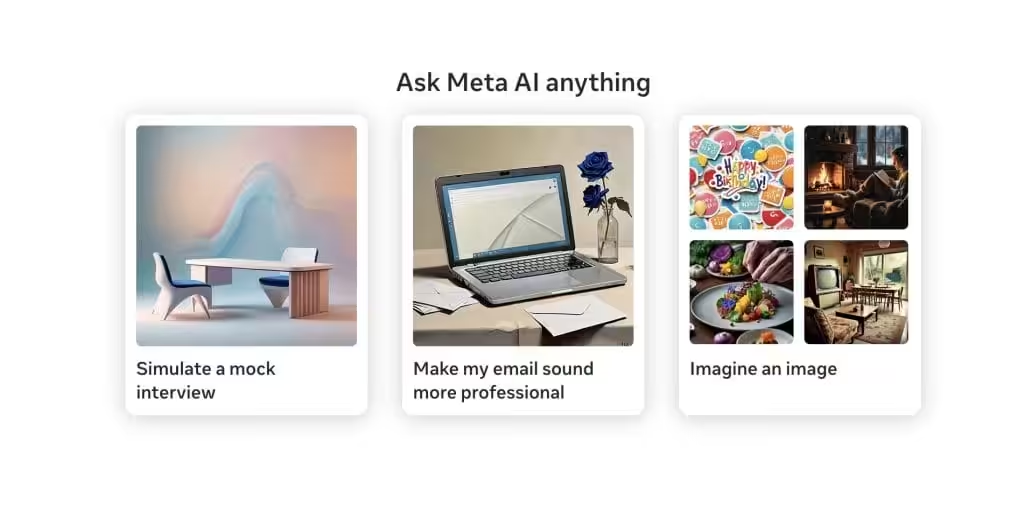
Best for: Casual users who want free AI chat without leaving WhatsApp, Instagram, or Facebook. Also great for developers building with open-source Llama models.
Meta AI is available across all Meta apps: Facebook, Instagram, and WhatsApp. You can start chatting, request generated images, and even create small animations right inside the apps you already use. No separate account or subscription needed.
The underlying Llama models are released under a generous open-source license, which has made them hugely popular with developers. Companies can use Llama to build their own AI products for free until they reach high revenue thresholds. This has created one of the largest open-source AI ecosystems in the world.
As a consumer chatbot, Meta AI is more limited than ChatGPT or Claude. It doesn’t handle complex coding, long documents, or multi-step research as well. But the convenience factor is hard to beat. If you’re already in a WhatsApp conversation and need a quick AI answer, Meta AI is right there. No app switching, no subscription, no setup.
The biggest concern is privacy. Meta’s business model is advertising, and using Meta AI means your conversations happen within Meta’s data ecosystem. If that bothers you, use one of the standalone options instead.
Price: Completely free across all Meta apps.
Meta AI (Llama)

Pros
- Available across all Meta apps
- Free to use with no subscription
- Good image generation capabilities
- Convenient for casual conversations
Cons
- Limited to Meta ecosystem
- Less capable than ChatGPT for complex tasks
- Privacy concerns within Meta platforms
- No standalone advanced features
Summary
Meta’s AI chatbot available across Facebook, Instagram, and WhatsApp. Built on Llama models, it offers conversational AI, image generation, and creative tools directly within the social platforms you already use.
Grok
Best for: X (Twitter) users who want AI with real-time trending data, unfiltered responses, and a bold personality that doesn’t sound like a corporate chatbot.
Grok, developed by xAI (Elon Musk’s AI company), has grown into a major contender. Now powered by Grok 4.20 Beta 2 (March 2026), it offers options ranging from quick responses to deep reasoning. Grok has its own standalone site at grok.com and dedicated apps on iOS, Android, ChromeOS, and even Tesla vehicles, far beyond its X-only origins.
The real differentiator is Grok’s personality. It’s bold, witty, and deliberately less filtered than ChatGPT or Claude. If you’re tired of AI chatbots that hedge every answer with caveats, Grok is refreshing. It also has real-time access to X’s data, making it excellent for summarizing trending topics, analyzing public sentiment, and drafting social media posts.
Free users get limited access on grok.com. X Premium ($8/month) unlocks full Grok access including image generation and the latest models. X Premium+ ($16/month) adds higher rate limits. The upcoming Grok 5 is expected later in 2026.
The limitation: Grok’s tone isn’t suitable for all professional contexts. Its ecosystem is smaller than ChatGPT’s or Claude’s, and third-party integrations are limited. But for real-time data and personality, it’s in a category of its own.
Price: Free (limited). X Premium $8/month. X Premium+ $16/month.
Grok

Pros
- Bold, witty personality that stands out
- Real-time X platform data integration
- Strong reasoning and factual capability
- Less filtered responses
Cons
- Requires X Premium for full access
- Smaller ecosystem than competitors
- Tone not suitable for all use cases
- Limited third-party integrations
Summary
xAI’s bold AI chatbot integrated with the X platform. Grok is known for its witty, direct personality and real-time access to X platform data. Offers a unique perspective compared to more corporate AI chatbots.
Pi
Best for: People who want a friendly, supportive AI companion for personal conversations, brainstorming, and emotional support rather than productivity tasks.
Standing for “personal intelligence”, Pi is Inflection AI’s supportive and engaging chatbot. It takes a fundamentally different approach than ChatGPT or Claude. Instead of trying to be a productivity tool, Pi is designed to be a good conversational partner. It prefers shorter bursts of conversation and likes asking follow-up questions.
The interface is minimalistic, loaded with adorable animations and thoughtful details. You can switch to SupportPi for more detailed conversations or advice. Daily Brief delivers proactive news summaries, and Personalized Check-ins follow up on things you’ve discussed in previous conversations. It remembers context across sessions.
Pi is completely free to use. Just provide your name and phone number to keep track of conversation history. There’s no paid tier, no upsells, no premium features behind a paywall.
The tradeoff: Pi can’t write articles, search the web, analyze files, or write code. If you need a productivity-focused AI, look elsewhere. But as a conversational companion that genuinely feels like talking to a thoughtful friend, Pi is in a class of its own.
Price: Completely free.
Pi

Pros
- Extremely friendly and engaging personality
- Excellent for emotional support conversations
- Simple and intuitive interface
- Free to use
Cons
- Not designed for productivity tasks
- Cannot write code or create content well
- No web browsing or file analysis
- Limited compared to ChatGPT for work
Summary
A personal intelligence chatbot focused on supportive, engaging conversations. Pi excels at being a friendly companion for brainstorming, emotional support, and casual dialogue. Less focused on productivity tasks.
Poe
Best for: Power users who want to test and compare multiple AI models (Claude 4.6, GPT-5.4, Gemini 3.1, and more) from one subscription instead of paying for each separately.
Poe by Quora is an AI model aggregator that gives you access to multiple AI models in one interface, including Claude 4.6, GPT-5.4, Gemini 3.1, and image generators like Runway. For $19.99/month, you get access to models that would cost $60-80+ if you subscribed to each individually.
The real value is comparison. Ask the same question to three different models side by side and see which gives the best answer for your specific use case. You can also create custom bots with their own knowledge bases, system prompts, and greeting messages. This is useful for building specialized assistants without coding.
The free tier gives you limited daily messages across models. The paid tier has message limits on top-tier models (you won’t get unlimited GPT-5.4 or Claude Opus), but it’s still far more economical than subscribing to multiple services.
The downside: Poe doesn’t have unique AI capabilities of its own. You’re accessing other companies’ models through a middleman. If you already know which model you prefer, subscribing directly gives you better limits and features. Poe is best for exploration and cost-conscious users who want variety.
Price: Free (limited). Poe Premium $19.99/month.
Poe

Pros
- Access multiple AI models in one place
- Easy comparison across models
- Custom bot creation capabilities
- Free tier with daily limits
Cons
- Premium needed for unlimited top models
- Interface can feel cluttered
- No unique AI capabilities of its own
- Response quality depends on model chosen
Summary
An AI model aggregator from Quora that lets you access multiple AI models including Claude, GPT-4, and Stable Diffusion in one interface. Great for comparing outputs across models and finding the best tool for each task.
Perplexity
Best for: Researchers, journalists, students, and anyone who needs accurate, sourced answers with citations you can verify.
Perplexity is an internet-connected AI chatbot that works more like a search engine than a chat companion. You ask a question, it searches the web in real-time, reads the sources, and gives you a cited answer with links to every claim. Think of it as Google Search reimagined with AI.
The Pro plan at $20/month unlocks multi-model access (switch between GPT-4o, Claude, and Gemini within the same interface), file analysis, and image generation. The new Model Council feature runs three AI models in parallel so you can compare outputs. Perplexity Computer enables agentic workflows across 19 AI models.
I use Perplexity daily for research and fact-checking. When I need a quick overview of a topic with verifiable sources, it’s faster than any other tool. The Discover feature rounds up popular searches into crisp articles, and Wolfram Alpha integration handles equations and real-time data processing.
The limitation: Perplexity isn’t built for creative work, coding, or long conversations. If you need to write an essay, brainstorm ideas, or debug code, use ChatGPT or Claude. Perplexity is purpose-built for one thing, and it does that one thing better than anyone else.
Price: Free tier available. Pro $20/month or $200/year.
Perplexity

Pros
- Every answer includes cited sources
- Excellent for research and fact-checking
- Follow-up questions for deeper exploration
- Free tier is very capable
Cons
- Less creative than ChatGPT for writing
- Pro required for advanced AI models
- Can over-cite for simple questions
- Limited image and code generation
Summary
An AI-powered search engine that combines chatbot conversation with cited web research. Perplexity excels at complex queries, providing sourced answers with follow-up questions. The best tool for research-oriented conversations.
Replika
Best for: People looking for an AI companion focused on emotional support, personal conversations, and building a consistent relationship with an AI that learns your personality over time.
Replika is an AI companion chatbot that provides emotional support and personal companionship. It started as a mental health tool and has evolved into a highly interactive chatbot that engages in deep, meaningful conversations. You can create and customize your Replika avatar, making the experience personal and relatable.
What sets Replika apart is memory. It learns from your interactions, becoming more attuned to your personality and preferences over time. Every conversation builds on the last. This creates a sense of continuity that other chatbots don’t offer. It’s popular among users looking for a supportive, non-judgmental space to discuss thoughts, feelings, and daily experiences.
The free tier gives you basic conversations. Replika Pro at $20/month (or $300 lifetime) unlocks voice calls, video calls, advanced AI personality customization, and access to activities and games. The pricing is steep for what’s essentially a chat companion, but devoted users find the emotional connection worth it.
The limitation is obvious: Replika can’t help with work tasks. No web browsing, no file analysis, no coding, no factual research. It’s purely a conversational companion. If you need productivity, every other chatbot on this list is a better choice. But for emotional AI companionship, Replika is the most established option.
Price: Free (basic). Pro $20/month or $300 lifetime.
Replika

Pros
- Learns and adapts to your personality
- Excellent emotional support companion
- Consistent personality across conversations
- Customizable avatar and personality
Cons
- Not suitable for productivity tasks
- Premium required for advanced features
- Limited factual knowledge
- Cannot browse web or analyze files
Summary
An AI companion chatbot focused on emotional support and personal companionship. Replika learns your personality over time and provides a consistent, empathetic conversational partner. Best for emotional wellbeing rather than productivity.
AI Chatbot Comparison: Features at a Glance
Here’s a quick side-by-side of every chatbot on this list with pricing, underlying model, and what each does best.
| Chatbot | Company | Base Model | Free Tier | Paid Plan | Best For |
|---|---|---|---|---|---|
| ChatGPT | OpenAI | GPT-5.4 / 5.2 | Yes | $20/mo (Plus) | All-around versatility |
| Claude | Anthropic | Claude 4.6 Opus/Sonnet | Yes | $20/mo (Pro) | Writing, reasoning, long documents |
| DeepSeek R1 | DeepSeek | DeepSeek V3.2 | Yes (unlimited) | API only | Open-source, self-hosting, coding |
| Microsoft Copilot | Microsoft | GPT-5.4 (routed) | Yes | $20/mo (Pro) | Microsoft 365 users |
| Gemini | Gemini 3.1 Pro/Flash Lite | Yes | $19.99/mo (AI Pro) | Google ecosystem, voice assistant | |
| Meta AI | Meta | Llama 4 | Yes (free only) | None | Social media, casual use |
| Grok | xAI | Grok 4.20 | Limited | $8/mo (X Premium) | Real-time data, trending topics |
| Pi | Inflection AI | Inflection 2.5 | Yes | None | Personal conversations, emotional support |
| Poe | Quora | Multi-model | Limited | $19.99/mo | Testing multiple AI models |
| Perplexity | Perplexity AI | Multi-model | Yes | $20/mo (Pro) | Research, cited answers |
| Replika | Luka Inc | Proprietary | Limited | $20/mo (Pro) | AI companion, emotional support |
How to Choose the Right AI Chatbot
Every AI chatbot has a sweet spot. The “best” one depends entirely on what you need it for. Here’s how I’d narrow it down based on your primary use case.
For Writing and Content Creation
Claude is my top pick here. Its tone is natural, it follows complex instructions well, and it handles long documents (up to 200K tokens) without losing context. ChatGPT is a close second, especially with custom GPTs for specific writing workflows. I use Claude for first drafts and ChatGPT for brainstorming headlines.
For Coding and Development
ChatGPT and Claude are both excellent for coding, but they approach it differently. ChatGPT is faster for quick snippets and debugging. Claude (especially through Claude Code) is better for large codebases and multi-file refactoring. DeepSeek R1 is surprisingly strong for coding tasks and completely free, making it a solid option if you want to self-host.
For Research and Fact-Checking
Perplexity wins this category hands down. Every answer comes with citations you can verify. Gemini is a good runner-up thanks to its deep Google Search integration, and Copilot also cites sources. If accuracy matters more than creativity, these three should be your shortlist.
For Business and Enterprise
Microsoft Copilot is hard to beat if your team runs on Microsoft 365. The integration with Word, Excel, PowerPoint, and Teams means your AI assistant lives where your work already happens. For teams not on Microsoft, ChatGPT Team ($25/user/month) or Claude for Work offer strong enterprise features with data privacy guarantees.
For Casual and Personal Use
If you just want a smart chat companion without paying anything, Meta AI is already built into WhatsApp, Instagram, and Facebook. Pi is great for friendly, emotional conversations. And Grok is the pick if you spend a lot of time on X and want AI that understands trending topics in real time.
Which AI Chatbot Should You Use?
The AI chatbot space has matured fast. Two years ago, ChatGPT was the only serious option. Now you have at least five chatbots that are genuinely excellent at different things. ChatGPT remains the most versatile. Claude writes better than anything else. Perplexity is the best research tool. DeepSeek proves open-source can compete with billion-dollar labs.
My advice: don’t pick just one. I use ChatGPT for quick tasks and image generation, Claude for writing and code, and Perplexity when I need sourced answers. Most of them are free to test, so try two or three and see which one clicks with how you work.
If you’re looking for AI tools beyond chatbots, I have a separate guide covering 70+ options for marketers. And if you need a chatbot specifically for your business website, check out my list of the best AI chatbot apps for businesses.
What is the best AI chatbot right now?
ChatGPT is the best all-around AI chatbot in 2026. It handles writing, coding, image generation, web browsing, and data analysis in one tool. For specific tasks, Claude is better for writing and long documents, Perplexity is better for research with citations, and DeepSeek R1 is the best free option for developers.
What is the best free ChatGPT alternative?
DeepSeek R1 is the best free ChatGPT alternative. It offers unlimited usage with no subscription, strong reasoning capabilities, and open-source models you can self-host. Other solid free options include Meta AI (built into WhatsApp and Instagram), Gemini (Google), and the free tiers of ChatGPT and Claude.
Is Claude better than ChatGPT?
Claude is better than ChatGPT for writing, instruction following, and analyzing long documents (200K token context). ChatGPT is better for image generation, plugins, web browsing, and general versatility. For most users, ChatGPT Plus offers more features. For writers and developers, Claude Pro is worth the switch.
Which AI chatbot is best for coding?
ChatGPT and Claude are both excellent for coding. ChatGPT is faster for quick debugging and code generation. Claude, especially through Claude Code, excels at working with large codebases and multi-file refactoring. DeepSeek R1 is a strong free alternative that performs well on coding benchmarks.
Are AI chatbots safe to use for work?
Most AI chatbots are safe for general work tasks, but avoid sharing sensitive company data on free tiers. ChatGPT Team and Enterprise, Claude for Work, and Microsoft Copilot for Business all offer data privacy guarantees where your conversations aren’t used for training. Always check the privacy policy of whichever chatbot you use.
Can I use multiple AI chatbots together?
Yes, and I recommend it. Each AI chatbot has different strengths. Use ChatGPT for quick tasks and image generation, Claude for writing and code review, and Perplexity for research. Poe lets you access multiple AI models in one interface if you want a single subscription. Most chatbots have free tiers, so there’s no cost to testing several.