
10 Best Pen Tablets for Online Teaching
You’re sharing your screen on Zoom, trying to explain a quadratic equation or label a cell diagram, and all you’ve got is a mouse. You click and drag, and it looks like a toddler’s finger painting. Your students squint. Someone types “I can’t read that” in the chat. Sound familiar?
According to a 2024 survey by the Online Learning Consortium, 73% of online students say illegible instructor annotations are their top frustration during live sessions. Traditional whiteboards don’t translate well to webcams either. Bad lighting, weird angles, and the instructor’s hand blocking half of what’s written. The material might be solid, but the delivery tools aren’t cooperating.
A digital pen tablet fixes all of that. Writing with a stylus produces clean, readable handwriting on screen, and students can actually follow along in real time. This guide covers 10 pen tablets that work well for online teaching in 2026, from budget picks under $30 to professional-grade displays over $1,000.
Best Pen Tablets for Online Teaching at a Glance
- Wacom Intuos – Best overall for most teachers (reliable, Bluetooth, two sizes)
- VEIKK VK1200 – Best budget pen display with a built-in screen
- XP-PEN Deco 03 – Best large drawing area on a budget
- Wacom One – Best premium pen display for full-time online teachers
- Huion Inspiroy Dial Q620M – Best wireless tablet with programmable dial
- HUION Inspiroy Ink H320M – Best dual-mode tablet (digital + LCD notepad)
- One by Wacom – Best simple, no-frills starter tablet
- XP Pen Star G430S – Cheapest option that still works well
- Huion H610PRO – Best for biology and science teachers (huge drawing surface)
- Wacom Cintiq Pro 16″ – Best professional-grade display tablet
Why Online Teachers Need a Pen Tablet
Online teaching isn’t going anywhere. Whether it’s live Zoom classes or pre-recorded lessons for a course platform, teachers need a way to write and draw on screen. Typing out every equation or diagram just doesn’t work. And a mouse? Forget it.
A pen tablet connects to a laptop and acts as a digital whiteboard. Writing with a stylus on the tablet surface makes handwriting appear on screen in real time. It’s the closest thing to standing at a physical whiteboard, minus the bad camera angles and lighting problems.
There are hundreds of pen tablets on the market, but they aren’t all equal. Some have built-in screens, some connect wirelessly, and prices range from $25 to $1,500+. This list narrows it down to 10 that work well for teachers in 2026.
Best Pen Tablets for Online Teaching
Wacom Intuos
Best for: Most teachers who want a reliable, well-supported tablet that just works.

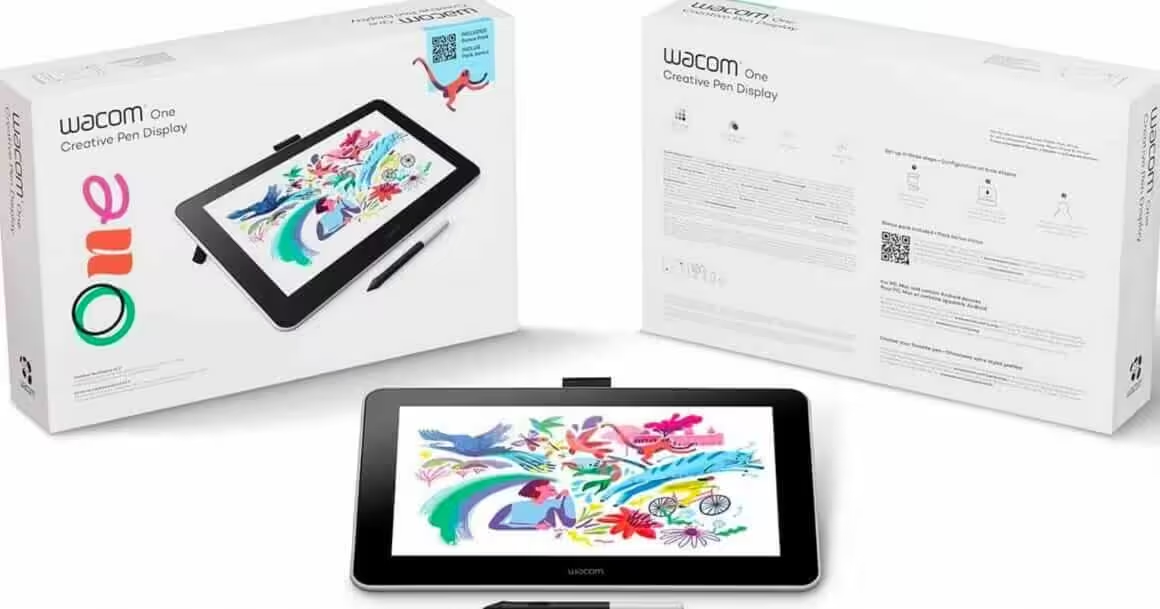
The Wacom Intuos is the go-to recommendation for anyone buying a first pen tablet for teaching. It comes in two sizes, small (6×3.7 inches) and medium (8.5×5.3 inches), and both deliver a smooth writing experience right out of the box. The small version starts around $39.95, while the Bluetooth-enabled model runs about $79.95.
The battery-free stylus tracks handwriting with 4,096 levels of pressure sensitivity, which means stroke thickness changes naturally based on how hard the pen presses down. It’s accurate enough for writing equations, labeling diagrams, and annotating slides. The tablet connects via USB cable or Bluetooth (on the wireless model), and it’s compatible with Windows, Mac, ChromeOS, and Android.
Wacom’s driver support is the most reliable in the industry, and the scratch-resistant writing surface holds up well over months of daily use. The downside? Only 4,096 pressure levels, while competitors like Huion and XP-PEN offer 8,192 at lower prices. For handwriting and teaching, though, that difference won’t matter much. The real value here is the dependability: plug it in, install the driver, and it works without fuss.
One thing worth noting: the small model is compact enough for a crowded desk, but teachers who draw detailed diagrams (biology, chemistry) should spring for the medium size. The extra surface area makes a noticeable difference.
VEIKK VK1200
Best for: Teachers who want a built-in screen without spending Wacom prices.
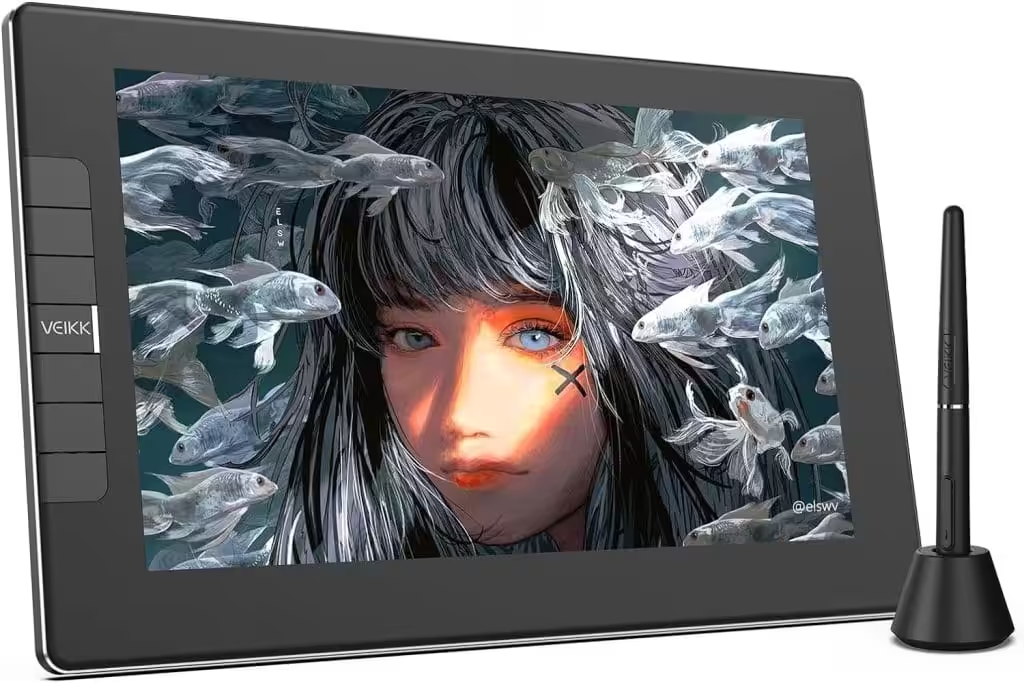
The VEIKK VK1200 is a pen display with a full HD 11.6-inch screen. Writing happens directly on the display, which completely removes the hand-eye coordination learning curve that screenless tablets require. The V2 version retails around $209.99 on the official VEIKK store, though Amazon pricing often runs lower.
It features a fully laminated display with anti-glare glass, which cuts down on parallax (the gap between where the pen touches and where the line appears). The battery-free pen supports 8,192 levels of pressure sensitivity and 60-degree tilt recognition. Six customizable shortcut keys line the side for quick access to common actions like undo, zoom, and eraser toggle.
The honest downsides: the 11.6-inch screen can feel cramped for teachers who write long equations or detailed diagrams. Color accuracy sits around 72% NTSC, which is fine for teaching but not for professional design work. And it requires a computer connection to function, so there’s no standalone use. Still, for the price, it’s the most affordable way to get a pen display for teaching. It also comes with two pens, so there’s always a backup ready.
XP-PEN Deco 03
Best for: Teachers who need a large writing area at a mid-range price.
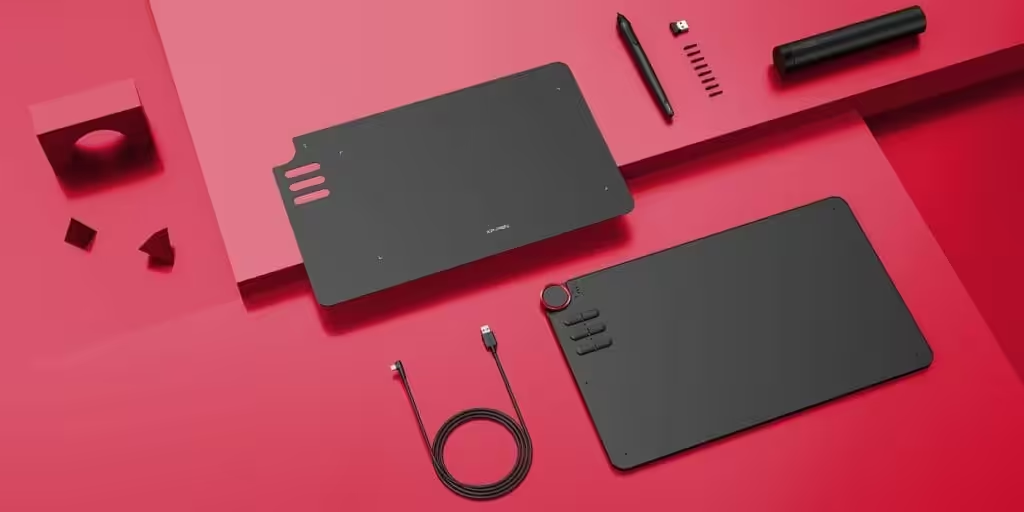
The XP-PEN Deco 03 hits a solid balance between size, accuracy, and price at around $59.99. Its 10×5.62-inch writing area is nearly twice as large as the Wacom Intuos small model, giving plenty of room for detailed diagrams, multi-step equations, and annotated slides.
The standout feature is a multi-function red dial that can be mapped to zoom, scroll, brush size, or other shortcuts, which is surprisingly handy during live classes. Six additional shortcut keys line the left side. The battery-free P05 stylus offers 8,192 levels of pressure and connects via 2.4G wireless or USB cable. At just 8mm thin, it slips easily into a laptop bag.
The trade-offs: the wireless USB dongle is small and easy to lose (tape it to the tablet when not in use). Mac users sometimes report driver quirks, though updates have improved compatibility over time. There’s no built-in screen, so there’s a learning curve for anyone new to screenless tablets. Four corner lights mark the active writing area, which helps in dim rooms but can be distracting in dark environments.
Wacom One
Best for: Full-time online teachers who want the most natural writing experience.
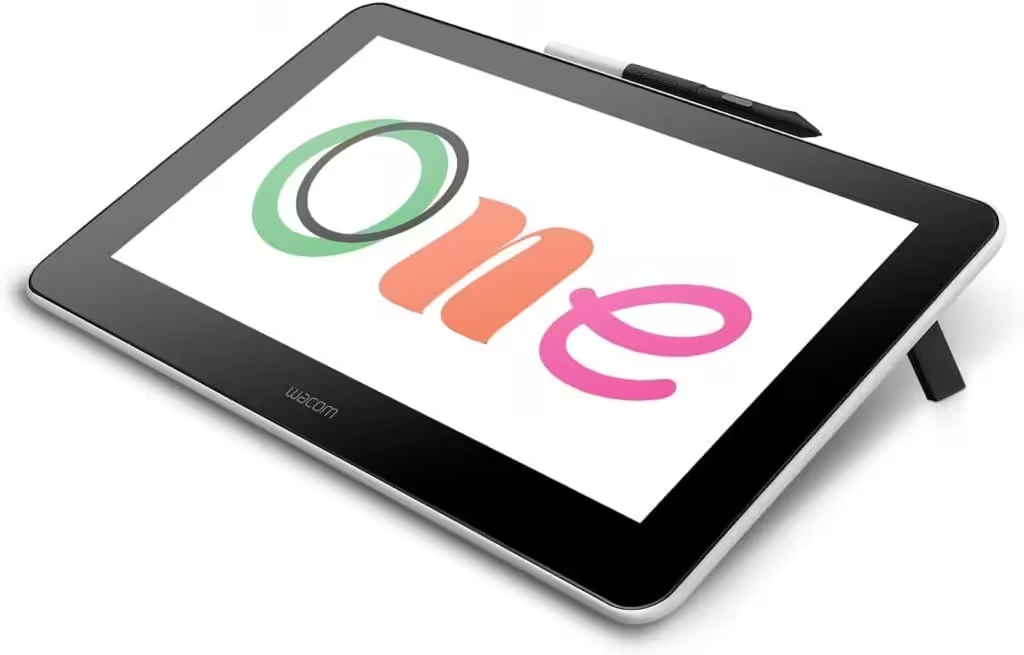
With screenless tablets, the pen moves on the tablet but handwriting appears on a separate monitor. That disconnect takes getting used to. The Wacom One display pen tablet eliminates this by letting users write directly on its built-in 13.3-inch Full HD screen. For teachers who run online classes daily, it’s worth the investment at around $399.95.
The 13.3-inch screen provides plenty of room for writing equations, annotating PDFs, and drawing diagrams. The surface has a paper-like texture, so the stylus doesn’t feel slippery. A matte anti-glare coating cuts down on reflections, and the included foldable stand lets the tablet angle from flat to about 19 degrees. It’s compatible with Windows, Mac, Chromebook, and select Android devices.
The downsides are real, though. At roughly $400, it costs 10x more than budget screenless tablets. The pen offers only 4,096 pressure levels (competitors match or beat this at half the price). There are no shortcut buttons on the device itself, which means relying on keyboard shortcuts. And the 3-in-1 cable setup is bulky. But for anyone teaching 3+ hours a day online, the direct-on-screen writing experience reduces fatigue and makes handwriting noticeably cleaner.
Huion Inspiroy Dial Q620M
Best for: Teachers who want wireless freedom and quick-access shortcut controls.
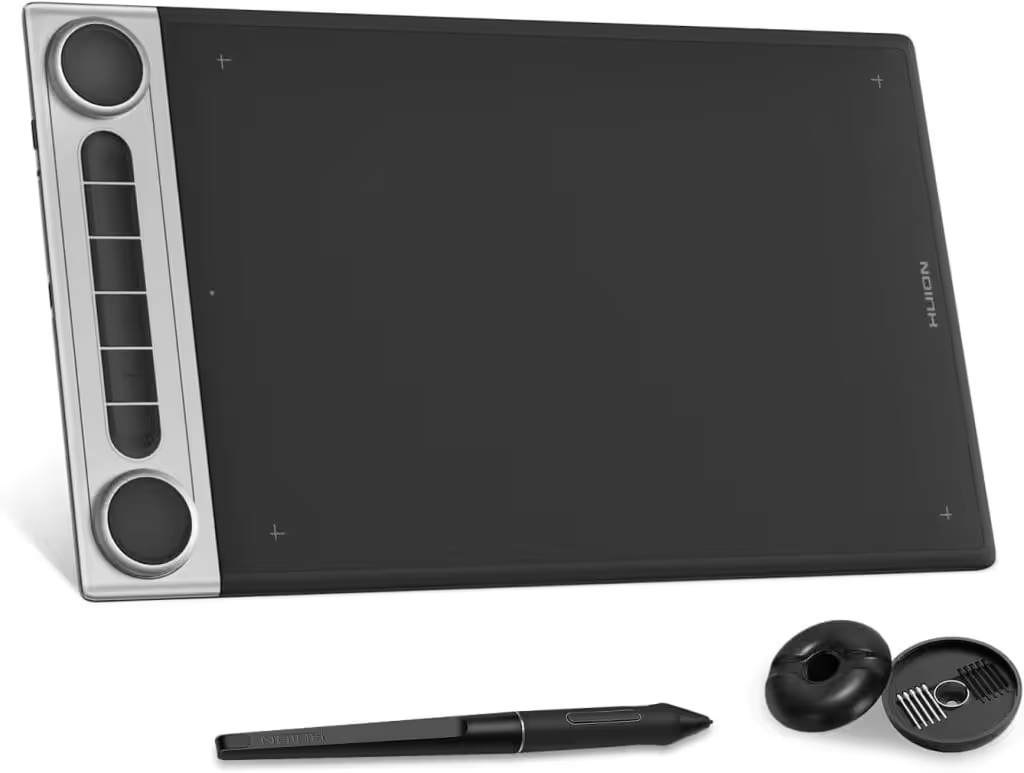
This pen tablet from Huion delivers one of the best feature-to-price ratios in the category at around $89. The 10.5×6.5-inch working area is one of the largest available in this price range, and it connects wirelessly via a USB adapter or through a standard USB cable.
Eight programmable buttons line the left side for shortcuts like undo, redo, and zoom. The standout feature is the physical dial in the top-left corner. Spin it to adjust volume, pen size, brush opacity, or eraser size mid-class without touching the keyboard. For teachers who switch between writing and drawing tools frequently, this saves a surprising amount of time.
The pen offers 8,192 pressure levels with tilt support, and the tablet works with Windows, Mac, and Android. At 666g and 8mm thin, it’s portable enough for teachers who move between classrooms or home offices. The downside: wireless mode introduces a tiny amount of latency that most people won’t notice, but precision-sensitive users might. There’s also no built-in screen, so the hand-eye coordination learning curve still applies. Budget about a week of regular use to adjust.
HUION Inspiroy Ink H320M
Best for: Teachers who also want a standalone LCD notepad for offline note-taking.
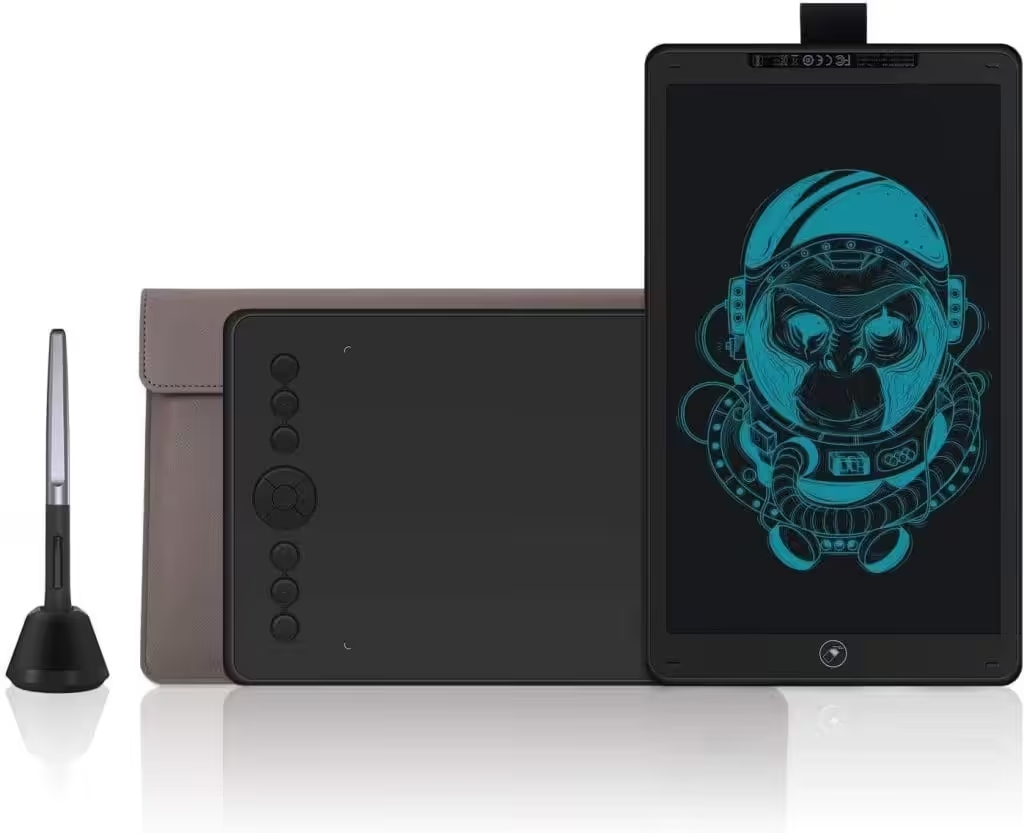
This is a two-in-one tablet that does something none of the others on this list can. The Huion Inspiroy Ink has two writing surfaces. On top, there’s a 9×5.6-inch digital pen area that connects to a computer for teaching. On the back, there’s an LCD writing pad (10.2×6.2 inches) that runs on a button cell battery. No computer needed for the LCD side. The tablet runs around $59.99.
The digital pen side supports 8,192 levels of pressure sensitivity with tilt recognition, and eleven programmable buttons provide quick access to common tools. Anti-slip rubber pads keep it steady on the desk. A sleeve bag comes included, which is a nice touch for teachers who carry it between locations.
The catch: the LCD writing pad on the back is a basic erasable notepad. It doesn’t save notes digitally, can’t transfer handwriting to a computer, and erases everything with one button press. Think of it as a reusable scratch pad for jotting lesson notes, student reminders, or quick calculations. The digital pen area (9×5.6 inches) is also smaller than competing tablets in this price range. And there’s no wireless option, so it’s USB-only.
One by Wacom
Best for: Teachers who want a simple, affordable Wacom without extra buttons or features.
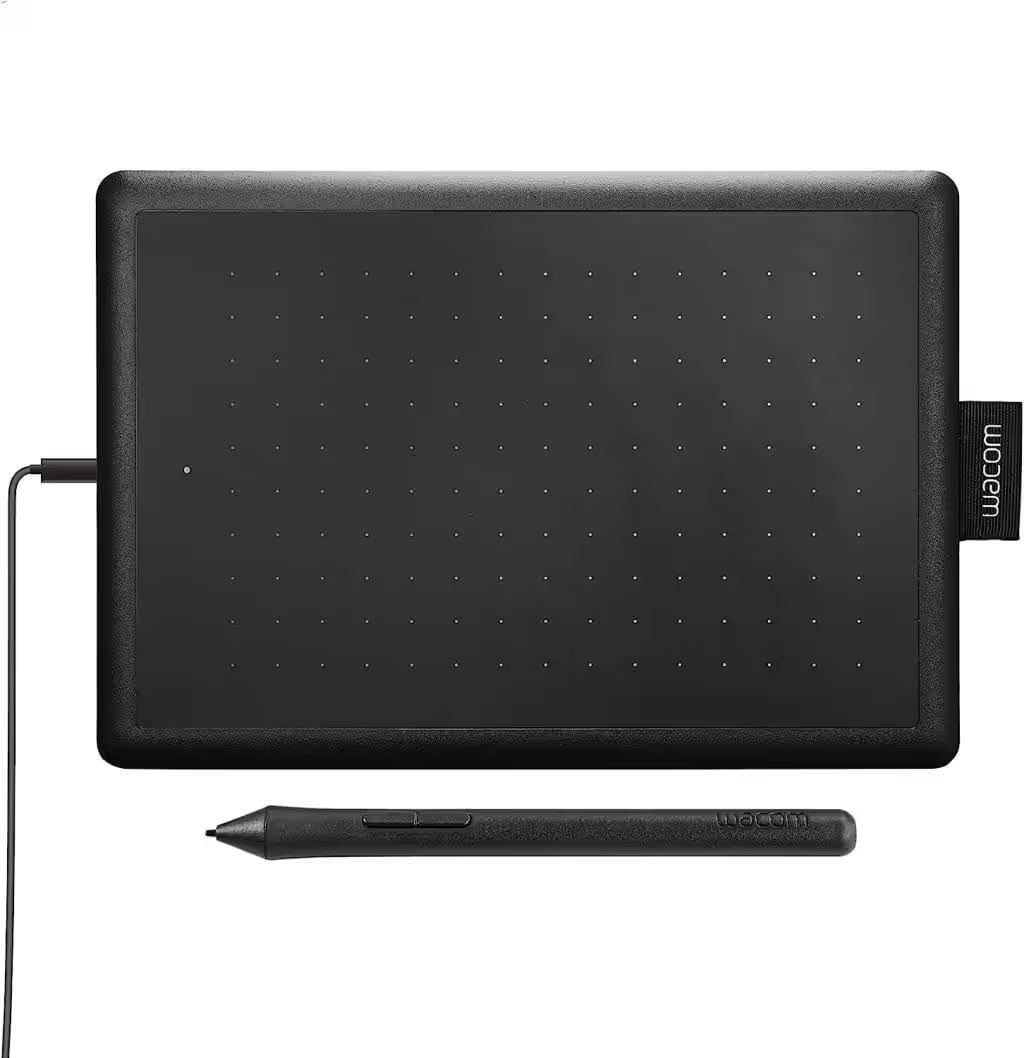
Note: Wacom One and One by Wacom are two different products.
For teachers who want a simple, reliable tablet from a trusted brand without all the extra features, this is it. Think of it as a stripped-down Wacom Intuos. It’s available in two sizes, small (6×3.7 inches) and medium (8.5×5.3 inches), and two colors: red and black. The small version starts around $29.95, making it one of the cheapest Wacom tablets available.
The design is intentionally minimal: no dials, no shortcut buttons, no wireless connectivity. Plug in the USB-A cable, install the driver, and start writing. The battery-free pen offers 2,048 levels of pressure sensitivity, which is lower than the 8,192 levels on Huion and XP-PEN tablets, but still more than enough for handwriting and basic annotations.
The trade-offs are clear. There’s no Android support, so it won’t work with a phone or tablet. No wireless means a cable on the desk at all times. And 2,048 pressure levels means less nuance in line weight, though most teachers won’t notice unless they’re doing detailed illustrations. It is, however, fully compatible with Chromebook, Windows, and Mac, and the premium scratch-resistant surface holds up well to daily use. For basic math annotations, slide markup, and quick diagrams, it gets the job done without complexity.
XP Pen Star G430S
Best for: Teachers on a tight budget who just need basic pen input.
The XP-PEN Star G430S is the cheapest pen tablet on this list at around $29.99, and it still writes well. All the electronics sit on the left side, which makes the writing surface just 2mm thick. The battery-free stylus has two buttons for switching between pen and eraser modes, and it supports 8,192 levels of pressure sensitivity, which is remarkable at this price point.
The obvious downside is the 4×3-inch working area. It’s small. Writing long equations means running out of space quickly, and detailed diagrams aren’t practical on a surface this size. The cable is also non-detachable, so a damaged cable means replacing the whole tablet. There are no shortcut buttons, no wireless option, and no tilt support.
But here’s the thing: for teachers who mostly write short equations, annotate a few slides, and jot quick notes during class, this tablet does exactly what it needs to at a price that’s hard to argue with. It’s compatible with Windows and Mac, takes about 5 minutes to set up, and the stylus is responsive enough for clean handwriting. It won’t replace a whiteboard for a full hour of detailed diagrams, but for quick annotations during a 30-minute Zoom session, it’s more than adequate.
Huion H610PRO Pen Tablet
Best for: Science and biology teachers who draw detailed diagrams regularly.
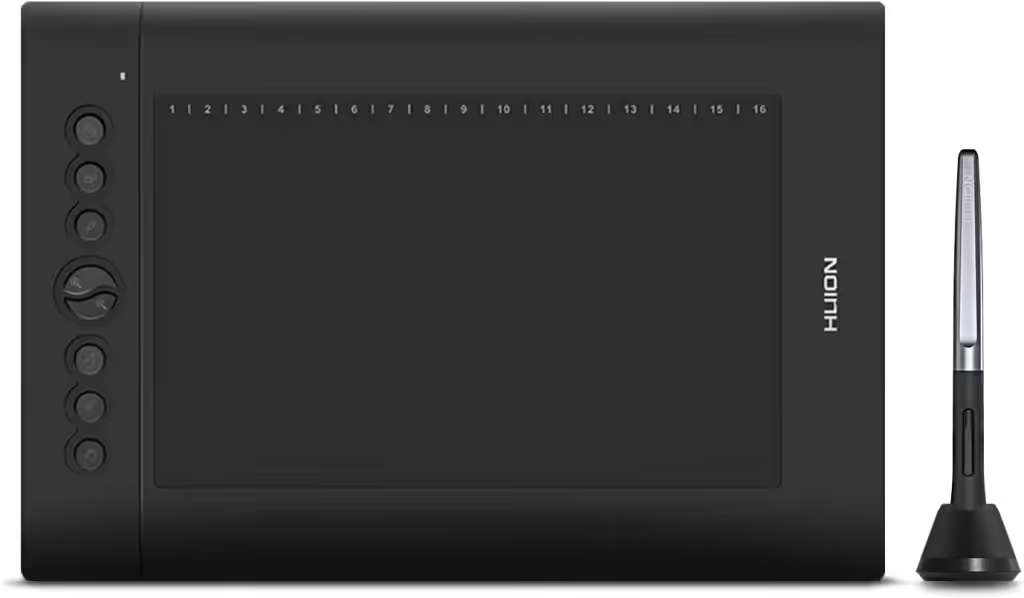
The Huion H610PRO V2 has one of the largest drawing surfaces on this list at 10×6.25 inches. For science and biology teachers who draw cell diagrams, chemical structures, and labeled illustrations during class, the extra space makes a real difference. The tablet runs around $49.99, which makes it one of the best value options for larger-area tablets.
The V2 version supports 8,192 levels of pressure sensitivity with tilt function, so lines transition smoothly from thin to thick. Eight customizable shortcut keys line the left side, and 16 additional soft keys sit along the top for even more shortcuts. The layout works equally well for left and right-handed users, and it’s compatible with Windows, Mac, and Android.
The downsides: it’s USB-only, so no wireless option. The pen build quality is functional but feels less premium than Wacom’s offerings. Driver updates aren’t as frequent as Wacom’s either, which can occasionally cause compatibility issues after OS updates. The design also feels a bit dated compared to newer Huion models. But for teachers who prioritize drawing space above everything else, it’s hard to beat the combination of a 10×6.25-inch area, tilt support, and 8,192 pressure levels at this price.
Wacom Cintiq Pro 16″
Best for: Professionals who also teach and want the highest-end pen display available.
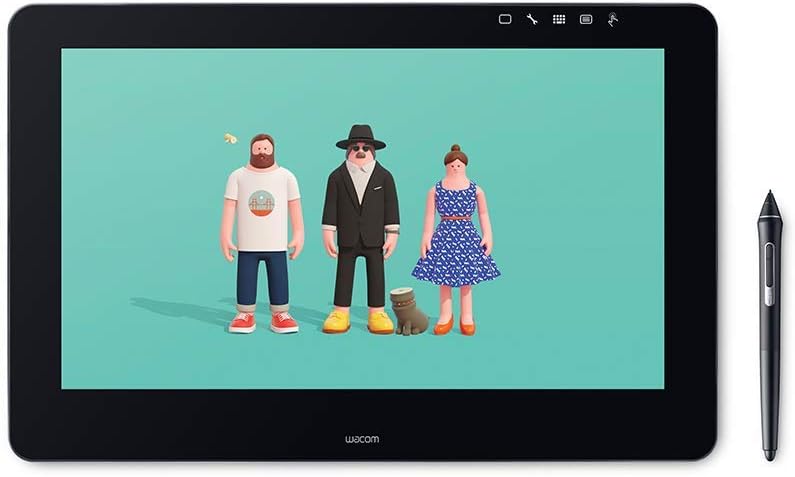
The Wacom Cintiq Pro 16 is the professional-grade option on this list, priced at roughly $1,499.95 for the 2021 4K model (DTH167K0A). It features a 15.6-inch 4K display with 98% Adobe RGB color accuracy, the Pro Pen 2 with 8,192 levels of pressure sensitivity, and multi-touch gesture support. Drawing and writing directly on this screen feels remarkably natural.
It’s compatible with programs like Corel Painter, Adobe Illustrator, Autodesk Sketchbook, and Photoshop, making it a genuine multi-use tool for teachers who also do design or illustration work. The etched glass surface provides pen friction that closely mimics paper, and the multi-touch functionality allows intuitive gestures like pinch-to-zoom and rotate directly on the screen.
Also read: Best Kindle Alternatives
The honest truth: this tablet is overkill for most online teachers. At nearly $1,500, it costs more than some teachers’ entire tech setup. It’s heavy, requires a computer connection via 3-in-1 cable, and takes up significant desk space. It makes sense for art professors, design instructors, or professionals who teach part-time and need a high-end display for their primary work. For teachers who just need to write equations and annotate slides, any of the sub-$100 options on this list will serve better.
Which Pen Tablet Should You Buy?
Here’s how to narrow it down. For a first tablet that’s dependable and well-supported, the Wacom Intuos is the safest pick. It works on Windows, Mac, and Chromebook, connects via USB or Bluetooth, and Wacom’s driver support is the most reliable in the industry.
For teachers who don’t want to deal with the learning curve of writing on a tablet while looking at a separate screen, a pen display is the better choice. The VEIKK VK1200 is the most affordable option with a built-in screen. The Wacom One costs more but delivers a better writing feel and longer-term durability.
On a tight budget? The XP-PEN Star G430S costs less than a textbook and still gets the job done for basic math and note-writing. Just know the drawing area is small (4×3 inches), so it’s not great for detailed diagrams.
Bigger isn’t always better with pen tablets. Some teachers prefer a compact surface because it requires less arm movement. If there’s uncertainty about size, starting with a medium option and adjusting from there is the safest approach.