
Top Online Marketing Strategies That Actually Work in 2026
Most online marketing advice recycles the same generic tips: “post on social media,” “do SEO,” “build an email list.” Thanks, we knew that in 2015. The question isn’t which channels exist. It’s which strategies actually drive results with the budget and team you have right now.
I’ve managed marketing campaigns for clients across SaaS, e-commerce, education, and professional services. The strategies that moved the needle weren’t always the trendy ones. They were the ones executed consistently with clear measurement. A boring email sequence that converts at 3% beats a viral TikTok that generates zero revenue.
Here are the online marketing strategies that actually work in 2026, with realistic expectations for each.
Search Engine Optimization (SEO)
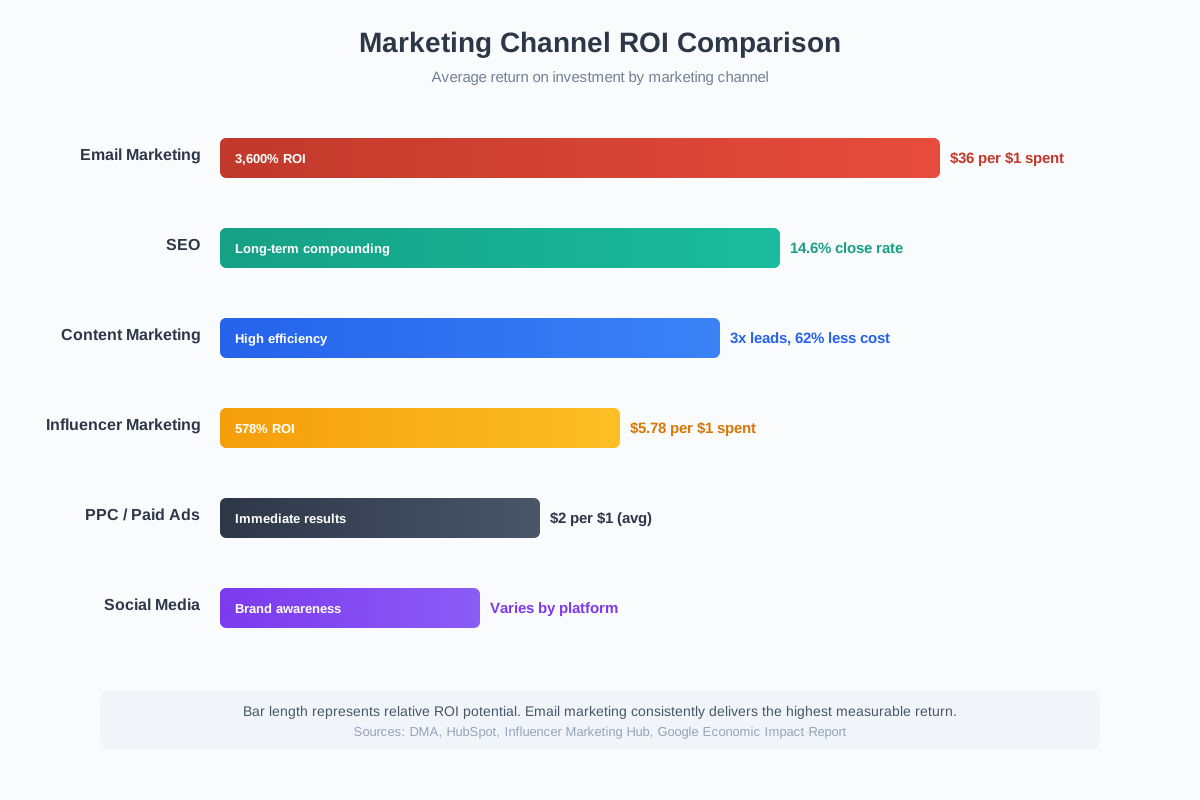
SEO remains the highest-ROI marketing channel for most businesses. Organic search drives 53% of all website traffic and has a 14.6% close rate compared to 1.7% for outbound leads. The catch: SEO is a long game. Expect 4-6 months before seeing meaningful results from new content.
What’s changed in 2026:
- AI Overviews: Google’s AI-generated answers now appear for 30%+ of searches. This means fewer clicks for informational queries but higher-quality clicks for commercial intent. Optimize for both traditional SEO and GEO (Generative Engine Optimization)
- Experience signals: Google’s E-E-A-T (Experience, Expertise, Authoritativeness, Trustworthiness) now emphasizes first-hand experience. “I tested this” beats “experts say” in rankings
- Topical authority: Ranking for competitive terms requires comprehensive coverage of a topic cluster, not just one optimized page. Build content hubs around your core topics
- Core Web Vitals: INP (Interaction to Next Paint) replaced FID in March 2024 as a ranking factor. Page speed and responsiveness matter more than ever
Essential SEO tools: Semrush for keyword research and competitive analysis ($129.95/month), Google Search Console (free) for performance monitoring, and Surfer SEO for content optimization. For a deeper dive, read the full digital marketing strategy guide.
Before creating new content, update your existing pages. Refreshing old content with current data, better structure, and improved targeting typically produces results faster than publishing new pages. I’ve seen traffic increases of 50-200% just from updating articles that had dropped in rankings.
Content Marketing
Content marketing costs 62% less than traditional marketing and generates 3x as many leads. But “content marketing” in 2026 doesn’t just mean blog posts. It means a strategic mix of formats distributed across channels where your audience actually spends time.
The content marketing stack that works:
- Pillar content: 3,000-5,000 word comprehensive guides that establish topical authority. These are your SEO anchors and link magnets
- Supporting content: Shorter articles (1,500-2,500 words) that cover subtopics and link back to pillar pages. This builds topic clusters that dominate search results
- Video content: YouTube for long-form education, Reels/Shorts/TikTok for discovery and brand awareness. Video isn’t optional anymore. It’s expected
- Email newsletters: Your owned audience. Social media algorithms can change overnight. Your email list can’t be taken away. Tools like ConvertKit make segmentation and automation accessible for creators and small businesses
- Repurposing: One blog post becomes 5-10 social media posts, a newsletter section, a YouTube script, and a carousel. Create once, distribute everywhere
For content marketing tools and workflows, I recommend building a content calendar in Monday.com with clear deadlines, assigned owners, and distribution checklists.
Social Media Marketing
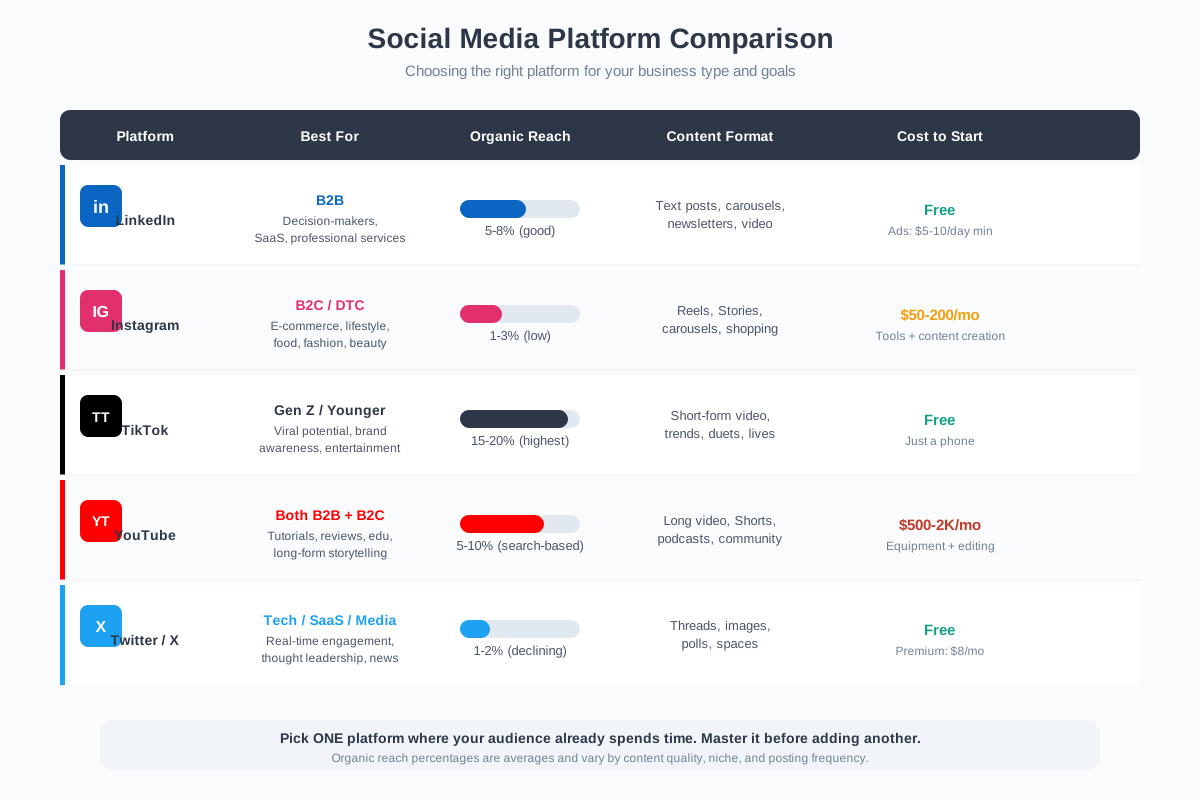
Social media in 2026 is pay-to-play for reach but still organic-first for trust. The average organic reach on Facebook is under 5%. Instagram’s is around 7-9%. LinkedIn organic reach remains strong at 8-15% for personal profiles. The platforms want you to pay for distribution, so your organic strategy needs to be exceptional to break through.
Platform-specific strategies that work:
- LinkedIn: The best B2B organic channel. Post 3-5 times per week. Personal profiles outperform company pages 10:1. Carousel documents and text-with-image posts get the highest engagement
- Instagram: Reels drive discovery. Carousels drive engagement. Stories drive relationship. Use all three. Hashtag strategy matters less than ever. Content quality and consistency matter more
- TikTok: The fastest growth channel for B2C and increasingly B2B. The algorithm rewards content quality over follower count. New accounts with great content can go viral immediately. Read more about TikTok marketing strategies
- Twitter/X: Still valuable for thought leadership and real-time engagement in tech, media, and politics. Thread format performs well. Controversial (but substantiated) takes get the most reach
- YouTube: The most durable social platform for long-term traffic. Videos published years ago still generate views and leads. Invest in evergreen content
The biggest shift: community over broadcasting. Build engaged communities (Discord, Facebook Groups, LinkedIn Groups) rather than chasing follower counts. A 1,000-person engaged community converts better than 100,000 passive followers.
Email Marketing
Email delivers $36 for every $1 spent. That’s not a typo. It’s the highest-ROI marketing channel, and it’s been that way for years. The reason: you own the list, you control the distribution, and you can segment and personalize at scale.
Email strategy in 2026:
- Welcome sequences: 4-7 emails that introduce new subscribers to your brand, deliver immediate value, and make a first offer. These generate 320% more revenue per email than promotional emails
- Segmentation: Stop blasting your entire list. Segment by behavior (what they clicked, what they bought), interest (which lead magnet they downloaded), and engagement level (active, dormant, new)
- Automation: Cart abandonment emails recover 5-10% of abandoned carts. Post-purchase sequences drive reviews and repeat purchases. Birthday and anniversary emails see 2-3x open rates. Set these up once and they run forever
- AI personalization: Tools like ConvertKit now offer AI subject line optimization, send-time optimization, and content recommendations based on subscriber behavior
- Deliverability: None of this matters if emails land in spam. Authenticate your domain (SPF, DKIM, DMARC), maintain list hygiene (remove inactive subscribers quarterly), and monitor your sender reputation
Avoid common email marketing mistakes that tank open rates and trigger spam filters.
Pay-Per-Click (PPC) Advertising
PPC delivers immediate, measurable results. Unlike SEO (which takes months) or content marketing (which compounds over time), paid ads can generate leads today. The challenge: costs keep rising. Average Google Ads CPC increased 10% year-over-year in most industries. You need tight targeting and strong landing pages to make the math work.
PPC strategies that maximize ROI:
- Bottom-of-funnel keywords: Target high-intent search terms (product comparisons, pricing queries, “best [product] for [use case]”). These cost more per click but convert at 5-10x the rate of informational keywords
- Retargeting: Show ads to people who visited your site but didn’t convert. Retargeting ads have 10x the click-through rate of standard display ads. Run retargeting on Google, Meta, and LinkedIn
- Landing page alignment: Every ad group should point to a dedicated landing page that matches the ad’s promise. Sending PPC traffic to your homepage is like paying for a billboard that points to a maze
- AI-powered bidding: Google’s Performance Max and Meta’s Advantage+ use AI to optimize bids, placements, and creative in real-time. They often outperform manual bidding for campaigns with sufficient conversion data
- Negative keywords: The most overlooked PPC optimization. Regularly review search terms and add irrelevant queries as negatives. This alone can reduce wasted spend by 15-30%
If you’re spending $1,000+/month on ads and sending traffic to your homepage or generic product pages, you’re wasting 40-60% of your budget. Build dedicated landing pages for each ad campaign with one clear CTA, matching messaging, and fast load times. A $200 landing page can double your PPC conversion rate overnight.
Influencer Marketing
Influencer marketing generates $5.78 for every $1 spent on average. But the landscape has shifted dramatically. Mega-influencers (1M+ followers) are losing effectiveness. Micro-influencers (10K-100K followers) now drive the best ROI because their audiences are more engaged and their endorsements feel more authentic.
What works in influencer marketing now:
- Micro and nano influencers: 10K-50K followers with 3-8% engagement rates. They charge $200-$2,000 per post vs $10,000-$100,000+ for macro influencers. Better ROI, more authentic
- Long-term partnerships: One-off sponsored posts feel transactional. 3-6 month ambassador relationships feel genuine. The audience sees repeated, authentic use over time
- Performance-based deals: Negotiate affiliate commission structures instead of flat fees. The influencer earns more if they actually drive sales. Aligns incentives perfectly
- User-generated content rights: The real value of influencer content isn’t just the organic post. It’s getting rights to use their content in your paid ads, email campaigns, and website. UGC-style ads outperform brand-produced ads by 4x on Meta
Video Marketing
91% of businesses use video as a marketing tool in 2026. It’s no longer a differentiator. It’s table stakes. The question isn’t whether to use video but which formats and platforms to prioritize.
Video formats by purpose:
- Short-form (15-90 seconds): Reels, Shorts, TikTok. Best for awareness and discovery. Algorithm-driven distribution means content quality matters more than follower count
- Mid-form (2-15 minutes): YouTube tutorials, product demos, explainers. Best for consideration and trust-building. These rank in search and generate traffic for years
- Long-form (15+ minutes): Webinars, interviews, deep dives. Best for conversion and lead generation. Gate behind email capture for lead gen or publish openly for authority
- Live video: LinkedIn Live, Instagram Live, YouTube Live. Best for engagement and community. Live gets 3x more engagement than pre-recorded on most platforms
You don’t need expensive equipment. A smartphone, a $50 microphone, and natural lighting produce professional-enough video for social media. Invest in good audio first. Viewers forgive mediocre video quality but abandon content with bad audio immediately.
AI and Marketing Automation
AI isn’t just another marketing channel. It’s reshaping every channel. In 2026, AI handles content drafts, ad optimization, customer segmentation, chatbot conversations, predictive analytics, and personalization at scales that were impossible 3 years ago.
Where AI delivers the most marketing value:
- Content creation assistance: AI drafts social posts, email copy, ad variations, and blog outlines. Human editing is still essential, but AI cuts first-draft time by 60-80%
- Ad optimization: Meta’s Advantage+ and Google’s Performance Max use AI to optimize creative, targeting, and bidding simultaneously. For accounts with sufficient data, AI bidding outperforms manual management
- Chatbots and conversational marketing: AI chatbots handle 70% of customer queries without human intervention. Tools like Intercom, Drift, and ChatGPT-powered bots qualify leads, answer questions, and book meetings 24/7
- Predictive analytics: AI identifies which leads are most likely to convert, which customers are at risk of churning, and which products to recommend. This moves marketing from reactive to proactive
- Personalization at scale: Dynamic content that changes based on visitor behavior, preferences, and history. Email subject lines, website content, product recommendations, and ad creative can all be personalized automatically
The businesses getting the best results from AI aren’t the ones trying to automate everything. They’re the ones using AI for repetitive tasks (data analysis, first drafts, reporting) while keeping humans for strategy, creativity, and relationship-building. AI does the 80% of grunt work so your team can focus on the 20% that requires judgment.
Data Analytics and Measurement
Marketing without measurement is guessing. And in 2026, the tools for measurement have both improved and become more complex. The death of third-party cookies, iOS privacy changes, and the shift to server-side tracking mean that the measurement stack you used in 2022 probably doesn’t work anymore.
What to measure and how:
- Attribution: Multi-touch attribution models (not last-click) give you a realistic picture of how channels work together. Google Analytics 4 supports data-driven attribution natively
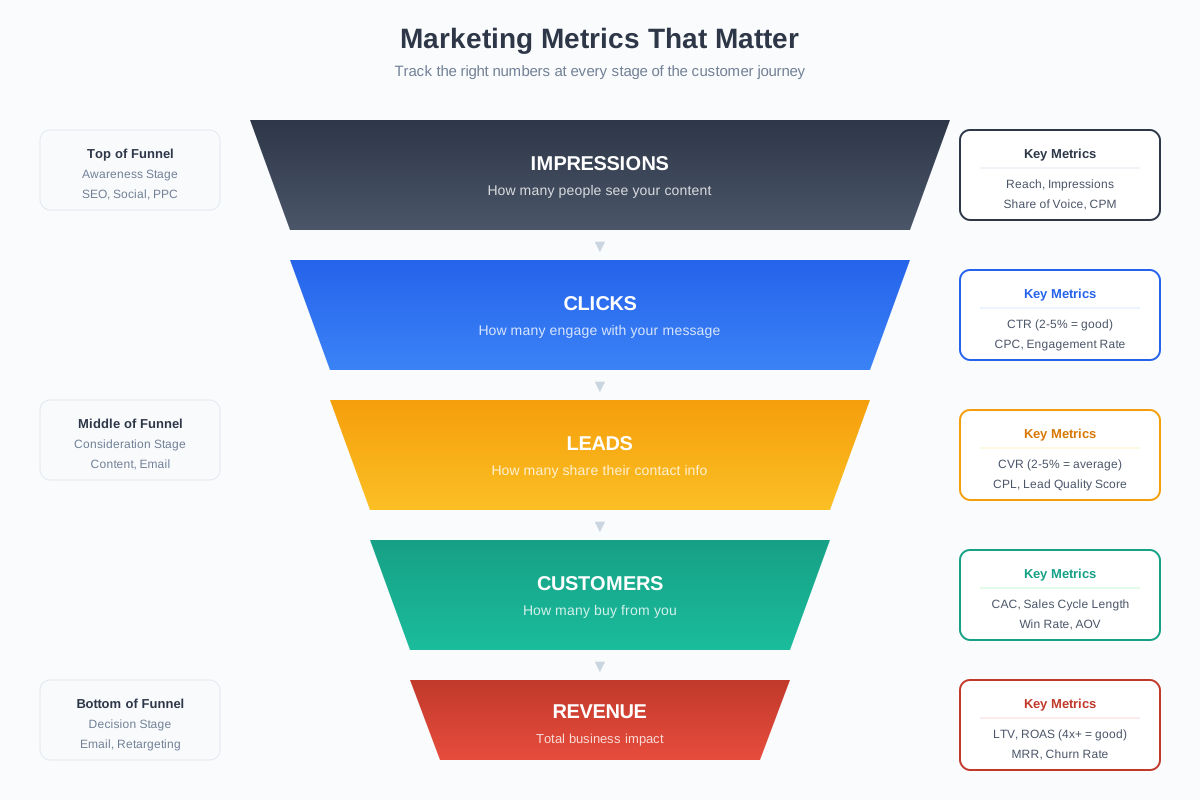
- Customer Acquisition Cost (CAC): Total marketing spend divided by new customers acquired. Track this per channel. If any channel’s CAC exceeds your customer lifetime value (LTV), shut it down or optimize aggressively
- Return on Ad Spend (ROAS): Revenue generated per dollar of ad spend. Aim for 3:1 minimum for sustainable growth. Track this per campaign, not just per platform
- Leading indicators: Don’t just track revenue (lagging). Track email subscribers, demo requests, content engagement, and pipeline value (leading) to predict future revenue
- First-party data: Build your own data assets: email lists, CRM data, survey responses. As third-party tracking degrades, first-party data becomes your competitive moat
For a structured approach to assessing your marketing strategies and finding what’s working versus what to cut, focus on revenue contribution per channel, not vanity metrics like impressions or followers.
How to Choose the Right Strategies for Your Business
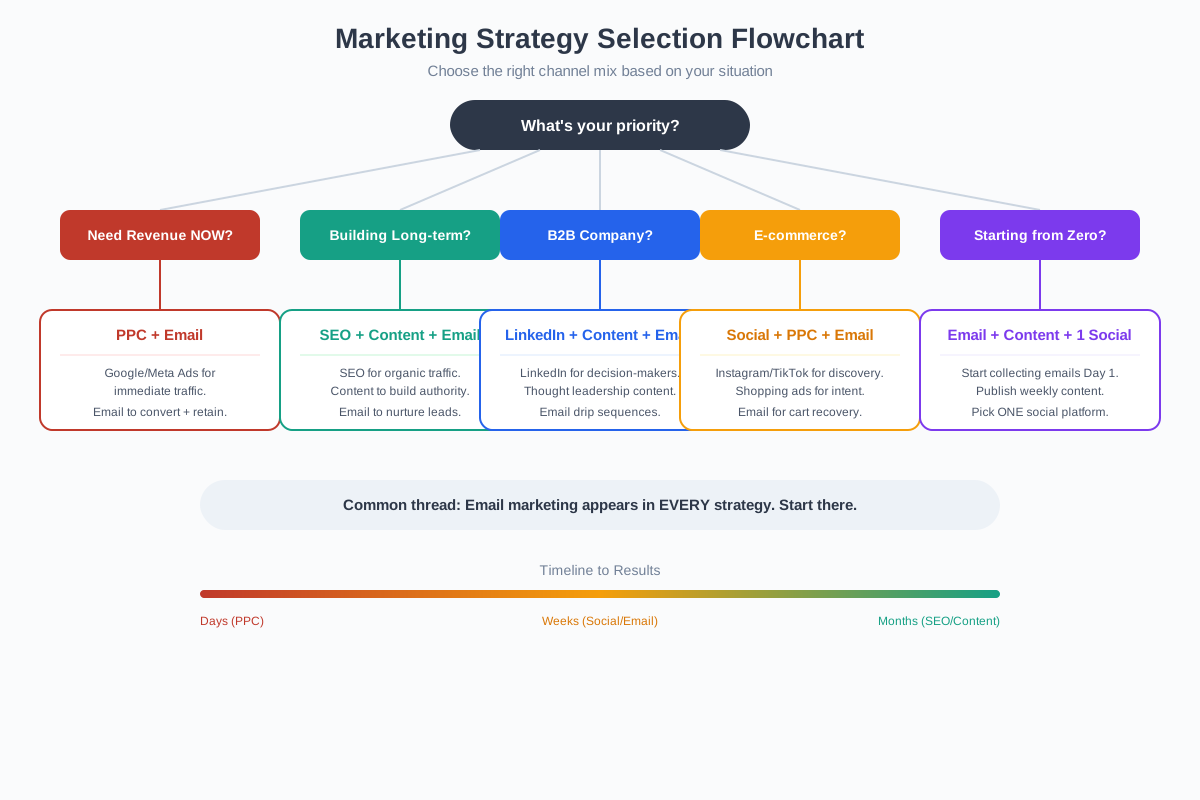
You can’t do all 10 strategies well. Not with a small team, not with a limited budget, not even with a large team. The businesses that win at marketing are the ones that pick 2-3 strategies, execute them excellently, and only add more channels once the current ones are profitable.
How to choose:
- If you’re starting from zero: Email marketing + content marketing + one social platform. Build owned audience (email), create assets that compound (content), and distribute where your audience already is (social)
- If you need revenue now: PPC + email marketing. Paid ads drive immediate traffic. Email converts and retains. This combination works for any business with a proven offer
- If you’re building for long-term: SEO + content marketing + email. The compounding trio. Takes 6-12 months to build momentum but creates a sustainable marketing engine that reduces your dependence on paid channels
- If you’re B2B: LinkedIn + content marketing + email + SEO. LinkedIn is where B2B buyers research. Content builds authority. Email nurtures leads through long sales cycles
- If you’re e-commerce: Social media (Instagram + TikTok) + PPC + email. Visual platforms drive discovery. PPC captures high-intent search. Email recovers abandoned carts and drives repeat purchases
Master the innovative marketing strategies for your specific business model, and remember: consistency beats perfection. A mediocre strategy executed consistently outperforms a brilliant strategy executed sporadically.
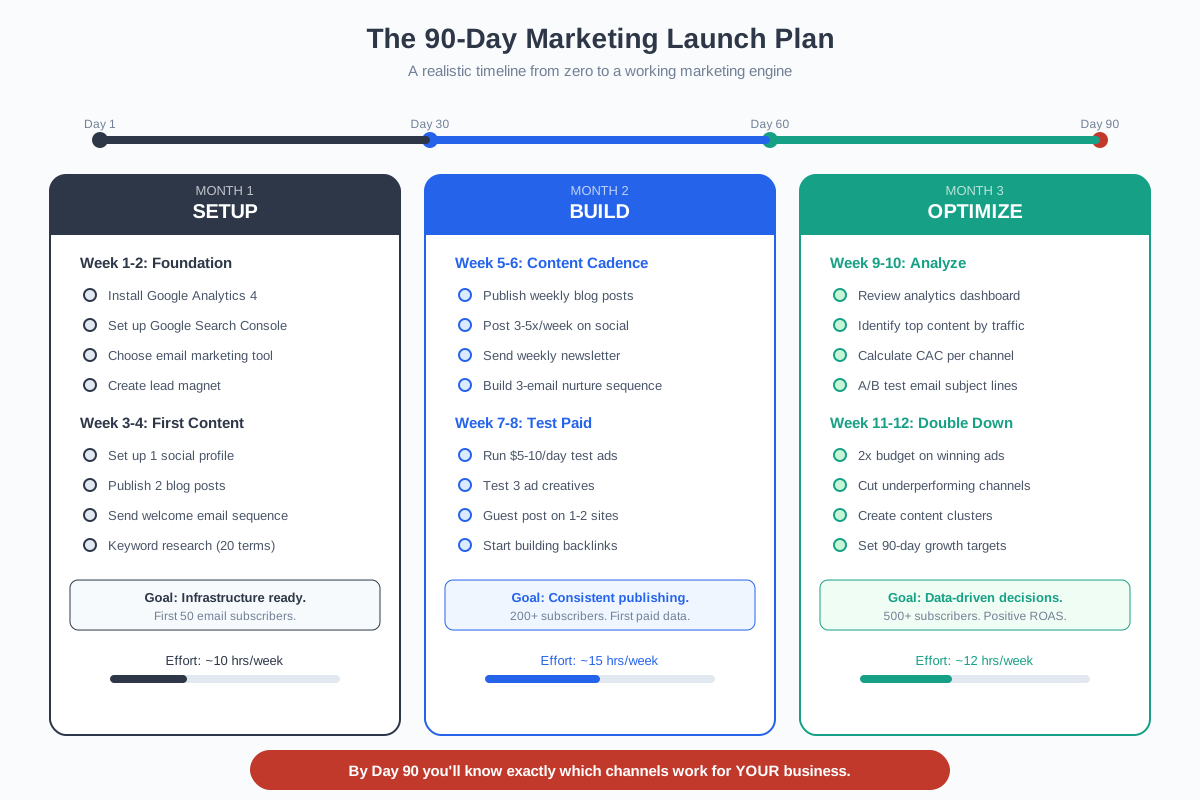
Give any marketing strategy 90 days before judging it. Most channels need time to build momentum: SEO needs crawling and indexing, social needs algorithm training, email needs list building, and content needs distribution. Switching strategies every month is the most expensive marketing mistake you can make.
Frequently Asked Questions
What is the most effective online marketing strategy?
It depends on your business model and timeline. For long-term ROI, SEO and content marketing deliver the highest returns because they compound over time. For immediate results, PPC advertising generates leads and sales from day one. For relationship-building and retention, email marketing has the highest ROI at $36 per $1 spent. Most successful businesses combine 2-3 strategies rather than relying on one channel.
How much should a small business spend on online marketing?
The SBA recommends 7-8% of gross revenue for businesses under $5 million in revenue. For growth-stage businesses, 12-20% is common. Start with a minimum of $500-$1,000/month for one channel (usually PPC or content marketing). Scale based on ROI. The key is tracking every dollar: if a channel returns $3+ for every $1 spent, increase the budget. If it’s under $2 return, optimize or cut.
Is social media marketing still worth it?
Yes, but with realistic expectations. Organic reach has declined on most platforms, so you need either excellent content (that earns algorithmic distribution), paid promotion, or both. LinkedIn remains the best organic B2B channel. TikTok and Instagram Reels still offer strong organic reach for quality short-form video. The key is choosing 1-2 platforms where your audience is most active rather than spreading thin across all of them.
How long does it take to see results from SEO?
Expect 4-6 months for new content to rank and generate meaningful traffic. Competitive keywords can take 12+ months. However, updating existing content that has dropped in rankings can produce results in 2-4 weeks. Technical SEO fixes (speed improvements, mobile optimization) can show ranking improvements within days. SEO is a long game, but once content ranks, it generates traffic for years with minimal maintenance.
What marketing tools are essential for small businesses?
At minimum: Google Analytics 4 (free, for website analytics), Google Search Console (free, for SEO monitoring), an email marketing platform (ConvertKit at $9/month or Mailchimp free tier), Canva (free, for visual content), and a social media scheduling tool (Buffer free tier or Later). As you grow, add Semrush for SEO research, a CRM like HubSpot (free tier), and a landing page builder.
How is AI changing online marketing?
AI is transforming every marketing channel. Content creation tools generate first drafts 60-80% faster. Ad platforms use AI for automated bidding and creative optimization. Chatbots handle customer queries 24/7. Predictive analytics identify high-value leads before they convert. Personalization engines customize website and email content for individual visitors. The businesses gaining advantage are using AI to handle repetitive tasks while focusing human effort on strategy and creativity.
Should I focus on organic or paid marketing?
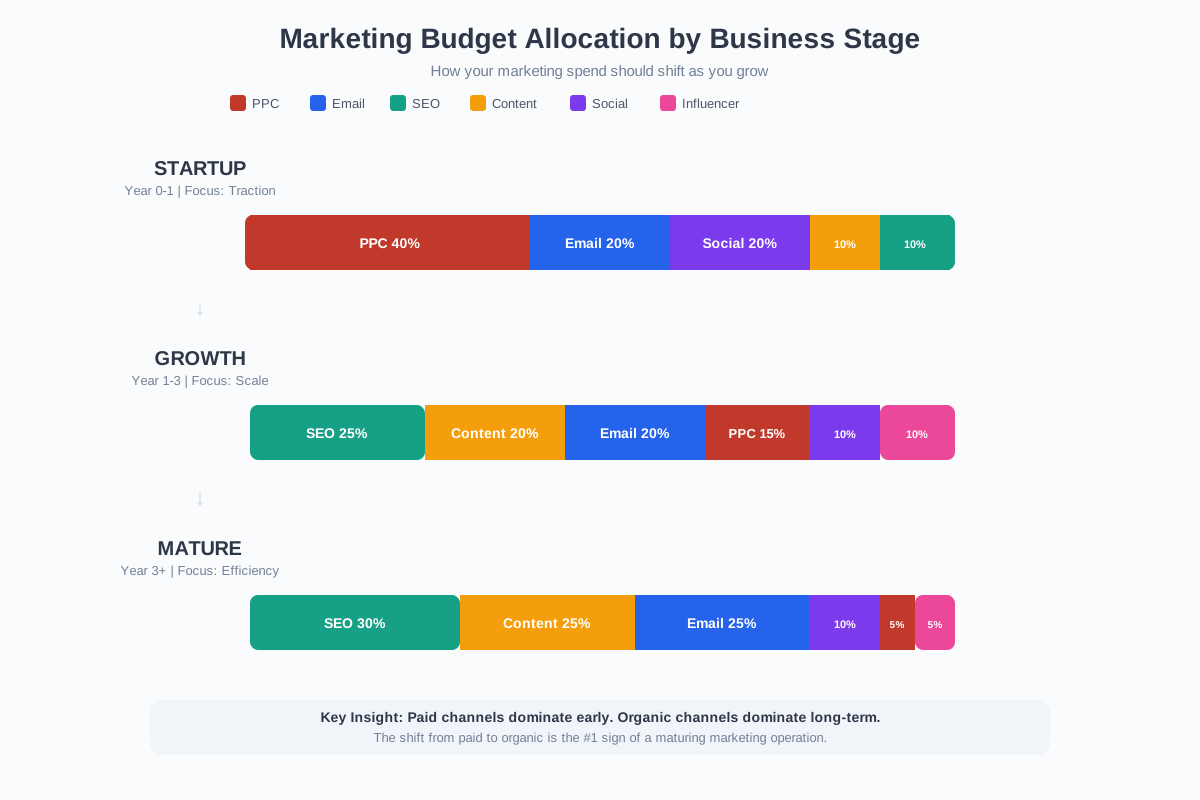
Both, but weight them based on your timeline. If you need revenue in the next 30 days, invest 70% in paid and 30% in organic. If you’re building for 6+ months, flip that ratio: 70% organic (SEO, content, email) and 30% paid. The ideal long-term mix uses paid to generate immediate cash flow while organic channels build compounding returns. Eventually, organic should provide 50-70% of your leads at near-zero marginal cost.
Disclaimer: This site is reader-supported. If you buy through some links, I may earn a small commission at no extra cost to you. I only recommend tools I trust and would use myself. Your support helps keep gauravtiwari.org free and focused on real-world advice. Thanks. - Gaurav Tiwari