
10 Best Books on Python Programming for Beginners
Looking for the best book to learn Python? Python is a translated, communal, object-oriented programming language. In recent years Python has become widely popular among programmers and has been incorporated in schools and colleges as a major language to learn. The primary reason for this is that Python includes modules, exceptions, and simple, hassle-free syntax, which makes the language very easy to incorporate.
A simple program, which may take 20 to 25 lines in C or C++, will only take 6-8 lines in Python. Thus, it is easier to use the language for real-life problems at the industrial level than syntax-restricted languages like C, C++, and Java.
Python also has interfaces to various system calls and window systems and is extensible in C or Cpp. That versatility is why finding a good book to learn Python is one of the smartest investments a new programmer can make. Python can also be used as an extension language where programmable interfaces are necessary. Python is a very efficient language and is highly portable too. It runs on many Unix variants such as macOS, Linux, and also on Windows.
Type out every code example instead of copy-pasting. Your brain processes code differently when your fingers are doing the typing. It takes longer but the concepts stick 3x faster. I’ve seen this pattern across hundreds of students.
As stated above, Python is widely popular nowadays. It is an important language that all programmers must know, and the language is quite beginner-friendly because it includes code that is easily read and understood. Python is highly essential for backend development and is the eBay choice if you opt for Web development.
Also, just so you know, the popular software companies like Google, Facebook, Instagram, Quora, Netflix, Dropbox, Spotify, and such are built extensively based on Python (though all of these platforms/software are built using multiple languages like C++, Python or Java, Python).
Best Book for Learning Python: Top Books for Beginners
After discussing all the advantages of Python, you must be curious about starting learning the programming language. Thus, we have brought you a compact but detailed list of the top 10 books for learning python for beginners and intermediate learners. These are the python best book options available in the market and are used widely by aspiring developers.
Here are the 10 best book for python picks for beginners:
Python: The Complete Reference
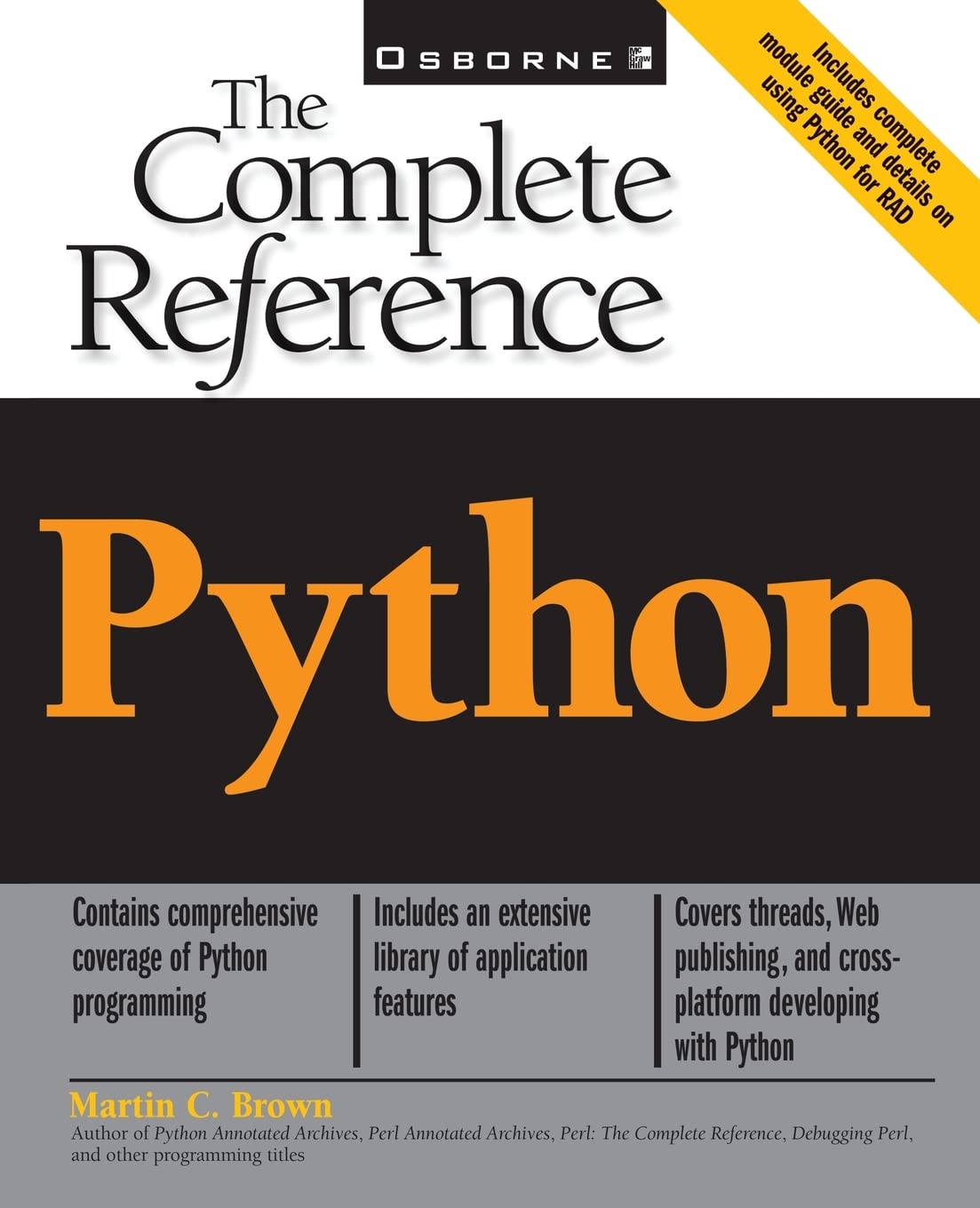
Python: The Complete Reference
- By Martin C. Brown, comprehensive reference guide
- Covers modules, advanced OOP classes, and application development
- Ideal for absolute beginners with zero coding experience
- Includes web development, multimedia, and AI project examples
- Three major sections: apps, web development, and multimedia
- Strong foundation for transitioning to other languages
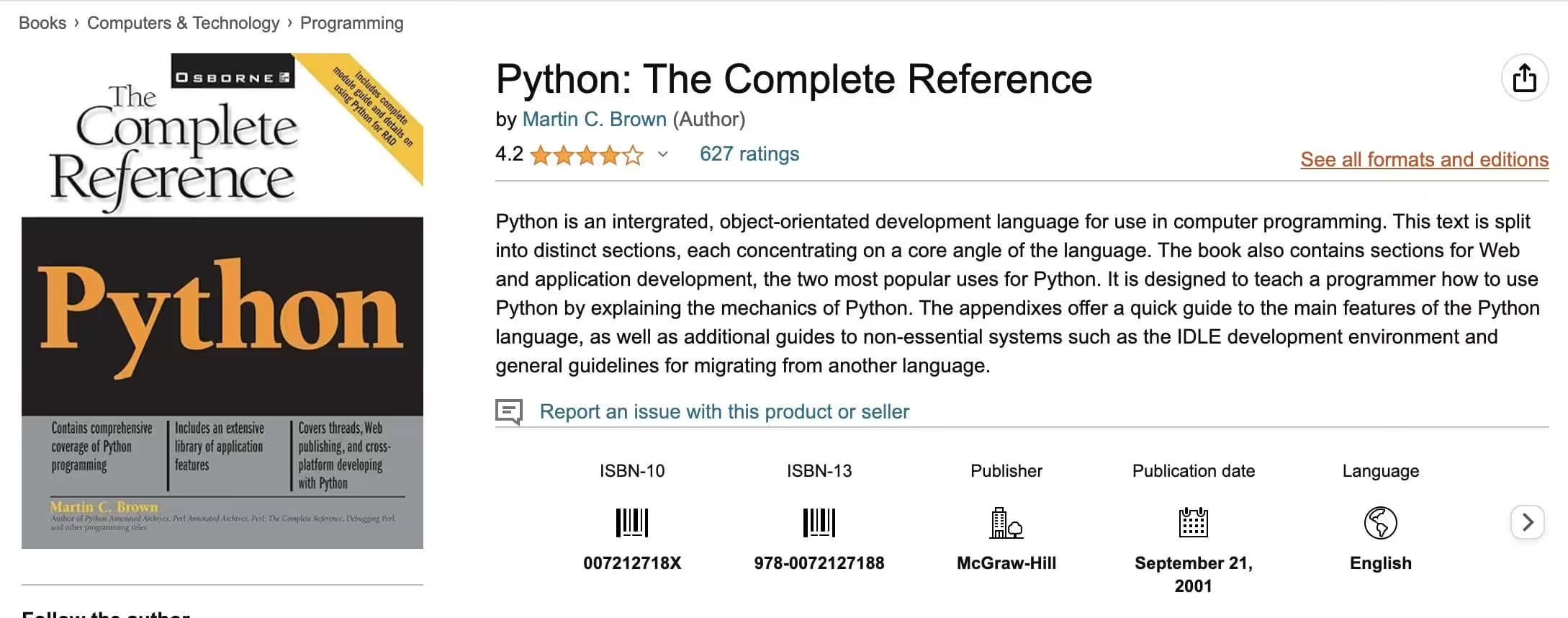
Written by Martin C. Brown, this Python guide is an excellent choice for beginners. The book is beginner-friendly and describes every detail you need to know for Python. It is also suitable for people who don’t know anything about coding and are just starting with Python. It covers everything from “use of modules” to “use of advanced object orientation classes.”
The book contains three prominent topics that it covers. The first is to learn how to develop applications, develop responsive websites and make multimedia software. Secondly, though the book has been written in such a way so that an experienced programmer can use it too, it works as an invaluable sourcebook for beginner programmers. Lastly, the book also teaches you how to use Python’s extensive libraries (along with tools) to read and parse HTML, XML, and SGML files.
Python Crash Course: A Hands-On, Project-Based Introduction to Programming
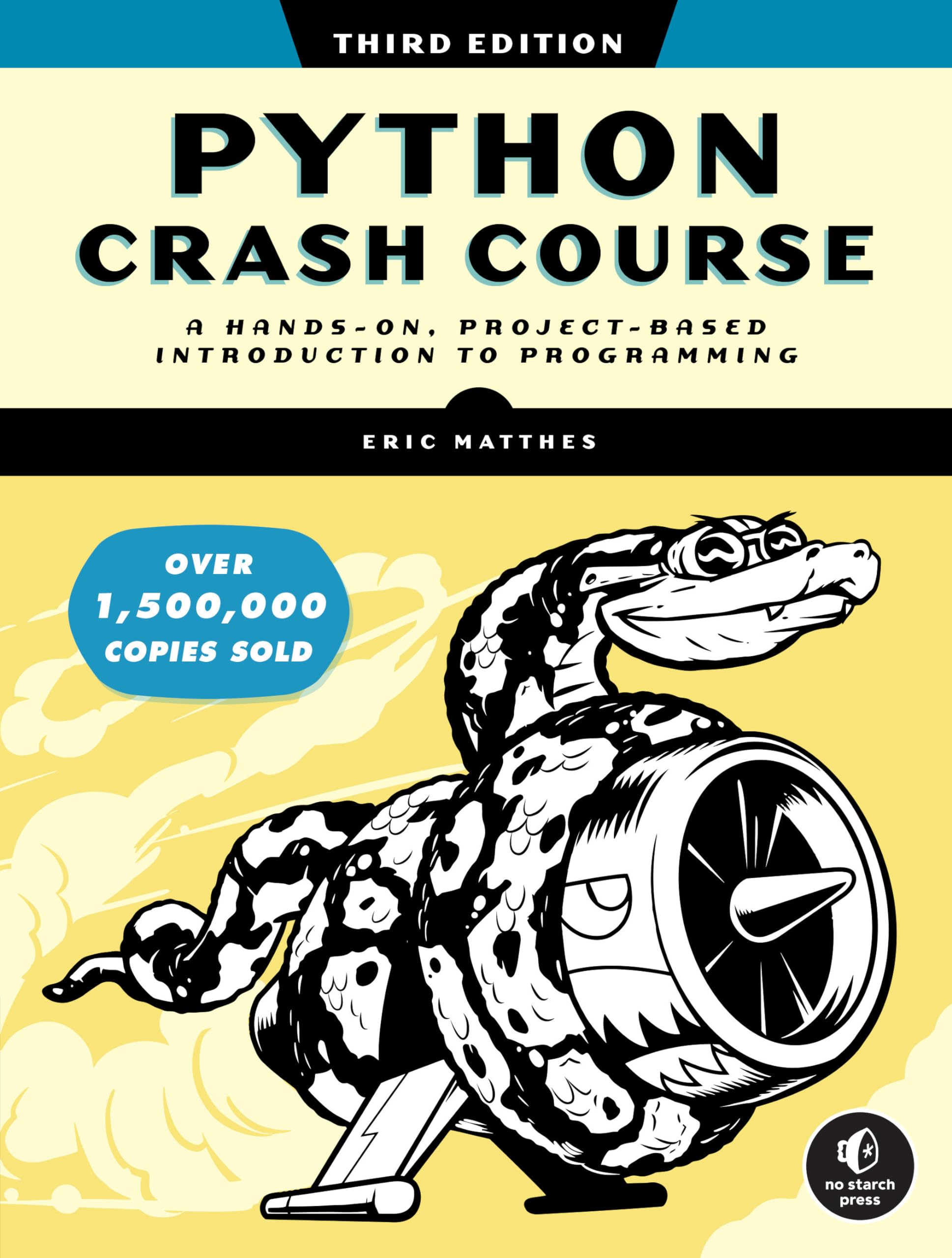
- By Eric Matthes, 3rd Edition, project-based approach
- Covers NumPy, Pygal, and core Python libraries
- Three capstone projects: game, data visualization, and web app
- Best for beginners who learn by building real things
- Builds logic skills transferable to other programming languages
- One of the best-selling Python books worldwide
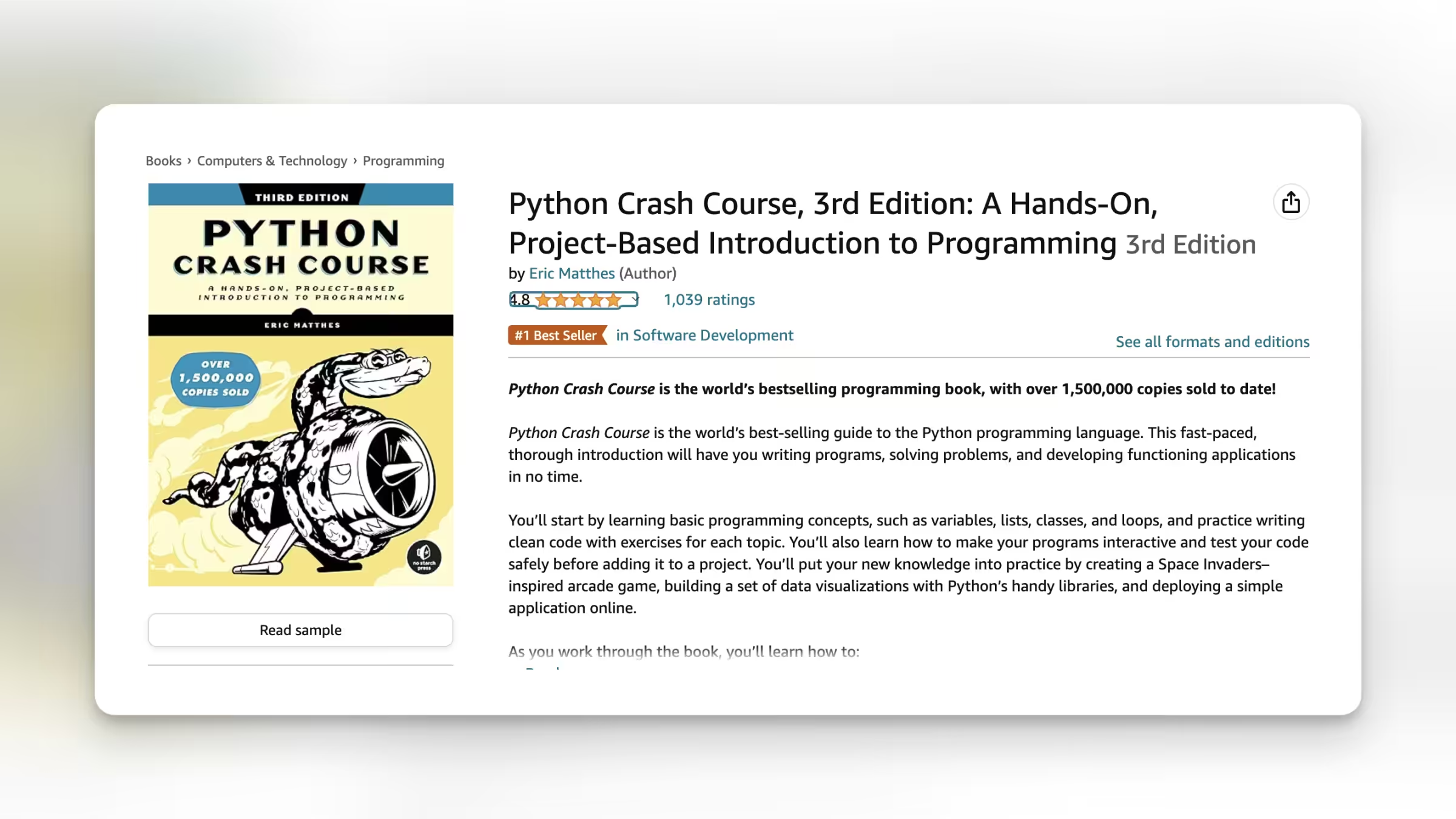
The python crash course by Eric Matthes is an excellent book that guides you through a detailed introduction to Python. The book is a great help for beginners and will help you write programs and solve problems using Python language. The book also helps you build your logic skills, and thus it will be of great aid when you learn other programming languages.
The book covers basic Python libraries and tools like NumPy and Pygal, and over time, you will be able to create basic 2-D games in Python and make personalized web applications. The book is subdivided into two parts: the first part teaches you how to write efficient programs and implement them. The other part teaches you about practical applications with three projects – a Space Invaders kind of arcade game, data visualizations using Python libraries, and a simple web app.
Python: Programming: A Beginner’s Guide To Learn Python In 7 Days
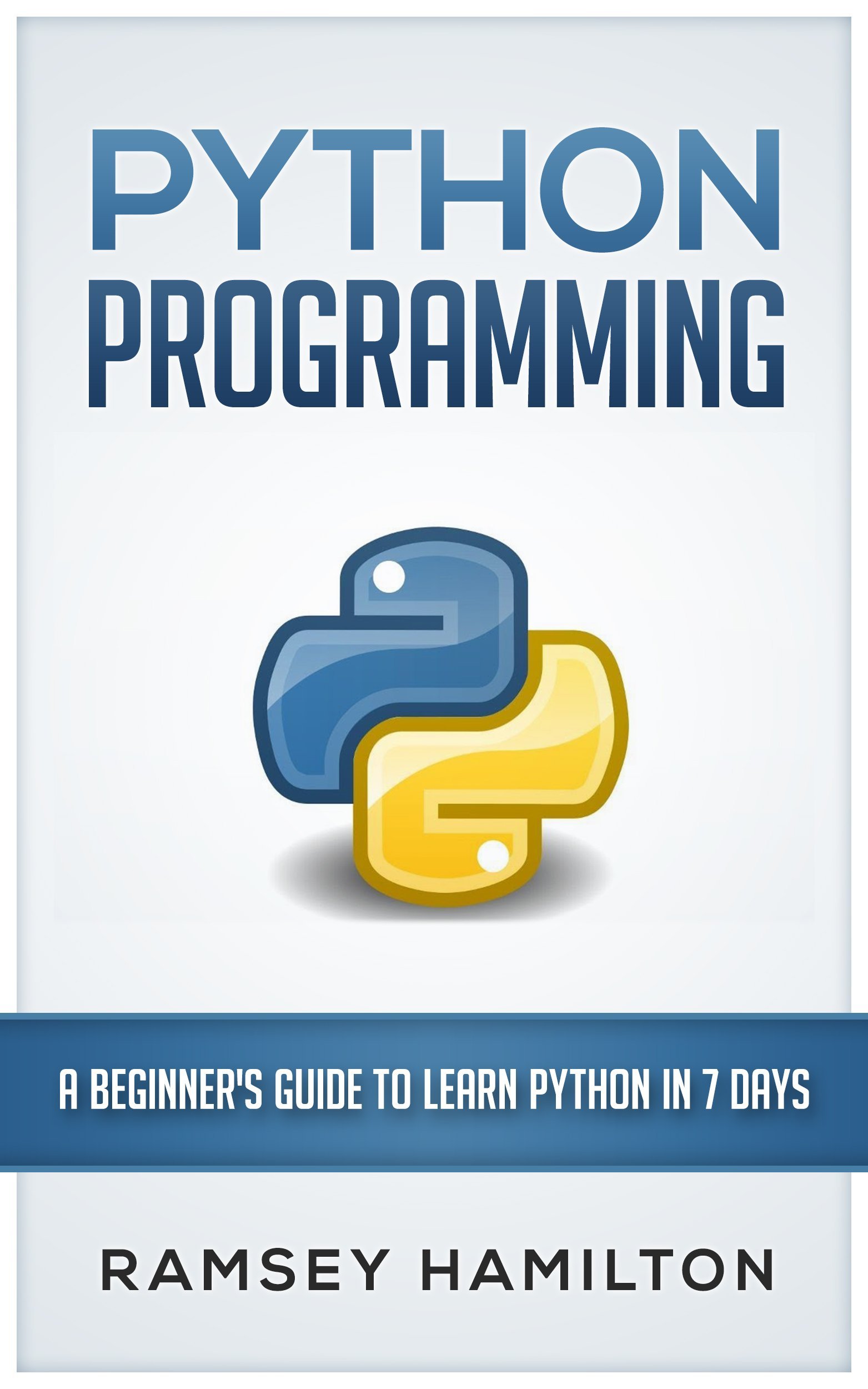
Python Programming: A Beginner's Guide to Learn Python in 7 Days
- By Ramsey Hamilton, fast-track 7-day learning plan
- Covers variables, loops, functions, dictionaries, and lists
- Includes Python installation and setup walkthrough
- Best for time-constrained learners wanting quick results
- Practical exercises reinforcing each day's concepts
- Compact format covering essential Python fundamentals
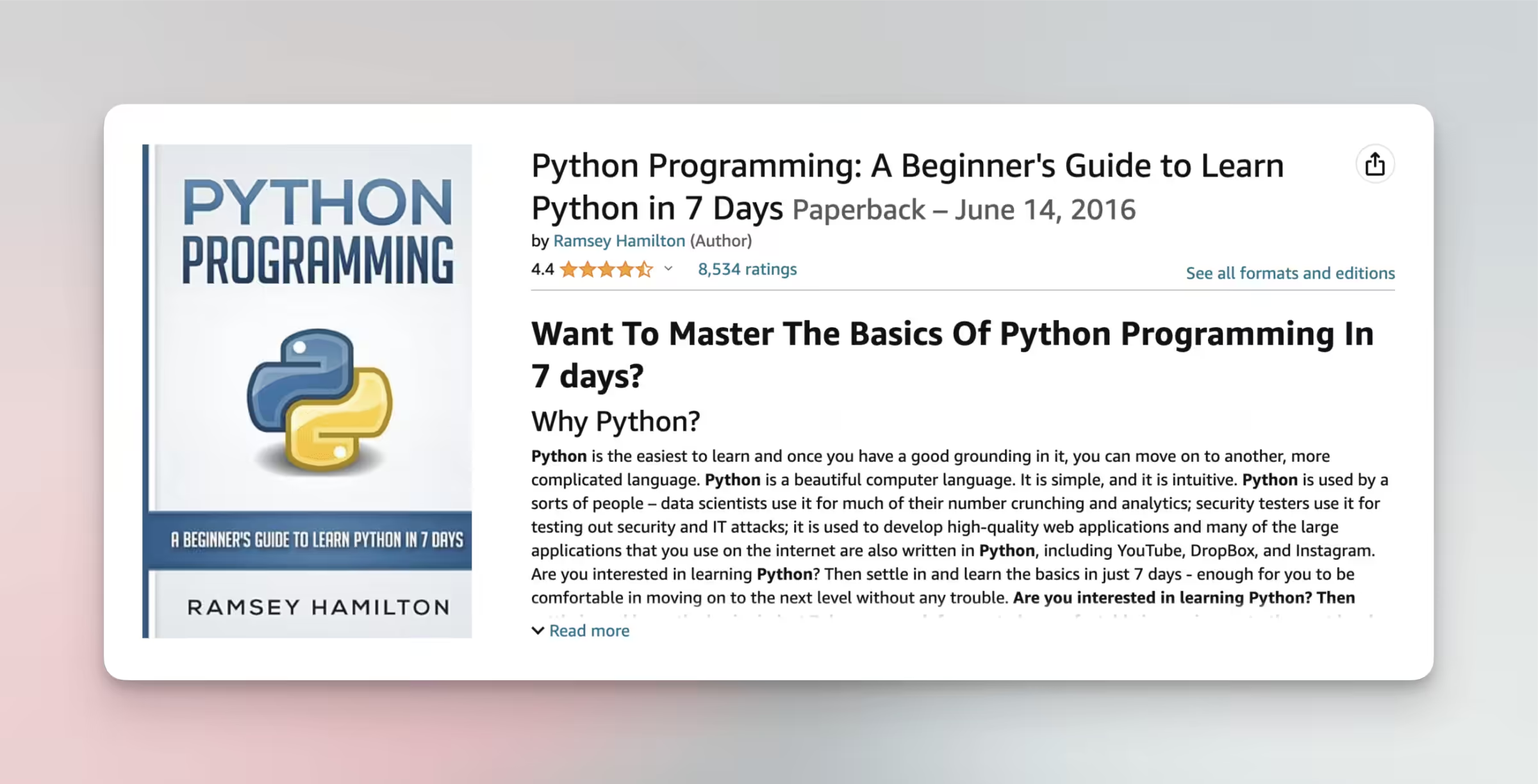
Ramsey Hamilton’s PYTHON: PROGRAMMING will teach you Python in just seven days!
The book covers various important topics such as:
- How to get started and install Python on your device
- starting programming, variables
- And programs in files, loops, functions, dictionaries, lists, and tuples for looping, classes, modules, file input/output, error handling, and much more.
Though the book does not dig deeper into the subject, these topics are more than enough for you to get started on Python. Then, as you get comfortable with the basics, moving a step up further won’t be of any trouble. So, if you are interested in learning Python but do not know where to start, get this book without a second thought.
Learn Python the Hard Way
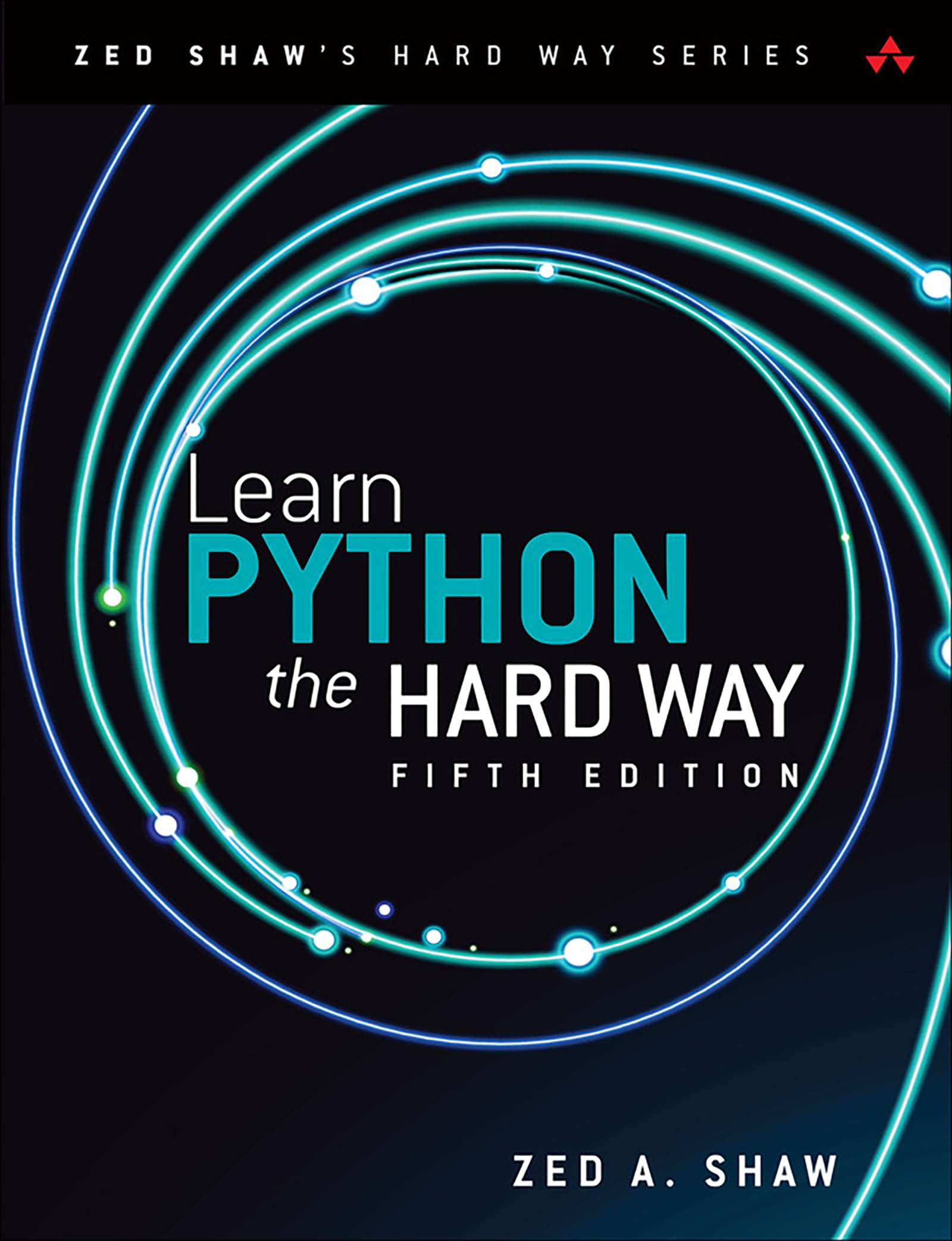
- By Zed Shaw, exercise-driven learning methodology
- 52 hands-on coding exercises with progressive difficulty
- Covers file handling, OOP, inheritance, and program design
- Learn by writing code, fixing errors, and debugging
- Best for self-taught programmers who prefer practice over theory
- Builds strong debugging habits from day one
Learn Python the Hard Way is a very efficient book by Zed Shaw. Through this book, you will be learning Python from a different perspective. The book contains 52 exercises that will help you to learn code on your own. Learning will be through writing code and fixing errors, and then writing more code. This way, you will get the first-hand experience in coding.
The book covers various topics such as:
- installing Python
- organize and write code, fix and debug
- basic mathematics
- variables, strings
- user interaction
- file handling, logic, and looping
- data structure using dictionaries and lists
- program design, OOP, inheritance
- composition, modules, objects and classes, packaging
- automated-testing, game development, and web development.
The book claims to be best for beginners and professionals who need a quick python course.
Learning with Python
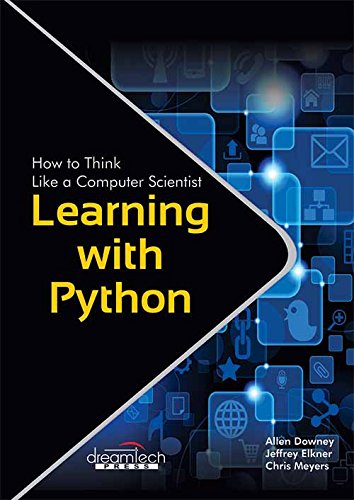
- By Allen Downey, Jeffrey Elkner, and Chris Meyers
- Covers recursion, iterative statements, and data structures
- Includes stacks, queues, linked lists, and trees
- Concepts transferable to C and C++ programming
- Best for students wanting solid computer science foundations
- Clear explanations of classes, objects, and inheritance
This book is thoroughly designed to introduce basic programming concepts and programming in Python in detail to all the readers interested in starting coding. Written by Allen Downey, Jeffery Elkner, and Chris Meyers, the book helps its readers to develop and run all basic programs in Python.
A lot of thought has gone into the making of the book, and only the most important topics are introduced, which a beginner will need in not only Python but also in other major programming languages like C, C++. The book covers topics such as Functions, Recursion, Iterative Statements, Dictionaries, Files and Exceptions, Classes and Objects, Strings, Lists, Tuples, Methods, Inheritance, Stacks, Queues, Linked Lists, and Trees.
Python Programming: An Introduction to Computer Science
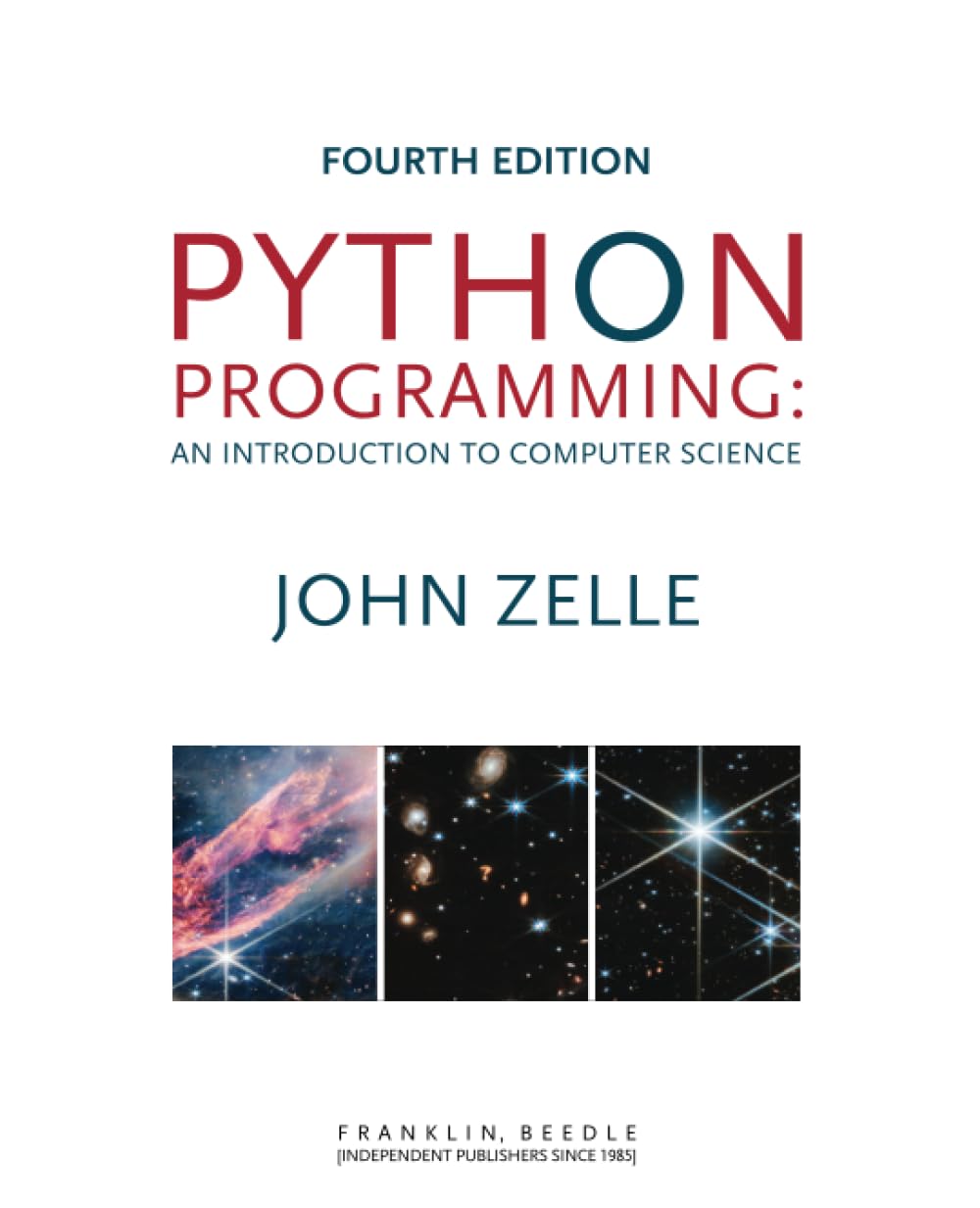
Python Programming: An Introduction to Computer Science
- By John M. Zelle, computer science focused approach
- Teaches design, logic, reasoning, and problem-solving
- Updated edition with new graphic examples in chapters 4-12
- Best for beginners wanting a CS education through Python
- Accessible to readers with zero prior coding knowledge
- Strong emphasis on computational thinking over syntax
Python Programming: An Introduction to Computer Science is ideal for those who want to learn basic coding logic in the easiest and most efficient non-standard language out there, Python! The book introduces and explains the basic computer science concepts as plainly as possible so that a person with zero knowledge of coding can also understand them.
The book focuses on basic skills such as designing, logic and reasoning, problem-solving, and programming. This Edition also teaches many new graphic examples spread across chapters 4 to 12. Overall, we suggest you opt for this book if you want a guide to coding in general.
Python Programming for the Absolute Beginner
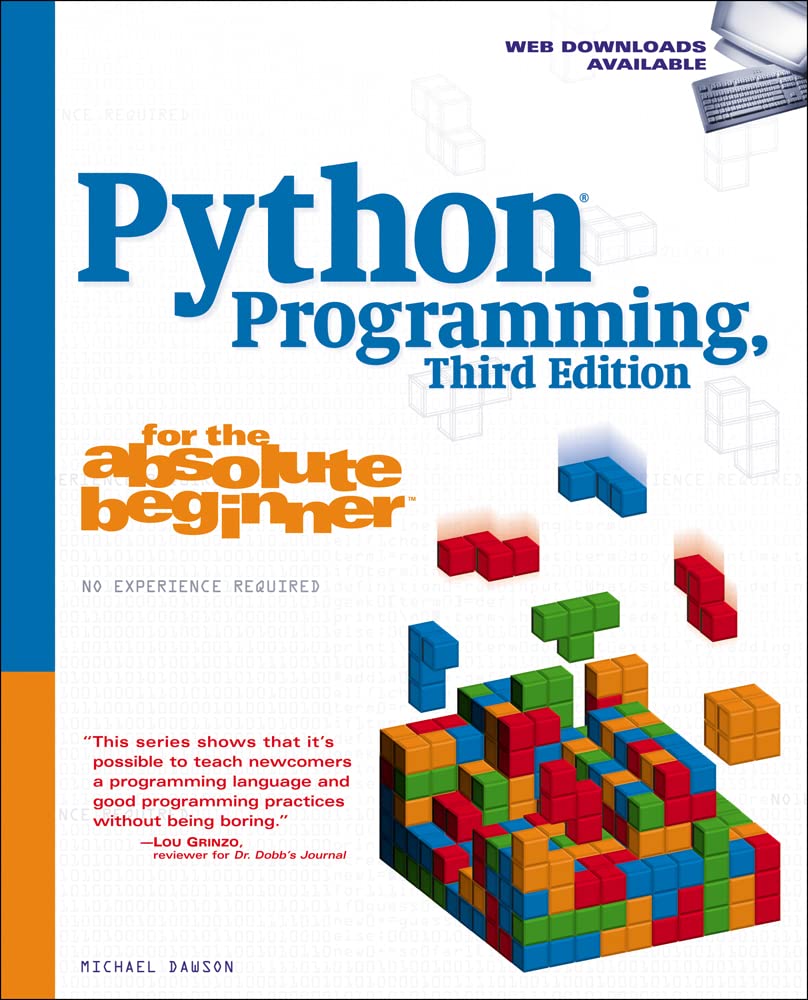
Python Programming for the Absolute Beginner
- By Michael Dawson, beginner-friendly with sample code per lesson
- Covers basic programming logic and Python fundamentals
- Each chapter includes summary, exercises, and practice problems
- Builds skills progressively from basics to real applications
- Best for readers who want structured, self-paced learning
- Strong emphasis on practice alongside theory
This book is necessary if you are new to programming. Written by Michael Dawson, the book teaches you the basic logic and rules of programming. After you go through the basic knowledge, the book will guide you through the practical Python programming applications. Thus, you will slowly and steadily develop skills to utilize your knowledge in real-life problems.
The book also depicts sample codes in each lesson that illustrates the practical use of the topic. The key idea behind the book is to make sure that readers practice along with the lessons. Also, at the end of every lesson, you will find a chapter summary and a few exercises to test your skills. After finishing the book, you will be ready with the basic programming concepts and basic Python and will be ready to learn new languages.
Python For Beginners: Learn From Scratch the Most Used Programming Language of the Moment in Just 15 Days
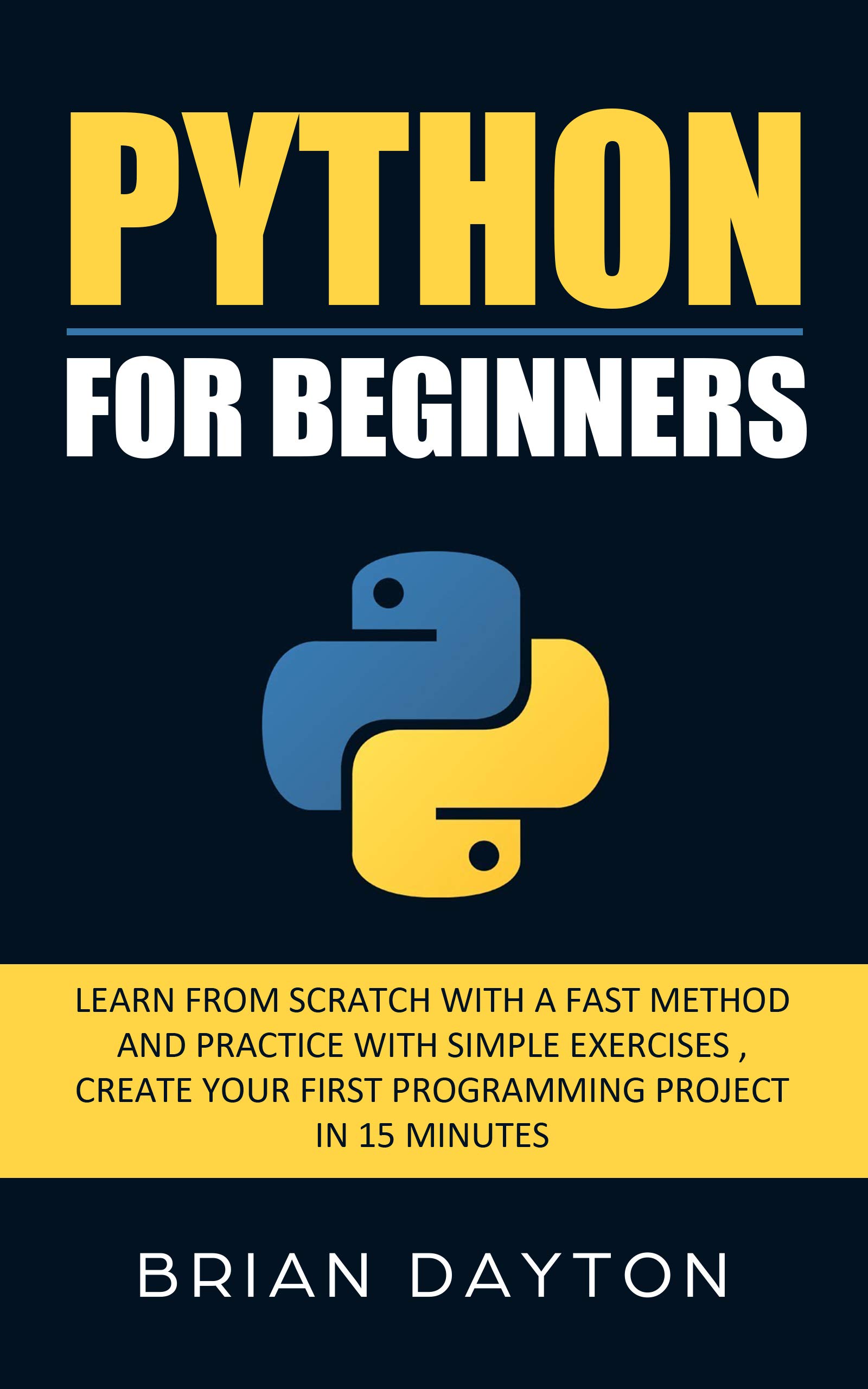
Python For Beginners: Learn From Scratch in Just 15 Days
- By Dylan Penny, structured 15-day learning program
- Covers data types, loops, functions, OOP, and modules
- Includes error handling, exception handling, and user I/O
- Best for beginners who want a time-boxed learning path
- Short, focused chapters designed for quick daily progress
- Covers classes, objects, methods, and inheritance fundamentals
Dylan Penny’s “Python for Beginners” will teach you everything you need to know as a newbie python ever. Python is the most widely sought-after language for developers. Building the basic concepts correctly is essential as they will be the pillars of everything else you learn. This book will guide you through short but complete python essentials.
The book contains an introduction to Python, basic data types and variables, operators, functions, strings, objects, classes, methods and inheritance, input-output, modules, loop, dictionaries, and much more. Short on time? Do not worry, and get started on python programming with Python for beginners.
Head-First Python: A Brain-Friendly Guide
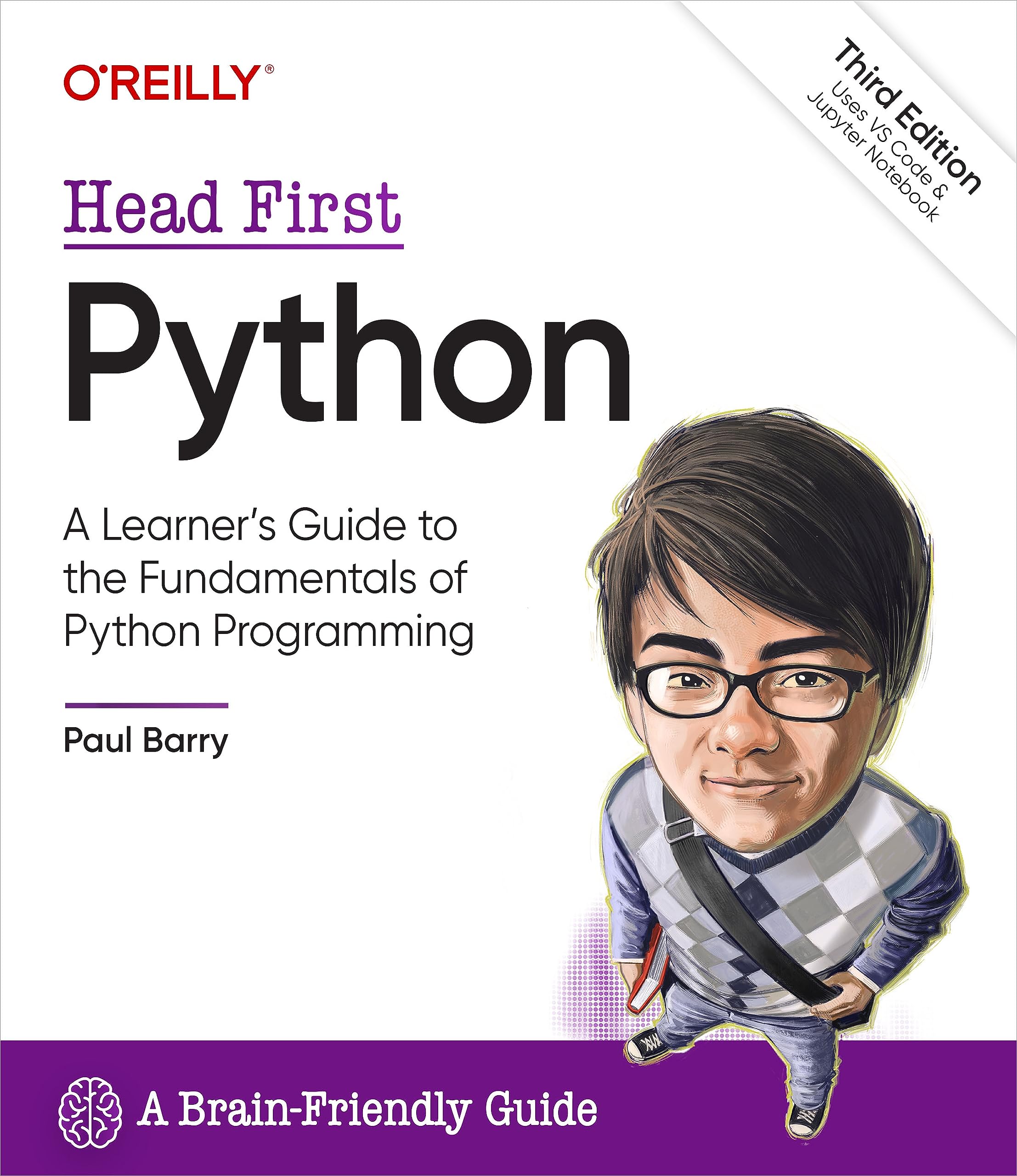
Head-First Python: A Brain-Friendly Guide
- By Paul Barry, 2nd Edition based on cognitive science research
- Covers context managers, comprehensions, decorators, and generators
- Projects include web apps, database management, and data wrangling
- Visual, multi-sensory learning approach backed by learning theory
- Best for visual learners who dislike traditional textbook formats
- Exception handling and built-in data structures covered in depth
Head-first Python is an incredible and compact book that will aid you in learning Python without how-to manuals. The book will gradually build your concept on built-in data structure and functions. After completing this book, you can work on projects like making basic web apps, exploring database management, exception handling, and data wrangling.
Paul Barry did an excellent job on the second Edition as he included and updated the previous version based on the recent research in cognitive science and learning theory. The book also covers various intriguing topics like context managers, comprehensions, decorators, and generators, thus giving you a multi-sensory learning experience. You will master the basics of python programming in no time with this book.
Python For Beginners: A Practical Guide For The People Who Want to Learn Python The Right and Simple Way
Python For Beginners: A Practical Guide
- By John Snowden, step-by-step practical approach
- Covers data types, variables, lists, tuples, and strings
- Includes loops, error handling, functions, and modules
- All program answers provided for self-checking
- Best for self-learners who want verified code examples
- Covers classes, objects, methods, and inheritance with examples
Written by John Snowden, the book is a highly efficient guide to all the people who want to learn to program in Python. The book broke down complex concepts into simpler steps so that anyone (even people with zero coding experience) can quickly master Python. Python for Beginners has also carefully incorporated examples to help readers visualize all the concepts. Also, answers to all programs are provided so that you can match and correct your outputs.
The book starts with an introduction to Python and its installation procedure on your device. Then the book contents include data types, variables, lists, tuples, strings, user inputs and outputs, loops, error handling and exception handling, functions and modules, classes, objects, methods, inheritance, and much more. Invest time and follow the book thoroughly; rest assured, you will learn all python basics within a couple of days.
Best Selling Python Books (Including Python Crash Course 3rd Edition)
| Book Name | Author | Amazon URL |
|---|---|---|
| Python Crash Course, 3rd Edition | Eric Matthes | Link |
| Learning Python, 5th Edition | Mark Lutz | Link |
| Fluent Python | Luciano Ramalho | Link |
| Automate the Boring Stuff with Python, 2nd Edition | Al Sweigart | Link |
| Python Programming: An Introduction to Computer Science | John Zelle | Link |
| Black Hat Python, 2nd Edition | Justin Seitz | Link |
| Python for Data Analysis, 3rd Edition | Wes McKinney | Link |
| Effective Python, 2nd Edition | Brett Slatkin | Link |
| Python Tricks: A Buffet of Awesome Python Features | Dan Bader | Link |
| Head First Python, 2nd Edition | Paul Barry | Link |
Conclusion: Best Book for Python Beginners
Python is one of the most powerful programming languages and the most sought-after language too. Developers vastly use the language. The language is object-oriented programming and is not compiled but interpreted. Data scientists, hackers, and software engineers all love this easy-going language that is highly compatible with other languages on projects and has minimal syntax.
Python is also an excellent language for learning how to code. The syntax somewhat resembles English grammar and is very easy to read and understand. Even a non-coder can understand the logic in a simple Python code just by reading it. We have listed ten good books for beginners so that they can get started with their coding. I hope this article will help you select a book that meets your preferences and needs.
What is the best book to learn Python for complete beginners?
“Python Crash Course” by Eric Matthes is the strongest choice for complete beginners. It starts with basics and moves into three real projects (a game, data visualization, and a web app). The Python Crash Course 3rd edition covers Python 3.11+ features and modern practices.
Can I learn Python from books without any programming experience?
Yes. Books like “Automate the Boring Stuff with Python” assume zero programming knowledge. The key advantage of learning Python from a book is the pace, you control how fast you move through concepts instead of keeping up with a video instructor.
How long does it take to learn Python from a book?
Most beginners finish a Python book in 4 to 8 weeks of daily practice (1 to 2 hours per day). The learning part is quick. Getting comfortable enough to build your own projects takes another 2 to 3 months of consistent practice beyond the book.
Should I learn Python 2 or Python 3?
Python 3 only. Python 2 reached end-of-life in January 2020 and no longer receives security updates. Every modern Python book teaches Python 3. If you find a book that still uses Python 2, skip it.
What Python book is best for data science beginners?
“Python for Data Analysis” by Wes McKinney (creator of pandas) is the standard reference. For a gentler introduction, “Python Data Science Handbook” by Jake VanderPlas covers NumPy, pandas, Matplotlib, and scikit-learn with clear examples.
Are free Python books online worth reading?
“Automate the Boring Stuff with Python” is available free online and it’s one of the best Python books at any price. “Think Python” is another solid free option. The quality matches or beats many paid alternatives.
What Python books help with web development?
“Flask Web Development” by Miguel Grinberg covers Python web development from scratch using Flask. For Django, “Django for Beginners” by William S. Vincent walks you through building and deploying three complete web applications.
Which Python programming books cover advanced topics?
“Fluent Python” by Luciano Ramalho is the go-to for intermediate-to-advanced Python. It covers data models, functions as objects, concurrency, and metaprogramming. “Effective Python” by Brett Slatkin gives 90 specific ways to write better Python code.
Disclaimer: This site is reader-supported. If you buy through some links, I may earn a small commission at no extra cost to you. I only recommend tools I trust and would use myself. Your support helps keep gauravtiwari.org free and focused on real-world advice. Thanks. - Gaurav Tiwari