
How Can You Make Money Online as a Student?
You’re juggling classes, assignments, and a social life that’s hanging by a thread. Your bank account looks like it’s on a hunger strike. And every “make money online” article you find suggests the same recycled ideas from 2019.
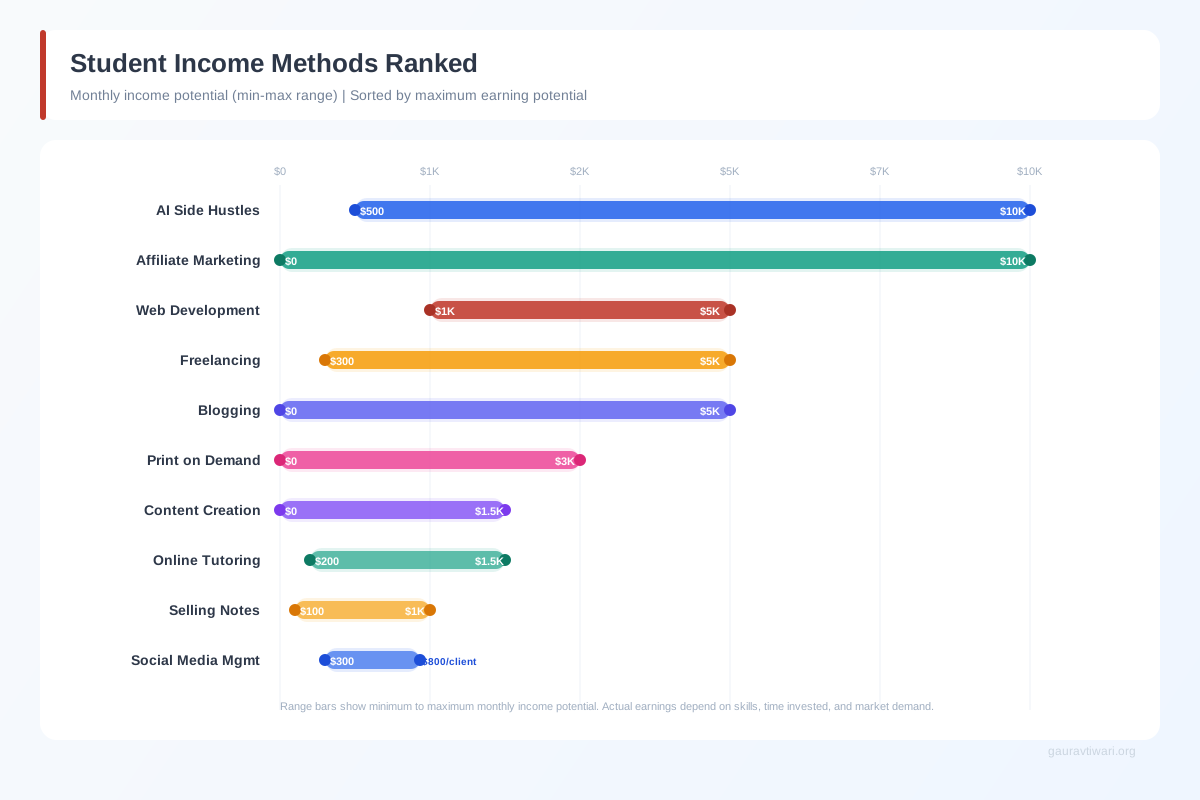
Here’s the reality in 2026: students are earning $500-$5,000 per month online without dropping out or sacrificing their GPA. The difference between students who earn and students who scroll? They picked one method, committed to it for 90 days, and built from there.
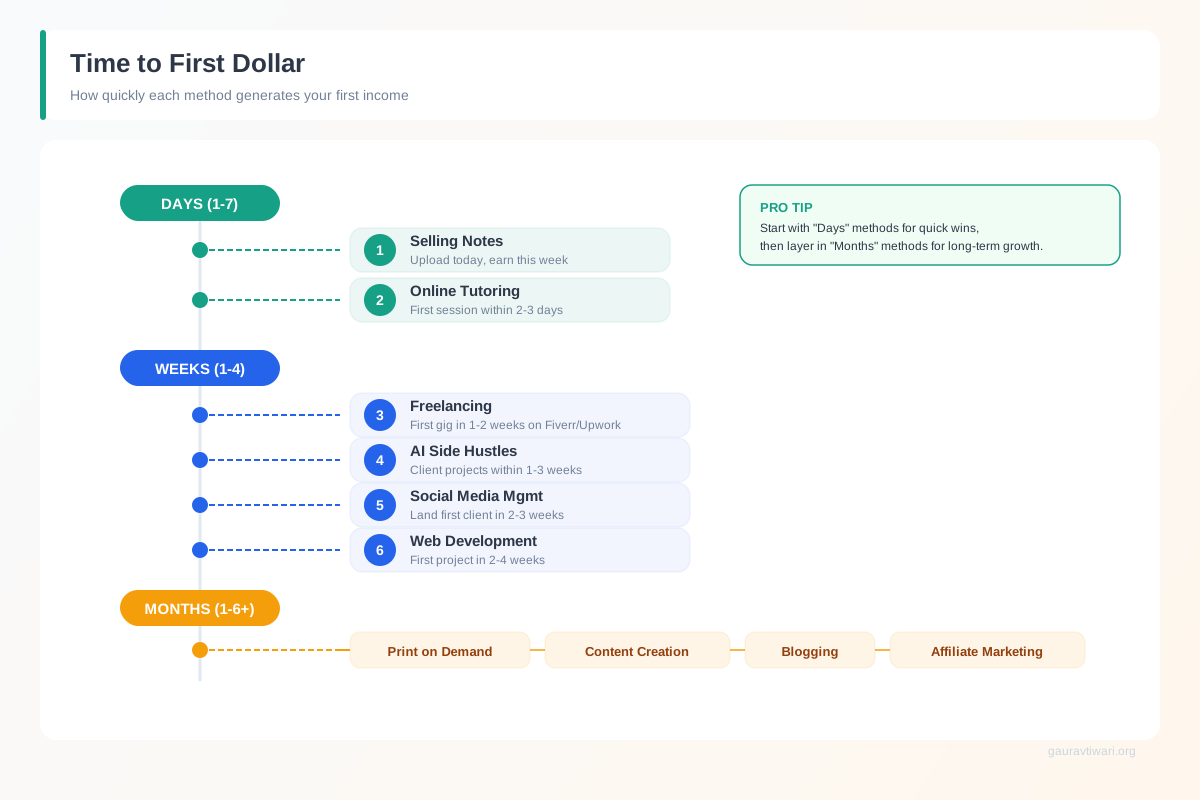
I’ve compiled 10 proven ways to make money online as a student, ranked by how quickly you can start earning. Each method includes realistic income ranges, time commitments, and the exact tools you’ll need. No fluff, no “become a millionaire by Tuesday” nonsense.
Sell Your Notes and Study Guides
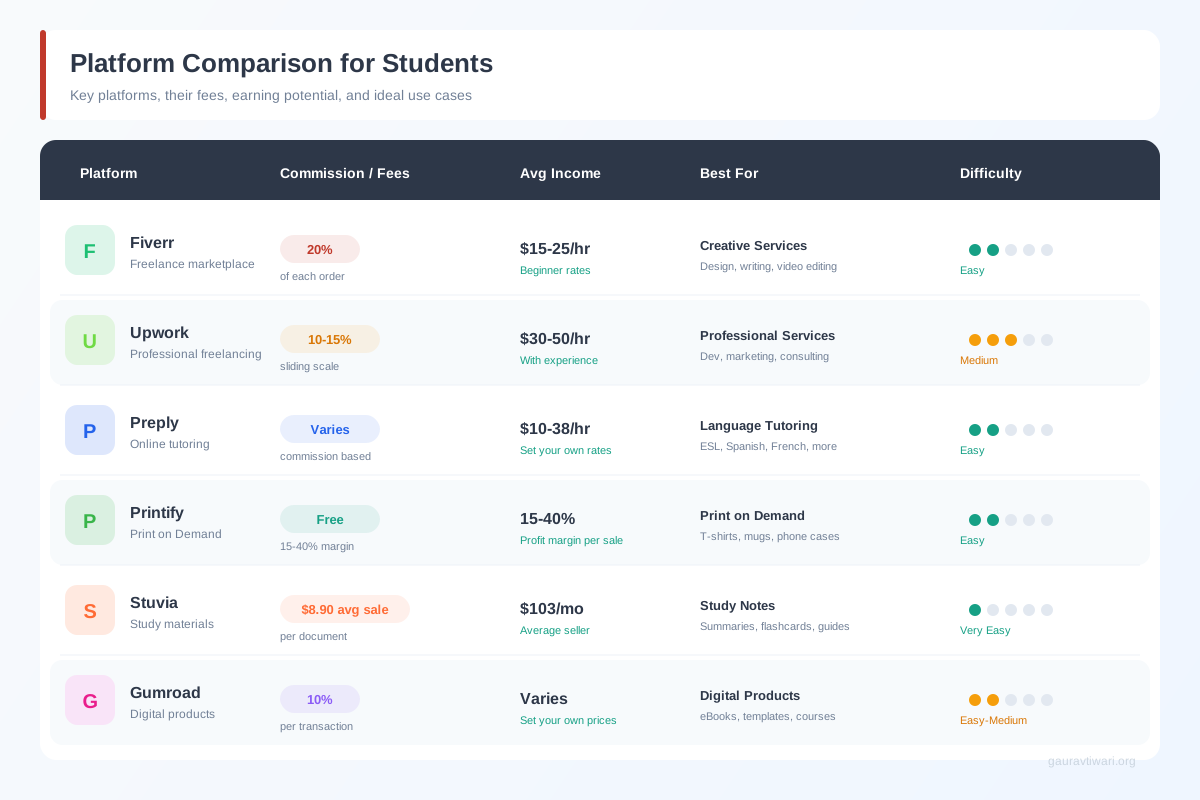
You’re already taking notes. Why not get paid for them? Platforms like Stuvia, Studocu, and Course Hero let you upload your study materials and earn every time someone downloads them. The average sale on Stuvia is $8.90, and consistent sellers earn around $103 per month with minimal effort.
But the real opportunity is Notion templates. The Notion template market exceeds $50 million per year. Student-focused templates (study planners, assignment trackers, GPA calculators) sell for $5-$10 each, while premium bundles go for $20-$100+. Top sellers make five figures monthly.
Your best-performing class notes from last semester are already a product. Clean them up, organize them into a PDF or Notion template, and list them on Gumroad or Stuvia today. You can literally start earning within days, not months.
- Monthly income: $100-$1,000
- Time to first dollar: Days to weeks
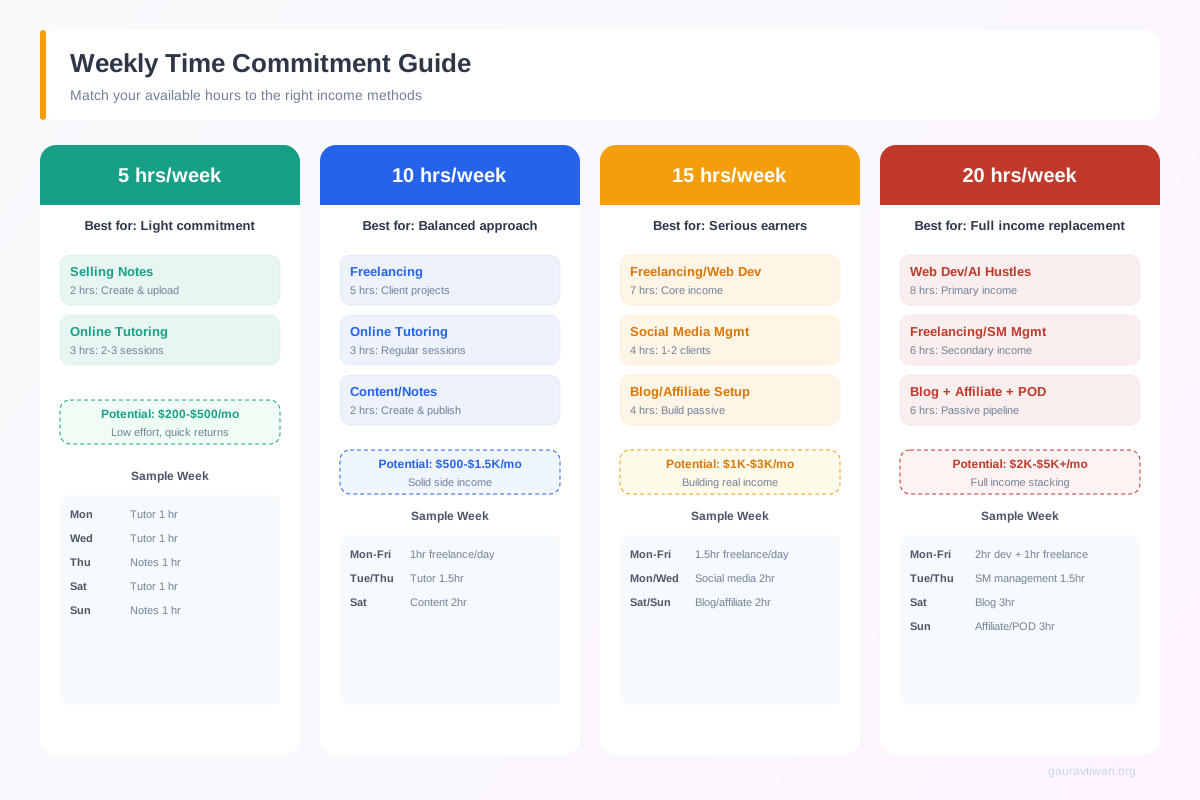
- Time commitment: 2-5 hours/week
- Startup cost: $0
- Best platforms: Stuvia, Studocu, Gumroad, Etsy (for Notion templates)
Become an Online Tutor
The online tutoring market hit $10.9 billion in 2025 and is growing at 14.5% annually. If you’re strong in any subject, there are students willing to pay you to explain it. K-12 core subjects earn $27-$55 per hour online, and test prep or STEM tutoring commands $80-$110 per hour.
The platforms worth your time:
- Preply: $10-$38/hour. You set your own rates and schedule. Best for language tutoring.
- Wyzant: Average $26.78/hour, with experienced tutors earning up to $65/hour. Takes a 25% commission.
- Tutor.com: $16-$25/hour. More structured, with scheduled shifts. Good for consistency.
- Chegg Tutoring: Up to $500/month. Lower per-hour rates but steady volume.
Language tutoring is the most beginner-friendly entry point. If you’re fluent in English and studying abroad (or vice versa), you already have a marketable skill. The scheduling flexibility makes this ideal for fitting around class schedules.
- Monthly income: $200-$1,500
- Time to first dollar: Days (after platform approval)
- Time commitment: 5-15 hours/week
- Startup cost: $0 (webcam + internet)
Start Freelancing on Fiverr or Upwork
Freelancing isn’t just for experienced professionals. Students with basic skills in writing, graphic design, video editing, or data entry can start earning on Fiverr or Upwork within their first week. Average hourly rates on Fiverr run $15-$25, while Upwork pays $30-$50 for similar work.
The most in-demand beginner-friendly skills in 2026: content writing, social media graphics, video editing (especially Reels and Shorts), proofreading, and data entry. One college student started editing Instagram Reels on Fiverr and earned $900 in the first month, scaling to $5,000+ by month three from influencer clients.
Here’s what most students get wrong: they create generic profiles. Instead, niche down. “I edit TikTok videos for fitness influencers” will get you hired faster than “I do video editing.” Specificity is your competitive advantage when you don’t have years of experience.
Fiverr takes a flat 20% of every transaction. Upwork charges 10-15%. Factor these fees into your pricing from the start, or you’ll consistently undercharge. If you want to earn $20/hour on Fiverr, you need to charge $25/hour to account for fees.
- Monthly income: $300-$2,000 (beginners); $2,000-$5,000 (3-6 months in)
- Time to first dollar: 1-4 weeks
- Time commitment: 10-20 hours/week
- Startup cost: $0
Related: Freelance Writing for Students: Get Clients and Build a Portfolio
Try AI Side Hustles
This is the category that didn’t exist two years ago and is now one of the fastest paths to student income. AI side hustles include prompt engineering, AI content creation, building chatbots for small businesses, and AI-assisted design work.
Prompt engineering alone pays $40-$150 per hour on freelance platforms. Building custom ChatGPT or Claude-powered chatbots for local businesses pays $18-$24/hour at entry level, scaling to $50-$100+ per hour for custom implementations. You don’t need to code. Tools like Botpress and Voiceflow let you build production-ready chatbots with visual interfaces.
One practical approach: take a free AI course on Coursera, then start selling ChatGPT prompt packs or AI workflow setups on Fiverr. Students are doing this right now. The demand massively outstrips supply because most professionals haven’t caught up to the tools yet.
- Monthly income: $500-$1,000 (beginners); $2,000-$10,000+ (experienced)
- Time to first dollar: 1-4 weeks
- Time commitment: 5-15 hours/week
- Startup cost: $0-$20/month (API costs)
Manage Social Media for Small Businesses
Small businesses know they need social media but don’t have time to do it themselves. That’s where you come in. A basic social media management package (1-2 platforms, 3-5 posts per week, basic engagement monitoring) goes for $750-$1,500 per month from professional agencies. As a student, you can charge $300-$800 per client and still be the most affordable option in town.
You only need three tools: Canva for graphics (free plan works), Buffer or Later for scheduling ($15-$30/month), and the native analytics on each platform. That’s it. No fancy certifications required.
Start by reaching out to local businesses, restaurants, gyms, salons, or small retail shops. Offer to manage their Instagram or TikTok for a month at a discounted rate. Once you have two to three clients and results to show, you can raise your rates.
- Monthly income: $300-$800 per client
- Time to first dollar: 1-4 weeks
- Time commitment: 5-10 hours/week per client
- Startup cost: $0-$30/month
Create Content on YouTube or TikTok
Content creation is a longer play, but the ceiling is higher than almost any other method on this list. YouTube has paid creators over $100 billion in the past four years. TikTok’s Creator Rewards Program pays $0.40-$1.00 per 1,000 views.
The monetization thresholds: YouTube requires 1,000 subscribers and 4,000 watch hours (most creators hit this in 6-12 months). TikTok LIVE needs 1,000 followers, and the Creator Fund requires 10,000 followers. TikTok has a lower barrier, making it faster to start earning.
The students earning real money from content aren’t relying on platform payouts alone. They stack revenue streams: brand deals, affiliate links, digital products, and courses. Creators using three or more income streams earn 5-6x more than those relying on ad revenue alone.
The best-performing student niches: “study with me” videos, campus life vlogs, major-specific tutorials (coding, math, science), productivity tips, and textbook reviews. These niches attract loyal audiences and sponsors in the education space, which pays better than most people expect.
- Monthly income: $0-$100 (first 6-12 months); $500-$1,500 (with 100K followers)
- Time to first dollar: 3-12 months
- Time commitment: 10-20 hours/week
- Startup cost: $0-$200 (phone is enough to start)
Start a Print-on-Demand Store
Print-on-demand lets you sell custom-designed products (t-shirts, mugs, posters, hoodies) without holding any inventory. You design it, Printify or Printful prints and ships it. The market hit $12.96 billion in 2025 and is growing at 26% annually.
Let me be honest: the era of uploading 500 low-quality designs and calling it passive income is over. The students making money with POD in 2026 are treating it like a real business. They pick a specific niche (Western-themed apparel, teacher humor, pet breed designs), create quality designs, and actively market them on social media.
Profit margins vary by product: apparel averages 40%, mugs 45%, candles 60%, and paper products up to 76%. One success story: Gina Van De Voorde started a Western-themed POD store, hit $100K in her first year, and reached $500K in revenue within two years.
- Monthly income: $0-$500 (first 6 months); $500-$3,000 (with traction)
- Time to first dollar: 1-3 months
- Time commitment: 10-20 hours/week
- Startup cost: $0-$50
Start Affiliate Marketing
Affiliate marketing is a $37.3 billion industry projected to reach $48 billion by 2027. The concept is simple: you recommend products, and when someone buys through your link, you earn a commission. The catch? It takes time to build traffic. Most affiliate marketers don’t see meaningful income for 6-12 months.
The best affiliate programs for students: Amazon Associates (1-10% commission), Shopify ($150 per referral), Fiverr Affiliates, ClickBank, and ShareASale. Education niche affiliates average $15,551 per month when established, but that takes years of consistent content creation.
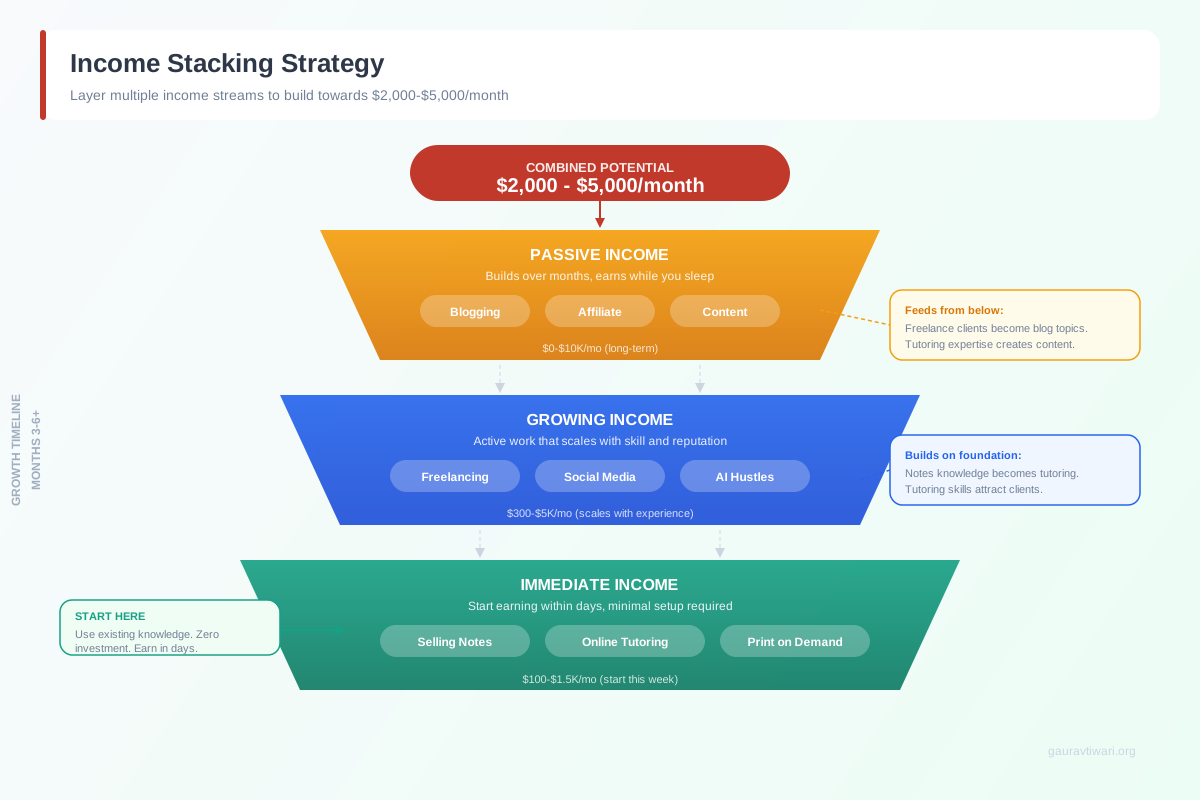
My recommendation for students: don’t make affiliate marketing your primary income strategy. Instead, add affiliate links to content you’re already creating (blog posts, YouTube videos, social media reviews). It compounds over time and eventually becomes meaningful passive income.
- Monthly income: $0-$500 (year 1); $1,000-$10,000 (years 1-3)
- Time to first dollar: 6-12 months
- Time commitment: 10-20 hours/week
- Startup cost: $50-$100/year (domain + hosting)
Related: 20 Best Ways to Make Money Online
Build Websites or Apps
If you’re studying computer science or have taught yourself to code, freelance web development is one of the highest-paying student side hustles. Junior web developers charge $50-$80 per hour on freelance platforms. Students with AI/ML skills command even more, with rates 40% above average.
You don’t need to be a full-stack wizard. Basic WordPress sites, Shopify store setups, and landing page builds are in constant demand from small businesses. These projects pay $500-$2,000 each and take a weekend to complete once you know what you’re doing.
The best platforms for student developers: Upwork and Fiverr for starting out, Toptal for the top 3% (once you’ve built a portfolio), and Contra for commission-free freelancing. Start on platforms to build your portfolio, then transition to direct clients for 20-30% higher rates.
- Monthly income: $1,000-$5,000 (part-time, 15-20 hours/week)
- Time to first dollar: 1-4 weeks
- Time commitment: 10-20 hours/week
- Startup cost: $0
Start a Blog
Blogging still works in 2026, but the game has changed. Generic content gets buried. AI has killed low-effort blogs. The students making money blogging now have genuine niche expertise and build real relationships with their audience.
The numbers: 30% of bloggers earn within 6 months, and 28% reach full-time income within 2 years. You typically need 100+ posts to consistently hit $1,000 per month. Revenue comes from ads (requires 50K+ sessions for premium networks like Mediavine), affiliate marketing, digital products, and sponsored posts.
Digital products outperform ads and affiliates for most bloggers. If you’re studying a specific subject, a blog about that field combined with downloadable study guides, templates, or mini-courses creates a compounding revenue engine that keeps paying long after you graduate.
Don’t start a blog expecting money next month. If you need income now, pick tutoring, freelancing, or selling notes first. Use blogging as a long-term investment that compounds over semesters. The students who started blogs in year one often have profitable sites by graduation.
- Monthly income: $0-$100 (months 1-6); $100-$1,000 (months 6-12); $1,000-$5,000 (year 2+)
- Time to first dollar: 3-6 months
- Time commitment: 15-25 hours/week
- Startup cost: $50-$100/year (domain + hosting)
Related: Blogging for Students: From Zero to First $100
How to Pick the Right Method for You
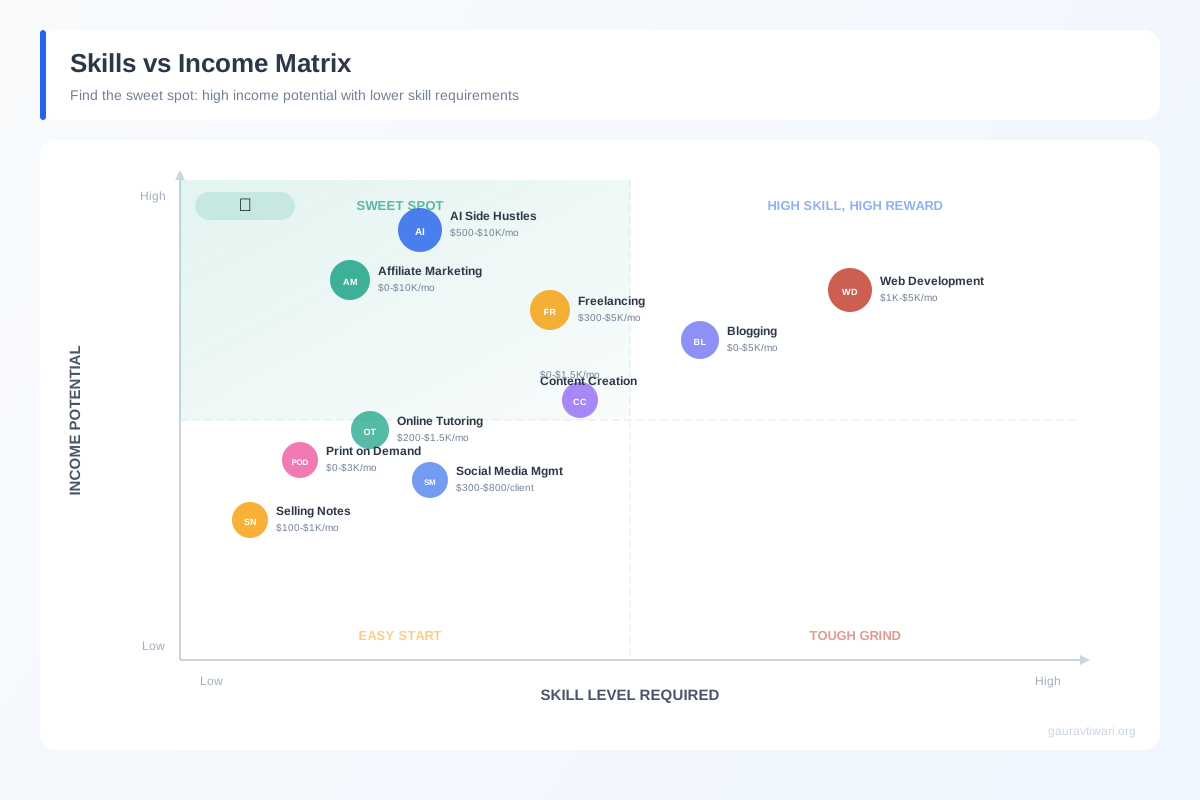
With 10 options, the worst thing you can do is try all of them. Pick one based on three factors: how fast you need income, what skills you already have, and how much time you can commit per week.
Need money this week? Sell your notes on Stuvia or sign up for tutoring on Preply. Both can generate income within days.
Have 10-15 hours per week? Freelancing on Fiverr or managing social media for a local business gives you the best income-to-time ratio.
Technically skilled? AI side hustles and web development pay the highest hourly rates of anything on this list.
Playing the long game? Content creation, blogging, and affiliate marketing compound over time. Start now, and your senior year self will thank you.
The one rule I’d give every student: don’t let earning money become your full-time job. The degree still matters. Build income around your studies, not instead of them. The skills you develop, writing, design, marketing, AI, coding, these are the same skills employers will pay a premium for after graduation.
The highest-earning students combine methods. Tutor online (immediate income) while building a blog or YouTube channel (long-term income). Add affiliate links to your content. Sell your study notes on the side. Each method feeds into the others, and within a year you have multiple income streams instead of one.
Related: 15 Perfect Online Jobs for Students to Earn While Learning
Related: 8 Effective Ways to Save Money as a College Student
Frequently Asked Questions
What is the fastest way for a student to make money online?
Selling notes and study guides is the fastest method since you can monetize materials you already have. Online tutoring through platforms like Preply or Wyzant is a close second, with income starting within days of profile approval. Both require zero startup costs and minimal setup time.
How much can a student realistically earn online per month?
Most students earn $200-$1,000 per month working 10-15 hours per week. Skilled students in web development or AI side hustles can earn $2,000-$5,000 per month. The key variable is consistency. Students who commit to one method for 90+ days almost always earn more than those who jump between methods.
Can I make money online with no skills or experience?
Yes. Selling notes, online tutoring in subjects you’re already studying, and social media management require no specialized skills beyond what you’re already developing in school. AI side hustles have a gentle learning curve with free courses available on Coursera. The skills you build while earning become career assets after graduation.
Is freelancing on Fiverr worth it for students?
Yes, if you niche down and price correctly. Fiverr takes a 20% commission, so factor that into your rates. The platform works best for specific, packaged services (video editing for TikTok, logo design, content writing) rather than hourly work. Students who specialize in one service type and build reviews earn significantly more than generalists.
How do I balance making money online with college studies?
Set a hard cap on work hours (10-15 per week is sustainable for most students). Block specific time slots for earning activities and protect your study time. Choose methods with flexible schedules like tutoring, freelancing, or note selling over those requiring daily consistency like content creation. Your degree is still the primary investment.
What are the best AI side hustles for students in 2026?
The top AI side hustles for students include prompt engineering ($40-$150/hour), building chatbots for small businesses using no-code tools like Botpress and Voiceflow ($18-$100+/hour), AI content creation, and selling AI workflow automations on Fiverr. Most require no coding skills and can be learned through free courses on Coursera or YouTube.
Do I need to pay taxes on online income as a student?
In most countries, yes. In the US, you must report self-employment income over $400. Freelancing platforms like Fiverr and Upwork issue 1099 forms for earnings over $600. Keep records of all income and expenses from day one. Consider using free accounting tools like Wave to track everything. Consult a tax professional if your annual online income exceeds a few thousand dollars.
Disclaimer: This site is reader-supported. If you buy through some links, I may earn a small commission at no extra cost to you. I only recommend tools I trust and would use myself. Your support helps keep gauravtiwari.org free and focused on real-world advice. Thanks. - Gaurav Tiwari