
 by
byThe best pen tablets for creatives split into two camps, and picking the wrong one wastes money. A pen tablet (or graphics tablet) has no screen, you draw on a pad and watch the lines appear on your monitor. A pen display has a screen built in, so you draw directly on your artwork like paper. Beginners learn just fine on a cheap screenless tablet; pros pay for the natural feel of drawing on a display. Know which you need and you’ll buy once, not twice.
I’ve set up tablets for illustrators, designers, photo editors, and online teachers, and the right pick depends on your budget, your software, and whether you’ll commit to digital art. The good news: the gap between budget brands like XP-Pen and Huion and the premium Wacom name has narrowed dramatically, so you get superb value at every price.
So here are the pen tablets and pen displays worth buying, sorted from beginner pads to professional displays, each with who it’s for. If you teach or present online, my pen tablets for online teaching guide covers that angle, and creatives building a portfolio should see how to build a creative portfolio.
1. Wacom Intuos (Small): best for beginners
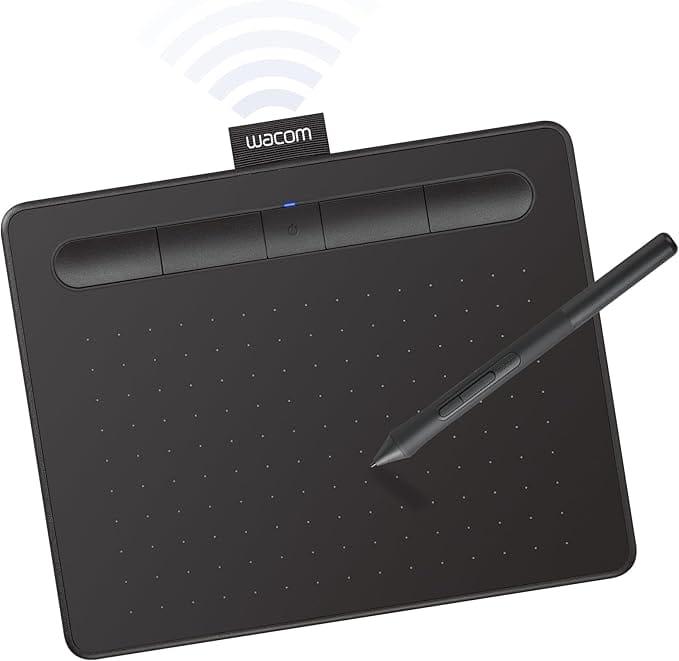
Wacom Intuos Small (Bluetooth)
- Battery-free Wacom pen
- Bluetooth, reliable drivers
- Compact screenless pad
- Best beginner support
The Wacom Intuos is the classic first tablet, a screenless pad with Wacom’s excellent battery-free pen, rock-solid drivers, and Bluetooth. It’s the safe starting point because Wacom’s software support is unmatched and the pen feel is superb. You draw on the pad while watching your monitor, which takes a day or two to get used to, then becomes second nature. The best way to learn digital art without overspending.
🎨 Buy if you’re starting out and want reliable Wacom quality cheaply. Skip if you want to draw directly on a screen.
2. Huion HS64: best ultra-budget
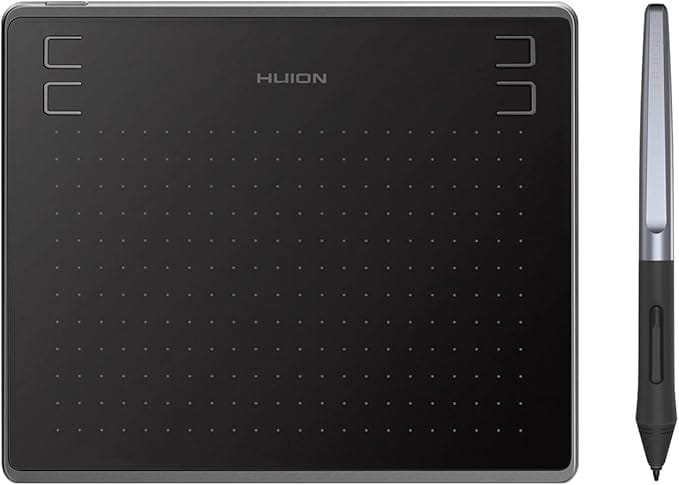
- Battery-free pen
- Rock-bottom price
- Compact and light
- Popular for osu and notes
The Huion HS64 proves you don’t need to spend much to start. It’s a compact screenless tablet with a battery-free pen and solid pressure sensitivity for a rock-bottom price, popular with osu! players, note-takers, and brand-new artists. The drivers aren’t quite as polished as Wacom’s, but for the money it’s astonishing value, and a low-risk way to find out if digital art is for you.
🎨 Buy if you want the cheapest way to try a pen tablet. Skip if you want premium drivers or a larger drawing area.
3. XP-Pen StarG640: best for note-taking and osu
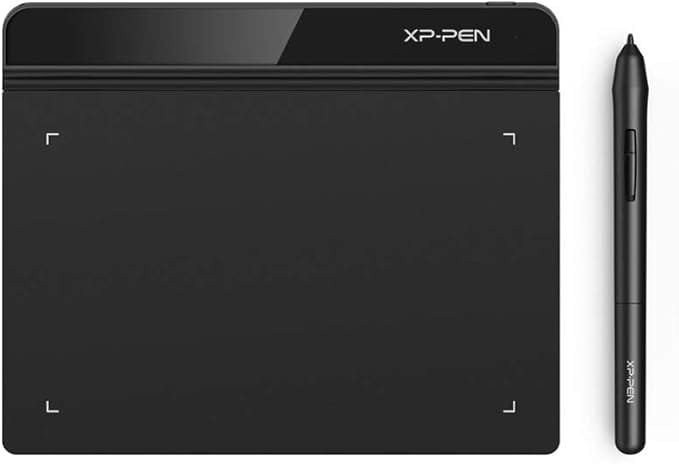
- Ultra-slim and light
- Responsive battery-free pen
- Great for signing and notes
- Lowest price here
The XP-Pen StarG640 is the ultra-slim, ultra-cheap screenless tablet that’s become a cult favorite for online signing, math note-taking, and gaming. It’s light, responsive, and costs less than a nice dinner. It won’t replace a pro setup, but as a digital signature pad, a teaching tool, or a starter for kids, it’s hard to argue with the price-to-performance.
🎨 Buy if you need a cheap pad for notes, signing, or osu. Skip if you’re doing serious illustration, size up.
4. XP-Pen Deco Pro LW: best wireless tablet
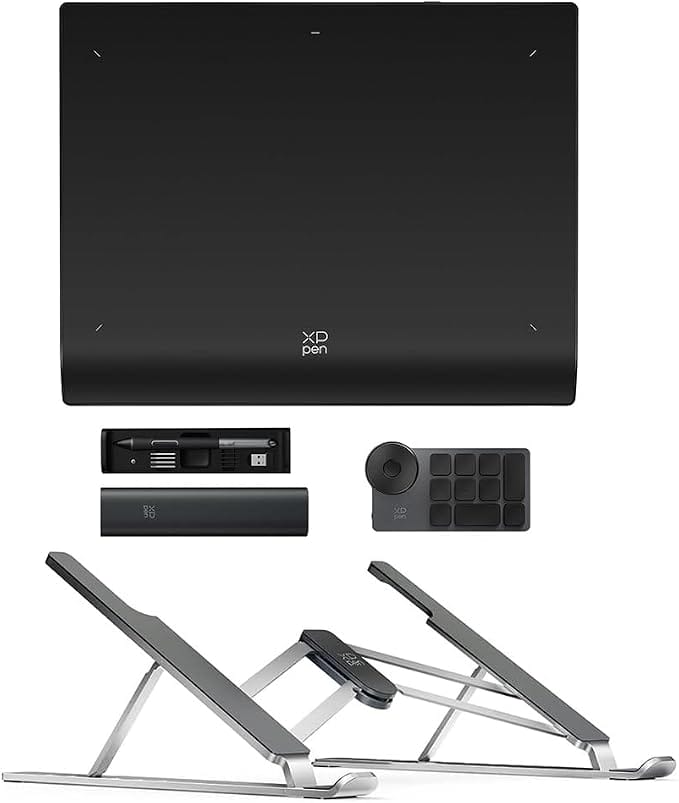
- Draws wirelessly
- Large active area
- Tilt-sensitive pen + dial
- Pro features for less
The XP-Pen Deco Pro LW is a premium screenless tablet that cuts the cord, drawing wirelessly so you can work from the couch or untether at a desk. It pairs a large active area with a tilt-sensitive pen, a dial, and shortcut keys for a genuinely pro workflow at a mid-range price. For artists who want Wacom-class features without the Wacom price, this is a standout.
🎨 Buy if you want a big, wireless, feature-rich tablet for less. Skip if you specifically want to draw on a screen.
5. Huion Inspiroy 2: best mid-range tablet
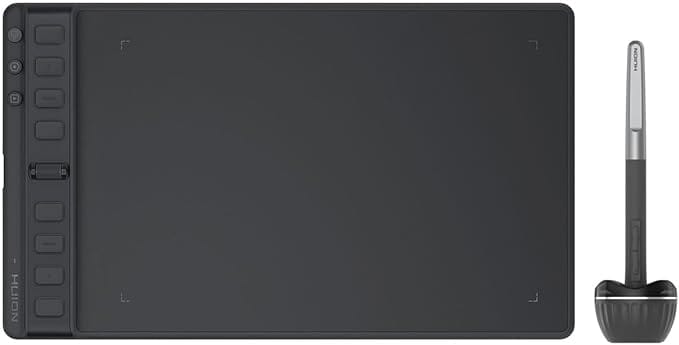
- Large drawing area
- Tilt-sensitive battery-free pen
- Scroll wheel + shortcut keys
- Great mid-range value
The Huion Inspiroy 2 hits the sweet spot for screenless tablets: a large drawing area, a tilt-sensitive battery-free pen, a handy scroll wheel, and programmable keys, all at a friendly price. It’s a serious upgrade from entry pads without the cost of a display, and Huion’s software has matured a lot. A great choice for hobbyists getting serious about illustration.
🎨 Buy if you’ve outgrown a starter pad and want more area and features. Skip if you’re ready to commit to a pen display.
6. Wacom One HD: best entry pen display
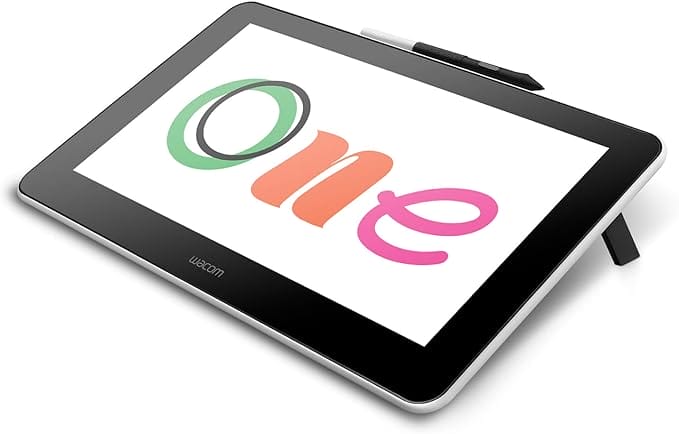
- Draw directly on screen
- Full HD display
- Reliable Wacom pen + drivers
- Best first pen display
The Wacom One HD is the gateway to drawing directly on a screen. You get a sharp Full HD display, Wacom’s reliable pen and drivers, and a price far below the Cintiq line. Drawing on the screen feels natural and immediate, the moment most artists stop fighting the hand-eye disconnect of a screenless pad. The best first pen display for the money.
🎨 Buy if you want to draw on a screen with trusted Wacom support, affordably. Skip if you want the largest or most color-accurate display.
7. XP-Pen Artist 13.3 Pro V2: best value pen display
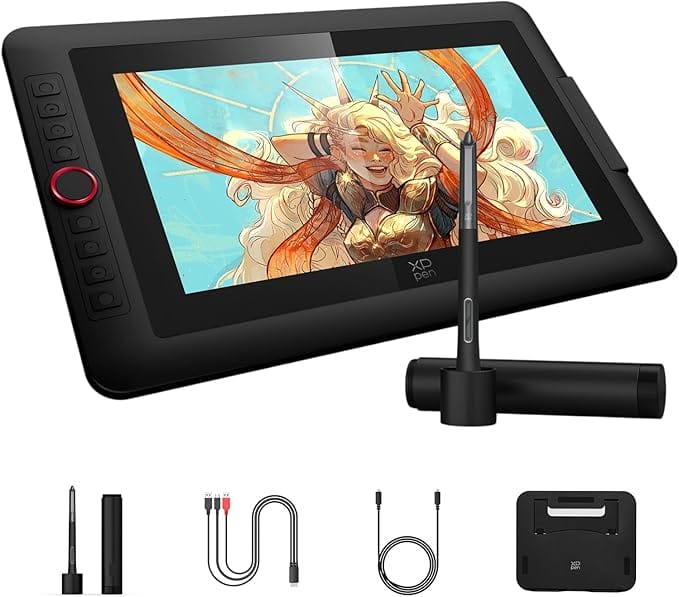
- Laminated, color-accurate screen
- Reduced parallax
- Tilt pen + red dial
- Portable and affordable
The XP-Pen Artist 13.3 Pro V2 packs a laminated, color-accurate screen, a tilt-sensitive pen, and a red control dial into a portable display at a price that undercuts Wacom significantly. The laminated screen reduces parallax (the gap between pen tip and line) that plagues cheaper displays. For artists who want a real drawing screen without spending Cintiq money, this is the value champion.
🎨 Buy if you want an affordable, color-accurate pen display. Skip if you need the largest screen or Wacom’s ecosystem.
8. Huion Kamvas 13 (Gen 3): best display for the money
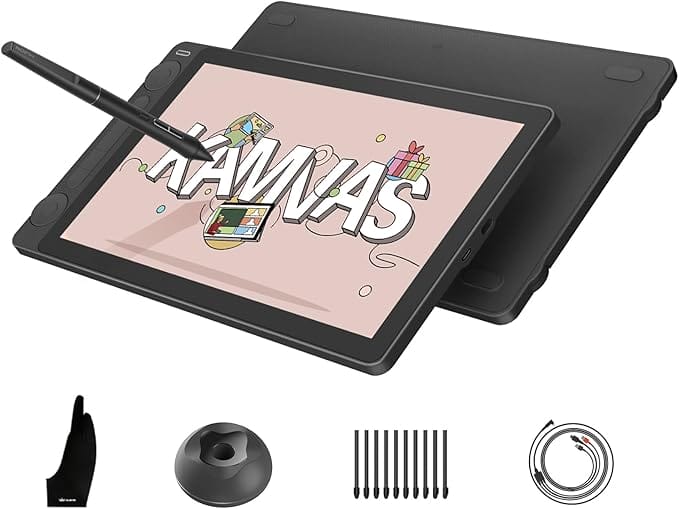
- Vivid laminated 13" screen
- High-pressure battery-free pen
- Stand and glove included
- Premium feel for the price
The Huion Kamvas 13 Gen 3 is one of the best-value pen displays you can buy: a vivid, laminated 13-inch screen, a superb battery-free pen with high pressure levels, and a bundle that usually includes a stand and glove. It feels far more premium than its price, and Huion’s drivers are now genuinely good. A brilliant pick for students and aspiring pros stepping up to a screen.
🎨 Buy if you want a premium-feeling pen display at a mid price. Skip if you need a 16-inch or larger workspace.
9. Wacom Cintiq 16: best pro display
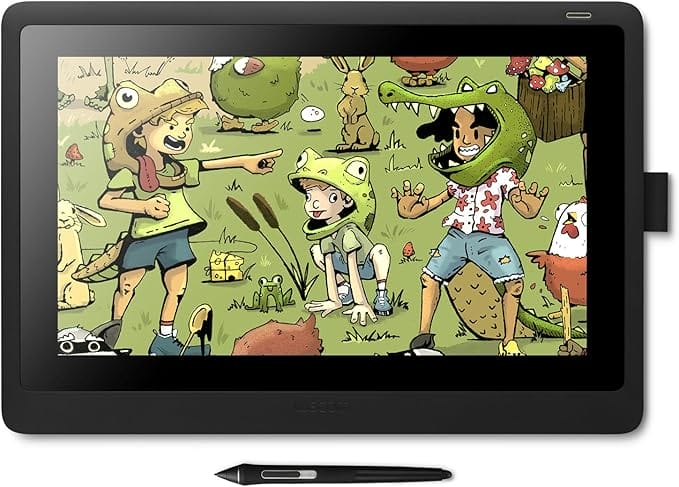
- 16-inch professional screen
- Wacom Pro Pen 2
- Class-leading drivers
- The studio workhorse
The Wacom Cintiq 16 is the professional standard, the pen display you’ll find in studios worldwide. A large 16-inch screen, Wacom’s class-leading Pro Pen 2, flawless drivers, and the most natural drawing feel in the business make it the reliable workhorse for working artists. It costs more than the budget brands, but the precision and rock-solid reliability are why pros keep buying Wacom.
🎨 Buy if you’re a working artist who wants the proven studio standard. Skip if you’re a beginner, the value brands do plenty for less.
10. Wacom Cintiq Pro 17: best premium display
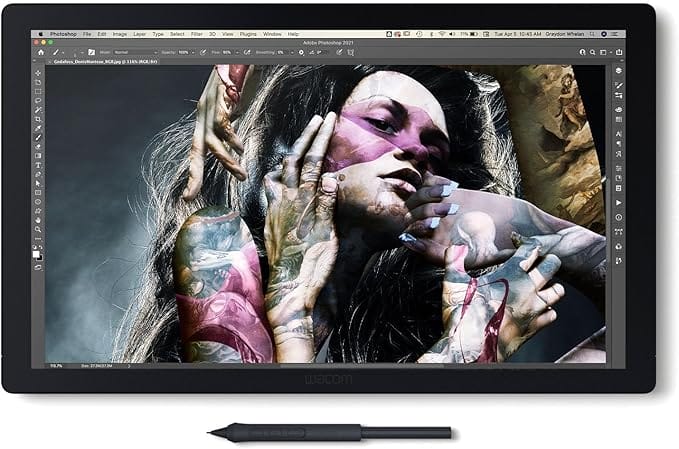
- 4K color-accurate screen
- Etched anti-glare glass
- Pro Pen 2 + touch
- For working professionals
For top-tier professionals, the Wacom Cintiq Pro 17 is the no-compromise display: a stunning 4K, color-accurate, etched-glass screen, the Pro Pen 2, and touch support. It’s built for studio illustrators, animators, and retouchers whose income depends on color accuracy and pen precision. It’s a serious investment, but for pros it pays for itself in speed and confidence.
🎨 Buy if you’re a professional who needs 4K color accuracy and the best pen feel. Skip if you’re not earning from your art yet, it’s overkill.
How to choose a pen tablet
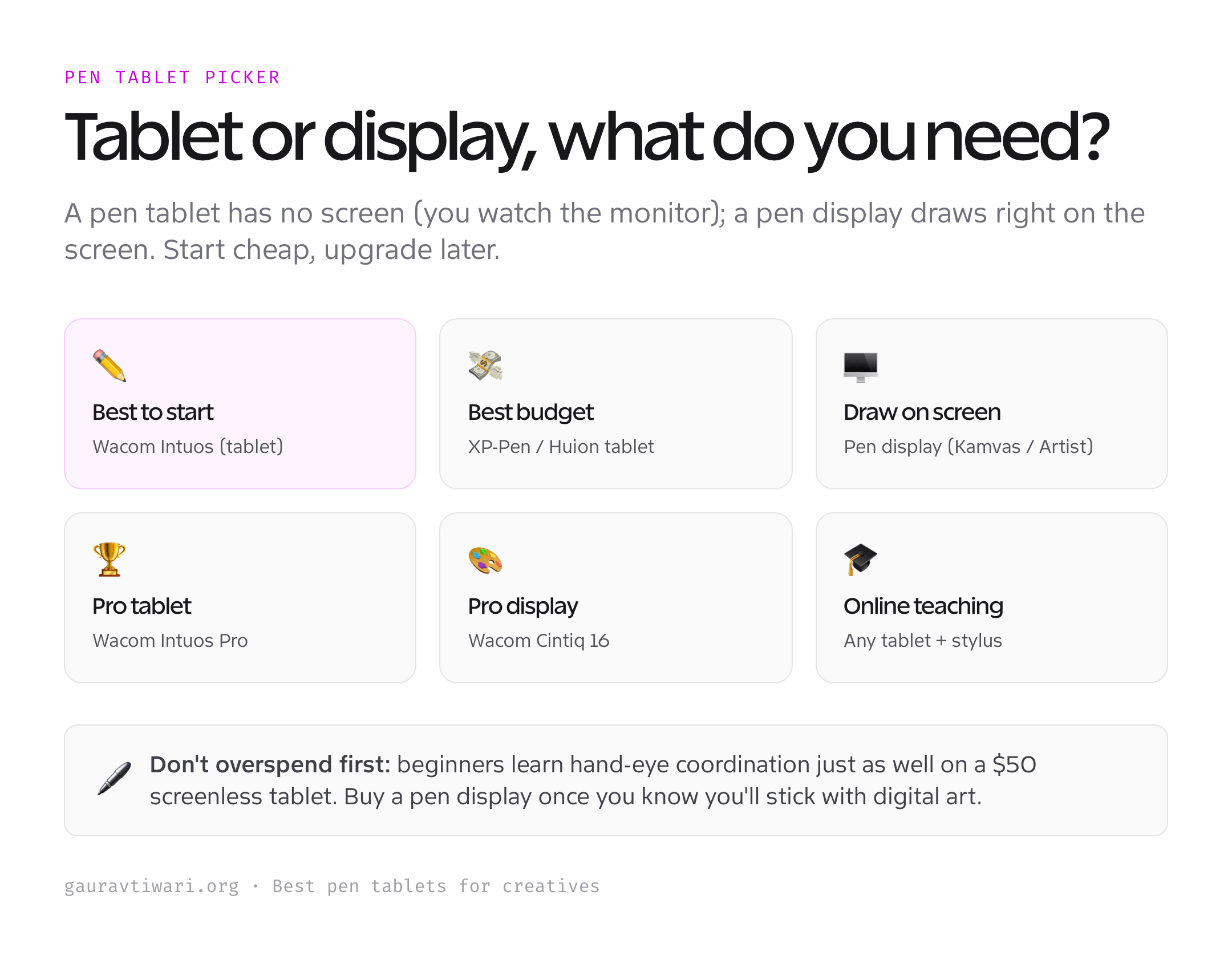
The right tablet comes down to a few clear questions.
- Tablet or display? Screenless tablets are cheaper and great for learning; pen displays let you draw directly on the screen and feel more natural. Beginners can start screenless.
- Pressure sensitivity. 8,192 levels is now standard and plenty. Don’t pay extra for marketing beyond that, the pen feel matters more than the number.
- Active area or screen size. Bigger is more comfortable but pricier and less portable. Match it to your desk and how you work.
- Drivers and software support. This is where Wacom leads, but Huion and XP-Pen have improved hugely. Check your art software is supported.
- Laminated screen (for displays). A laminated screen reduces parallax, the small gap between pen tip and line, for more accurate drawing. Worth it on a display.
Decide tablet-vs-display first, then set your budget, and the choice narrows fast. Beginners genuinely don’t need to spend much to learn.
Which pen tablet should you buy?
If you’re starting out, a Wacom Intuos or a budget Huion HS64 / XP-Pen StarG640 teaches you the craft cheaply. Ready to draw on a screen? The Wacom One HD, XP-Pen Artist 13.3 Pro, or Huion Kamvas 13 are the value picks. Working professionals should invest in the Wacom Cintiq 16, or the Cintiq Pro 17 for 4K color-critical work. Decide tablet-vs-display, match your budget, and check your software, then buy with confidence.
Frequently asked questions
What is the difference between a pen tablet and a pen display?
A pen tablet (graphics tablet) has no screen, you draw on a pad while looking at your computer monitor. A pen display has a built-in screen, so you draw directly on your artwork like paper. Tablets are cheaper and great for learning; displays feel more natural but cost more. Beginners can start with a screenless tablet and upgrade to a display later.
Is Wacom worth it over Huion and XP-Pen?
Wacom still leads on driver reliability, pen feel, and software support, which matters for working professionals who can’t afford glitches. But Huion and XP-Pen have closed the gap dramatically and offer far more screen and features for the money. For beginners and budget-conscious artists, the value brands are excellent; for studio pros, Wacom’s consistency justifies the premium.
Do I need a pen display to draw digitally?
No. Plenty of professionals work on screenless tablets, and they’re far cheaper. Drawing on a pad while watching your monitor takes a day or two to learn, then becomes second nature. Start with a screenless tablet to build the skill and confirm you’ll stick with digital art, then invest in a pen display if you want the more natural, draw-on-screen feel.
How much pressure sensitivity do I need?
8,192 levels of pressure sensitivity is now the standard across nearly all tablets, including budget ones, and it’s far more than enough for professional work. Don’t choose a tablet based on a higher number, the actual pen feel, tilt support, and driver quality matter much more than the pressure-level spec, which crossed the point of diminishing returns years ago.
What is the best pen tablet for beginners?
The Wacom Intuos is the classic beginner choice for its reliable drivers and pen feel, while the Huion HS64 and XP-Pen StarG640 are excellent ultra-budget alternatives. All are screenless tablets that teach the fundamentals cheaply. Start with one of these, and only move up to a pen display once you’re sure you’ll keep drawing and want the draw-on-screen experience.
Can I use a pen tablet for online teaching or signing documents?
Yes, and it’s one of the most popular uses. A cheap screenless tablet like the XP-Pen StarG640 or Huion HS64 is perfect for writing on a virtual whiteboard, annotating slides, solving math problems live, or signing PDFs. You don’t need an expensive display for these tasks, any basic pen tablet turns your screen into a writable surface for a few dollars.
The bottom line
The best pen tablet is the one that fits your stage and budget. Start cheap with a Wacom Intuos or a budget Huion/XP-Pen pad to learn the craft, step up to a pen display like the Wacom One HD, XP-Pen Artist, or Huion Kamvas 13 when you want to draw on screen, and invest in a Wacom Cintiq once art pays the bills. Decide tablet-vs-display, match your budget, check your software, and you’ll create with a tool that helps rather than fights you.