
Free ebook · Physics
Shine light through a material and a fraction comes back changed. This is the whole story of that fraction.
On February 28, 1928, C.V. Raman and K.S. Krishnan measured that changed light in Kolkata. This free book covers the complete story: the science, the history, and the modern applications.
Free digital download · theory, discovery, and applications · no payment at checkout
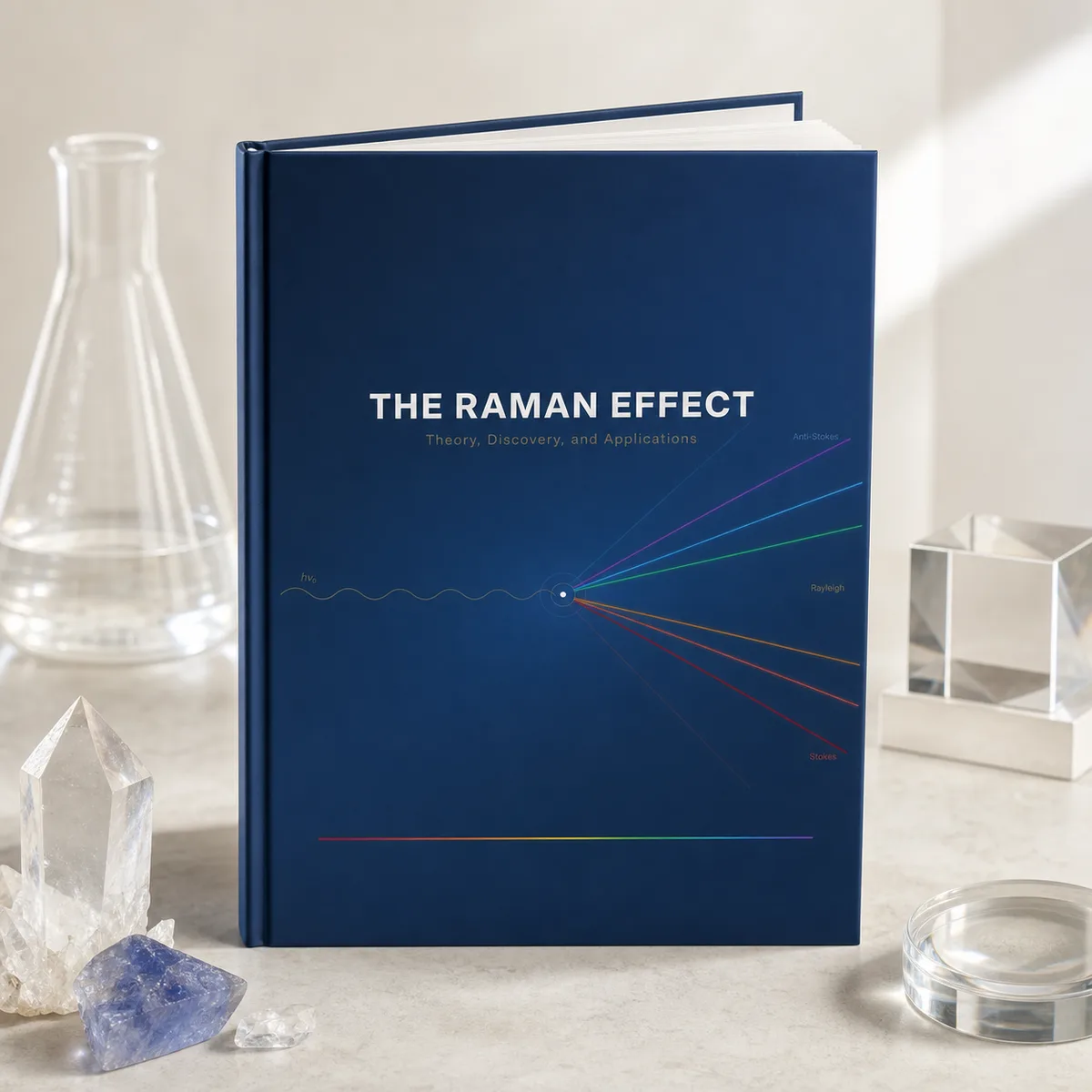
What’s inside
The discovery, the derivations, and where the effect works today.
Most treatments pick one: the history or the physics. This book runs them together, because the 1928 measurement makes more sense when you can follow the theory behind it.
The discovery
- February 28, 1928. C.V. Raman and K.S. Krishnan, in Kolkata
- Raman’s life and the road to that measurement
The theory
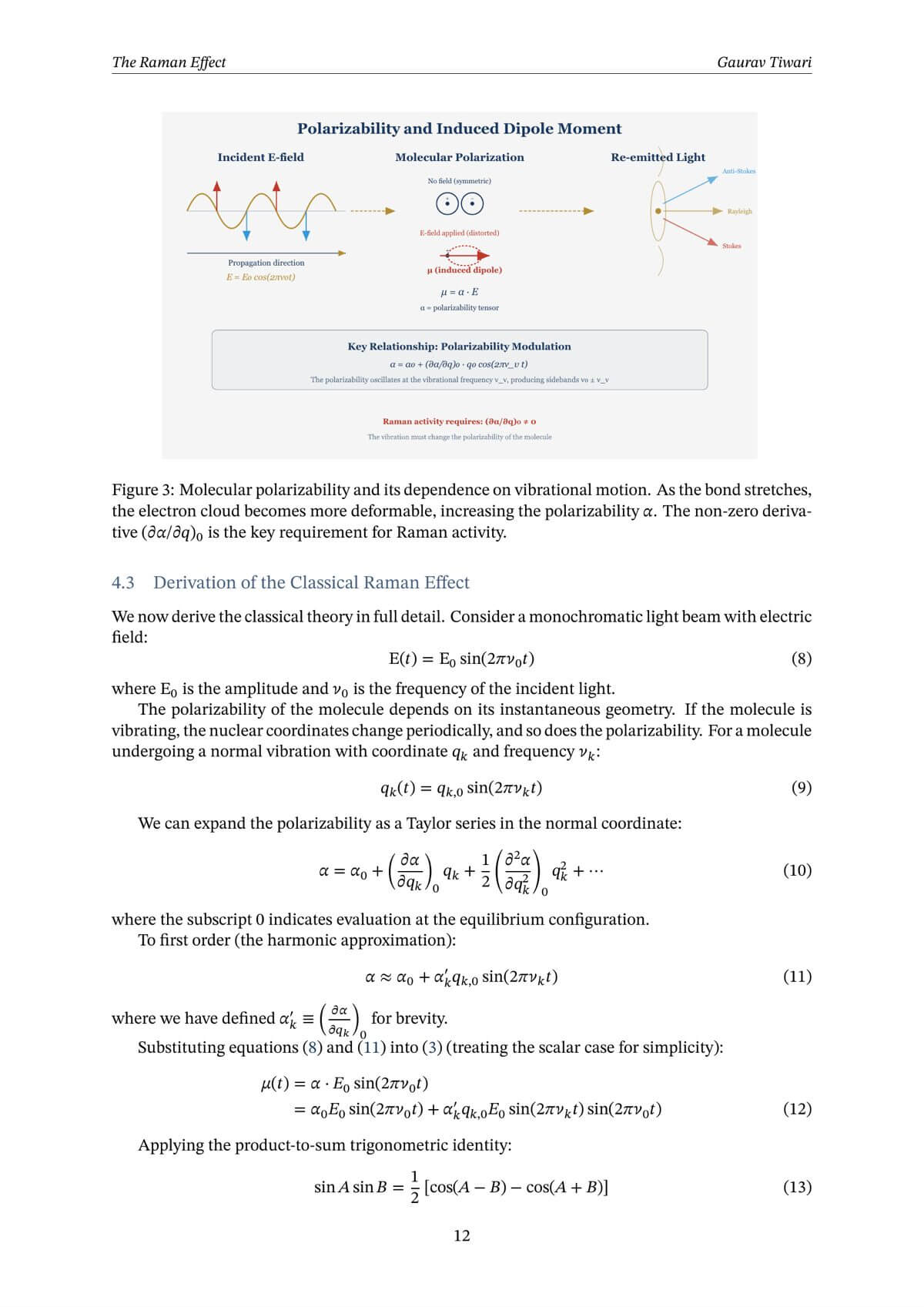
- Classical derivation of the effect from first principles
- Quantum treatment. Energy level diagrams, virtual states, and selection rules
- Polarizability tensor and the depolarization ratio
The modern lab
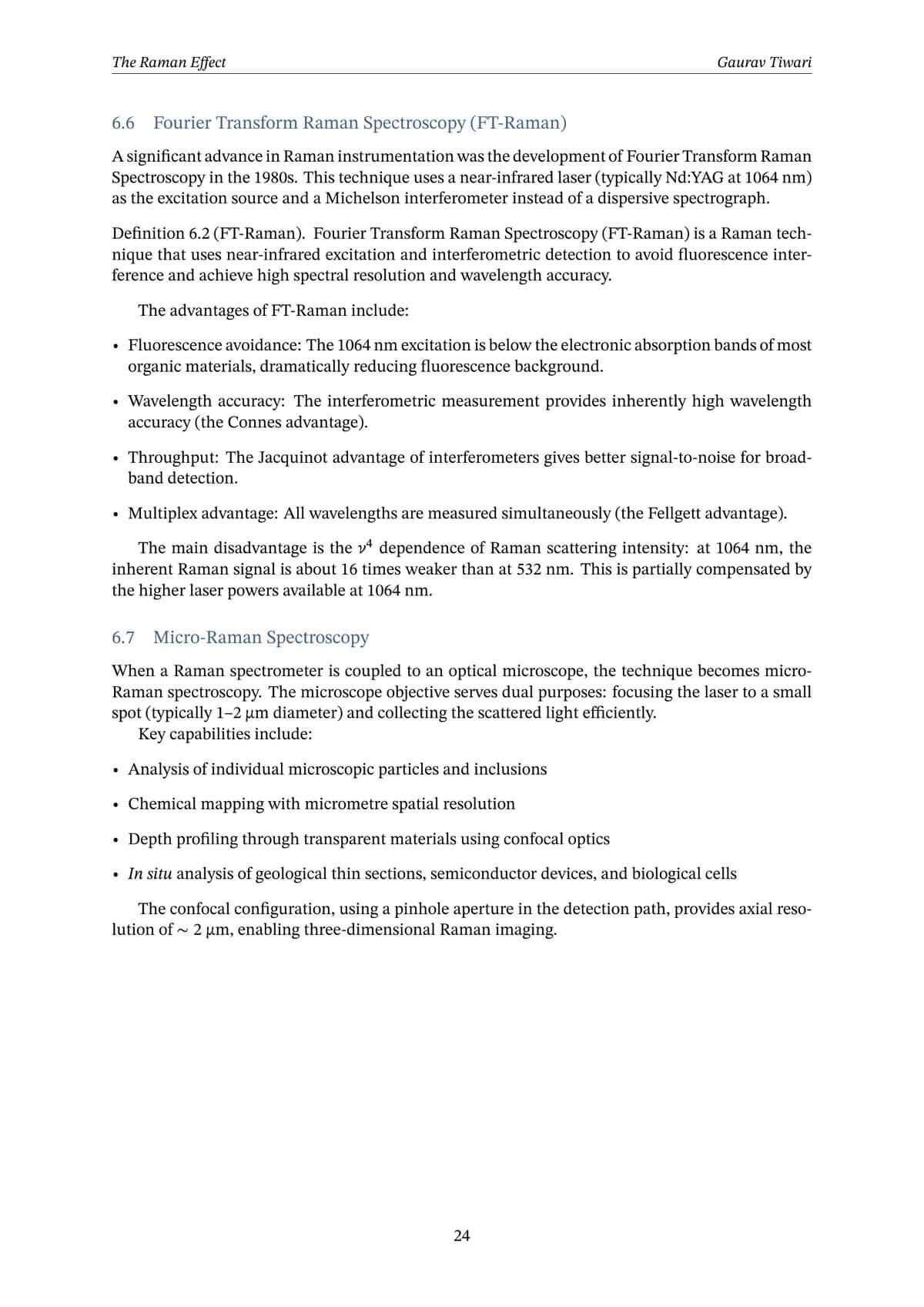
- Techniques: SERS, CARS, TERS, SORS
- FT-Raman and micro-Raman spectroscopy
- Applications in medicine, forensics, art, and nanotechnology, from diagnostics to carbon nanomaterials
The wider story
- Indian contributions to physics beyond Raman: Bose, Saha, Chandrasekhar
- The context that made the discovery possible
History, derivations, and applications in one book, so the effect never floats free of its story.
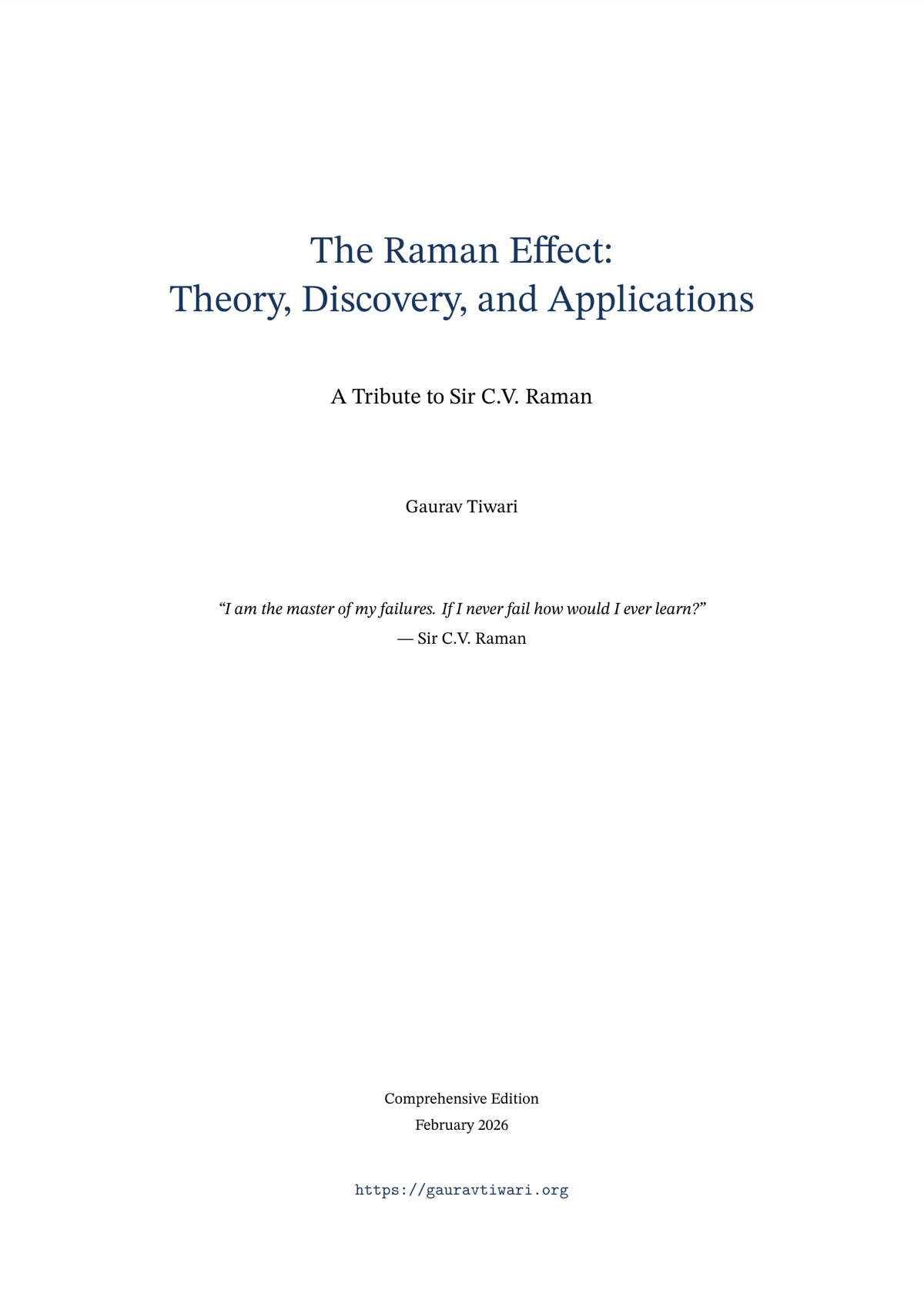
Look inside the book.
Preview the writing, structure, and page layout before you decide.
Get the book
The Raman Effect: Theory, Discovery, and Applications
Free
Digital download · the checkout exists only to create your download link
- The 1928 discovery told with the people and the place, not just the result
- Classical and quantum derivations of the Raman effect
- Selection rules, the polarizability tensor, and the depolarization ratio
- Modern techniques: SERS, CARS, TERS, SORS, FT-Raman, micro-Raman
- Applications in medicine, forensics, art, and nanotechnology
- The wider arc of Indian physics: Bose, Saha, Chandrasekhar
No payment. Checkout creates your download link instantly.
Questions readers ask
Asked before downloading, answered straight.
Is it actually free?
Yes. There’s no payment step. The checkout exists only to create your download link, and it does that instantly.
Is it a history book or a physics book?
Both, on purpose. Raman’s life and the 1928 discovery carry the story, and the classical and quantum derivations carry the physics. Neither half is decoration for the other.
Does it stop at the classic experiment?
No. It covers the modern techniques, SERS, CARS, TERS, and SORS among them, and the applications that run from medical diagnostics to carbon nanomaterials.
Is it only about Raman?
Mostly, but not entirely. There’s a section on Indian contributions to physics beyond him: Bose, Saha, and Chandrasekhar, so the discovery sits in its context.
What I’m not going to claim
This book has no ratings yet, and I’d rather say that than invent applause. It’s a free download, so finding out whether it’s for you costs one click and an evening.
I’m also not claiming it turns you into a spectroscopist. It gives you the derivations, the history, and a map of the modern techniques. Running an instrument is a different education.
Hey, I’m Gaurav 👋
I’ve been writing math and physics for students since 2008, and the Raman effect is the piece of Indian science I kept coming back to: a world-class measurement, made at home, that most textbooks reduce to one line and a date. This book is the longer version.
The numbers, since you probably won’t read a full bio:
- 18 years building on the web, and a WordPress core contributor
- 2,000+ articles published since 2008, a lot of them explanations like this one
- 850+ clients shipped in that time, from study notes to software
Read the story
Start with a February morning in Kolkata. Finish knowing why the light changed.
The discovery, the derivations, and the modern lab, in one free book. The checkout only exists to hand you the link.
Free · no payment · download link issued instantly