
Student Help series · free download
Your mind goes blank in the exam. You studied. That’s not a memory problem.
Test anxiety, social anxiety, and generalized anxiety look different, feel different, and need different responses. Most students carrying one of them have never had it named, which makes it feel like a character flaw instead of a thing with a shape.
15 pages · free on this site, no payment · also on Kindle and paperback · published 28 February 2025
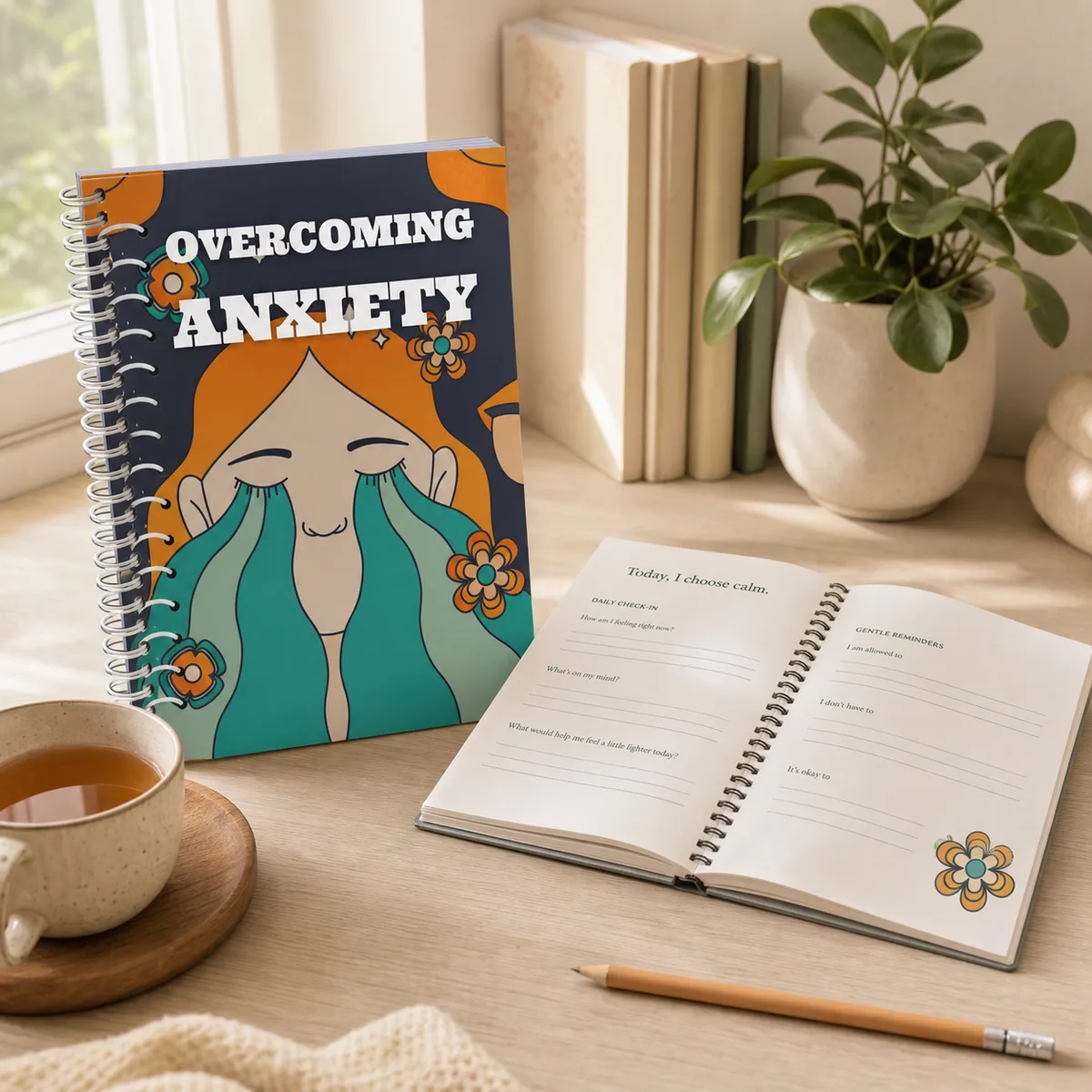
Read it as:
Why this guide
Just relax has never helped anybody.
Generic advice fails because the three common kinds of student anxiety need different responses, and lumping them together produces advice that fits none of them.
The advice students usually get
the default- Just relax. Instruction without a method, which mostly adds guilt for not managing it.
- Study more. Aimed at a knowledge gap, when the problem is what happens to recall under pressure.
- One label for everything. Test, social, and generalized anxiety get treated as one thing needing one fix.
- Advice with no source. Confident claims about the brain with nothing behind them.
- Wait until it’s severe. Nothing on what to do at the stage most students are actually at.
- No mention of professionals. The option that helps most is left out, usually to sell you the alternative.
What this guide does
the primer- Three types, separated. Test, social, and generalized anxiety, each with its own symptoms and responses.
- Named techniques. Progressive muscle relaxation, gradual exposure, study routine restructuring, mindfulness.
- Cases you can recognize. Three students, with specific symptoms, specific interventions, and outcomes.
- Sourced numbers. Figures from the National Institute of Mental Health and the American College Health Association.
- Support structures. Building a network, finding resources, and daily habits that reduce baseline stress.
- Professional help, stated. When to seek it, said clearly rather than avoided.
What’s inside
Three kinds of anxiety, and what each one needs.
The guide separates the three most common presentations in students, gives each one its symptoms and its techniques, and closes on support and daily habits.
Test anxiety
- What it looks like
- Why the mind goes blank
- Progressive muscle relaxation
- Restructuring a study routine
Social anxiety
- Group projects and speaking up
- Avoidance and what it costs
- Gradual exposure
- Cognitive-behavioral approaches
Generalized anxiety
- Persistent worry across everything
- Professional treatment options
- Mindfulness practice
- Routine building and realistic goals
Three case studies
- Olivia, before entrance exams
- Max, college freshman
- Sarah, through graduate school
The numbers
- National Institute of Mental Health data
- American College Health Association findings
- Why prevalence matters when you feel alone in it
Support
- Building a support network
- Finding professional resources
- Daily stress-reduction habits
- Steps you can take this week
15 pages. The cases are there to be recognized, not admired. If one of them sounds like your week, the section after it tells you what helps.
Before you start
Most of what stops students isn’t real.
Four reasons students put this off, none of which hold up.
You don’t need a diagnosis to start
The techniques here help whether or not anything is formally diagnosed. Naming what you’re experiencing is a legitimate first step on its own.
You don’t need to tell anyone yet
Everything in the first pass is private. Building a support network is covered, but it’s a later step and it’s your call.
You don’t need hours a day
The daily habits section is built around things that fit into a student week, not around a wellness routine nobody sustains.
You don’t need to pay for it
The full guide is free here. Buy the Kindle edition only if you’d genuinely rather read it there.
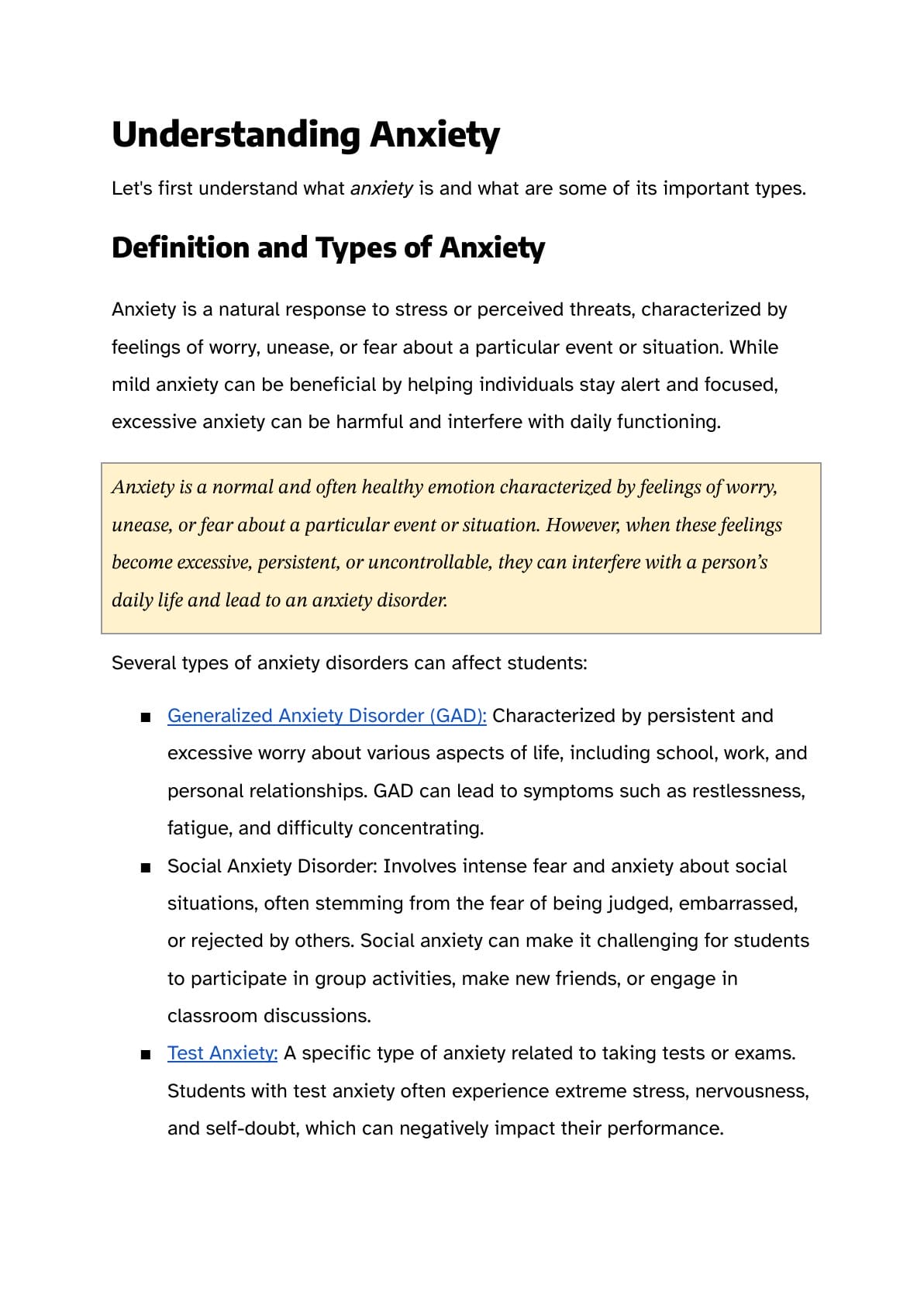
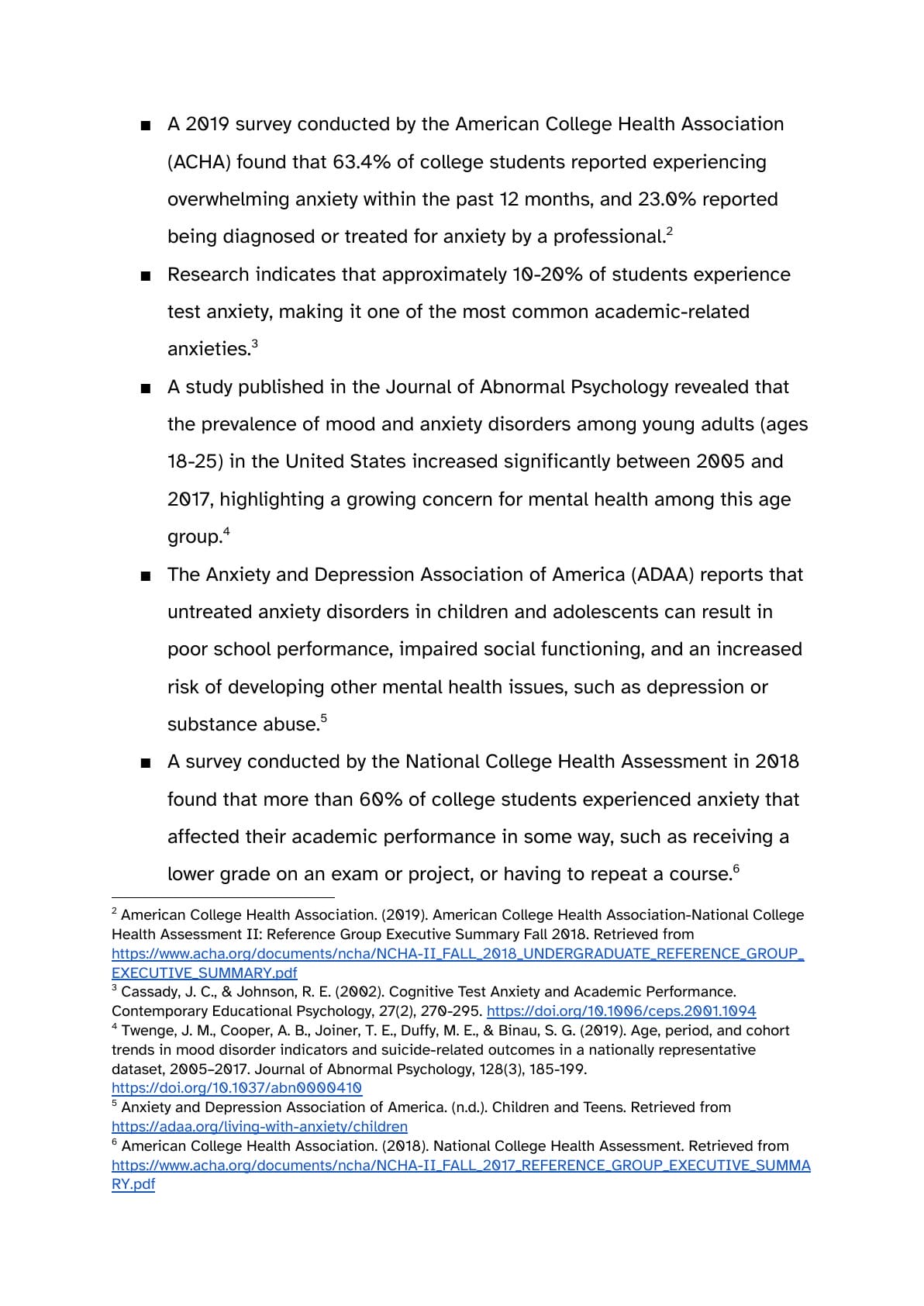
Look inside the book.
Preview the writing, structure, and page layout before you decide.
Get the guide
Overcoming Anxiety as a Student
Free
15 pages · free on this site · Kindle and paperback on Amazon · published 28 February 2025
- Tell which of the three common kinds of student anxiety matches what you’re experiencing
- Use progressive muscle relaxation before an exam, correctly rather than approximately
- Restructure a study routine so it stops feeding pre-exam stress
- Approach a feared social situation through gradual exposure instead of avoidance
- Read three case studies with specific symptoms, interventions, and outcomes
- Recognize the point at which professional help is the right next step
The Kindle edition exists because some people read on a Kindle and Amazon has no free tier. If you’re deciding between the two on price, take the free one. Page count, publication date, and Kindle Unlimited status checked on Amazon, July 27, 2026.
No payment. Checkout creates your download link instantly.
How to actually use it
Small and consistent beats a big plan you abandon in a fortnight.
1. Find your section
Read the three types and stop at the one that sounds like your week.
You leave with: a name for what’s happening.2. Try one technique
Pick a single method from that section and use it for a week before adding anything.
You leave with: one thing that either helps or doesn’t.3. Adjust the routine
Change the study or social pattern the guide identifies as feeding it.
You leave with: a week that costs you less.4. Decide about support
Read the support section and make a deliberate call about professional help.
You leave with: a decision rather than a drift.Questions students ask
Asked before downloading, answered straight.
Fifteen pages. Is that enough?
It’s enough to name the thing, try a technique, and know where to go next. It is not enough to work through an anxiety disorder, and I’d be doing you harm by implying otherwise.
Is this treatment?
No. I’m a teacher and a writer, not a psychologist. The guide summarizes recognized techniques, cites published prevalence data, and points you toward professional help. That’s the honest limit of what it is.
Why does a fifteen-page book need three case studies?
Because recognizing yourself is most of the first step. A student who thinks they’re bad at exams behaves differently from a student who knows they have test anxiety and that it’s a common thing with specific techniques attached to it.
What if this is bigger than exam nerves?
Then a fifteen-page guide isn’t the right tool. If you’re in distress, or if what you’re carrying is affecting your safety, please talk to a doctor, a campus counselling service, or a crisis line.
Why is there a paid Kindle edition if it’s free here?
Because some people read on a Kindle and Amazon has no free tier. It’s on Kindle and paperback, and free to read on Kindle Unlimited. If price is the deciding factor, take the free one here.
Do I need a diagnosis first?
No. The techniques help whether or not anything is formally diagnosed, and naming what you’re experiencing is a legitimate first step on its own.
What I’m not going to claim
This is not treatment, and it isn’t written by a clinician. It summarizes recognized techniques and published data and points you toward professional help, and that’s the honest limit of what it is. If you’re in distress, please talk to a doctor, a campus counselling service, or a crisis line rather than a fifteen-page ebook.
It’s also short. Fifteen pages is a primer. It’s enough to name the thing, try a technique, and know where to go next. It is not enough to work through an anxiety disorder.
And it’s free here. The Kindle edition exists because some people read on a Kindle and Amazon has no free tier. If you’re deciding between them on price, take the free one. I’d rather this reached you than earned anything.

Hey, I’m Gaurav 👋
I taught competitive-exam and NDA students for years, and I watched capable candidates go blank in a hall over material they knew cold the previous evening. Nobody in that room had a name for what was happening, including me at first. That’s the gap this was written into.
I want to be straightforward about my limits. I’m not a clinician, and this guide doesn’t pretend to be clinical. Where it stops, it says so.
The numbers, since you probably won’t read a full bio:
- 18 years building on the web, and a WordPress core contributor
- 2,000+ articles published since 2008, a lot of them written for students
- 850+ clients, which is the work that pays for the free shelf
It’s part of a small Student Help series, and it stays free here permanently. This is one of the few things I’ve published where I’d rather nobody paid for it.
Start this week
Read the section that sounds like your week, then try one technique.
One sitting to read. One week to find out whether a single named technique does anything for you.
15 pages · free here, no payment · Kindle and paperback on Amazon if you’d rather read it there
Disclaimer: This site is reader-supported. If you buy through some links, I may earn a small commission at no extra cost to you. I only recommend tools I trust and would use myself. Your support helps keep gauravtiwari.org free and focused on real-world advice. Thanks. - Gaurav Tiwari