
Study notes · free download
Most cell biology notes ask you to memorize what nobody explained.
Genetics, physiology, biochemistry, and medicine all trace back to what happens inside cells. This guide takes the cell apart one structure at a time, at the depth competitive exams ask for, and defines every technical term where it first appears.
Free on this site · no payment · written for competitive-exam depth, not for a night-before skim
What’s inside
The cell, taken apart in the order it makes sense in.
It starts at the cell theory proposed by Schleiden and Schwann, moves through the structural differences between prokaryotes and eukaryotes, and then gives each organelle its own section.
Cell theory and cell types
- The cell theory of Schleiden and Schwann
- Structural differences between prokaryotes and eukaryotes
- Why everything else in life sciences traces back here
Prokaryotic cells
- Bacterial cell envelope layers
- Gram staining, step by step
- Why Gram-positive stains purple and Gram-negative turns pink
- Flagella structure and the role of plasmids
The plasma membrane
- The fluid mosaic model
- Passive and active transport
- Endocytosis and exocytosis
The endomembrane system
- Endoplasmic reticulum
- Golgi apparatus
- Lysosomes and vacuoles
- Treated as one coordinated unit, not isolated structures
Mitochondria and chloroplasts
- Semi-autonomous organelles
- Why they carry their own DNA and ribosomes
- What that tells us about their evolutionary origin
Nucleus and chromosomes
- Nuclear envelope structure
- Chromatin organization and chromosome types
- Heterochromatin against euchromatin
- Lampbrush and polytene chromosomes
Technical terms are defined where they first appear, and the diagrams support the text rather than replacing it.
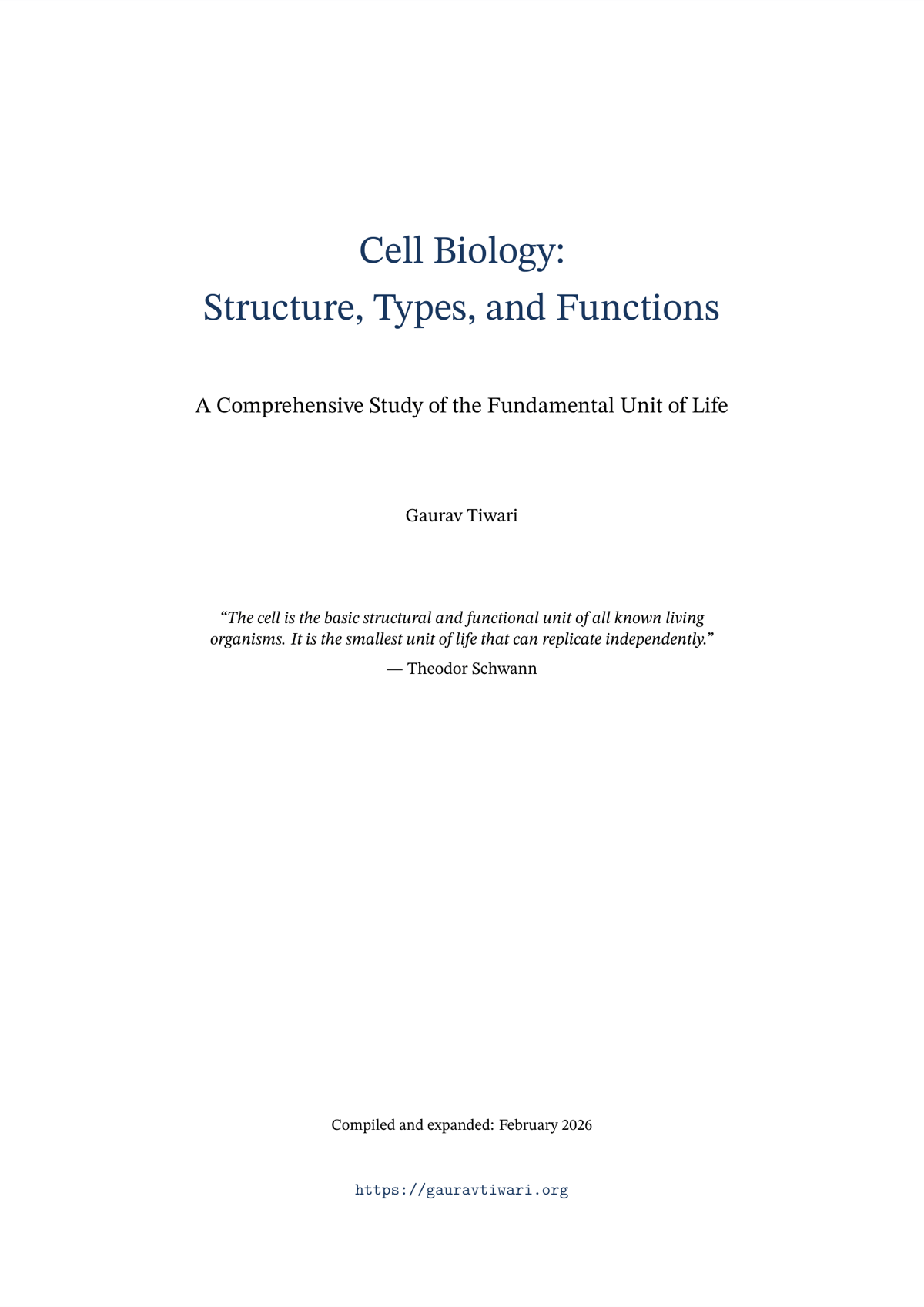
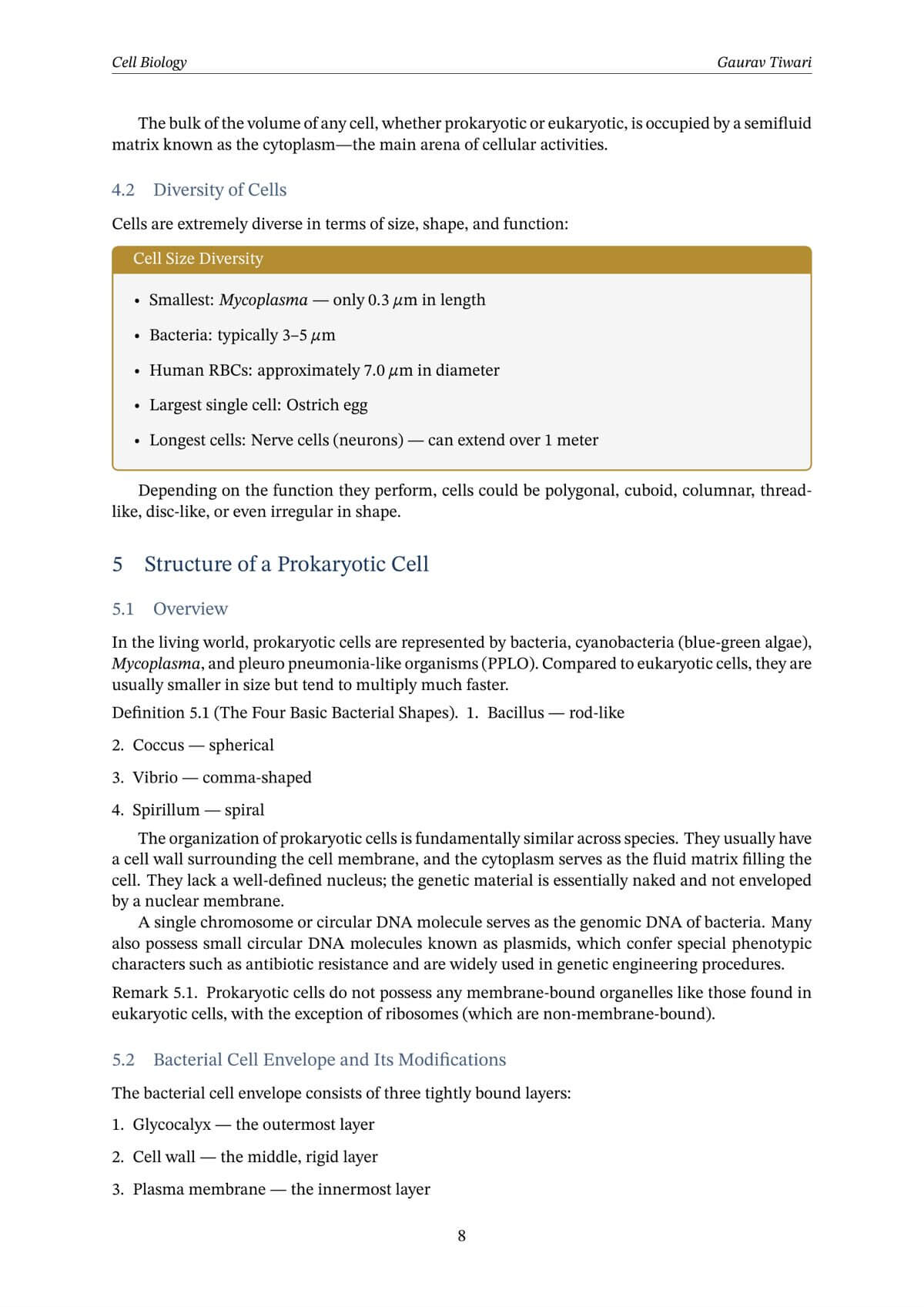
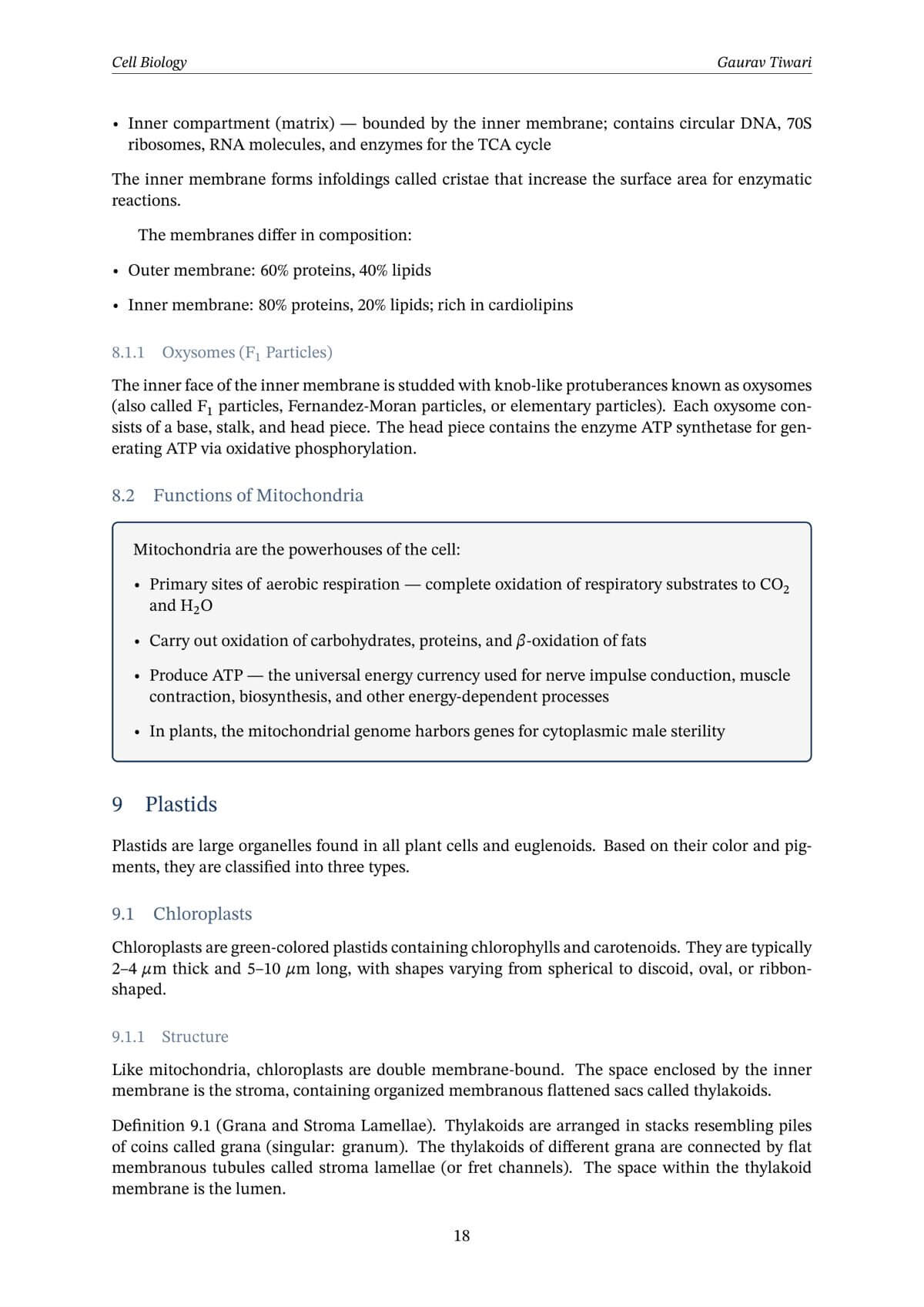
Look inside the book.
Preview the writing, structure, and page layout before you decide.
Get the guide
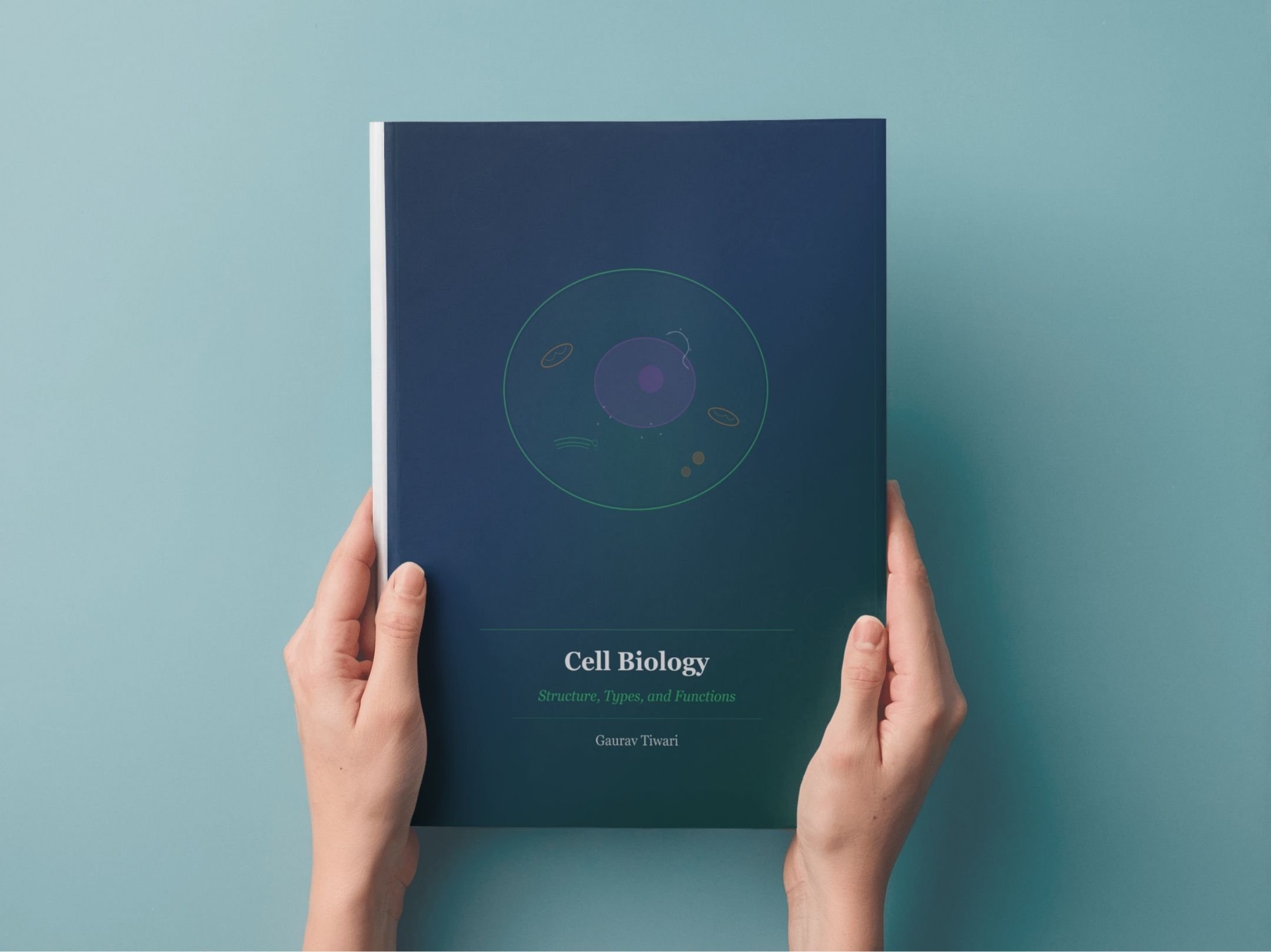
Cell Biology
Free
Free on this site · no payment · download link issued at checkout
- Explain the cell theory and the structural split between prokaryotes and eukaryotes
- Run through Gram staining as a procedure, and say why the two results differ in color
- Describe the fluid mosaic model, then place passive transport, active transport, endocytosis, and exocytosis inside it
- Read the ER, Golgi, lysosomes, and vacuoles as one coordinated endomembrane system
- Argue why mitochondria and chloroplasts count as semi-autonomous, from their own DNA and ribosomes
- Separate heterochromatin from euchromatin, and handle lampbrush and polytene chromosomes when a paper asks
This isn’t a condensed summary or a collection of bullet points. It’s a proper reference, written at exam depth and still readable enough to learn from.
No payment. Checkout creates your download link instantly.
How to actually use it
Read it in order once, then use it as a reference.
1. Start at the cell theory
The prokaryote and eukaryote split only makes sense once the theory underneath it does. Reading forward from there costs you nothing and saves the confusion later.
You leave with: the frame the rest hangs on.2. Treat Gram staining as a procedure
Follow the steps as written, then read the explanation of why the two groups end up purple and pink. Questions on this come back every year.
You leave with: a procedure you can reproduce, not a color you memorized.3. Read the endomembrane system in one sitting
ER, Golgi, lysosomes, and vacuoles are written as a coordinated unit. Studying them separately is what makes them slippery.
You leave with: one system instead of four flashcards.4. Keep the chromosome section for the hard questions
Heterochromatin, euchromatin, and the giant chromosomes are the detail end. Come back to it when a paper goes further than the basics.
You leave with: the depth on hand when you need it.Questions before you download
Asked before downloading, answered straight.
Is this a summary of bullet points?
No. That’s the thing it was written against. It’s a proper reference that covers cell biology at the depth competitive exams require, while staying readable enough to actually learn from.
Does it explain Gram staining properly?
Yes, with step-by-step instructions and the explanation for the result. If you’re confused about why Gram-positive bacteria stain purple while Gram-negative bacteria turn pink, that gets cleared up.
Are there diagrams?
Yes, and they support the text rather than replacing it. A labelled figure with nothing explaining it is how most notes lose you.
Will I need a glossary alongside it?
No. Technical terms are defined where they first appear, so you’re not holding a second book open to read the first one.
Does it cover the giant chromosomes?
Yes. Lampbrush and polytene chromosomes get dedicated coverage for students who need that level of detail, along with chromatin organization and chromosome types.
Does it really cost nothing?
Nothing. Checkout is there to create your download link, and no payment is taken.
What I’m not going to claim
It stops where the cell stops. Genetics, physiology, biochemistry, and medicine are named here as the things that build on cell biology, not as things this guide covers.
It’s a reference, not a revision sheet. If you want something you can skim the night before a paper, this isn’t shaped for that, and a condensed summary would serve you better on that one evening.
And it’s free, which means it owes you accuracy rather than volume. Read the section you need, and use your prescribed textbook for anything past the cell.

Hey, I’m Gaurav 👋
I taught competitive-exam students for years, and the pattern was always the same. They could recite the organelles and still lose the question, because nobody had explained how the parts work together. Notes that define their terms and explain their diagrams fix more of that than another revision cycle does.
The numbers, since you probably won’t read a full bio:
- 18 years building on the web, and a WordPress core contributor
- 2,000+ articles published since 2008, a lot of them written for students
- 850+ clients delivered, which is the work that keeps this shelf free
This one stays free here permanently. Study notes that sit behind a paywall reach the wrong half of the people who need them.
Read it this week
Understand the cell once, and the rest of the syllabus stops feeling arbitrary.
Start at the cell theory, read forward to the nucleus, and keep the chromosome section for the questions that go deeper.
Free here · no payment · download link issued at checkout