
7 Business Ideas to Make Money in 2026
Most “business idea” lists recycle the same tired suggestions every year. Sell t-shirts. Start a blog. Drive for Uber. Meanwhile, the people actually building wealth in 2026 are doing something completely different.
I’ve spent 16 years building businesses, helping 800+ clients launch their own, and watching trends come and go. The biggest shift I’ve seen? AI has completely rewritten the playbook. Business models that didn’t exist 18 months ago are now generating $10K-$30K per month for solo operators. At the same time, traditional models like e-commerce and franchising have evolved with better tools, lower startup costs, and higher margins than ever before.
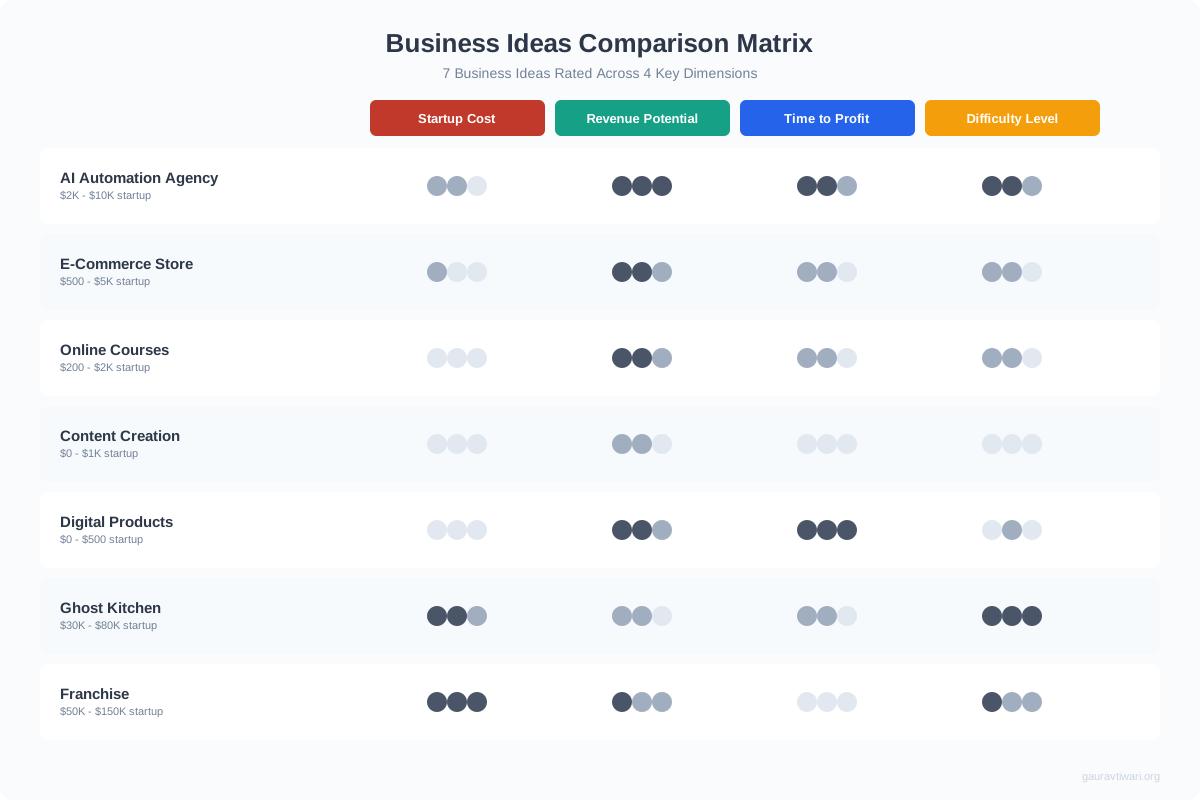
Here are seven business ideas that are actually working right now, with real startup costs, realistic revenue numbers, and the specific tools you’ll need to get started.
Start an AI Automation Agency
AI automation agencies are the fastest-growing business model I’ve seen since WordPress development took off in 2010. The concept is simple: you help businesses automate repetitive tasks using AI tools. Think setting up chatbots, building automated email workflows with AI, creating content pipelines, or integrating AI into existing business processes.
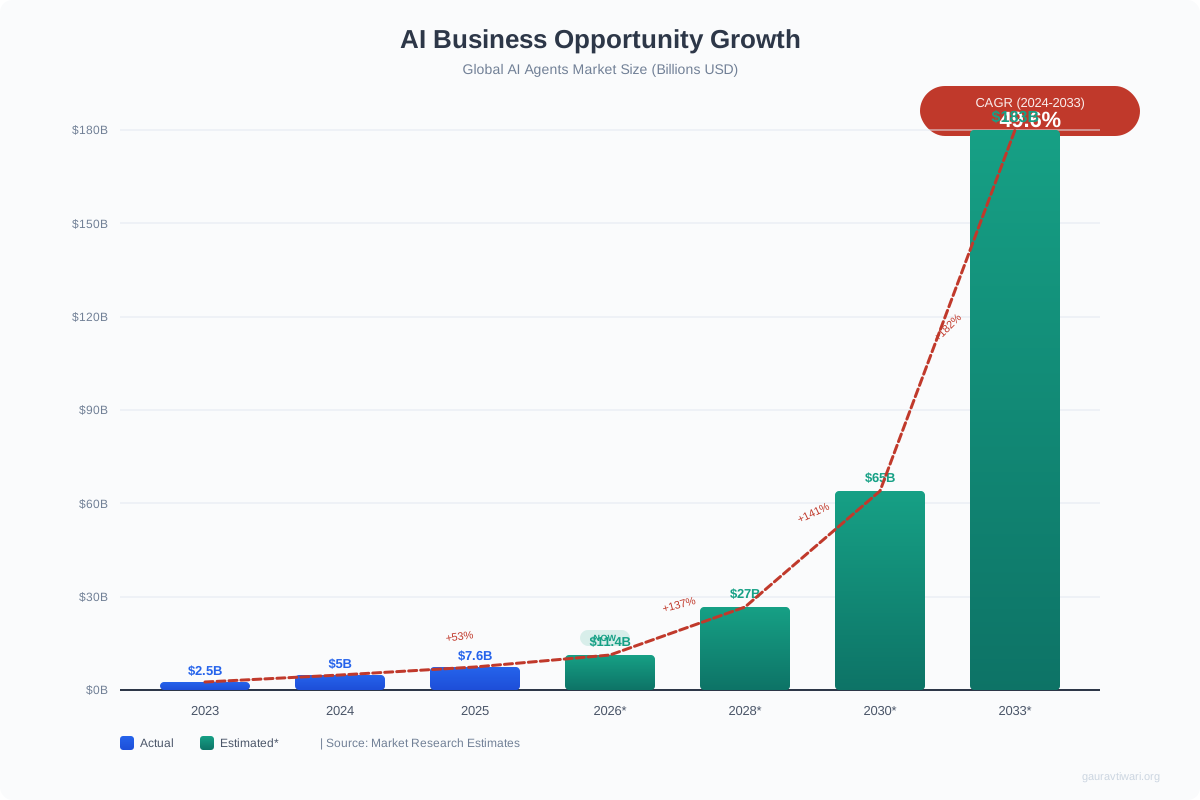
The AI agents market hit $7.63 billion in 2025 and is projected to reach $182.97 billion by 2033, growing at 49.6% annually. That’s not hype. That’s verified market data. And the best part? You don’t need to be a programmer to start one.
Tools like Make.com, Zapier, and n8n let you build sophisticated automations with drag-and-drop interfaces. Pair those with the OpenAI or Claude API, and you can deliver solutions that would have required a team of developers just two years ago.
Start with project-based pricing ($2,500-$15,000 per automation project), then transition clients to monthly retainers ($2,000-$8,000/month) for ongoing maintenance and optimization. Retainer clients are where the real money is.
Startup Costs and Revenue Potential
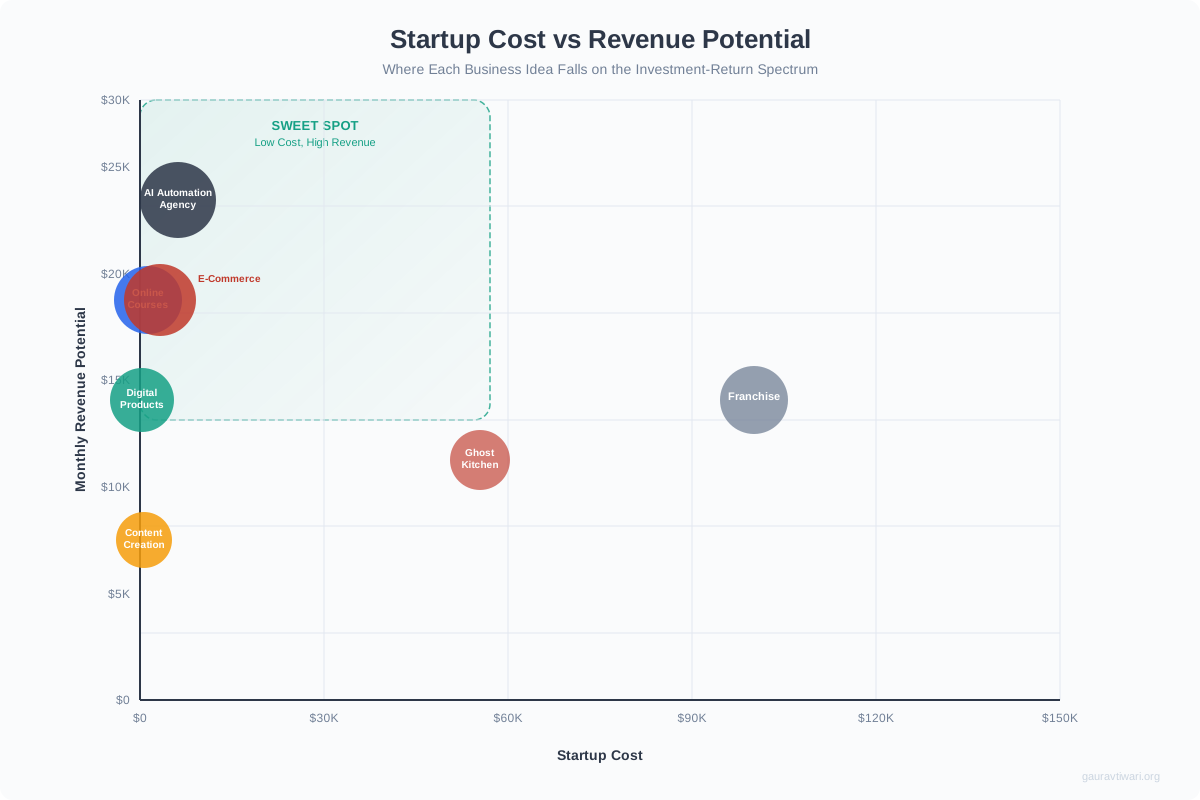
- Startup cost: $500-$5,000 (tools, subscriptions, portfolio site)
- Revenue potential: $7,500-$30,000/month within 6-12 months
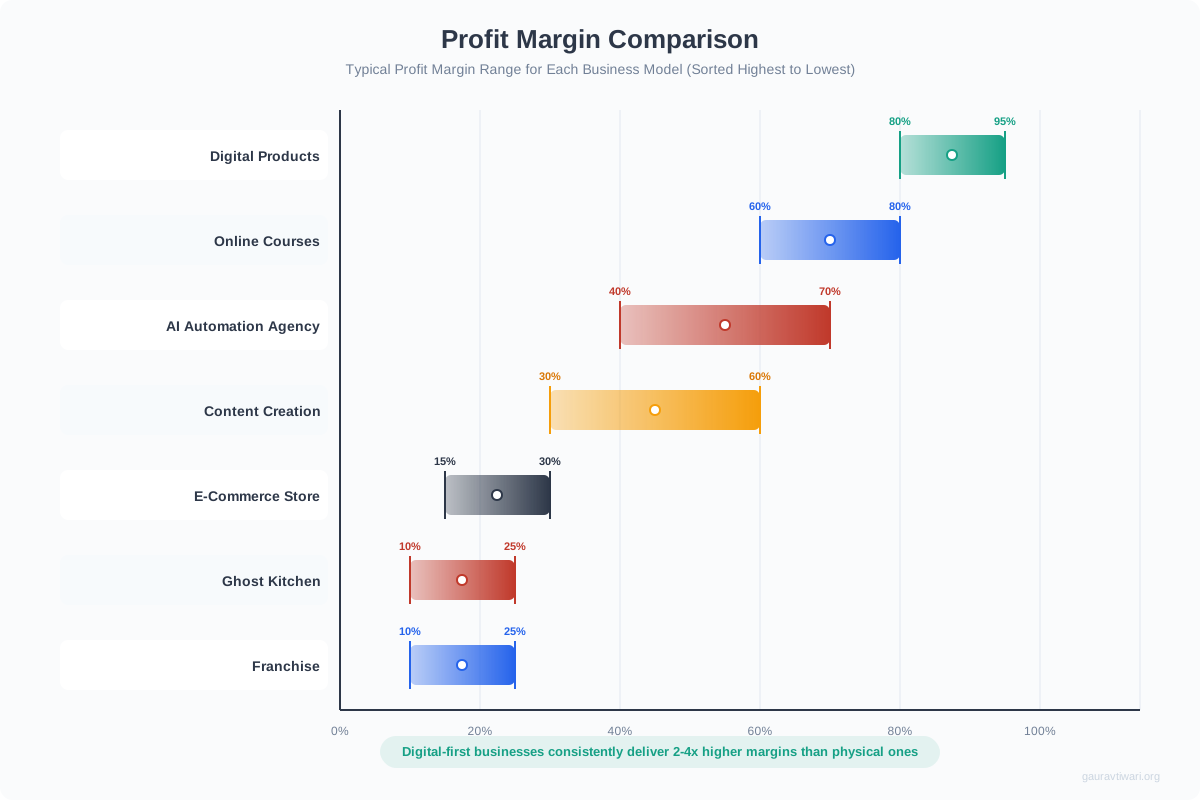
- Profit margins: 40-70% gross
- Time to profitability: 3-6 months for solo operators
- Key tools: Make.com, Zapier, n8n, OpenAI API, Claude API
The biggest advantage? Almost no competition understands this space yet. Most local businesses haven’t even explored AI automation, which means you’re not fighting over scraps. You’re opening a new market.
Start an E-Commerce Store
E-commerce isn’t new, but the way you start one in 2026 is fundamentally different from even three years ago. The dropshipping market alone hit $330 billion in 2025 and is projected to reach $828 billion by 2030. More importantly, Shopify hosts 62.8% of all dropshipping stores, making it the obvious platform choice.
Here’s what’s changed: AI-driven traffic to brand sites surged 1,200% between July 2024 and February 2025. That’s not a typo. Customers are now discovering products through ChatGPT, Perplexity, and Google’s AI Overviews before they ever hit a search results page. If your product descriptions and store content aren’t optimized for AI citation, you’re invisible to a rapidly growing customer segment.
You have three main models to choose from:
- Dropshipping: $100-$500 startup, no inventory. 79% of successful dropshippers use automated order processing. Best for testing products before committing.
- Print-on-demand: $0-$500 startup using Printify or Printful. Market projected to hit $102 billion by 2034. T-shirts account for 60%+ of all POD orders.
- Amazon FBA: $2,000-$5,000 startup. Average FBA seller generates $160,000/year in revenue. 64% become profitable within 12 months. Amazon fees consume 25-35% of revenue.
My recommendation for beginners? Start with dropshipping on Shopify to validate your niche, then transition to private label or direct-to-consumer once you know what sells. DTC e-commerce sales are expected to exceed $226 billion in 2026, and the margins are significantly better than marketplace selling.
Amazon takes 25-35% of your revenue. Delivery platforms take 25% from ghost kitchens. Social platforms control creator reach. Always build your own audience (email list, direct traffic) alongside any platform business. Platform dependency is the #1 killer of promising e-commerce stores.
Create and Sell Online Courses
The e-learning market is projected to reach $325 billion in 2026, and the tools to create courses have never been more accessible or affordable. If you have expertise in anything, literally anything, there’s a market for a course about it.
I’ve watched Teachable creators earn over $2 billion collectively. Thinkific hosts 50,000+ active creators with 378 million enrollments. These aren’t vanity numbers. They represent real people building sustainable income teaching what they know.
The sweet spot for pricing? Courses priced between $49-$200/month for membership models, or $750-$1,500 as one-time purchases. The average membership-based course generates $179,880 per year in revenue. That’s not the top 1%. That’s the average.
Platform Comparison
Your three best options:
- Teachable: $39-$199/month. 150,000+ instructors. Best for beginners who want everything in one place.
- Thinkific: $36-$149/month. Free plan available. Better for those who want more customization.
- Kajabi: $149-$399/month. Premium option with built-in marketing. Best for established creators ready to scale.
Course creation platforms have increased revenue by 120% over the past two years. The trend isn’t slowing down, especially as AI tools like Descript, Synthesia, and Canva make video production dramatically easier. You can now create a professional-quality course in a weekend that would have taken months just three years ago.
Related: 10 Best Education Business Ideas with Low Investment
Build a Content Creation Business
The creator economy is worth roughly $250 billion in 2026. But let’s be honest about the numbers: 9% of creators make over $100K per year, while nearly half earn less than $500. The difference between those two groups? Treating content like a business, not a hobby.
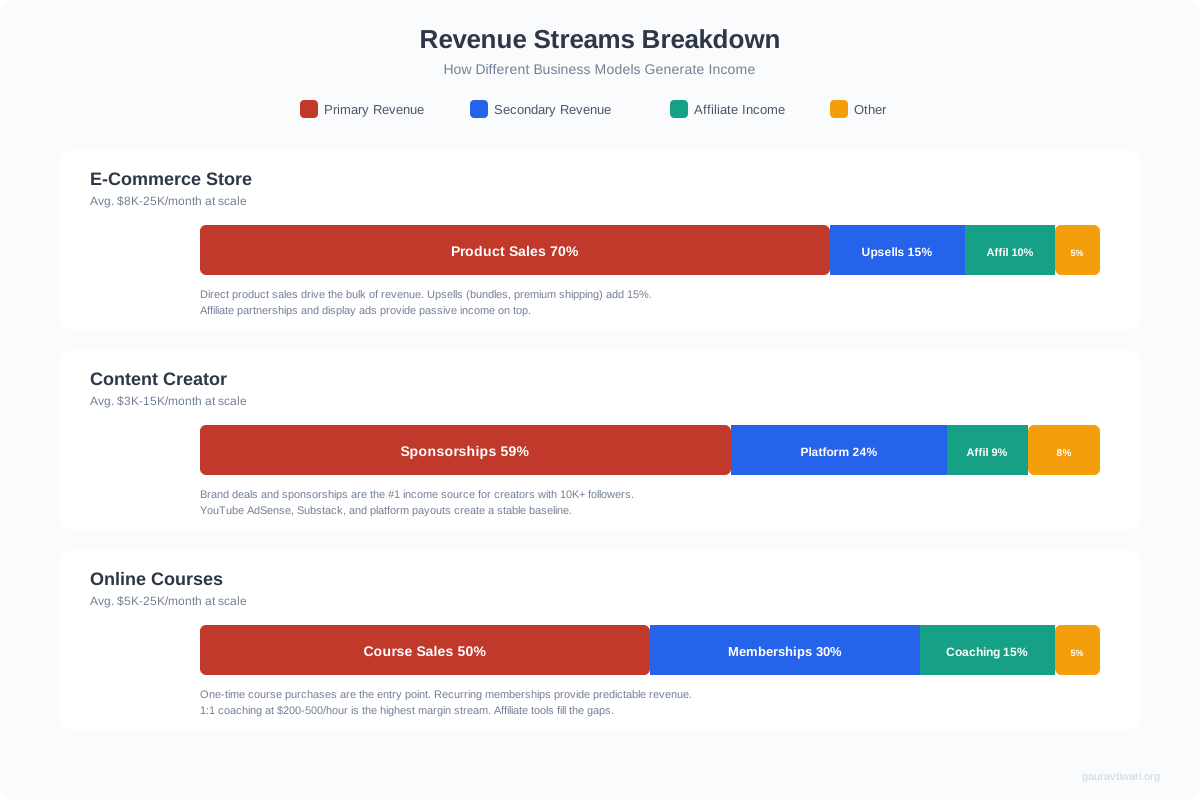
Revenue breaks down like this across the creator economy: 59% comes from sponsored content, 24.4% from platform payouts, and 8.2% from affiliate marketing. The creators earning six figures typically have three or more revenue streams, not just one.
YouTube
YouTube has paid creators over $100 billion in the past four years. Startup costs run $500-$5,000 for decent equipment. The monetization threshold (1,000 subscribers + 4,000 watch hours) takes most creators 12-24 months to hit. Revenue per 1,000 views ranges from $3-$10, but sponsorships at scale can bring $500-$50,000+ per video.
Newsletters
This is the channel I’m most excited about in 2026. Paid newsletter subscriptions generated $19 million in 2025, a 138% jump from $8 million in 2024. Platforms like Beehiiv, Substack, and ConvertKit make it free to start. Your revenue grows with your subscriber count, and you own the audience, no algorithm can take it away.
Podcasting
Podcasters are 3x more likely to earn $31K+ than short-form creators. The stat that should convince you: 67% of global podcast listeners have made a purchase because of a podcaster. Startup costs are low ($200-$2,000), and sponsorship rates for niche podcasts can be surprisingly high.
Don’t pick just one channel. Record a podcast, extract clips for YouTube Shorts and TikTok, turn the transcript into a newsletter and blog post. One piece of content becomes five. This “content stacking” approach is how successful creators build multiple revenue streams without burning out.
Related: 20 Best Ways to Make Money Online
Sell Digital Products
Digital products have 80-95% profit margins because you create them once and sell them forever. No inventory, no shipping, no warehousing. The global digital commerce market is projected to surpass $7.9 trillion by 2026, and individual creators are capturing a meaningful slice.
Here’s what’s actually selling:
- Templates and printables: $7-$97 per template. Top sellers earn $5,000-$50,000/month on Gumroad alone. Notion templates, Canva designs, and spreadsheet tools are the hottest categories.
- Software tools and plugins: $500/month to $100,000+/month depending on user base. No-code tools and AI assistants have made development faster and cheaper than ever.
- Ebooks and guides: Lower margins per unit but excellent lead magnets for higher-ticket offerings.
- Stock assets: Photos, videos, icons, fonts. Recurring revenue through marketplaces like Shutterstock or Creative Market.
The platforms you’ll need: Gumroad (simplest), Lemon Squeezy (modern alternative), Shopify (for serious scale), or Payhip (budget-friendly). Pair any of these with Canva for design and you can launch your first digital product this weekend.
The key insight most people miss: niche specificity wins. “Notion templates” is too broad. “Notion templates for real estate agents” is a business. “Canva templates for wedding photographers” is a business. The more specific your audience, the easier it is to market and the more you can charge.
Related: 130+ Most Profitable Niches to Make Money Online
Start a Ghost Kitchen or Food Truck
The food industry has always been one of the most reliable ways to build a business. But the entry point has changed dramatically. Ghost kitchens (also called cloud kitchens) let you run a restaurant without the restaurant. No dining room, no front-of-house staff, no $1 million buildout.
The ghost kitchen market hit $97.2 billion in 2025 and is projected to reach $204 billion by 2030. CloudKitchens (Uber founder Travis Kalanick’s company) offers entry points around $30,000 versus $1 million+ for a traditional restaurant. Established operations generate $50,000-$150,000 in monthly revenue with 10-25% gross margins.
The rule of thumb: you need 50+ orders per day to reach profitability. Most operators hit that within 6 months. By the end of the decade, 90% of restaurants may run multiple brands from a single kitchen location.
Food Trucks: The Lower-Risk Alternative
If ghost kitchens feel too abstract, food trucks are the tangible alternative. Average annual revenue: $346,000. Daily revenue ranges from $500-$2,000 depending on location and menu. Realistic startup costs run $65,000-$130,000 including 3-6 months of operating capital.
Net profit margins sit at 7-15% for owner-operators, translating to $24,000-$75,000 annual take-home. Not life-changing wealth, but a solid foundation that many operators scale into multiple trucks or brick-and-mortar locations.
Food costs eat 30% of revenue, labor takes another 30%, and delivery platform fees consume 25%. That leaves slim margins for everything else. Track every dollar from day one. Use Toast POS or Square for automated tracking, and don’t expand until your first location consistently hits profitability targets.
Buy a Franchise
Franchising gets a bad rap because people immediately think McDonald’s ($1-2.2 million investment). But there are franchise opportunities at every budget level, and the model has one massive advantage: you’re buying a proven system instead of building one from scratch.
Here’s how franchise costs actually break down:
- Ultra-low ($10K-$30K): Home-based and mobile businesses. Cruise Planners starts at just $10,995 with 0-3% royalties. Digital marketing consultancies and online tutoring franchises fall in this range too.
- Low ($30K-$50K): Service-based businesses like Wize Computing Academy ($30K) or estate sale companies ($40K).
- Mid ($50K-$150K): Most service franchises land here. Cleaning companies, senior care services (no storefront required), and home maintenance businesses.
- Traditional ($150K-$500K+): Restaurants, retail stores, and fitness centers.
The sweet spot for first-time franchise owners? Service-based franchises in the $50K-$150K range. They typically reach profitability in 12-24 months, require no physical storefront, and have lower ongoing costs than retail or food service franchises.
The FTC requires franchisors to provide a Franchise Disclosure Document (FDD) at least 14 days before you sign. Read every page. Pay special attention to Item 19 (financial performance), Item 7 (estimated initial investment), and Item 6 (fees). Hire a franchise attorney to review it with you. This $1,000-$2,000 investment can save you from a six-figure mistake.
Top franchise categories in 2026: commercial cleaning, travel planning, business services, education/tutoring, and mobile services. The best franchises let you leverage someone else’s brand recognition while you focus on execution.
Related: 9 Best Work from Home Online Business Ideas
How to Choose the Right Business for You
All seven of these ideas are viable. But the right one depends on three things: your budget, your skills, and your patience for delayed gratification.
If you have under $1,000 to invest, start with an AI automation agency, digital products, or content creation. These are nearly free to launch and can generate revenue within months.
If you have $5,000-$50,000, e-commerce (especially Shopify dropshipping transitioning to DTC) or online courses give you the best risk-adjusted returns.
If you have $50,000+, franchising or a ghost kitchen offer more predictable returns with established systems, but they require more capital and carry higher fixed costs.
The one constant across all seven? AI is a force multiplier in every single business model. Whether you’re using AI to automate customer service, generate marketing content, optimize pricing, or analyze data, the businesses that integrate AI tools will outperform those that don’t. That’s not speculation. The data is overwhelming.
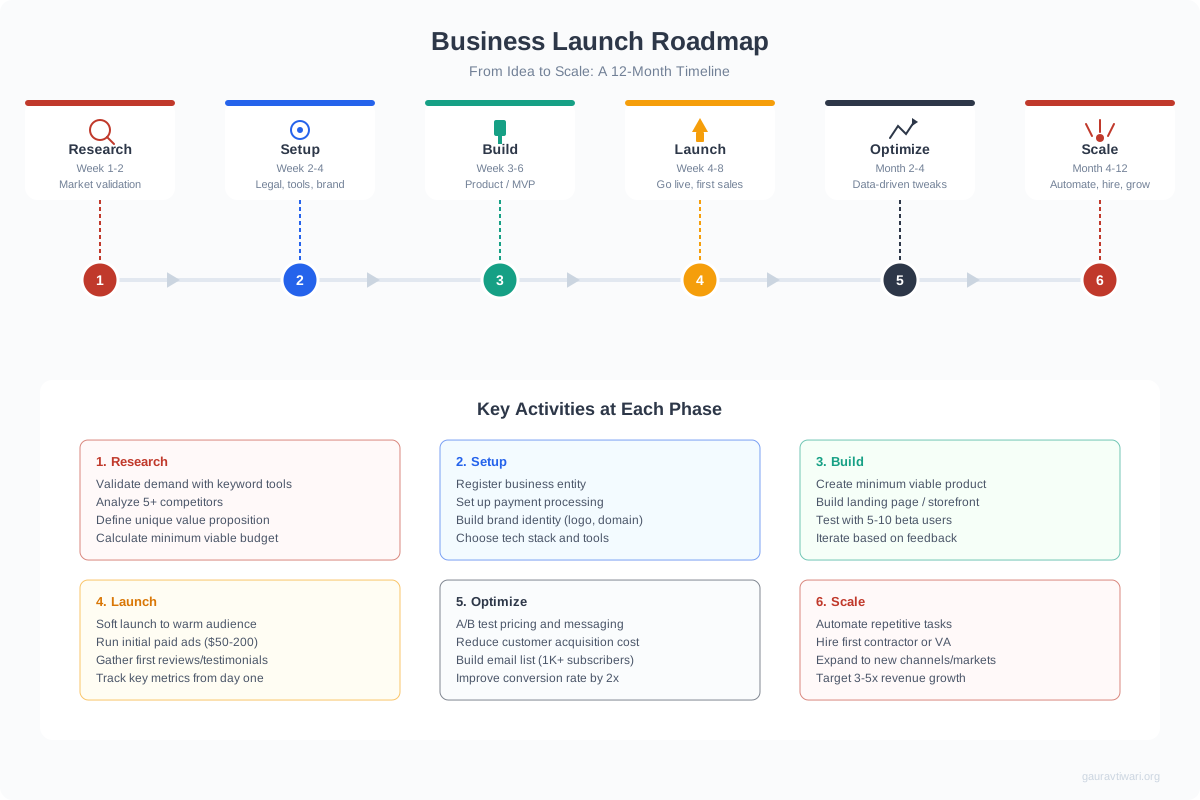
Pick one idea. Start this week. Adjust as you learn. The businesses that succeed in 2026 aren’t the ones with the best business plan. They’re the ones that launched while everyone else was still “researching.”
Related: Best Google AdSense Alternatives to Make Money Blogging
Frequently Asked Questions
What is the most profitable small business to start in 2026?
AI automation agencies currently offer the highest profit potential with the lowest startup costs. With margins of 40-70% and revenue potential of $7,500-$30,000 per month, they outperform most traditional business models. E-commerce (especially Shopify-based DTC stores) and online courses are strong second choices with proven revenue models.
How much money do I need to start a business?
You can start an AI automation agency, digital products business, or content creation business for under $500. E-commerce dropshipping starts at $100-$500. Online courses need $0-$500. Ghost kitchens require $20,000-$60,000, and franchises range from $10,000 to $500,000+ depending on the model. The lowest-risk approach is starting with a service-based or digital business first.
What business can I start with no experience?
Content creation and digital products are the most beginner-friendly options. You can learn the skills as you build. Franchising is also designed for people without industry experience since you’re buying a proven system with training included. AI automation agencies work well if you’re willing to learn tools like Make.com and Zapier, which have gentle learning curves.
Is dropshipping still profitable in 2026?
Yes. The dropshipping market reached $330 billion in 2025 and is growing at 21.3% annually. However, profitability depends on niche selection, marketing efficiency, and operational automation. Only 10-20% of dropshipping stores achieve profitability in their first year. The key differentiator is automated order processing, which 79% of successful stores use, and AI-optimized product descriptions for better conversion rates.
How long does it take for a new business to become profitable?
Timeline varies by business type. AI automation agencies and digital products can reach profitability in 3-6 months. E-commerce stores typically take 6-12 months (64% of Amazon FBA sellers profit within 12 months). Ghost kitchens average 6 months. Franchises generally reach profitability in 12-24 months. Content creation businesses (YouTube, podcasting) take 12-24 months to hit meaningful income.
What’s the difference between a ghost kitchen and a food truck?
Ghost kitchens operate from shared commercial kitchen spaces and sell exclusively through delivery apps. Startup costs run $20,000-$60,000. Food trucks are mobile and sell directly to customers at events, streets, and markets, with startup costs of $65,000-$130,000. Ghost kitchens have lower overhead but depend on delivery platform fees (up to 25%). Food trucks have higher margins but more variable income based on location and weather.
Can I run these businesses while working a full-time job?
AI automation agencies, digital products, online courses, and content creation can all start as side businesses. E-commerce (especially dropshipping with automated fulfillment) also works part-time. Ghost kitchens and food trucks generally require full-time commitment due to operational demands. Franchises vary: home-based franchises like travel planning can be part-time, while service-based franchises typically need full-time attention.
The biggest mistake I see with aspiring entrepreneurs? Spending months on research and never launching. Every successful business owner I know started with an imperfect version and improved it along the way. Pick the idea that matches your budget and skills, set a launch date within 30 days, and hold yourself to it.
Disclaimer: This site is reader-supported. If you buy through some links, I may earn a small commission at no extra cost to you. I only recommend tools I trust and would use myself. Your support helps keep gauravtiwari.org free and focused on real-world advice. Thanks. - Gaurav Tiwari