
Using OKR and KPI: How to Align Your Team and Measure Business Success
I’ve managed teams and client projects for over 16 years now. And the single biggest difference between teams that ship real results and teams that just stay busy? Clear, measurable goals. Not vague mission statements. Not inspirational posters on the wall. Actual numbers that everyone on the team can point to and say, “That’s what we’re chasing this quarter.”
That’s where OKRs (Objectives and Key Results) and KPIs (Key Performance Indicators) come in. I’ve used both across my own businesses, client projects, and consulting work. And I’ve seen what happens when they’re done right versus when they’re treated as corporate checkbox exercises that nobody looks at after week one.
OKRs push your team toward ambitious targets. KPIs tell you if the engine is running smoothly day to day. You need both. Used together, they give you a complete picture of where you’re headed and whether you’re actually getting there. This guide covers how to set them up, avoid the common traps I’ve watched businesses fall into, and turn them into something your team actually uses instead of ignoring.
What Are OKRs and KPIs? A Quick Refresher
Before we get into the strategies, I want to make sure we’re on the same page. I’ve worked with clients who use these terms interchangeably, and that’s where the confusion starts. They’re related, but they do different things.
OKRs: Your GPS for Strategic Growth
OKRs stand for Objectives and Key Results. Think of them as your team’s GPS. The Objective is the destination, something ambitious but reachable. The Key Results are the measurable checkpoints that prove you’re making progress.
A good OKR looks like this:
- Objective: Become the top-rated customer support team in our industry.
- Key Result 1: Hit a customer satisfaction score of 90% or higher by the end of Q2.
- Key Result 2: Cut average customer wait time from 5 minutes to 2 minutes.
- Key Result 3: Improve first-contact resolution from 65% to 85%.
Notice how specific those Key Results are. There’s no guessing about whether you hit the target. You either did or you didn’t. That clarity is what makes OKRs work. Google has used this framework since its early days, and it’s one of the reasons their teams stay aligned even at massive scale.
KPIs: Your Business Dashboard
KPIs are the ongoing metrics that tell you how your business is performing right now. If OKRs are the GPS, KPIs are the dashboard gauges: speed, fuel level, engine temperature. They’re not about big strategic pushes. They’re about keeping things running and catching problems before they blow up.
Common KPIs include:
- Monthly recurring revenue (MRR)
- Website traffic and conversion rates
- Customer churn rate
- Employee satisfaction scores
- Average order value
These numbers give you an instant read on your business health. If your churn rate suddenly spikes, you know something’s wrong, and you can investigate before it becomes a crisis. I check KPIs on my own projects weekly. Not because I love spreadsheets, but because the one time I didn’t check for a month, I missed a 15% drop in conversions that cost real money to fix.
The Actual Difference Between OKRs and KPIs
This is where most people get confused. OKRs are about change. They push your business forward toward something new. KPIs are about consistency. They track what’s already running and make sure it stays healthy.
- OKR example: Launch a new mobile app and get 10,000 active users within three months.
- KPI example: Track monthly user growth rate and app retention rate for ongoing engagement.
The OKR sets the ambitious target. The KPI monitors the health metrics once you’ve launched. You need both running at the same time. I’ve seen teams that only set OKRs and then have no way to tell if their day-to-day operations are falling apart in the process. And I’ve seen teams that only track KPIs and wonder why they never seem to move the needle on anything new.
Advanced Strategies for Setting OKRs That Actually Work
Most teams set OKRs and forget them by week three. I know because I’ve done it myself in the early years of running my business. The problem isn’t motivation. It’s how the goals are structured. If your OKRs are too vague, too ambitious, or disconnected from daily work, they die on the whiteboard.
Set Ambitious, Yet Realistic Objectives
There’s a sweet spot between “so easy nobody cares” and “so hard everyone gives up.” You want stretch goals, not fantasy goals. If your team normally grows revenue by 5%, pushing for 10% is a stretch. Pushing for 50% without a clear plan is a morale killer.
I use the 80% rule: set goals where achieving 70-80% still counts as solid progress. Google does this too. Their internal guidance says that if you’re hitting 100% of your OKRs every quarter, you’re not being ambitious enough. But if you’re consistently hitting below 50%, the goals are crushing your team instead of motivating them.
One thing that’s made a big difference for me: involve your team in setting the objectives. When people help define the target, they’re far more invested in hitting it. I stopped dictating OKRs top-down about five years ago, and the difference in engagement was immediate.
Aligning OKRs Across Your Teams
Alignment is the part that most businesses mess up. Every team sets their own goals, and nobody checks if they’re pulling in the same direction. I’ve seen companies where the sales team’s OKR directly conflicted with the product team’s OKR. One was focused on closing deals for features that didn’t exist yet, while the other was focused on reducing technical debt.
Alignment works like this in practice:
- Company-level Objective: Increase customer retention by 15% this year.
- Sales Team OKR: Improve renewal rate from 65% to 75%.
- Support Team OKR: Cut response time from 4 hours to 2 hours, boost satisfaction to 90%.
- Product Team OKR: Ship 3 high-demand features based on user feedback in Q2.
Every team’s OKR feeds into the company objective. When someone on the support team asks “why does my work matter?”, you can draw a straight line from their daily tasks to the company’s biggest goal. That’s alignment. And it’s one of the most powerful things you can give your team: context for why their work matters.
Using Cascading OKRs Without Creating Bureaucracy
Cascading means breaking company goals down into team goals, then into individual goals. It sounds clean in theory. In practice, too many layers turn it into a micromanagement nightmare.
I keep it to two levels max: company and team. Individual contributors should know how their team’s OKR connects to the company objective, but they don’t need their own formal OKR document. That just adds paperwork without adding clarity.
The biggest mistakes I’ve seen with cascading:
- Too many layers of OKRs that nobody can track
- Using OKRs as performance reviews (they should guide, not judge)
- Forcing goals downward without asking for team input
- Making key results so specific that they become task lists instead of outcomes
OKRs should tell your team what to achieve, not how to achieve it. Let your people figure out the “how.” That’s where creativity and ownership come from.
Choosing and Tracking KPIs That Actually Matter
I hate when businesses drown in meaningless metrics. Thirty KPIs on a dashboard that nobody looks at. Vanity numbers that make everyone feel good but don’t tell you anything useful. The whole point of KPIs is to give you a clear signal, and you can’t hear a signal when there’s too much noise.
Picking the Right KPIs (Less Is More)
You need 3-5 KPIs per team, max. Not 15. Not 30. Three to five that directly reflect what matters most. To find them, ask three questions:
- Does this metric directly connect to our core business goals?
- If this number improves, will it have a real, measurable impact?
- Can our team actually influence this number through their work?
If the answer to any of those is “no,” drop it. For SaaS businesses, I’d track monthly recurring revenue, churn rate, and customer acquisition cost. For eCommerce, I’d focus on conversion rate, average order value, and cart abandonment rate. That’s it. Fewer, stronger KPIs beat a wall of meaningless numbers every single time.
KPI Frameworks Worth Using
Once you’ve picked your core KPIs, you need a framework to organize them. Three have worked well for me and the teams I’ve consulted with:
Balanced Scorecard (BSC): This balances financial and non-financial KPIs across four areas: finances, customer satisfaction, internal processes, and team growth. It gives you a snapshot of your entire business, not just the revenue line.
North Star Metric: One single metric that captures the core value you deliver to customers. Airbnb’s is “nights booked.” It forces every team to optimize toward the same customer-focused outcome. If you’re a content business, your North Star might be “monthly active readers” or “email subscribers who open 3+ emails per month.”
Pirate Metrics (AARRR): Acquisition, Activation, Retention, Referral, Revenue. I love this framework for startups because it maps directly to the customer journey. You can see exactly where people drop off and focus your energy on fixing that stage instead of guessing.
Real companies use these. Netflix monitors retention rate and hours streamed per subscriber. Shopify tracks Gross Merchandise Volume to measure their merchants’ success. HubSpot watches customer lifetime value alongside acquisition cost to make sure growth is sustainable. Pick a framework that matches your business model and stick with it.
Bringing OKRs and KPIs Together for Maximum Impact
Using OKRs and KPIs separately is fine. Combining them is where the real power shows up. I’ve worked with businesses that set ambitious OKRs but completely ignored their KPIs, or vice versa. It drives me nuts because they’re leaving so much on the table.
How They Work Together
OKRs push your team forward. KPIs keep the engine running. You need both at the same time.
Say your OKR is: “Launch a new product and gain 20,000 active users in six months.” Your related KPIs would be daily active user growth (tracking adoption), user engagement rates (checking if people actually like the product), and customer support response times (making sure users get help fast). The OKR gives direction. The KPIs give real-time feedback on whether your daily work is moving the right numbers.
I’ve been using this pairing approach since 2019, and it changed how I run client projects. Before that, I’d set goals at the start of a quarter and only check them at the end. By then, it was too late to course-correct. Now, the KPIs act as an early warning system. If the daily numbers start drifting, I know within a week, not three months later.
Building OKRs and KPIs into Your Regular Reviews
Setting goals is only half the job. Reviewing them consistently is what actually moves the needle. I’ve found this rhythm works well:
Weekly check-ins (15-20 minutes): Quick scan of KPI trends. Are they stable or dropping? Brief updates on OKR progress. Flag any blockers. This isn’t a deep discussion. It’s a pulse check.
Monthly deep dives (60-90 minutes): Detailed review of KPI trends over the past month. Open conversation about what’s working and what’s not on OKRs. Adjust priorities based on what the data is telling you. This is where you course-correct before things go sideways.
When OKRs and KPIs become part of your routine, your team never loses sight of the goals. And if something goes wrong, you see it in days, not months. Trust me, there’s nothing worse than realizing you’ve been drifting off course for weeks because nobody was watching the numbers. I’ve learned that lesson the expensive way, and I’d rather you didn’t have to. If you’re looking for more ways to structure your time around these reviews, I’ve written about the Pomodoro Technique for focused work sessions that pair well with weekly goal reviews.
Tools and Resources for Managing OKRs and KPIs
Good goals need good tools. I’ve watched businesses try to manage OKRs in Google Docs and KPIs in random spreadsheets. It falls apart within a month. If tracking goals becomes painful, people stop doing it. The right tool makes the difference between a system your team uses and a system that collects dust.
My Recommended Tools
ClickUp: This is the tool I recommend most for teams that want everything in one place. Tasks, goals, OKRs, KPIs, dashboards. It’s flexible enough that you can customize it to your workflow instead of adapting your workflow to the tool. The goal-tracking feature alone saves hours of manual reporting every week. I’ve used it with clients running teams of 5 to 50, and it scales well in both cases.
Monday.com: If your team is more visual, Monday’s interface makes progress tracking intuitive. The built-in KPI dashboards show performance at a glance. It’s especially good for teams that don’t want to spend time learning a complex tool. Setup is fast, and the visual breakdown of progress makes status meetings shorter.
Notion: For teams that prefer full customization, Notion lets you build your own OKR and KPI tracking system from scratch. I use Notion for my own business because I like having everything, notes, goals, project docs, in a single workspace. The tradeoff is that you need to build the system yourself, which takes a few hours upfront.
Perdoo and Weekdone: These are dedicated OKR platforms with deeper analytics, alignment insights, and advanced reporting. If your entire focus is OKR implementation and you want a tool built specifically for that purpose, they’re worth a look. They’re not as flexible as ClickUp or Notion for general project management, but they’re deeper on the OKR-specific features.
Books Worth Reading
If you want to go deeper on the theory and practice behind OKRs and KPIs, these two books are the ones I’d recommend. I’ve read both, and they’re the kind of books you actually refer back to when setting up your quarterly goals.
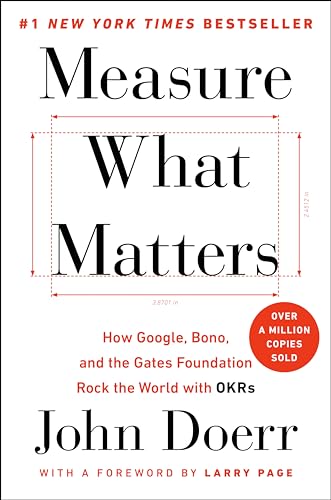
Measure What Matters: How Google, Bono, and the Gates Foundation Rock the World with OKRs
- Hardcover book by John Doerr, the venture capitalist who brought OKRs to Google
- Real case studies from Google, the Gates Foundation, Bono's ONE campaign, and more
John Doerr is the venture capitalist who introduced OKRs to Google in 1999 when they had about 40 employees. This book covers how OKRs work at scale with case studies from Google, the Gates Foundation, and Bono’s ONE campaign. It’s practical, not theoretical. If you’re serious about OKRs, this is the book to start with. At $13.99 (50% off the hardcover), it’s a steal.
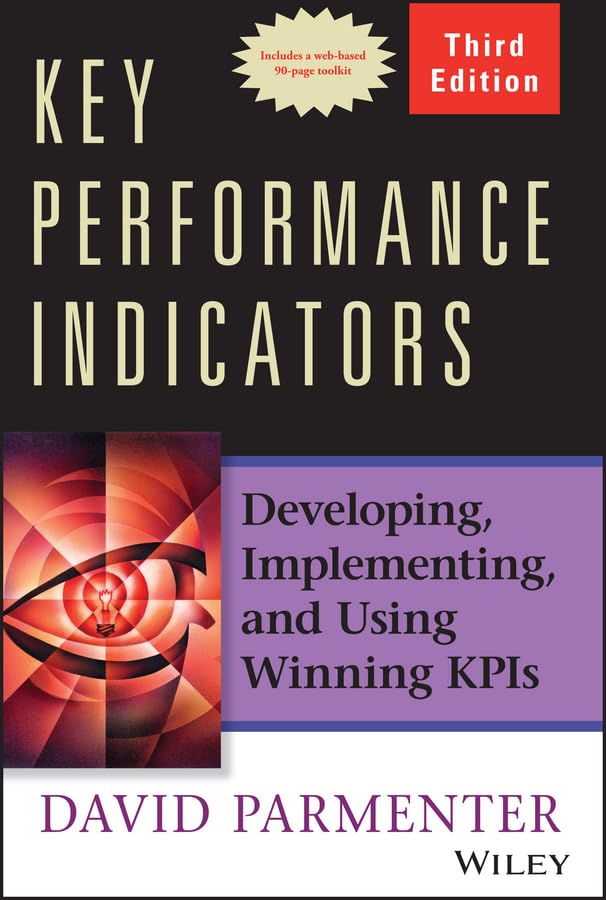
Key Performance Indicators: Developing, Implementing, and Using Winning KPIs
- Hardcover book by David Parmenter, a recognized authority on KPI development
- Covers the 12-step model for developing and using KPIs that actually drive performance
David Parmenter’s book is the KPI bible. It walks you through a 12-step model for developing KPIs that actually measure what matters instead of what’s easy to count. It’s more detailed and process-oriented than Doerr’s book, which makes it a good companion read. If you’re building a KPI framework for the first time, Parmenter’s approach saves you months of trial and error. The $56 price tag is steep, but it pays for itself if it keeps you from tracking the wrong metrics for a quarter. For more reading on building productive habits around these systems, check out my list of must-read productivity books.
Dashboard Practices That Work
A good dashboard is the heartbeat of your OKR and KPI system. But too many dashboards turn into overwhelming walls of charts that nobody reads. I’ve built dashboards for clients that had 40+ widgets on a single screen. Nobody used them.
What actually works:
- Keep it simple: 5-8 key metrics per dashboard, max. If you can’t absorb the information in 30 seconds, it’s too complex.
- Use clear visuals: Line graphs for trends, bar charts for comparisons, simple up/down arrows for quick status. Skip the pie charts. They look nice but communicate poorly.
- Make it accessible: If your team can’t find the dashboard in 2 clicks, they won’t use it. Pin it somewhere obvious.
- Update automatically: Manual dashboards die fast. Connect them to your data sources so they update in real time. This keeps the information fresh without adding work for anyone.
Common OKR and KPI Mistakes (And How to Avoid Them)
I’ve watched smart teams make these mistakes over and over. Most of them are avoidable if you know what to look for.
Mistake 1: Vague Goals That Nobody Can Measure
Goals like “improve customer experience” sound great in a meeting but are useless in practice. How do you know when you’ve improved it? By how much? Compared to what? If your team can’t measure progress in numbers, the OKR is broken from day one.
- Vague: Improve customer service.
- Clear: Increase customer satisfaction score from 70% to 85% by end of Q3.
Every OKR should pass the “how will we know?” test. If you can’t answer that question with a specific number, rewrite it until you can.
Mistake 2: The Set-and-Forget Trap
I hate seeing teams invest hours setting OKRs and KPIs at the start of a quarter, only to abandon them completely by week three. Goals only work if you actively use them. If nobody’s looking at the numbers, you might as well not have set them.
The fix is simple: schedule weekly check-ins. They don’t need to be long. Fifteen minutes to scan the numbers, flag any issues, and move on. Short, consistent reviews beat occasional marathon sessions every time.
Mistake 3: Tracking 30 KPIs When You Need 5
More metrics don’t mean better decisions. I’ve seen this so many times: a team creates a massive KPI dashboard with every number they can think of, then gets paralyzed because they don’t know which ones actually matter. If a KPI doesn’t directly help you understand or improve performance, drop it.
Mistake 4: Refusing to Adjust Goals
Some teams treat goals like sacred documents that can’t be changed. But business conditions shift. New competitors show up. Markets move. If your Q2 OKR was based on assumptions that turned out to be wrong, sticking with it stubbornly doesn’t make you disciplined. It makes you slow.
Be willing to adjust based on real-world feedback. Not every month, that creates instability. But a mid-quarter check where you honestly ask “does this goal still make sense?” can save your team from wasting effort on the wrong target.
Mistake 5: Using OKRs as Performance Weapons
This is the fastest way to kill your OKR culture. The moment people feel like missing an OKR will show up in their performance review, they’ll stop setting ambitious goals. They’ll play it safe. Set easy targets they know they can hit. And the whole point of OKRs, pushing toward something bigger, dies.
OKRs should be tools for growth and alignment, not punishment. Make it safe for your team to aim high without fearing consequences if they land at 70% instead of 100%. That 70% on an ambitious goal is still more progress than 100% on a safe one. If you’re looking for tools to help your team stay focused while working toward these goals, I’ve put together a list of study and productivity tools that work well for any focused work environment.
Building Your OKR and KPI System: A Practical Roadmap
If you’re starting from scratch or rebuilding a broken system, here’s the approach I’d take based on what’s worked across my own businesses and client projects.
Week 1: Define 1-3 company-level objectives. These should be the biggest things you want to accomplish in the next quarter. Not 10 goals. Not 7. One to three. Anything more and you’re spreading focus too thin.
Week 2: Set team OKRs that align with company objectives. Each team picks 1-2 objectives that directly support the company goals. For each objective, define 2-4 measurable key results. Get team input on the targets, don’t dictate them top-down.
Week 3: Identify your core KPIs. Pick 3-5 KPIs per team that track ongoing business health. Set up dashboards in whatever tool you’re using. Make them visible and easy to access.
Week 4 onward: Start the review rhythm. Weekly 15-minute check-ins. Monthly deep dives. Quarterly OKR resets. This is the part that separates teams that get results from teams that just set goals.
Don’t overthink the setup. I’ve seen teams spend two months perfecting their OKR framework before actually using it. Start messy. Refine as you go. A rough system you actually use beats a perfect system you never start.
OKR and KPI Templates You Can Use Today
I want to give you something practical you can start with right away. These templates work for most small to mid-sized teams.
OKR Template
Company Objective: [One clear, ambitious statement about what you want to achieve this quarter]
- Key Result 1: [Specific metric] from [current number] to [target number] by March 26, 2026
- Key Result 2: [Specific metric] from [current number] to [target number] by March 26, 2026
- Key Result 3: [Specific metric] from [current number] to [target number] by March 26, 2026
Example filled in:
- Objective: Grow our content marketing into a consistent lead generation channel.
- KR1: Increase organic traffic from 15,000 to 30,000 monthly sessions by end of Q3.
- KR2: Improve email signup conversion rate from 1.2% to 3% on blog pages.
- KR3: Publish 12 long-form articles targeting bottom-of-funnel keywords.
KPI Dashboard Template
For each team, track these columns: KPI name, current value, target value, trend (up/down/flat), and owner. Keep it in a shared dashboard that updates weekly. The owner column matters because it creates accountability. When everyone knows whose name is next to a number, that number gets attention.
You don’t need fancy software to start. A shared Google Sheet works fine for teams under 10. Once you outgrow that, move to ClickUp or Notion for more structure.
Real-World OKR and KPI Examples by Industry
Theory is helpful, but seeing how other businesses apply OKRs and KPIs makes the concepts click faster. I’ve pulled these from my own experience working with clients across different industries.
SaaS Company Example
- OKR Objective: Reduce customer churn and increase annual contract value.
- KR1: Lower monthly churn rate from 5% to 2.5%.
- KR2: Increase average contract value from $1,200 to $1,800/year.
- KR3: Launch 2 features from the top-10 customer request list.
- Related KPIs: Monthly recurring revenue, net promoter score, support ticket volume.
eCommerce Business Example
- OKR Objective: Become the go-to store for [product category] in our target market.
- KR1: Increase repeat purchase rate from 18% to 30%.
- KR2: Grow email list by 5,000 subscribers through post-purchase sequences.
- KR3: Achieve a 4.5+ average product review rating across all SKUs.
- Related KPIs: Conversion rate, average order value, cart abandonment rate.
Content Marketing Team Example
- OKR Objective: Turn the blog into a primary lead generation channel.
- KR1: Grow organic traffic from 20,000 to 50,000 monthly sessions.
- KR2: Publish 15 articles targeting high-intent keywords with 2,000+ words each.
- KR3: Improve lead capture rate from blog visitors from 0.8% to 2.5%.
- Related KPIs: Page views per session, time on page, email signup rate.
Notice the pattern: each OKR has clear, numbered targets. The KPIs track the health metrics that support those targets. This pairing gives you both the ambition and the monitoring you need.
Making OKRs and KPIs Stick Long-Term
The hardest part about OKRs and KPIs isn’t setting them up. It’s keeping them alive past the first month. I’ve seen this pattern dozens of times: excited kickoff, detailed planning, beautiful dashboards. Then three weeks of silence. Then someone asks “weren’t we tracking something?” at the next all-hands.
What makes it stick:
- Make the review non-negotiable. Block 15 minutes every Monday for the weekly check-in. Don’t cancel it for other meetings. Don’t skip it because “nothing changed.” The habit matters more than the content of any single review.
- Celebrate progress, not just completion. If you went from 15,000 sessions to 22,000 on your way to 30,000, that’s worth recognizing. Teams that only celebrate hitting 100% burn out faster than teams that acknowledge the climb.
- Keep goals visible. Put them on a shared dashboard that everyone sees daily. Not in a document buried in Google Drive. Visibility creates accountability without the need for micromanagement.
- Learn from misses. When you don’t hit a Key Result, don’t just move on. Ask why. Was the goal unrealistic? Did something change in the market? Did we miss early warning signs in the KPIs? Every miss is data for setting better goals next quarter.
I’ve been running this system for my own projects since 2026, and the compounding effect is real. Each quarter gets a little sharper. The goals get more realistic. The team gets better at reading the KPIs and spotting issues early. It takes about 2-3 quarters to really hit your stride, so don’t give up after the first one feels messy.
Frequently Asked Questions
What’s the difference between OKRs and KPIs?
OKRs set ambitious goals with measurable outcomes that push your business forward. KPIs track ongoing operational health and day-to-day performance. Think of OKRs as your destination and KPIs as your dashboard gauges. You need both to run a business effectively.
How many OKRs should a team have per quarter?
Stick to 3-5 objectives per team, each with 2-4 key results. More than that and your team loses focus. I’ve seen companies set 15 OKRs per quarter and accomplish none of them. Fewer, well-defined objectives always outperform a long wishlist.
What’s a good KPI framework for small businesses?
Start with 5-7 KPIs that directly connect to revenue. Track customer acquisition cost, lifetime value, monthly recurring revenue, churn rate, and conversion rate. Add operational KPIs only when the basics are dialed in. The SMART framework works well for keeping KPIs actionable.
How often should you review OKRs and KPIs?
Review KPIs weekly since they measure ongoing performance. Review OKR progress bi-weekly or monthly. Do a full OKR retrospective at the end of each quarter. The biggest mistake is setting goals in January and checking them in December.
Can OKRs and KPIs work together?
They should. KPIs tell you if the engine is running. OKRs tell you where to drive. A KPI might show declining customer satisfaction, which then informs an OKR to improve support response time by 40%. The two systems feed each other when set up correctly.
What tools are best for tracking OKRs and KPIs?
For small teams, a well-structured Google Sheet or Notion database works fine. For larger organizations, dedicated tools like Lattice, Weekdone, or Gtmhub offer OKR tracking with built-in alignment features. Most project management tools like Asana and Monday.com also have OKR templates.
What’s the most common OKR mistake?
Making objectives too vague. “Improve customer experience” isn’t an OKR. “Reduce average support ticket resolution time from 48 hours to 12 hours by Q2” is. If you can’t measure it with a specific number, it’s a wish, not a key result.
Should individual employees have their own OKRs?
It depends on your company size. Teams of 50+ benefit from cascading individual OKRs. Smaller teams should focus on team-level OKRs and use individual KPIs for accountability. Never use OKRs as performance review weapons or people will sandbag their targets.
Disclaimer: This site is reader-supported. If you buy through some links, I may earn a small commission at no extra cost to you. I only recommend tools I trust and would use myself. Your support helps keep gauravtiwari.org free and focused on real-world advice. Thanks. - Gaurav Tiwari