
Should You Personalize Your Cover Letter and CV for Every Application?
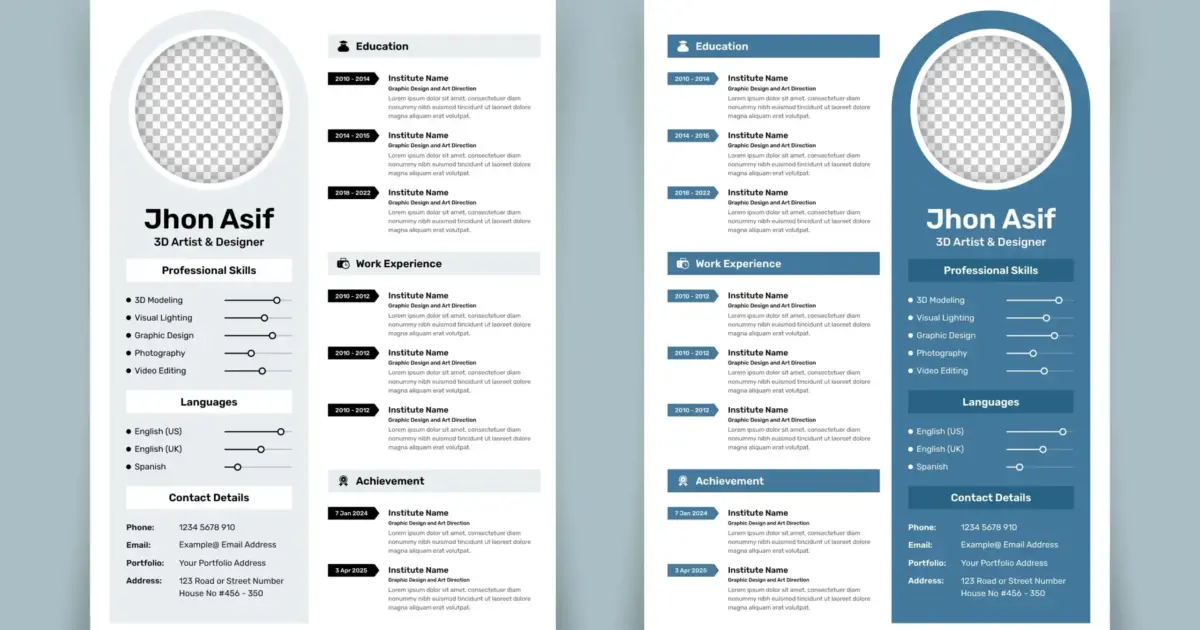
Today, most jobs require applicants to submit both a cover letter and a CV to be considered for the situation. A CV or a resume is a brief summary of your skills, experience and education, while a cover letter is a more in-depth explanation of why you’re the best person for the job.
Among the most hotly debated questions when it comes to applying for jobs is whether or not applicants should tailor their application documents for each position. We strongly believe that the answer to this question is a resounding ‘yes.’ While you don’t need a complete overhaul, it can boost your chances of success tremendously with some strategic tweaks to both your resume and cover letter.
In this article, I’ll go over some key reasons why it’s vital to tailor your CV and cover letter for each role you apply to.
Skip to:
Tailor Your CV and Cover Letter Format
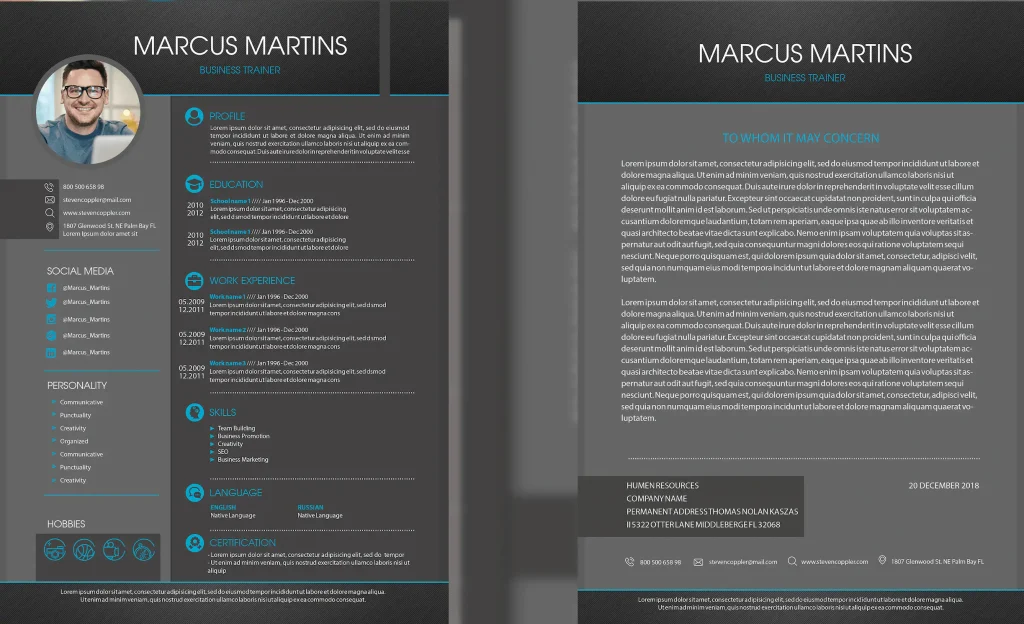
Before worrying about content, it’s vital to read the description on each job listing you apply to in order to determine how best to format your application documents.
You might need to use a PDF editor to tweak the order in which you present the different sections of your resume based on what a specific recruiter values. For example, a company hiring recent graduates might be more interested in where you went to school, while a business looking to hire for a managerial position requiring more than 10 years of experience might place greater weight on work experience.
There are plenty of other formatting decisions that you should make based on the positions you’re applying to and the industries you’re looking to apply within. For example, if you’re looking to work in the arts, you may take more liberties when designing your application documents, which might better demonstrate your creativity. Contrastingly, you’re probably better served using a clean, organized aesthetic if you’re looking to land a role as a financial analyst. Whether or not you include a headshot and the file type you use will also depend on your desired role.
Formatting is an aspect of resume and cover letter design that many applicants neglect, but it’s absolutely essential. Following the job description’s requirements to a tee demonstrates attention to detail and a genuine interest in the position, which are traits that recruiters place tremendous value on.
Customize Your Personal Summary
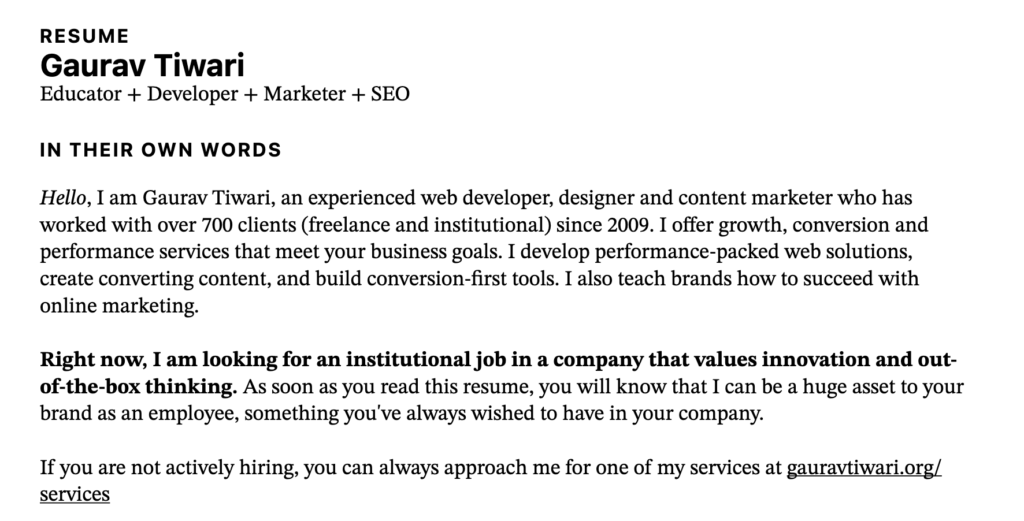
A strong personal summary can be the difference between a great resume and one that’s merely okay. This section of your resume should include a brief overview of your professional experiences and the sort of role you’re looking for.
When writing a summary, you should frame yourself in a way that makes you an appealing candidate for a specific position. If you’re applying for a role as a PPC marketer, for example, you should mention your experience in PPC if you have any.
Remember that less is more when it comes to your personal summary, so keep it as concise as possible. More specifically, your personal summary should be no more than two or three sentences. And while it can be tempting to say more, expanding on what you’ve written in your resume is really what your cover letter is for. So feel free to communicate any more complex ideas and relevant experiential accounts there to ensure you make a strong first impression with the hiring manager.
Showcase your Most Relevant Experience
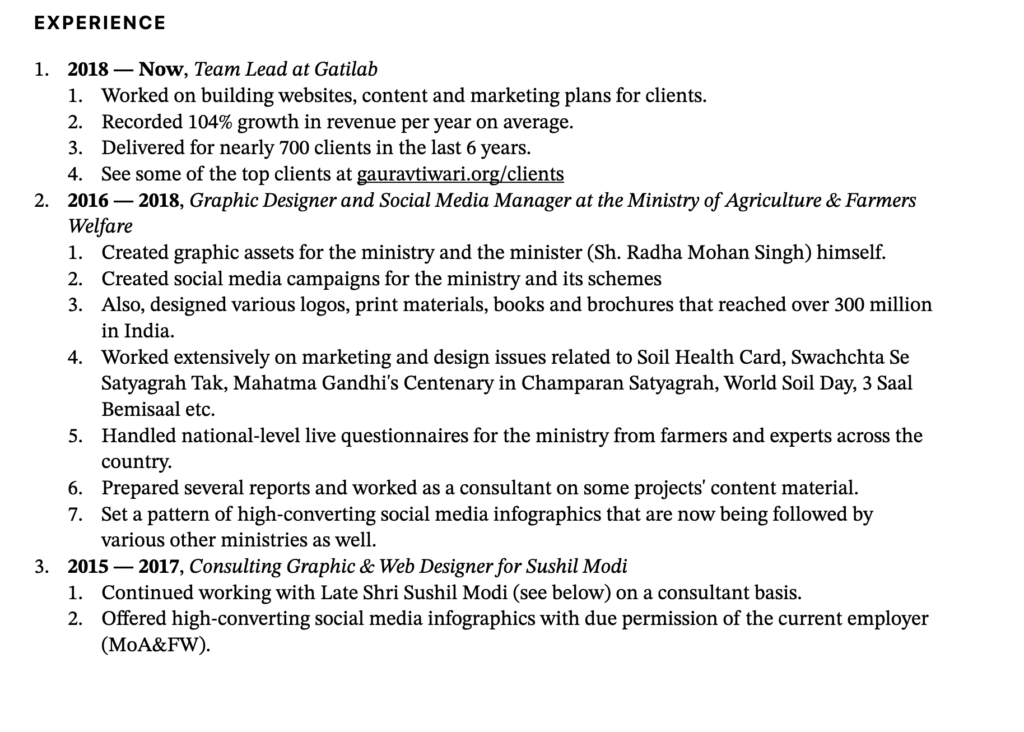
When a recruiter reads your resume and cover letter, among the first things they’ll look for is work experience. In order to boost your chances of landing your dream job, aim to highlight the most relevant roles you’ve worked in the past. Simply listing down each and every position you’ve held may inflate your resume and cover letter to the point that recruiters grow hesitant to read them fully.
Besides customizing the roles you choose to feature, you should also tailor the ‘roles and responsibilities’ you list for each position. For every job you’ve worked, you probably wore more hats than you could fit into a single CV. Pick and choose the most relevant ones to make yourself a more attractive candidate.
Changing your work experience section for each and every job you apply for can be time-consuming. This is where online resume builders come in: today, there are plenty of tools that allow you to make quick changes to your CV without necessarily knowing graphic design and save multiple versions of the document to use for different types of roles.
Highlight Your Most Important Skills
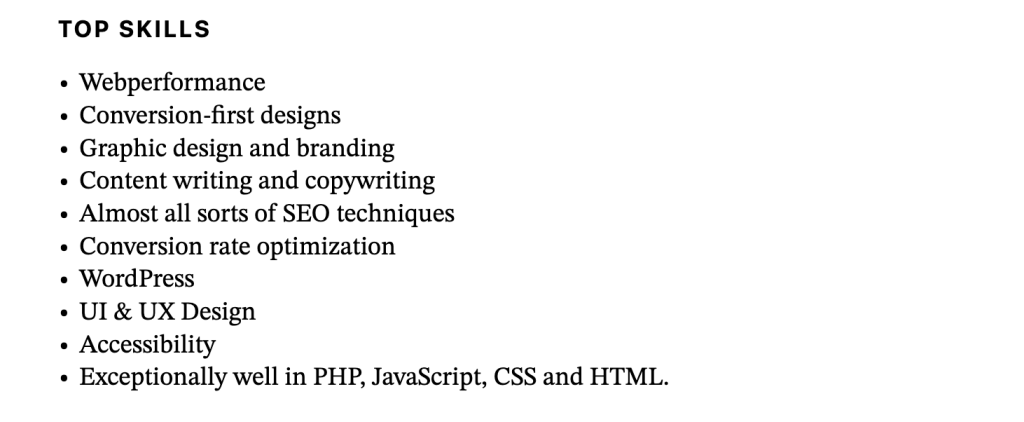
Every job requires a specific set of skills. When filling out your resume and cover letter, it’s essential to read the job description carefully to learn what competencies recruiters are looking for. If you possess any of these skills, make sure to work them into your resume and expand on how you gained them in your cover letter.
Don’t limit yourself to talking about hard skills. Most businesses place tremendous value on employees who possess both technical knowledge and soft skills like good organization, a willingness to work with teams and the ability to manage multiple tasks at once.
Of course, this doesn’t mean you should be dishonest and list down skills you don’t actually have. If there are certain skills you don’t possess, speak about your willingness to learn them when writing your cover letter. Employers don’t expect you to know everything, but they do want to see that you’re eager to improve yourself.
Should you Personalize your CV & Cover Letter for every Application?
If you’re wondering whether you should personalize your cover letter and CV for each job application, the short answer is ‘yes.’ While you should never lie in your application documents, you should frame your experience and skills in a way that gives you the highest possible chance of landing your desired job. You should also make sure that your personal summary and the format of your application documents are on point.
In this article, I’ve reviewed some key reasons to tailor your CV and cover letter for each application. Optimize your application documents for every job you apply for, and you’ll secure a job in no time.
I’ve reviewed hundreds of applications for developer and content roles at Gatilab over 16 years. The ones that stand out aren’t always from the most qualified candidates. They’re from people who clearly read the job post, matched their experience to the specific role, and wrote a cover letter that didn’t look like 40 other cover letters in the same inbox. When someone sends a generic application for a WordPress developer role and the cover letter mentions “my passion for web development,” it’s done. Not because passion is bad, but because it tells me nothing about whether this person can build what we need.
ATS systems (applicant tracking systems) are the first filter at most companies with 50+ employees. They scan for keyword matches between your application and the job description. The systems used by enterprise employers, Workday, Greenhouse, Lever, typically score resumes on keyword density and contextual match. If the job description says “WordPress REST API” and your resume says “WordPress development,” that’s a partial match, not a full one. The fix is straightforward: mirror the exact language from the job post in your resume and cover letter, not stuffed awkwardly but naturally woven into descriptions of real work you did. You can usually get past ATS with 70% keyword alignment. Getting to 100% often means gaming the system in ways that then fail the human review.
Time investment per application should scale with how much you want the role. For a job you’re indifferent about: 20 minutes to swap keywords and send. For a role you genuinely want: 90 minutes to rewrite the cover letter, tailor specific resume bullet points to the role’s priorities, and research the company enough to mention something specific and real. The mistake is spending 90 minutes on every application. That’s not sustainable at scale and it’s not necessary. I’d rather see a candidate spend 90 minutes on 5 targeted applications than 20 minutes on 50 generic ones. Response rates bear this out: targeted applications convert to interviews at roughly 3-5x the rate of generic ones.
Apply for roles where you meet at least 70% of the listed requirements, not 100%. Job descriptions are wish lists. Hiring managers write them knowing they won’t find a perfect match. If you meet the 3-4 core technical requirements and have relevant adjacent experience, apply. The 30% you’re missing is almost always trainable; the 70% you bring is not. I’ve hired people who met 65% of our stated requirements and passed on people who met 95% because the 65% match communicated better, asked better questions, and showed they understood the problem the role was meant to solve.
AI-written cover letters are easy to spot and most hiring managers are flagging them now. The tell isn’t just the phrasing. It’s structural: generic AI cover letters follow a predictable three-paragraph template, reference vague “alignment with company values,” and end with “I look forward to discussing this opportunity.” If you’re going to use AI, use it to draft a structure and then rewrite every sentence in your actual voice. The goal is to sound like you wrote it, because ultimately, someone’s going to interview you and they’ll know immediately if the cover letter voice matches you or not.
How many job applications should I send per week?
For most professionals, 5-10 targeted applications per week is more productive than 30-50 generic ones. The data from job search platforms like LinkedIn and Glassdoor consistently shows that personalized applications convert to interviews at 3-5x the rate of generic submissions. If you’re applying to 50 jobs per week and getting zero responses, the problem isn’t volume. It’s fit or quality. Tighten your targeting: are you applying to roles where you genuinely meet 70%+ of the requirements? Are your applications specific enough to pass both ATS and human review?
How do I optimize my resume for ATS systems?
Use the exact phrases from the job description rather than synonyms. If the post says ‘cross-functional collaboration,’ don’t write ‘worked with multiple teams.’ Use standard section headers (Experience, Education, Skills) since some ATS parsers choke on creative formatting. Avoid tables, columns, headers, and footers, as these often don’t parse correctly. Save and submit as a .docx or .pdf as specified. Use a clean, single-column layout. Then run your resume through a free ATS checker like Jobscan or Resume Worded to see your match score before submitting.
How long should a cover letter be?
Three paragraphs, 250-350 words. Hiring managers spend an average of 7 seconds on an initial resume scan and maybe 30-60 seconds on a cover letter if it passes the first glance. A one-page dense letter doesn’t get read in full. Your structure: paragraph one opens with the specific role and why you’re the right fit (not why you want the job). Paragraph two gives one concrete example of relevant experience with a result. Paragraph three is your close with a clear next step. Cut everything else.
What do recruiters actually read first?
On a resume: job titles, company names, and dates first (about 3 seconds), then the most recent role’s bullet points. The summary at the top gets read only if the titles and companies pass the initial scan. On a cover letter: the first two sentences and the last two sentences. Everything in between gets skimmed if those land. This means your opening sentence does the most work of anything you write in a job application. Don’t waste it on ‘I’m excited to apply for this position.’ Use it to state your specific value immediately.
Should I use AI to write my cover letter?
Use AI to help structure and draft, but rewrite every sentence before submitting. AI-generated cover letters have become easy to recognize: they follow predictable patterns, use certain phrases (‘I am excited to bring my skills,’ ‘aligns perfectly with my experience’), and lack specific detail. Hiring managers who review hundreds of applications have seen enough AI output to pattern-match it in seconds. More importantly, if your cover letter voice sounds nothing like you in an interview, it creates a credibility gap. The tool is fine for a starting point. The voice has to be yours.