
10 Must-read Productivity Books to Supercharge Your Career
I’ve read over 50 productivity books in the past 16 years of running my business. Most of them repeat the same advice in different packaging. But a handful of books genuinely changed how I work, think, and build systems around my time.
These 10 books are the ones I keep coming back to. Some helped me build better habits. Others taught me how to lead teams, focus deeper, or stop wasting energy on the wrong 80% of my work. If you’re serious about getting more done without burning out, start here.
I’ve organized them into four categories: habits, mindset, people skills, and work output. Each one tackles a different angle of productivity, and together they cover pretty much everything you need. Whether you’re a college student figuring out how to study better or a freelancer trying to scale past the 40-hour ceiling, there’s something here for you.
The Power of Habit by Charles Duhigg
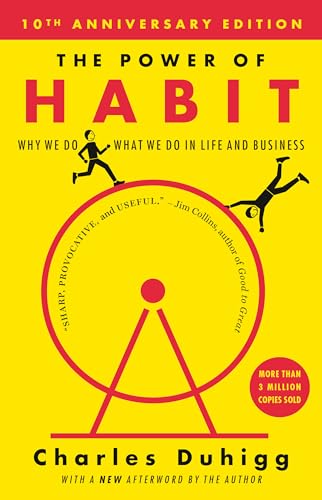
The Power of Habit: Why We Do What We Do in Life and Business
- Reveals the science behind habit formation through fascinating real-world case studies
- Includes a practical reader's guide to help you reshape your own habits
This is the book that made me understand why I kept checking email first thing every morning, even though I knew it killed my focus. Duhigg breaks habits into a dead-simple framework: Cue, Routine, Reward. Once you see this loop in your own behavior, you can’t unsee it.
The case studies are genuinely fascinating. He walks you through how Starbucks trains employees to handle stressful situations by building automatic habits, and how an MIT lab discovered the neurological patterns behind routine behavior. What makes this book practical (not just theoretical) is the reader’s guide at the end. It gives you a step-by-step process to identify your own habit loops and redesign them. I used it to replace my morning email habit with a 25-minute writing block using the Pomodoro technique, and it stuck.
The 7 Habits of Highly Effective People by Stephen R. Covey
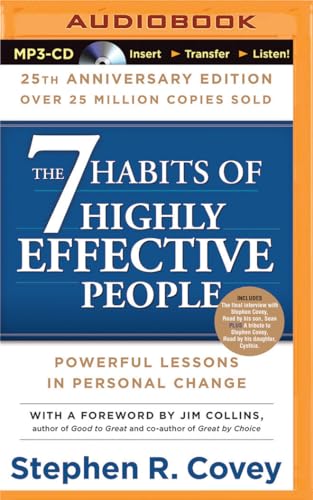
The 7 Habits of Highly Effective People: 25th Anniversary Edition
- A timeless personal effectiveness framework used by millions worldwide
- Covers everything from proactive thinking to teamwork and self-renewal
Yes, this book has been around since 1989. Yes, everyone recommends it. And yes, it still deserves a spot on this list because most people read it once and forget to actually practice what’s inside.
Covey’s seven habits boil down to this: be proactive, start with the end in mind, put first things first, think win-win, seek to understand before being understood, synergize through teamwork, and sharpen the saw (take care of yourself). The habit that changed my work the most was “Put First Things First.” I used to start every day reacting to whatever landed in my inbox. After reading this book, I started blocking my first 2 hours for deep work before opening a single email. My output roughly doubled. At $10.18 for the audiobook, this is probably the best return on investment you’ll find anywhere.
Mindset by Carol Dweck
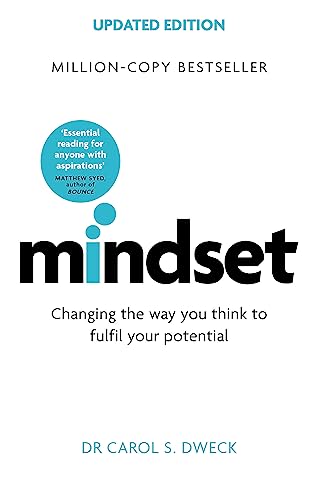
Mindset: Changing The Way You Think To Fulfil Your Potential (Updated Edition)
- Explains the difference between fixed and growth mindsets with research-backed evidence
- Shows how your mindset shapes success in business, relationships, and personal growth
Carol Dweck’s research boils down to one question: do you believe your abilities are fixed, or can they grow? That’s it. But the implications are massive.
People with a fixed mindset avoid challenges because failure feels like proof they’re not good enough. People with a growth mindset treat failure as feedback. I’ve seen this play out in my own career. Early on, I avoided projects I wasn’t sure I could handle. After reading this book, I started taking on work that stretched me, things like building custom WordPress plugins when I’d only done themes before. The discomfort was the point. Dweck backs this up with decades of research across education, sports, and business. If you find yourself avoiding hard things or getting defensive about feedback, this is the book that’ll snap you out of it.
13 Things Mentally Strong People Don’t Do by Amy Morin
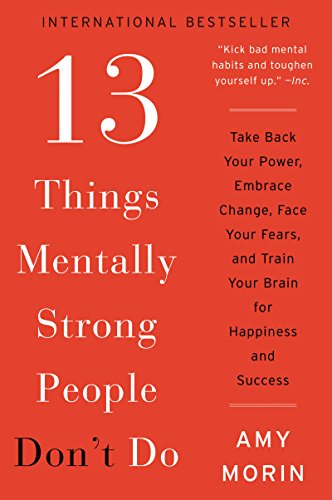
13 Things Mentally Strong People Don't Do: Take Back Your Power, Embrace Change, Face Your Fears
- Practical framework for building mental resilience through 13 avoidable behaviors
- Real-world examples showing how mental strength drives professional and personal success
Most productivity books tell you what to do. This one tells you what to stop doing. That’s what makes it different, and honestly, more useful.
Amy Morin wrote this after losing her husband, her mother, and her father-in-law within a few years. She’s not theorizing about resilience. She lived it. The 13 things she lists include: don’t waste time feeling sorry for yourself, don’t give away your power, don’t shy away from change, don’t focus on things you can’t control, and don’t resent other people’s success. I caught myself guilty of at least 5 of these when I first read the book. The one that hit hardest? “Don’t expect immediate results.” Running a business for 16+ years has taught me that compounding takes time, but reading Morin’s framing helped me stop comparing my chapter 3 to someone else’s chapter 20.
How to Win Friends and Influence People by Dale Carnegie
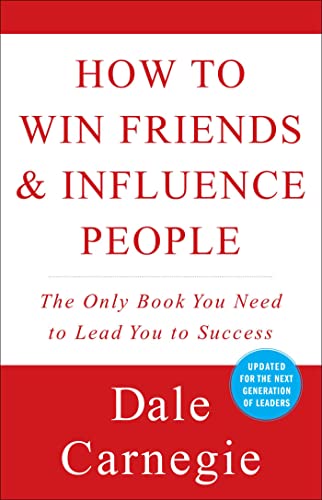
How to Win Friends & Influence People by Dale Carnegie
- Timeless techniques for building genuine relationships and persuading others
- Packed with real stories showing how empathy and listening win people over
You might wonder what a people skills book is doing on a productivity list. Here’s the thing: your ability to get things done is directly tied to how well you work with others. Clients, team members, partners. I’ve lost count of how many projects stalled because of poor communication, not poor skills.
Dale Carnegie wrote this in 1936, and it’s still the best book on human interaction I’ve ever read. The core principles are simple: don’t criticize, give honest appreciation, become genuinely interested in other people, and let the other person do the talking. I’ve used these principles in client meetings for years, and they work every single time. When you let a client feel heard before pitching your solution, close rates go up dramatically. At under $10, this book has probably generated more revenue for my business than any course or tool I’ve ever bought. If you haven’t read it yet, fix that this week.
The Definitive Book of Body Language by Allan and Barbara Pease
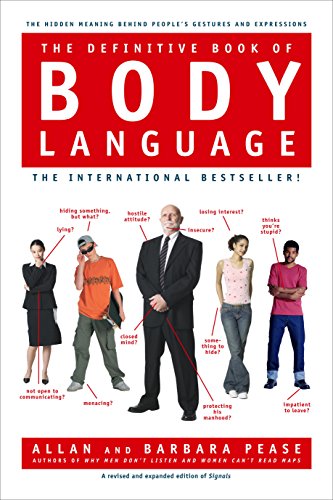
The Definitive Book of Body Language: The Hidden Meaning Behind People's Gestures and Expressions
- Comprehensive guide to reading facial expressions, arm gestures, and posture
- Includes practical tips for public speaking and professional settings
Your body speaks before your mouth does. Allan and Barbara Pease break down exactly what your facial expressions, arm positions, and leg posture are telling people, whether you realize it or not.
The productivity angle here is subtle but real. The book covers how office setups affect relationships between clients, employees, and employers. Where you sit in a meeting, how you position your desk, even which direction you face during a presentation, all of it influences how people perceive and respond to you. I found the public speaking section especially useful. Small adjustments like open palm gestures and avoiding crossed arms made my client presentations noticeably more effective. This isn’t a typical productivity book, but it’s helped me close more deals and lead better meetings, which is productive in the truest sense.
Smarter Faster Better by Charles Duhigg
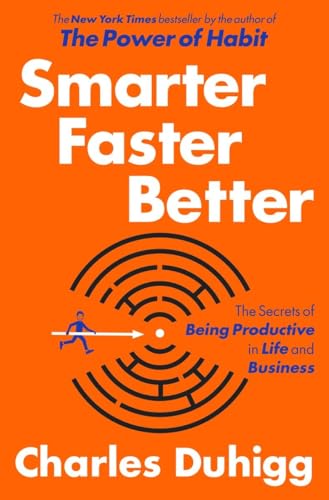
Smarter Faster Better: The Secrets of Being Productive in Life and Business
- Covers 8 pillars of productivity: motivation, teams, focus, goal setting, managing others, decision making, innovation, and data
- Includes a practical appendix showing how to apply each chapter's lessons
This is Duhigg’s second book on this list, and it’s the more actionable one. While The Power of Habit focuses on understanding behavior patterns, Smarter Faster Better gives you a framework for actually getting more done.
The book covers 8 key areas: motivation, teams, focus, goal setting, managing others, decision making, innovation, and absorbing data. Each chapter uses a real-world case study. The focus chapter was the game-changer for me. Duhigg explains the concept of “mental models,” which is basically telling yourself a story about what you expect to happen before you start a task. This keeps your brain engaged instead of drifting. I started doing this before every client call: spending 60 seconds imagining how the conversation should go. My meetings got shorter and more productive. The appendix at the end shows you exactly how to apply each chapter, which most productivity books skip.
Deep Work by Cal Newport
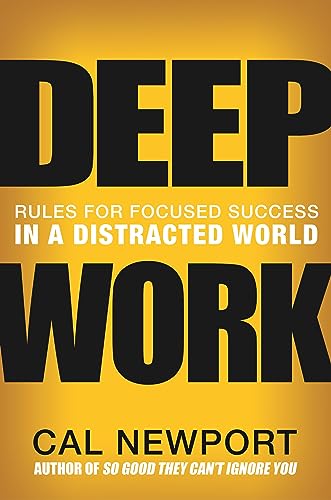
Deep Work: Rules for Focused Success in a Distracted World
- Introduces a practical framework for achieving distraction-free, high-value work
- 4 clear rules for building deep focus into your daily routine
If I could only recommend one book from this entire list, it would be this one. Cal Newport’s definition of deep work is simple: “Professional activities performed in a state of distraction-free concentration that push your cognitive capabilities to their limit.” That’s where your best work lives, and most of us spend embarrassingly little time there.
Newport lays out 4 rules: work deeply, embrace boredom (stop reaching for your phone every quiet moment), quit social media (or at least audit its value honestly), and drain the shallows (reduce the low-value busywork that fills your day). I implemented the “shutdown ritual” he describes, where you review your task list at the end of each workday and literally say “shutdown complete.” It sounds ridiculous, but it works. My evenings stopped being contaminated by half-finished work thoughts, and I started each morning fresh. If you’re a programmer or developer, this book is practically mandatory reading. Deep work is how you ship code that matters.
The Productivity Project by Chris Bailey
The Productivity Project: Accomplishing More by Managing Your Time, Attention, and Energy
- 25 hand-picked productivity tactics tested through a year of real experiments
- Covers the three pillars of productivity: time, attention, and energy management
Chris Bailey spent an entire year running productivity experiments on himself. He worked 90-hour weeks. He worked 10-hour weeks. He meditated. He cut out caffeine. He tried every tactic he could find and distilled the results into 25 hacks that actually move the needle.
What I love about this book is that it treats productivity as three interconnected things: time, attention, and energy. Most people only focus on time management (calendars, schedules, Pomodoro timers), but if your energy is shot or your attention is scattered, perfect scheduling won’t save you. Bailey’s “Rule of 3” became part of my daily routine: pick 3 things you want to accomplish by end of day, then protect your energy and attention around those 3 items. At $5.99 for the hardcover, this is absurdly good value. It’s also the most entertaining productivity book on this list. Bailey writes like he’s telling you a story over coffee, not lecturing from a stage.
The 80/20 Principle by Richard Koch
The 80/20 Principle: The Secret of Achieving More with Less
- Explains why 80% of results come from 20% of efforts, with real business case studies
- Practical framework for identifying and focusing on high-impact activities
80% of your results come from 20% of your actions. You’ve probably heard this before, but have you actually audited your work to find out which 20% matters?
Richard Koch doesn’t just explain the Pareto Principle. He shows you how to apply it ruthlessly. In my business, I tracked my revenue sources for a quarter and discovered that roughly 15% of my clients generated about 75% of my income. The rest were high-maintenance, low-return projects that ate up time I could’ve spent on higher-value work. After reading this book, I restructured my client roster, raised prices for my best services, and dropped the bottom tier. Revenue went up, stress went down. Koch illustrates this pattern across businesses, relationships, and personal habits with case studies that make the math feel intuitive. This book pairs perfectly with a good fiction book for your downtime, because once you start applying 80/20 thinking, you’ll find yourself with a lot more free evenings.
Which Productivity Book Should You Read First?
If you’re just starting your productivity journey, begin with Deep Work by Cal Newport. It’s the most actionable book on this list and addresses the biggest problem most people face: distraction. Once you’ve built the habit of focused work, move to The Power of Habit to understand the science behind why you do what you do. Then pick up The 80/20 Principle to make sure you’re focusing that deep work on the right things.
For people skills (which are productivity multipliers whether you realize it or not), How to Win Friends and Influence People is non-negotiable. And if you’re dealing with setbacks or struggling with motivation, 13 Things Mentally Strong People Don’t Do will get your head right faster than any motivational podcast.
Don’t try to read all 10 at once. Pick one, finish it, and apply one idea from it for 30 days before grabbing the next one. That’s how these books actually change your output instead of just sitting on your shelf looking impressive.
Frequently Asked Questions
What is the best productivity book for beginners?
Deep Work by Cal Newport is the best starting point. It gives you 4 clear rules for building focused work habits, and you can start applying them immediately. Once you’ve built a foundation of focused work, move on to The Power of Habit to understand the psychology behind your routines.
Can productivity books actually make you more productive?
Only if you apply what you read. Reading 10 productivity books without changing your behavior is just entertainment. Pick one book, extract one actionable idea, and practice it for 30 days. That single habit will do more for your output than reading an entire shelf of self-help books.
Is The 7 Habits of Highly Effective People still relevant?
Yes. Covey’s principles are timeless because they focus on character and fundamental human behavior, not trendy tools or apps. The habit of “Put First Things First” is arguably more relevant now than in 1989 because we have more distractions competing for our attention.
What is the difference between The Power of Habit and Smarter Faster Better?
Both are by Charles Duhigg but tackle different problems. The Power of Habit explains how habits form and how to change them. Smarter Faster Better is a broader productivity book covering motivation, focus, goal setting, teamwork, and decision making. Read The Power of Habit first, then follow up with Smarter Faster Better.
What is the 80/20 rule in productivity?
The 80/20 rule (Pareto Principle) states that roughly 80% of your results come from 20% of your efforts. In practice, this means identifying the small number of tasks, clients, or activities that generate most of your results, and focusing your energy there instead of spreading yourself thin across everything.
Should I read physical books or listen to audiobooks for productivity?
Both work, but I prefer audiobooks for narrative-driven books like How to Win Friends and Influence People, and physical copies for reference-heavy books like The 80/20 Principle. Physical books are easier to highlight and revisit. Audiobooks are great for commutes and workouts. Pick whatever format you’ll actually finish.
How do I apply the growth mindset from Carol Dweck’s book at work?
Start by reframing failures as learning opportunities instead of evidence of your limitations. When you hit a setback on a project, ask “what can I learn from this?” instead of “I’m not good enough for this.” Volunteer for projects that stretch your skills. The discomfort of learning something new is the growth mindset in action.
What is deep work and why does it matter?
Deep work is Cal Newport’s term for professional activities performed in distraction-free concentration that push your cognitive capabilities to their limit. It matters because this type of focused work produces your highest-value output, whether that’s writing code, creating content, or solving complex business problems. In a world of constant notifications, the ability to do deep work is becoming rare and therefore more valuable.