
5 Essential Leadership Skills For Entrepreneurial Success
You hired your first freelancer last month. They missed two deadlines, delivered work that needed complete revision, and stopped responding to messages for three days. You spent more time managing them than it would’ve taken to do the work yourself.
This is the leadership gap nobody warns solopreneurs about. You went from doing everything yourself to suddenly needing to communicate expectations, give feedback, hold people accountable, and make hard calls. And you have zero training for any of it.
Bad leadership doesn’t just waste money on contractors. It burns out your best people and keeps you stuck doing $20/hour tasks when your time is worth $200. I’ve run remote teams for over a decade now, managed freelancers across four time zones, lost clients because of team mistakes, and fired people I should’ve fired months earlier. Every lesson here comes from real situations, not management textbooks.
What follows are practical leadership skills built from running remote teams. How to delegate without micromanaging, communicate in async environments, make fast decisions, handle conflict, and build a team culture when nobody shares an office.
The Player-Coach Reality Nobody Talks About
The hardest transition in entrepreneurship isn’t getting your first client. It’s going from doing the work yourself to managing someone else doing it. I call this the player-coach phase, and it’s where most solopreneurs either level up or burn out.
When I hired my first contractor in 2014, I expected to free up 20 hours a week. Instead, I spent 15 hours managing their work and another 10 fixing what they delivered. My net gain was negative. The problem wasn’t the contractor. It was me. I didn’t know how to brief work, set clear expectations, or give feedback that actually improved output.
Here’s what nobody tells you about the player-coach phase. You’ll be worse off financially for the first 2-3 months. You’re paying someone while also investing time teaching them. The payoff comes around month 4 when they can handle tasks independently and you stop touching every deliverable.
The mistake most entrepreneurs make is quitting at month 2. They fire the contractor, go back to doing everything themselves, and convince themselves that “nobody can do it like I can.” That’s not a quality standard. That’s a leadership failure.
The player-coach phase typically lasts 6-18 months. During this time, you’re still doing client work while also managing 1-3 contractors. It’s exhausting but temporary. The goal is to build systems solid enough that you can step back from execution entirely.
Async Communication That Actually Works
Async communication is the backbone of remote leadership, but most people do it wrong. They treat Slack like a real-time chat room, send one-sentence messages that require 12 follow-up questions, and schedule meetings for things that should’ve been a Loom video.
I run my entire agency on async-first communication. About 90% of our daily work happens without a single real-time conversation. Here’s the framework that made that possible.
The SOP-First Approach
Every repeatable task gets a Standard Operating Procedure before it gets delegated. Not a 40-page manual. A simple document with three sections: what the task is, what “done” looks like, and common mistakes to avoid. I store all SOPs in Notion with screenshots and short Loom recordings embedded.
When I first started delegating, I’d explain tasks over a 20-minute call. The freelancer would nod, hang up, and then do something completely different from what I described. Written SOPs fixed this overnight. Now when someone delivers wrong work, I can point to the exact line in the SOP they missed instead of having a frustrating “but I thought you said…” conversation.
Choosing the Right Channel
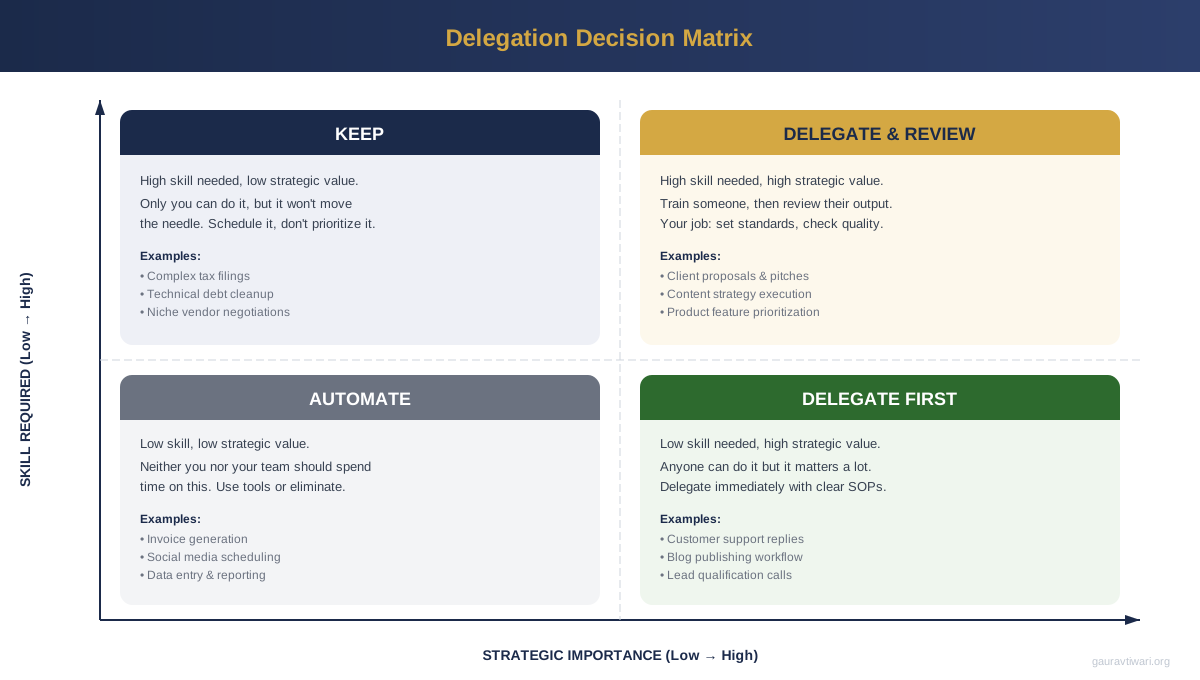
The biggest communication mistake remote leaders make is using the wrong channel for the message. A quick question about a deadline doesn’t need a 30-minute Zoom call. A sensitive conversation about performance doesn’t belong in a Slack thread.
I use a simple rule: default to async, escalate only when speed or nuance demands it. Task updates go in Monday.com. Project briefs and SOPs live in Notion. Quick questions hit Slack with an expected response window of 1-4 hours. Meetings happen only for strategy sessions, conflict resolution, or onboarding new team members.
The Weekly Standup That Takes 15 Minutes
I hold one weekly sync meeting with my core team. It lasts exactly 15 minutes. Everyone submits their updates async before the meeting using a simple template: what they completed, what they’re working on, and what’s blocking them. The meeting itself is only for discussing blockers and making decisions that require real-time input.
Before I implemented this structure, our weekly meetings ran 60-90 minutes. Most of that time was status updates that could’ve been a message. Cutting meeting time by 75% gave everyone an extra hour of focused work per week. Across a team of 6, that’s 6 hours of productivity recovered every single week.
Decision-Making Speed: The Underrated Leadership Skill
Fast decision-making separates successful remote leaders from stuck ones. When your team is spread across time zones, a 48-hour delay in a decision can cost you a full week of progress. By the time everyone wakes up, reads the update, waits for your response, and starts working, you’ve lost 2-3 business days.
I use a framework I call the 70% rule. If I have 70% of the information I need, I make the decision. Waiting for 100% certainty means waiting too long. Most business decisions are reversible anyway. You can change a contractor’s assignment, adjust a project timeline, or pivot a strategy. The cost of a wrong decision is almost always less than the cost of no decision.
Here’s a real example. Last year, a developer on my team flagged a client’s site was loading in 8.2 seconds. The client hadn’t noticed yet. I had two options: schedule a meeting to discuss solutions or authorize the developer to spend 4 hours optimizing immediately. I chose option two. The developer got load time down to 1.9 seconds before the client’s next login. That quick call saved a potential client complaint and turned into a case study we used to win two more projects.
The worst decision you can make as a remote leader is no decision. Your team is sitting idle in another time zone, waiting for you to reply. Every hour of indecision multiplies across your entire team.
There are exceptions. Hiring decisions, firing decisions, and anything involving legal or financial commitments deserve deliberation. But for 90% of daily operational choices, speed beats perfection. Train your team to make smaller decisions independently by giving them clear boundaries. “You can approve any expense under $200 without asking me” eliminates dozens of back-and-forth messages per month.
The Delegation Framework: Keep vs. Delegate
Delegation is the skill that unlocks everything else. You can’t scale past a certain point if you insist on doing everything yourself. But blind delegation, handing off tasks without structure, leads to the exact frustration that makes entrepreneurs give up on building teams.
I use a simple 2×2 matrix to decide what stays on my plate and what gets delegated. The two axes are: does this task require my unique skill set, and does it directly impact revenue? Tasks that score high on both stay with me. Everything else gets delegated, automated, or eliminated.
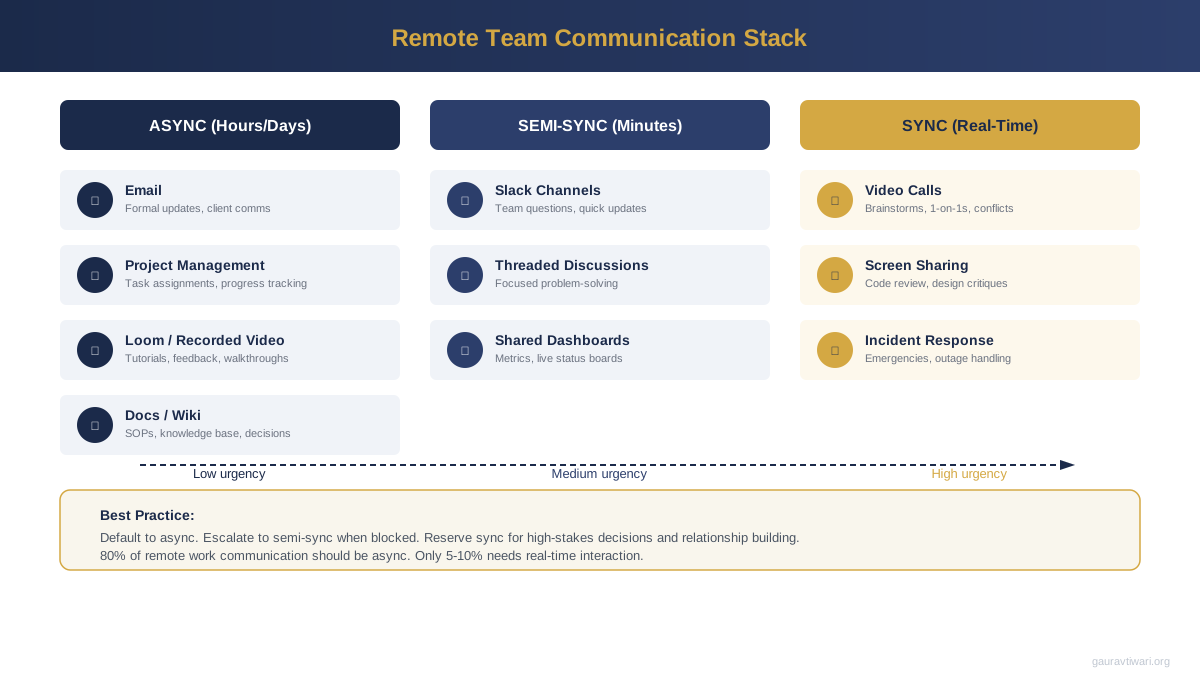
Client strategy calls, pricing decisions, and final hiring calls stay with me. These require judgment built from years of experience and directly affect revenue. Blog content drafts, design work, and client onboarding get delegated with a review step. Social media posting, data entry, and basic research get delegated completely. Invoice formatting and email templates get automated.
The key insight is that “delegate and review” is a temporary category. The goal is to move tasks from “delegate and review” to “fully delegated” as your team builds competence. If you’re still reviewing the same type of deliverable after 3 months, something is wrong with either the SOP, the person, or your expectations.
The $200/Hour Test
Here’s a practical filter I use every week. I track my time for one day and categorize every task. Then I ask: “Would I pay someone $200/hour to do this?” If the answer is no, it should be delegated to someone who costs $15-50/hour. Formatting proposals, scheduling meetings, uploading blog posts, creating social media graphics. None of these are $200/hour work, but they eat 60% of most entrepreneurs’ days.
When I first did this exercise, I realized I was spending 4 hours daily on tasks worth $25/hour. That’s $100 of work consuming time that could generate $800. Delegation isn’t an expense. It’s the highest-ROI investment you’ll make in your business. Track your time with a tool like Hubstaff and the data will shock you.
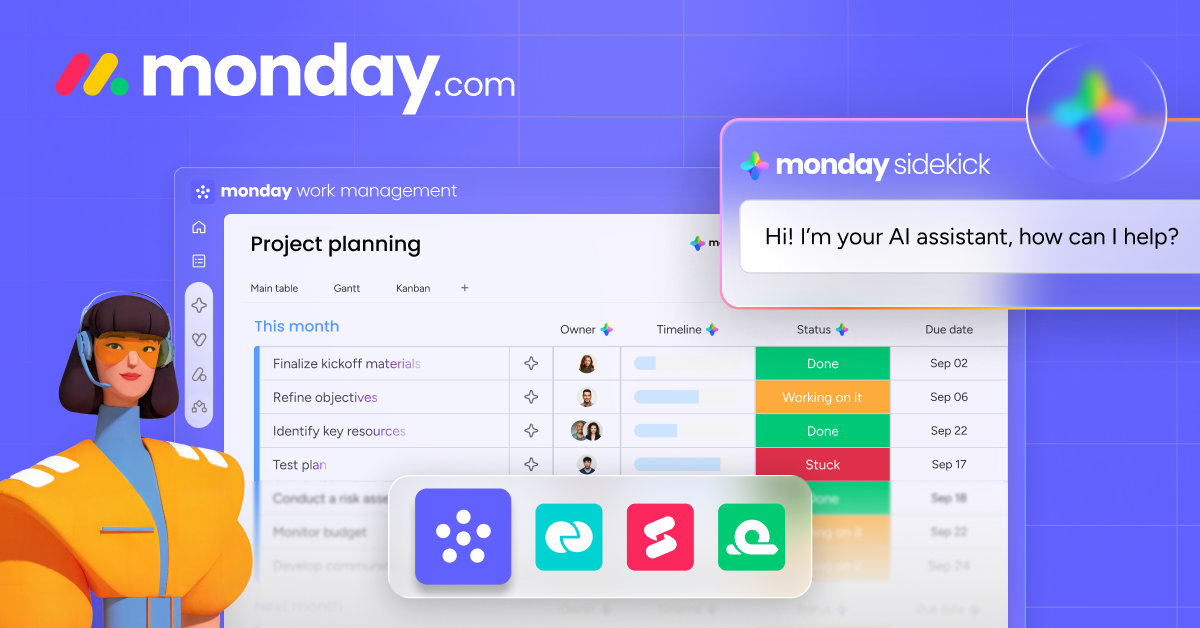
- Visual project boards with customizable workflows
- Built-in time tracking and workload management
- Automations that eliminate repetitive status updates
- 200+ integrations including Slack, Google Workspace, Zoom
- Free plan available for up to 2 users
Handling Conflict With Freelancers
Conflict with remote freelancers is inevitable. You’ll deal with missed deadlines, quality issues, communication breakdowns, and the occasional freelancer who simply disappears mid-project. How you handle these situations defines your leadership more than anything else.
I’ve developed a three-conversation framework for performance issues. The first conversation is clarification. Maybe the freelancer didn’t understand the brief, or they’re dealing with a personal situation. You assume good intent and clearly restate expectations. No frustration, no lecture. Just: “Here’s what I expected, here’s what was delivered, here’s the gap. How do we close it?”
The second conversation is a formal warning. Same issue happened again. Now you document it in writing, set a specific improvement timeline (usually 2 weeks), and define exact metrics for success. “The next 3 deliverables need to meet the SOP standard with zero revisions. If that doesn’t happen, we’ll need to part ways.”
The third conversation is the exit. If the pattern continues after two clear conversations, the relationship isn’t working. You end it professionally, pay what’s owed, and move on. No hard feelings, no drawn-out drama.
The biggest mistake I see entrepreneurs make with conflict is avoidance. They’ll tolerate mediocre work for months because the conversation feels uncomfortable. I did this early in my career. I kept a developer on a project for 4 months past the point where I should’ve replaced them. The cost? Three missed client deadlines, $4,200 in rework, and a damaged client relationship that took 6 months to rebuild.
Building Culture Without an Office
Remote team culture doesn’t happen by accident. Without deliberate effort, your team becomes a collection of disconnected contractors who do their tasks and log off. That works for simple task-based relationships, but it falls apart when you need people to go above and beyond, flag problems proactively, or collaborate creatively.
Culture in a remote team comes down to three things: shared context, psychological safety, and recognition. Shared context means everyone understands not just their task, but why it matters. I send a monthly “state of the business” update to my entire team. Revenue numbers, client wins, goals for the next month. When a designer knows that the landing page they’re building is for a client who represents 15% of our revenue, they bring more care to the work.
Psychological safety means people feel comfortable saying “I don’t know” or “I made a mistake” without fear of punishment. I build this by admitting my own mistakes openly. Last quarter, I mispriced a project by 40%. I told the team, explained what I learned, and asked for input on how to prevent it next time. That one moment of vulnerability did more for our culture than any team-building exercise ever could.
Recognition is simple but often neglected. A direct Slack message saying “Great work on the XYZ project, the client specifically mentioned the quality” takes 30 seconds and has an outsized impact on retention. I also do public shoutouts in our weekly standup notes. People want to know their work matters. In a remote environment where nobody sees you working, explicit recognition fills the gap that in-office visibility naturally provides.
Culture isn’t ping pong tables and pizza Fridays. It’s whether your team trusts you enough to tell you bad news before it becomes a crisis.
Hiring Mistake Recovery
Every entrepreneur makes bad hires. The skill isn’t avoiding them entirely. It’s recognizing them quickly and recovering without derailing your business. I’ve made at least a dozen hiring mistakes over the years, and each one taught me something different about what to look for and what to avoid.
The most expensive hiring mistake I ever made was bringing on a senior developer at $75/hour who interviewed brilliantly but delivered poorly. They could talk about architecture and best practices for hours but consistently shipped code that broke in production. I kept them for 3 months because I’d already invested in onboarding. Total cost: roughly $12,000 in wages for work that had to be redone, plus the opportunity cost of delayed client projects.
Now I use paid trial projects for every hire. Before committing to an ongoing relationship, I pay the candidate for a small, real project. Not a test. An actual deliverable that my business needs. This costs $200-500 upfront but has saved me thousands in bad hires. The trial project reveals things no interview can: how they handle feedback, whether they meet deadlines, how they communicate when stuck, and whether their actual work quality matches their portfolio.
Red Flags I Missed (So You Won’t)
After enough bad hires, you start recognizing patterns. Here are the red flags I now watch for that I used to ignore. Freelancers who can’t provide specific examples of past work similar to what you need. People who say “yes” to everything without asking clarifying questions. Contractors who are available immediately with no current commitments, which often means other clients have already let them go. And anyone who communicates in walls of text with no clear structure, because that’s exactly how they’ll deliver their work.
The fastest recovery from a bad hire is having a backup plan. I maintain a shortlist of 2-3 vetted freelancers in every role I regularly need. When a hire doesn’t work out, I can swap in a replacement within a week instead of starting the search from scratch. Think of it as protecting your startup costs by building redundancy into your hiring pipeline.
Emotional Resilience: Surviving the Lows
Leadership isn’t all strategy and systems. There’s an emotional weight that comes with running a team that nobody prepares you for. When a client fires you, it’s not just lost revenue. You also have to explain it to your team and reassign their hours. When a key team member quits, you’re scrambling to cover their responsibilities while pretending everything is fine. When revenue dips for two months straight, you’re lying awake wondering if you’ll be able to make payroll.
I’ve experienced all of these. In 2019, I lost my two biggest clients within the same month. Combined, they represented about 40% of my revenue. I had three contractors depending on consistent work from me. I didn’t sleep properly for weeks. The imposter syndrome hit hard. “Maybe I’m not cut out for this. Maybe I should just go back to freelancing solo.”
What got me through it was compartmentalization and forward motion. I gave myself 48 hours to process the emotional hit, then switched to problem-solving mode. I reached out to 15 past clients with a simple “checking in” email. Three of them had projects they’d been meaning to start. Within 6 weeks, I’d replaced 80% of the lost revenue. The lesson: your network is your safety net, and emotional resilience is a muscle you build through practice, not a trait you’re born with.
Imposter Syndrome Never Fully Goes Away
Here’s something experienced leaders rarely admit publicly. Imposter syndrome doesn’t disappear when you hit a certain revenue number or team size. I still feel it when I’m on a call with a client who runs a 500-person company and they’re asking me for advice. The difference is that I’ve learned to recognize the feeling, acknowledge it, and act despite it.
The practical fix I’ve found is keeping a “wins file.” It’s a simple document where I record every positive client feedback, successful project outcome, and team achievement. When imposter syndrome hits, I open the file and read the last 10 entries. It’s hard to feel like a fraud when you’re looking at concrete evidence of your impact.
Tools for Remote Leadership
Tools don’t make you a better leader, but the right stack removes friction that creates leadership problems. After testing dozens of combinations over the years, I’ve settled on a lean stack that covers everything a remote team needs without tool fatigue.
For project management and task tracking, I use Monday.com. It handles client projects, internal tasks, and deadline tracking in one visual interface. Every team member updates their tasks daily, which eliminates most “what’s the status on X?” messages. The automation features are genuinely useful. When a task moves to “Review,” I automatically get notified. When I approve it, the task creator gets notified. No manual pinging required.
For documentation and SOPs, Notion is where everything lives. Project briefs, client onboarding checklists, team processes, meeting notes. Notion’s database features let me build custom dashboards for different views of the same information. My designers see their assigned projects. I see all projects across all clients. Same data, different perspectives.
For communication and file sharing, Google Workspace handles email, documents, and video calls. I chose it over separate tools because the integration is seamless. A document shared in an email thread can be edited collaboratively without switching apps. Calendar scheduling across time zones works correctly. And the admin console lets me manage team access and security from one dashboard.
For time tracking, Hubstaff gives me visibility into how hours are being spent without micromanaging. I don’t use it for surveillance. I use it for billing accuracy and workload balancing. If a contractor is consistently spending 10 hours on a task that should take 5, it’s a signal that something needs to change in the process, the training, or the assignment.
- All-in-one workspace for SOPs, wikis, and project docs
- Database views let each team member see their relevant work
- Built-in templates for meeting notes, project briefs, and onboarding
- Real-time collaboration with inline comments
- Free for personal use, $8/user/mo for teams
- Professional email with custom domain
- Google Meet for video calls with recording and transcription
- Shared drives with granular access controls
- Calendar scheduling that handles multiple time zones
- Admin console for team security and access management
What’s your biggest challenge as a team leader?
Scaling From Solo to Team: The Growth Stages
Leadership requirements change dramatically as your team grows. What works with 2 freelancers completely breaks with 8. I’ve been through all four stages of this growth curve, and each one required me to develop different skills and let go of different habits.
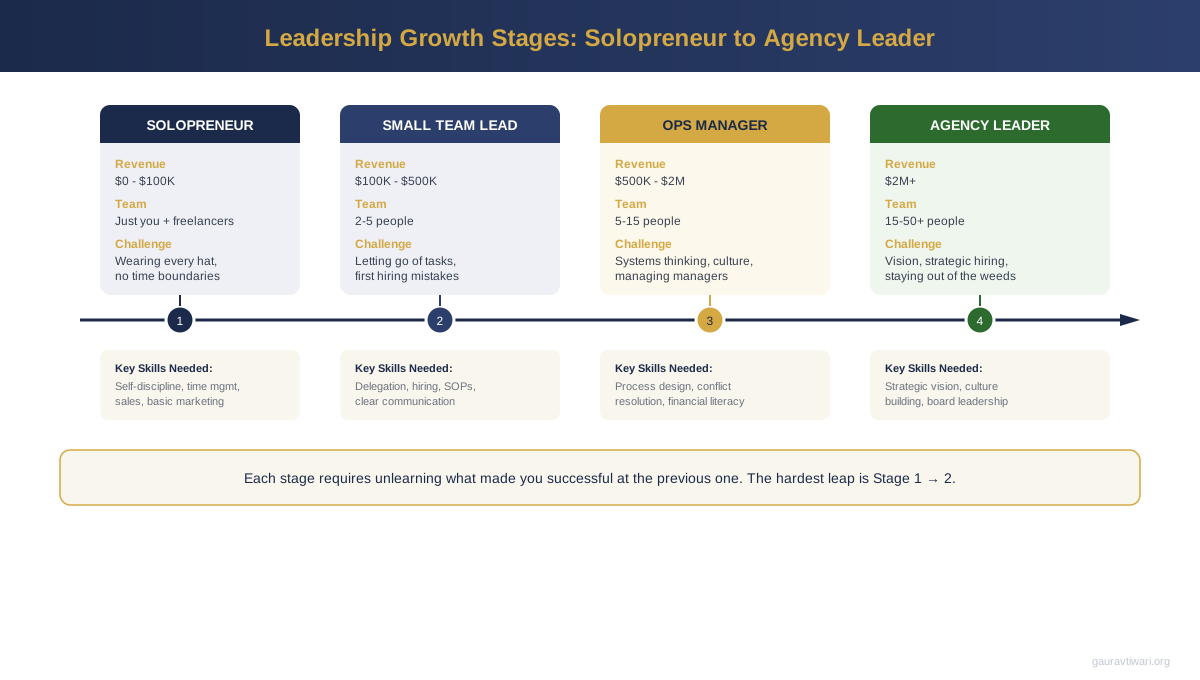
Stage 1 is the solopreneur. You do everything, revenue is $0-5K per month, and the only process you need is a to-do list. This stage is comfortable but has a hard ceiling. There are only so many hours in a day, and your revenue is directly tied to your time.
Stage 2 is the player-coach. You have 1-3 contractors, revenue is $5-15K per month, and you need basic SOPs and a project management tool. This is the hardest transition. You’re still doing client work while learning to manage people. Most entrepreneurs get stuck here for years or quit entirely. The key skill here is creating unified systems that let your team operate without constant guidance.
Stage 3 is the team manager. You have 4-10 team members, revenue is $15-50K per month, and your systems run the work while you manage the people. At this stage, you stop being involved in day-to-day execution entirely. Your job is hiring, training, quality control, and client relationships. The hardest part is letting go of the work you’re good at. I still have to fight the urge to jump in and “fix” a design instead of coaching the designer to improve it.
Stage 4 is the agency leader. You have 10+ people, potentially with middle managers, and revenue exceeds $50K per month. At this stage, you’re building leaders, not managing individual contributors. You set the vision, establish the culture, and make strategic decisions. Everything operational is delegated. If you’re still approving individual deliverables at this stage, you’ve failed to build the right systems and people under you.
The Leadership Playbook: What I’d Tell My Younger Self
If I could go back to 2014 when I started building my first team, here are the five things I’d tell myself.
First, write everything down before you delegate it. The 30 minutes you spend creating an SOP saves 3 hours of revision and frustration. Second, hire for communication skills over technical skills. A slightly less skilled freelancer who communicates proactively is worth 3x more than a brilliant one who goes silent for days. Third, fire faster. Every week you keep a bad hire costs you money, energy, and team morale.
Fourth, build your content marketing pipeline early so you’re not dependent on any single client or revenue source. When you lose a big client (and you will), having a steady flow of inbound leads from your own content means the business survives. Fifth, take care of your mental health. Burnout doesn’t announce itself. It creeps in slowly until you wake up one morning dreading work you used to love.
Leadership in an entrepreneurial context isn’t about having all the answers. It’s about creating an environment where your team can do their best work without you being the bottleneck. Every system you build, every SOP you write, every decision boundary you set is one step closer to a business that runs without you touching every piece.
That’s the real goal. Not to be the best at doing the work, but to be the best at enabling others to do it. Start with one freelancer, one SOP, one project management board. Build from there. The leadership skills you need will develop as the challenges demand them. Just don’t make the mistake of thinking you need to figure it all out before you start.
Frequently Asked Questions
How do you manage freelancers across different time zones?
I default to async communication for everything. Tasks and deadlines live in Monday.com, SOPs and briefs are in Notion, and we have one 15-minute weekly sync that rotates times to be fair to everyone. The key is making sure every task has a clear deadline, a written brief, and a definition of done. When everyone knows exactly what’s expected, time zone differences stop being a problem. I also set response windows (4 hours for chat, 24 hours for async) so nobody feels pressure to be online outside their working hours.
What’s the best way to delegate without micromanaging?
Create a clear SOP for the task, define what “done” looks like with specific examples, and set a check-in point midway through. Then step back. Don’t check their progress every hour. Review the final deliverable against the SOP criteria. If it meets the standard, approve it. If not, point to the specific gap and ask them to revise. The SOP is your quality standard, not your personal preference in the moment. This removes subjectivity and lets the freelancer know exactly what they’re aiming for.
How do you handle a freelancer who misses deadlines?
First missed deadline gets a private conversation to understand why. Maybe the scope was unclear or they had a personal emergency. Second missed deadline gets a documented warning with a clear improvement timeline, usually 2 weeks. Third occurrence means ending the relationship. I’ve found that most deadline issues stem from unclear briefs or unrealistic timelines on my end. Before blaming the freelancer, I always check whether I gave them enough information and enough time.
What tools do you recommend for remote team management?
My core stack is Monday.com for project management and task tracking, Notion for SOPs and documentation, Google Workspace for email, video calls, and file sharing, and Hubstaff for time tracking. Loom handles async video walkthroughs and feedback. This covers everything without tool overlap. The most important thing is picking tools your team will actually use consistently, not the ones with the most features.
How do you build team culture in a fully remote setup?
Three things matter most: shared context, psychological safety, and recognition. Share business updates openly so everyone understands the bigger picture. Admit your own mistakes publicly to create safety for others. And recognize good work directly and specifically, not generic praise but “the way you handled X on the Y project saved us Z hours.” These three practices do more for remote culture than virtual happy hours or team-building games.
When should you fire a freelancer vs. invest in coaching them?
Invest in coaching when the person communicates well, takes feedback seriously, and shows improvement between revisions. Fire when you see patterns of missed deadlines with no accountability, defensive responses to feedback, or declining quality over time. A good rule of thumb: if after two explicit conversations about the same issue nothing changes, it won’t change. Cut your losses and move on.
How do you handle imposter syndrome as a team leader?
Keep a “wins file” where you document every positive client feedback, successful project, and team achievement. When imposter syndrome hits, read the last 10 entries. I’ve found that the feeling never fully goes away, even after years of running teams. The difference is learning to act despite the doubt. Your team doesn’t need you to be perfect. They need you to be decisive, consistent, and honest about what you don’t know.
What’s the biggest leadership mistake new entrepreneurs make?
Trying to do everything themselves for too long. The second biggest is delegating without systems. Both lead to the same place: burnout and a business that can’t grow past your personal capacity. The fix is starting to document your processes today, even if you’re still a solopreneur. When you’re ready to hire, you’ll have SOPs ready to hand off instead of trying to transfer years of knowledge through a 30-minute phone call.
Disclaimer: This site is reader-supported. If you buy through some links, I may earn a small commission at no extra cost to you. I only recommend tools I trust and would use myself. Your support helps keep gauravtiwari.org free and focused on real-world advice. Thanks. - Gaurav Tiwari