
Why have Online Degree Programs Become So Popular?
You’re staring at a $60,000 tuition bill for a degree that’ll take four years to finish. Meanwhile, your friend just landed a $75K marketing job after completing a $39/month Google Career Certificate on Coursera in five months. Something doesn’t add up.
I’ve watched this shift happen in real time. Clients I work with stopped asking candidates about their degrees around 2020. They started asking for portfolios, certifications, and proof of work instead. The hiring managers at tech companies and marketing agencies don’t care where you went to school. They care what you can do.
The real question isn’t whether online degree programs have become popular. They have, obviously. The real question is whether you even need a degree at all, or if online courses and certifications can get you where you want to go faster, cheaper, and with less risk.
I’m going to break down exactly when a degree still makes sense, when it doesn’t, and how to build a learning path that actually leads to a job in tech or marketing without drowning in student debt.
The Degree Premium Is Shrinking Fast
For most tech and marketing roles, employers value portfolios and certifications over degrees. That’s not my opinion. It’s what the hiring data shows. Google, Apple, IBM, and Tesla have all dropped degree requirements for many positions. When companies like these stop caring about diplomas, the signal is clear.
A 2026 study from the Burning Glass Institute found that 45% of job postings that previously required a bachelor’s degree no longer do. The shift accelerated after 2020 when remote work proved that skills matter more than credentials. Companies realized they were filtering out talented candidates with an arbitrary checkbox.
Here’s what actually happens when you apply for a web development or content marketing position. The hiring manager spends about 6 seconds on your resume. They’re scanning for specific tools, platforms, and results. “Bachelor’s in Communications” doesn’t trigger the same reaction as “Google Analytics certified, managed $50K ad budgets, grew organic traffic 340% in 8 months.”
I’ve hired freelancers, developers, and content creators for client projects. Not once have I asked for a degree. I ask for work samples, case studies, and references. Every hiring manager I’ve talked to in the tech and marketing space says the same thing. Show me what you’ve built, not where you studied.
Online Courses That Actually Lead to Jobs
Not all online courses are created equal. Some are glorified YouTube playlists. Others are structured certification programs that employers actively seek out on resumes. You need to know the difference before spending money.
The certifications that carry the most weight in 2026 come from companies that also do the hiring. Google Career Certificates on Coursera cover data analytics, project management, UX design, IT support, cybersecurity, and digital marketing. Each takes 3-6 months at 10 hours per week and costs under $300 total. Google created these specifically to fill their own hiring pipeline, and over 150 companies accept them as degree equivalents.
HubSpot Academy offers free certifications in inbound marketing, content marketing, SEO, email marketing, and social media. These aren’t fluff courses. HubSpot powers the marketing stack for over 200,000 companies globally. When a hiring manager sees “HubSpot Inbound Certified” on your resume, they know you can hit the ground running.
Semrush Academy teaches SEO, content marketing, PPC, and competitive analysis, all free. AWS Certified Cloud Practitioner opens doors to cloud computing roles starting at $70K-90K. And DataCamp takes you from zero to data analyst with Python, SQL, and R in a structured, hands-on environment.
I recommend starting with free Google courses to test whether a career path interests you before investing money. It’s the lowest-risk way to explore.
The Real Cost Comparison: Degrees vs Courses vs Certifications
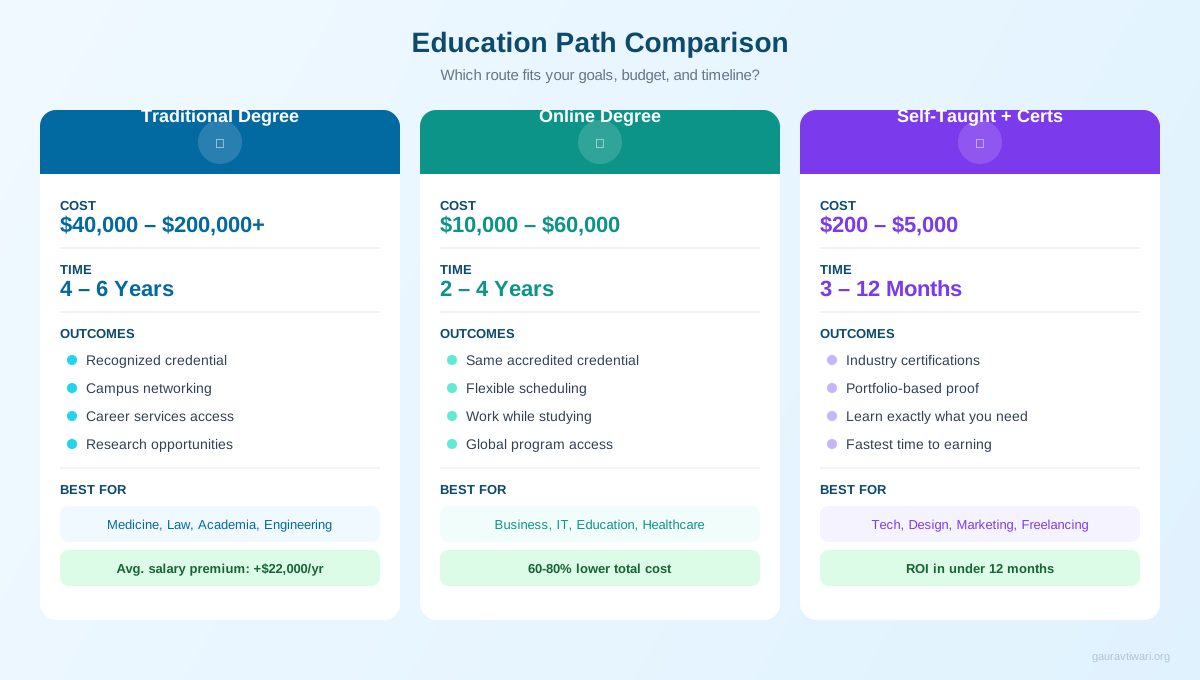
The numbers tell a story that no university marketing brochure wants you to see. A traditional 4-year degree at a US university costs between $40,000 and $200,000 depending on whether it’s public, private, in-state, or out-of-state. That doesn’t include living expenses, textbooks, or the opportunity cost of not earning a full-time salary for four years.
An online degree from an accredited university runs $10,000-$40,000. That’s significantly cheaper, and you can work while studying. Western Governors University charges around $7,600 per year for IT degrees. Georgia Tech’s online Master’s in Computer Science costs under $7,000 total. These are legitimate options if you specifically need a degree on paper.
But here’s the option most people overlook. A stack of industry certifications costs $500-$5,000 total and takes 3-6 months. The Google Career Certificate costs about $240 at $39/month over six months. A DataCamp subscription runs $25-$39/month. HubSpot and Semrush certifications are completely free.
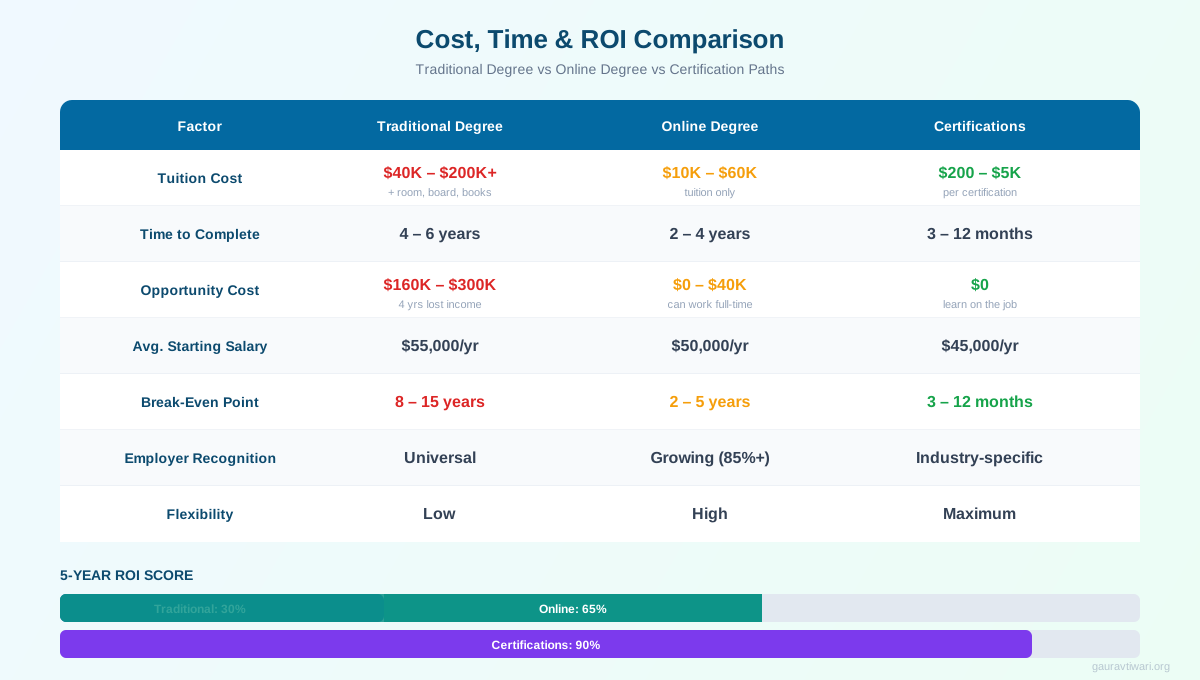
Let’s do the math on opportunity cost. If you earn $45,000/year at your current job and quit to pursue a 4-year degree, you’re giving up $180,000 in lost wages plus paying $60,000 in tuition. That’s a $240,000 decision. Or you can keep your job, spend $2,000 on certifications over 6 months, and switch careers without the financial cliff.
Check out the best deals on online courses to find discounted certification bundles that cut costs even further.
Time Comparison: 4 Years vs 4 Months
Time is the factor most people underestimate. A traditional degree takes 4 years of full-time study. An online degree takes 2-3 years because you can sometimes accelerate. But certification paths? You can be job-ready in 2-24 weeks depending on the program.
The Google UX Design Certificate takes about 6 months at 10 hours per week. The AWS Cloud Practitioner exam takes 2-4 weeks of focused study. HubSpot’s Content Marketing Certification takes about 12 hours total. You can stack three or four of these in the time it takes to finish one semester of a traditional degree program.
I’ve seen career switchers go from zero experience to their first tech or marketing job in under six months using a certification-first approach. That same person would still be writing essays about marketing theory in a degree program. Theory has its place, but employers want people who can execute.
The fastest career switchers I’ve seen don’t collect degrees. They collect certifications, build portfolios, and ship real work. The job offer comes from proving you can do the job, not from proving you can survive four years of lectures.
Career Paths Where Degrees Still Matter
I don’t want to pretend degrees are worthless. They’re not. For certain careers, you absolutely need one, and no amount of Coursera certificates will substitute. Medicine, law, and academia require formal degrees. You can’t practice medicine without a medical degree, pass the bar without a law degree, or get tenure without a PhD. That’s non-negotiable.
Licensed engineering positions (civil, mechanical, electrical) typically require an accredited engineering degree to sit for the PE exam. Accounting firms still prefer CPAs with accounting degrees. Government positions often have rigid degree requirements baked into their hiring frameworks.
But here’s the list of careers where degrees are becoming optional: web development, software engineering (at many companies), content marketing, SEO, social media management, UX/UI design, data analytics, digital advertising, project management, graphic design, video production, and copywriting. That’s most of the tech and marketing industry.
If your target career is on the second list, you’re probably better off with certifications and a portfolio. If it’s on the first list, invest in the degree. It’s that simple. For a deeper look at the credential debate, read my take on the pros and cons of online certifications.
The Hybrid Approach: Certifications First, Degree Later
The smartest career switchers I know use a two-phase strategy. They don’t choose between degrees and certifications. They sequence them correctly. Certifications come first. They validate your interest, build job-ready skills, and start generating income fast. Then, if a degree would unlock a promotion or a specific opportunity, they pursue one part-time while working.
Here’s what that looks like in practice. Phase one: take 2-3 targeted certifications (Google, HubSpot, or AWS depending on your field). Build a portfolio with real projects. Land your first role in 3-6 months. Phase two: once you’re earning in the field, evaluate whether a degree would meaningfully increase your earning potential. For many tech roles, it won’t. For management tracks or enterprise companies with rigid HR policies, it might.
Western Governors University and Southern New Hampshire University both offer competency-based online degrees that let you move faster if you already have work experience. Some people complete a bachelor’s in 12-18 months by testing out of courses they already know from their certifications and job experience.
The hybrid approach eliminates the biggest risk of the degree path: spending four years and $100K before discovering you don’t actually enjoy the career. Certifications let you test-drive a career path for under $500.
Top Learning Platforms Compared
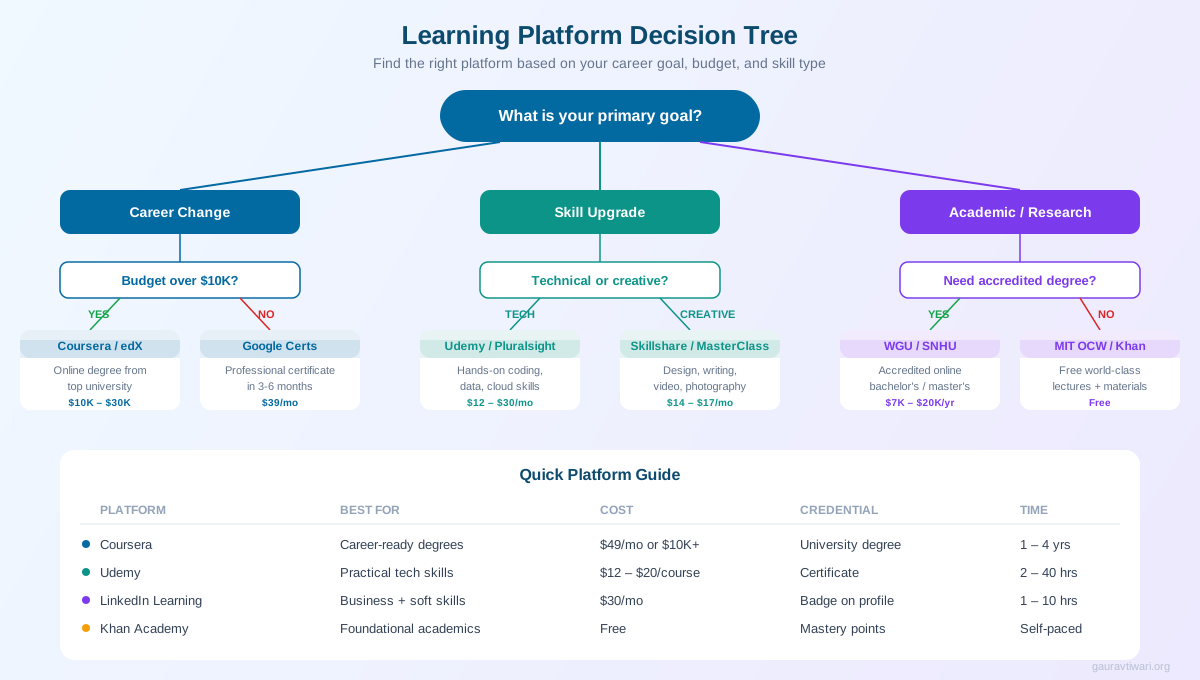
Not every learning platform serves the same purpose. I’ve used most of them, and the right choice depends entirely on your goal. Here’s my honest breakdown of the platforms that matter in 2026.
- Google Career Certificates in 6 high-demand fields
- University degrees from top schools at a fraction of campus cost
- Coursera Plus gives unlimited access for $59/month
- Free audit option for most courses (no certificate)
- Financial aid available for learners who qualify
Coursera is my top recommendation for career switchers. The Google Career Certificates alone have helped over 1 million people prepare for in-demand jobs. You get university-level content, graded projects, and a certificate that employers recognize. The Coursera Plus plan at $59/month gives you unlimited access to 7,000+ courses, which is a steal if you’re doing multiple certifications.
- 30,000+ classes in design, marketing, business, and tech
- Project-based learning with community feedback
- Taught by working professionals, not academics
- Annual plan works out to about $14/month
- Free trial available to test before committing
Skillshare is best for creative professionals and marketers who learn by doing. The project-based format means you finish every class with something tangible for your portfolio. It’s not the right choice for hardcore technical certifications, but for design, content creation, social media, and freelance business skills, it’s excellent. The instructors are working professionals who teach from real experience, not textbooks.

- Interactive coding environment, no setup required
- Structured career tracks for Data Analyst and Data Scientist
- AI and machine learning courses with real datasets
- Skill assessments to prove competency to employers
- Mobile app for learning on the go
DataCamp is the best platform specifically for data skills. If you want to become a data analyst, data scientist, or add data skills to your marketing toolkit, this is where you start. The interactive coding exercises run right in your browser, so there’s no painful environment setup. Their career tracks take you from “what is Python?” to “build a predictive model” in a structured sequence. For anyone targeting data roles, DataCamp beats Coursera on depth and hands-on practice.
Udemy works best as a supplement. Individual courses cost $10-20 during their frequent sales (never pay full price). It’s great for learning a specific tool or framework quickly, but the quality varies wildly between instructors. LinkedIn Learning at $30/month is solid for business and soft skills, and completed courses show up directly on your LinkedIn profile.
Browse websites that offer free online courses for a comprehensive list of platforms where you can start learning without any financial commitment.
How did you learn your primary professional skill?
Building a Learning Portfolio That Gets You Hired
Certifications alone don’t get you hired. A portfolio of real work does. The certification opens the door. The portfolio closes the deal. You need both, and building a portfolio alongside your courses is the fastest path to employment.
For developers, that means a GitHub profile with real projects. Not “todo app tutorial” clones, but actual tools or websites that solve problems. Fork open-source projects and contribute improvements. Build a personal site that showcases your code. Deploy something live that people can use.
For marketers, it means published case studies. Write blog posts about marketing experiments you’ve run, even on your own projects. Create a personal website showing campaign results, content samples, and analytics screenshots. Take a small business or nonprofit as a pro bono client and deliver real results you can reference.
For data professionals, it’s Kaggle notebooks, published analyses on Medium, and a GitHub repo with clean, well-documented projects. Hiring managers for data roles care more about your ability to extract insights from messy data than about your GPA.
I’d argue that a strong portfolio matters more than either a degree or certifications. I’ve written about this extensively in my comparison of portfolio vs resume, and the data supports it. Employers want proof you can do the work, not proof you sat through lectures about the work.
The ROI Calculation: What’s Your Time and Money Actually Worth?
Let’s put real numbers on this decision. I’ll walk through three scenarios for someone currently earning $40,000/year who wants to switch into a tech or marketing career.
Scenario 1: Traditional 4-year degree. Cost: $80,000 tuition + $160,000 lost wages (4 years not working full-time) = $240,000 total investment. Expected starting salary after graduation: $55,000-$65,000. Time to break even on the investment: 8-12 years. That’s assuming you graduate, which only 60% of students do within 6 years.
Scenario 2: Online degree (part-time, while working). Cost: $15,000-$25,000 tuition, no lost wages since you keep working. Time: 2-3 years part-time. Expected salary bump: $10,000-$20,000/year. Time to break even: 1-2 years after completion. This is a reasonable option if your employer requires a degree for promotion.
Scenario 3: Certification stack. Cost: $2,000-$4,000 total. No lost wages. Time: 4-6 months of evenings and weekends. Expected salary after career switch: $50,000-$70,000 (depending on field and location). Time to break even: immediately, since you barely spent anything. Risk: near zero.
The best investment in education isn’t the most expensive one. It’s the one that gets you earning in your target career the fastest with the least financial risk. For 80% of tech and marketing roles, that’s certifications plus a portfolio.
Scenario 3 wins for most people. The math isn’t close. You invest $2,000-$4,000 and 4-6 months to potentially increase your salary by $10,000-$30,000/year. That’s a 500-1,500% return on investment in year one. No stock market, no real estate deal, and no traditional degree program can match that ROI.
So Why Have Online Degree Programs Become So Popular?
Online degrees got popular because they solved real problems: flexibility, accessibility, and lower cost compared to campus programs. Working adults could earn credentials without quitting their jobs. People in rural areas could access university education. Single parents could study after the kids went to bed. These are genuine advantages over traditional campus education.
COVID-19 accelerated the shift dramatically. When every university went online overnight in 2020, the stigma around online education evaporated. Employers who previously viewed online degrees with skepticism had to accept that remote learning was legitimate. That permanent shift in perception made online programs mainstream.
But the real story in 2026 isn’t about online degrees replacing campus degrees. It’s about short-form certifications replacing degrees entirely for many career paths. The same technology that made online degrees possible also made it possible to learn specific, marketable skills in weeks instead of years. Platforms like Coursera, DataCamp, and Skillshare offer targeted education that’s more relevant, more affordable, and faster than any degree program.
The popularity of online degree programs was actually a stepping stone. It proved that learning doesn’t require a physical classroom. Now the next evolution is happening: learning doesn’t require four years and six figures either.
Your Action Plan: What to Do This Week
Stop researching and start doing. Here’s the exact sequence I’d follow if I were switching careers today.
Step 1: Pick your target career. Web developer, data analyst, content marketer, UX designer, project manager, or something else specific. Don’t say “something in tech.” Be precise.
Step 2: Find 3 job postings for that role. Read the requirements. Note the specific tools, certifications, and skills they mention. This is your curriculum. Not some university’s idea of what you should learn. The actual market telling you what it wants.
Step 3: Start one free certification today. Google Digital Marketing on Coursera (free to audit), HubSpot Inbound Marketing (free), or DataCamp‘s intro courses (free tier). Spend 30 minutes on it tonight. If it clicks, keep going. If it doesn’t, try a different path before investing more.
Step 4: Build as you learn. Every course module you complete, turn it into a portfolio piece. Wrote a marketing plan as an assignment? Publish it as a blog post. Built a website in a coding course? Deploy it live. Analyzed a dataset? Write up your findings on LinkedIn.
Step 5: Apply before you feel “ready.” Most career switchers wait too long. You don’t need 10 certifications. You need 2-3 relevant ones, a portfolio with 3-5 projects, and the confidence to pitch yourself. Start applying after month 3, not month 12.
The education landscape has changed permanently. Degrees aren’t going away, and for some careers they never will. But for the majority of tech and marketing roles, the smartest path is certifications first, portfolio always, and degree only if a specific career goal demands it.
Your move.
Frequently Asked Questions
Are online courses as valuable as a degree for getting hired?
For tech and marketing roles, yes. Companies like Google, Apple, IBM, and Tesla have dropped degree requirements for many positions. Industry certifications from Google, HubSpot, AWS, and Semrush are actively sought by employers. The key is pairing certifications with a strong portfolio of real work samples.
How much do online certifications cost compared to a degree?
A traditional 4-year degree costs $40,000-$200,000. An online degree costs $10,000-$40,000. A stack of industry certifications costs $500-$5,000 total. Many high-value certifications from HubSpot Academy and Semrush Academy are completely free. Google Career Certificates on Coursera cost about $240 total over six months.
Can I get a tech job without a degree?
Absolutely. Web development, content marketing, SEO, UX design, data analytics, project management, and digital advertising are all fields where certifications and portfolios matter more than degrees. Many successful developers and marketers are entirely self-taught or certification-trained.
Which online learning platform is best for career switchers?
Coursera is best overall because of the Google Career Certificates program and university-backed content. DataCamp is best specifically for data careers. Skillshare is best for creative and marketing skills. Udemy works well as a cheap supplement for learning specific tools.
How long does it take to switch careers using online courses?
Most career switchers can become job-ready in 3-6 months with focused effort of 10-15 hours per week. Google Career Certificates are designed for this timeline. You should start applying for roles after 3 months of learning and portfolio building, not after completing every course available.
Do employers care about online degrees from accredited universities?
Online degrees from accredited universities like Western Governors University, Georgia Tech, and Southern New Hampshire University are generally treated the same as traditional degrees by employers. The stigma around online degrees has largely disappeared since 2020 when every university shifted to remote learning.
What careers still require a traditional degree?
Medicine, law, academia, licensed engineering (civil, mechanical, electrical), accounting (CPA), and many government positions still require formal degrees. If your target career requires a professional license, you need the degree. For most tech and marketing roles, degrees are optional.
Should I get certifications or an online degree first?
Start with certifications. They cost less, take less time, and validate whether you actually enjoy the career path before committing to a degree. Get 2-3 relevant certifications, build a portfolio, land your first role, then evaluate whether a degree would meaningfully boost your career. Many people find they never need one.
Disclaimer: This site is reader-supported. If you buy through some links, I may earn a small commission at no extra cost to you. I only recommend tools I trust and would use myself. Your support helps keep gauravtiwari.org free and focused on real-world advice. Thanks. - Gaurav Tiwari