by
by
Recovering data from a damaged pen drive or memory card is one of those skills that most people never need until they suddenly desperately need it — wedding photos that won’t open, work documents on a corrupted USB stick the night before a deadline, a memory card from a vacation that’s just stopped responding. The good news in 2026: the data-recovery toolset has improved substantially, free tools handle most cases, and physical-damage recovery (for genuinely fried hardware) has gotten more affordable through specialized services. This guide covers the recovery workflow that I’ve used to recover data from dozens of failed drives over the years — from the simplest “format and try again” approaches to the deeper forensic recovery techniques.
Storage devices are certainly the most functional hardware tools. Every time you modify files on a pen drive or memory card, you’re figuratively forcing it to its demise. A storage device has a limit of total actions done on it. A MicroSD card can have around one to tens of thousands of delete actions.
So, every time you delete a file, you are playing your storage device’s substructure. Your device will get weak & less secure over time.
Throughout this, the insecure file transfers may place adware or virus junks in your storage that are not removed even after completely formatting the disk. Once entered, these junks corrupt stored files and, ultimately, the disk.
The 2026 Data Recovery Workflow
The standard recovery workflow, in order. Step 1 — Don’t write anything to the damaged drive. The single biggest mistake people make is trying to “fix” the drive by formatting or copying new files; every write reduces the chance of recovering original data. Stop using the drive immediately. Step 2 — Try Disk Management or Disk Utility: Windows Disk Management or macOS Disk Utility can sometimes reassign drive letters and recover access if the issue is logical (filesystem corruption) not physical. Step 3 — Run a free recovery tool: Recuva (Windows, free), PhotoRec (Windows/Mac/Linux, free, open source), Disk Drill (free trial, paid for full recovery). PhotoRec is genuinely good and free for any volume of data.
Step 4 — Try a paid recovery tool if free tools didn’t work: R-Studio, EaseUS Data Recovery, Stellar Data Recovery. Typically $50-100, sometimes worth it for important data. Step 5 — Physical recovery service: if the drive doesn’t show up at all even at the OS level, the problem is likely physical (controller chip damage, NAND flash failure). Send to a professional data-recovery service. Costs in India: ₹5,000-50,000 depending on damage severity. Globally: $300-3,000. The 2026 reality: for SD cards from cameras and pen drives under 64GB, free tools recover the data 70-80% of the time on logical failures. For physical failures, only specialist services help. The single best prevention: 3-2-1 backup rule. Two copies of every important file, in two different media types, with one off-site (cloud backup like Backblaze or iDrive).
Once a USB stick or SD card starts failing, do not trust it again for important files. Recover what you can, then replace it with a fresh USB flash drive or memory card and keep a second copy in cloud storage.
Need to Format Disks
Formatting the disk is the option you will surely try to remove those insecure items. But this junk exploitation is not an easy thing to recover from. Formatting disk makes no real impact on virus-infected drives.
After formatting, unwanted files may disappear from sight, but they won’t be completely removed. After a day or more of usage, you will see them popping back. They come from the deeply hidden sectors of your disk.
Not just the virus & adware, but sometimes the device itself loses its structure after a certain amount of time. The structure loss will result in an unusable disk. This mainly happens after the disk crosses a certain ( its warranty ) period.
Whatever be the reason, if your storage device is facing trouble even after being formatted or isn’t even able to format. You can either try buying fancy and appealing pen drives or just wipe & fix the older one to start afresh. For the latter, you can use the method described below.
Make sure you have your pen drive or SD card or any other removable disk plugged in a Windows PC during this process.
Now, ask?
My removable disk isn’t working!
- Click here to download Diskwipe for Windows (free). Diskwipe is just 1 MB in size and works as a portable software. That means you do not need to install it on your PC.
- Once downloaded, run it as an administrator.
- Diskwipe will scan for all the hard drives including the drive you inserted. Select the removable drive you want to fix. Diskwipe shows all drive-related information.
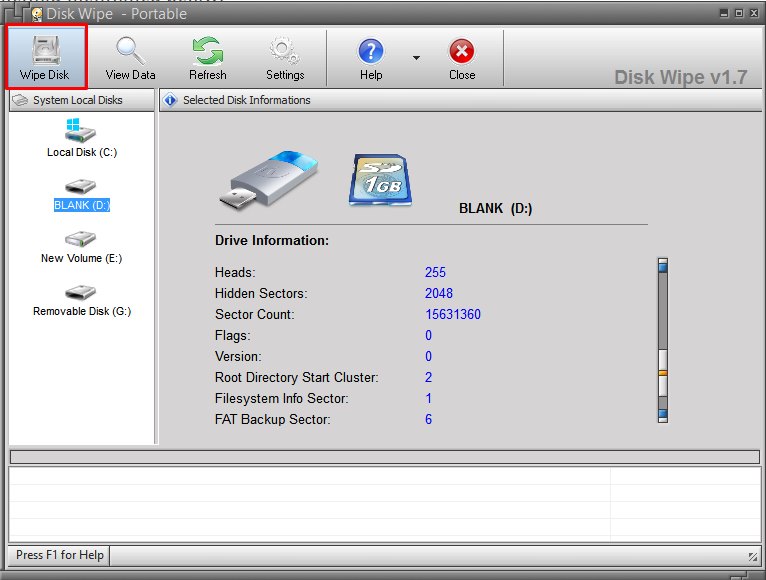
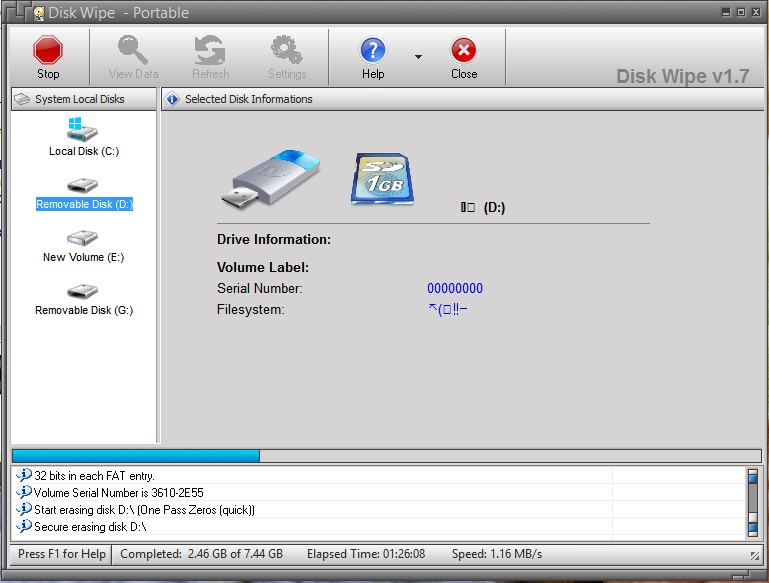
- Use the wipe disk menu to wipe out all the data from the disk. This will make your unusable disk re-usable. If it has hidden files or viruses covering a portion of the disk, make sure to go through the next step.
My removable disk has some hidden files/viruses!
- Now open the command prompt (cmd) as administrator.
- Type the drive letter of the removable disk. For example,
D: - Then type
attrib -h -r -s /s /d D:\*.* - Note that the last D is the letter of the removable disk. This may change from user to user.
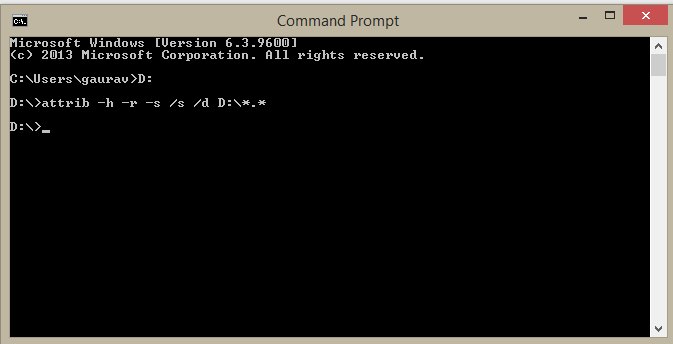
- Now exit the command prompt.
- Open your removable disk. You will now find all the hidden files that were causing trouble. Use any antivirus/security app to scan and completely delete them.
This was all from me. I hope that you will be able to fix your damaged/infected disk and get a smoothly running Pendrive with no troubles at all.
Tell Google you want more of this.
Add Gaurav Tiwari as a preferred sourceOne tap, and this site shows up more often in your own Top Stories, AI Overviews and AI Mode. Remove it any time.
Disclaimer: This site is reader-supported. If you buy through some links, I may earn a small commission at no extra cost to you. I only recommend tools I trust and would use myself. Your support helps keep gauravtiwari.org free and focused on real-world advice. Thanks. - Gaurav Tiwari