
5 Steps to Creating a Unified Business
Your blog says you’re a WordPress consultant. Your LinkedIn headline says “digital strategist.” Your Instagram bio calls you a “creative entrepreneur.” And your newsletter introduces you as a “tech writer.” A potential client finds you through Google, checks your LinkedIn, glances at your Instagram, and wonders if they’re looking at the same person. They’re not confused for long. They just leave.
This happens more than you’d think. I’ve watched freelancers and consultants lose warm leads because their online presence looked like it belonged to four different people. A 2024 Edelman Trust Barometer study found that 63% of consumers check multiple channels before engaging with a brand. If your messaging doesn’t match across those touchpoints, they move on. You won’t even know you lost them.
The fix isn’t a rebrand or a design agency. It’s a unified personal brand system. I’m going to walk you through the hub-and-spoke model, a simple brand style guide you can build in a weekend, a content repurposing workflow that turns one blog post into six platform outputs, and the exact tools that keep everything consistent without hiring a team. Five concrete steps, with templates and examples from my own setup.
What a Unified Personal Brand Actually Means
A unified personal brand means every platform tells the same story. Not the same content repeated verbatim, but the same core identity: who you serve, what you believe, and how you help. Someone who finds your Twitter thread should recognize your voice when they land on your blog. Your newsletter subscribers shouldn’t feel like they’re hearing from a stranger when they visit your LinkedIn.
There are three pillars to brand unity. First, consistent messaging. Your value proposition, your tagline, and your “about” copy should share DNA across every platform. Second, visual identity. Colors, fonts, profile photos, and graphic style need to look like they belong to the same person. Third, voice. The way you write on Twitter should feel like a compressed version of how you write on your blog, not a different personality entirely.
I learned this the hard way. A few years ago, I noticed that my blog felt educational and structured, but my LinkedIn posts were stiff and corporate, and my newsletter was too casual. People who subscribed from one platform and encountered another were dropping off. When I unified everything, my newsletter open rate went from 22% to 34% in three months. Cross-platform recognition builds trust, and trust converts.
The goal isn’t to be robotic or template-driven. Each platform has its own culture and norms. LinkedIn rewards professional storytelling. Twitter rewards sharp takes. Instagram rewards visuals. But underneath the format differences, the person should be unmistakably you. If you need a primer on building a strong brand foundation, I wrote a detailed guide on top strategies for branding that covers the fundamentals.
Step 1: Audit Your Current Brand Presence
Before you build anything new, you need to see what you’re working with. Open every platform where you have a profile. Pull them up side by side. Blog, LinkedIn, Twitter/X, Instagram, newsletter landing page, YouTube channel (if you have one), and your services page. I guarantee you’ll find at least 3 mismatches.
Here’s what to check on each platform. Start with your profile photo. Is it the same image everywhere? Not “similar.” The exact same headshot, ideally taken in the last 2 years. Next, your bio or tagline. Does each platform describe you the same way? Read them out loud back to back. You’ll hear the inconsistencies immediately.
Then check your color palette. Does your blog header, LinkedIn banner, Instagram highlights, and newsletter template use the same colors? Most solopreneurs fail here because they picked colors ad hoc over the years. Finally, read your last 3 posts on each platform. Does the voice sound like the same person wrote them?
When I ran this audit on my own brand, I found that my LinkedIn headline said something completely different from my blog’s about page. My Twitter bio mentioned things I hadn’t worked on in 2 years. My newsletter header image was a color scheme I’d abandoned months ago. Fixing these took one focused afternoon. The impact was immediate.

Step 2: Build the Hub-and-Spoke Model
The hub-and-spoke model is the single most important framework for a unified personal brand. Your blog (or website) is the hub. Every other platform is a spoke. All spokes drive traffic, attention, and subscribers back to the hub. The hub converts visitors into clients, subscribers, or customers.
Why the blog as the hub? Because you own it. LinkedIn can throttle your reach tomorrow. Twitter can change its algorithm overnight. Instagram can shadowban you for no clear reason. Your blog, your email list, your domain. Those are yours. Every piece of content you create on a spoke platform should include a pathway back to something you own.
Here’s how the spokes work in practice. LinkedIn posts link to your latest blog article or lead magnet. Twitter threads end with a link to the full post. Instagram carousels include “link in bio” pointing to your blog’s landing page. Newsletter issues drive readers to your latest article. YouTube descriptions link to related blog posts. Even Quora and Reddit answers can reference your blog for the full breakdown.
I’ve been running this model for years. About 40% of my blog traffic comes from social spokes. Another 30% comes from organic search. The remaining 30% is direct and referral. The spokes don’t just bring traffic. They bring warm traffic. Someone who read your LinkedIn post and then clicked through to your blog is already interested. They convert at 2-3x the rate of cold search visitors.
Your blog is the only platform you fully own. Everything else is rented land. Build accordingly.
The key mistake I see creators make is treating each platform as an island. They write completely original content for LinkedIn, different original content for Twitter, different original content for their blog. That’s 3x the work for fragmented results. The hub-and-spoke model inverts this: you create once, adapt many times, and funnel everything back to one place.
If you’re building your LinkedIn presence specifically, I’ve got a thorough guide on using LinkedIn for career development and personal growth that pairs well with this hub-and-spoke strategy.
Step 3: Create a Brand Style Guide (Even as a Solo Creator)
A brand style guide sounds corporate. It sounds like something for companies with 50+ employees and a design team. But solo creators need one even more than big companies do. When you’re the only person managing your brand across 5 platforms, you need a reference document that keeps you consistent.
Your brand style guide doesn’t need to be 40 pages. Mine is a single Notion page with five sections: colors, fonts, voice, bio templates, and visual rules. That’s it. Here’s what goes in each section.
Colors. Pick 2-3 brand colors. One primary, one accent, one neutral. Write down the hex codes. Use these everywhere: blog, social media graphics, newsletter templates, presentation slides. Canva Brand Kit lets you save these and access them in every design. I use a deep blue (#1a365d), a warm accent (#e53e3e), and white. That’s the entire palette.
Fonts. Pick one heading font and one body font. If you’re keeping it simple, just use one font family. I use Inter for everything. It works on web, in graphics, and in email. Consistency matters more than creativity here.
Voice. Write down 3-5 words that describe how you sound. Mine: direct, practical, opinionated, conversational, specific. Then write 3-5 words that describe how you DON’T sound: academic, formal, vague, salesy, timid. This section saves you from voice drift. When you’re writing a LinkedIn post at 11pm and you’re tempted to sound corporate, you check the guide.
Bio templates. Write three versions of your bio. A long version (150-200 words for your blog’s about page), a medium version (80-100 words for LinkedIn), and a short version (30-40 words for Twitter and Instagram). Update all three whenever your positioning changes. Copy the right version and paste it directly. No improvising.
Visual rules. Define your image style. Do you use illustrations or photos? Flat design or 3D? Minimal or busy? I use clean illustrations with a limited color palette. Every blog graphic, social card, and newsletter header follows this style. People start to recognize my visuals before they even read the text.
- Brand Kit saves your colors, fonts, and logos
- Resize designs for any platform in one click
- Background Remover and Magic Eraser built in
- 100M+ templates, photos, and design elements
- Content Planner schedules posts directly
Step 4: Build a Content Repurposing Workflow
Here’s where the hub-and-spoke model becomes practical. You write one blog post. Then you turn that single piece of content into 6 platform-specific outputs. Not the same content copy-pasted everywhere. Adapted content that fits each platform’s culture while carrying the same core message.
This is the repurposing workflow I use every week. I publish one blog post (typically 2,400+ words). Within the same week, that post becomes a LinkedIn carousel (8-10 slides), a Twitter thread (7-12 tweets), a newsletter segment (TL;DR plus personal angle), an Instagram carousel (visual tips from the actionable steps), a YouTube script (expanding one key section into an 8-12 minute video), and 2-3 Quora or Reddit answers referencing the blog post.
The total time for repurposing? About 3 hours. Creating original content for each of those platforms from scratch would take 15-20 hours. That’s an 80% time savings while maintaining a consistent message across every channel.
The trick is having a system, not doing it ad hoc. Here’s my 3-step process. First, I extract 5-8 key takeaways from the blog post into a bullet list. Second, I adapt each takeaway for the target platform’s format (slide, tweet, visual, or script line). Third, I schedule everything across the week using a scheduling tool so each platform gets content on different days.
A good content marketing plan makes this whole process smoother. If you don’t have one yet, my guide on building the perfect content marketing plan will help you set the right foundation before you start repurposing at scale.
Creating original content for 6 platforms takes 15-20 hours. Repurposing one blog post into 6 platform outputs takes 3 hours. Same reach, 80% less effort.
Where does most of your audience find you?
Step 5: Tools That Keep Everything Consistent
You don’t need a dozen tools. You need three, maybe four. Here are the ones I actually use and recommend for keeping a unified brand without hiring a team.
Canva for visual consistency. Canva Pro’s Brand Kit feature is the backbone of my visual identity. I saved my colors, fonts, and logo once. Every graphic I create automatically pulls from that kit. The Magic Resize feature lets me take a blog header image and instantly convert it to LinkedIn post size, Instagram square, Twitter card, and newsletter header. One design, five platform-ready outputs in about 90 seconds.
Notion for your brand bible. I store my entire brand style guide, content calendar, repurposing templates, and bio versions in a single Notion workspace. It’s where I go before creating anything. The database feature works perfectly for tracking which blog posts have been repurposed and which platforms still need content. I’ve tried Trello, Asana, and Google Sheets for this. Notion won because it combines documents, databases, and templates in one place.
Monday.com for team workflows and scheduling. If you work with a VA, editor, or designer, Monday.com is how you keep everyone aligned. I use it to manage my content pipeline: each blog post moves through stages (draft, edit, publish, repurpose, schedule). The automations save real time. When a post moves to “published,” Monday.com automatically creates tasks for each platform’s repurposed content. For solo creators scaling to a small team, this is where you graduate from spreadsheets.
Buffer or Publer for scheduling. Pick one. Both work well for scheduling posts across LinkedIn, Twitter, Instagram, and Facebook. I’ve used Buffer for years. The queue system lets me load a week’s worth of repurposed content in one sitting. It posts at optimal times per platform, and the analytics show which content resonates where.
- All-in-one workspace for docs, databases, and wikis
- Templates for brand guides, content calendars, and SOPs
- Database views: table, board, timeline, calendar, gallery
- Built-in AI assistant for writing and summarizing
- Free for personal use, $10/mo for Plus features
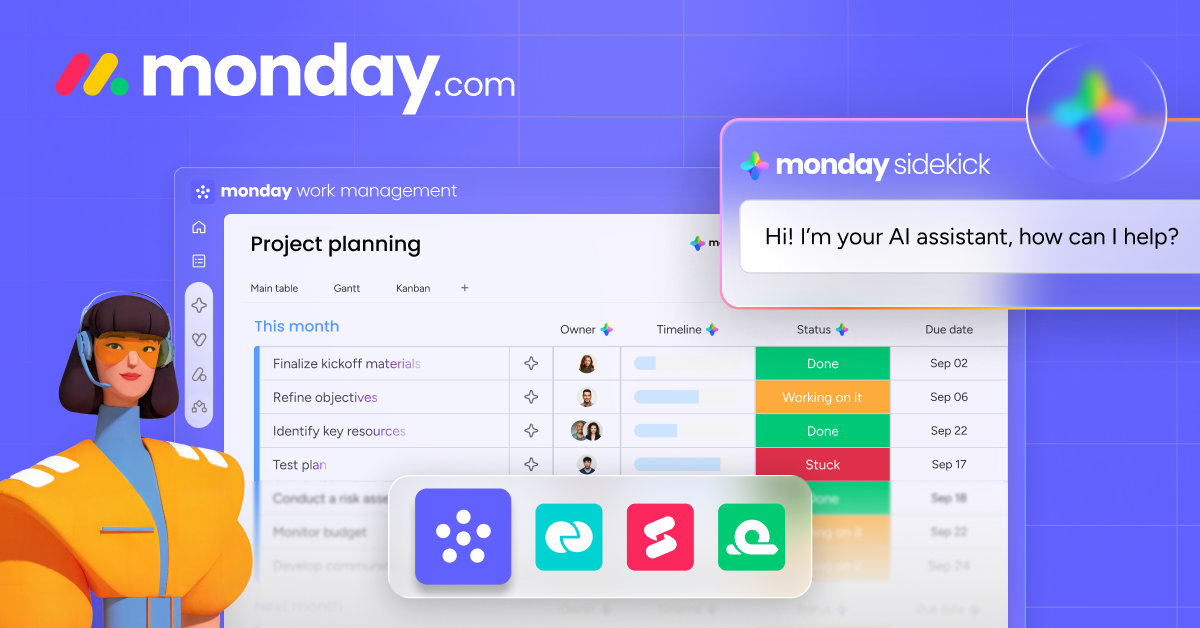
- Visual project boards with drag-and-drop interface
- Automations for recurring content workflows
- Multiple views: Kanban, Gantt, calendar, timeline
- Integrations with Slack, Gmail, Canva, and 200+ tools
- Free plan for up to 2 users
Keeping Your Voice Consistent Across Platforms
Voice is the hardest part of brand unity. Colors and fonts are copy-paste. Voice requires judgment. The challenge is adapting your voice to each platform without losing your identity. Here’s how I think about it.
Your blog is your full voice. Uncompressed, detailed, opinionated. This is where you go deep. Long-form, first-person, with real examples and specific numbers. If your blog voice is right, everything else is a compression of it.
LinkedIn is your blog voice in a suit. Same opinions, same directness, but structured for a professional audience. Shorter paragraphs. More line breaks. A hook in the first line. The substance stays the same. The packaging changes.
Twitter/X is your blog voice in a text message. The sharpest version of your take. No preamble. No caveats. One insight per tweet. If a thread has 10 tweets, each one should stand on its own. This forces you to distill your thinking, which actually makes your blog writing better too.
Instagram is your blog voice in a visual format. The core message is the same, but it’s carried by design, not words. Short captions, strong hooks, carousel slides that make one point each. The voice in your captions should still sound like you.
Your newsletter is your blog voice over coffee. More personal. More “behind the scenes.” This is where you share what you’re working on, what you learned this week, what failed. The format is intimate, but the voice is still yours. Same contractions. Same directness. Same opinions.
The common thread: your opinions don’t change between platforms. Your level of detail does. Your formatting does. Your personality doesn’t. If you’re working with brands on collaborative content, this consistency becomes even more critical. My guide on how to collaborate with brands as a blogger covers how to maintain your authentic voice even in sponsored partnerships.
How I Keep My Blog, LinkedIn, and Newsletter Aligned
Let me show you how this works in practice. I’ll walk through a typical content week and how the unified brand system keeps everything connected.
Monday: Blog post goes live. I publish a 2,500-word article. The blog post is the anchor. Everything that follows in the week flows from this single piece of content. Before publishing, I pull 6-8 key takeaways into a separate doc. This becomes my repurposing brief.
Tuesday: LinkedIn carousel. I take the top 5 takeaways and turn them into a Canva carousel. Brand colors. Brand font. Same visual style as every other carousel I’ve posted. The last slide says “Full breakdown on the blog” with a link. Takes about 30 minutes.
Wednesday: Twitter thread. I write 8-10 tweets pulling from different sections of the blog post. Each tweet is a standalone insight. The first tweet is the hook. The last tweet links to the full article. I schedule this through Buffer. About 20 minutes.
Thursday: Newsletter goes out. I write a personal intro (3-4 paragraphs) about the topic, sharing something I didn’t include in the blog post. Then I link to the article with a “here’s the full breakdown” CTA. My newsletter reads like a letter from me, not a content digest. About 25 minutes.
Friday: Instagram carousel + Quora answers. The Instagram carousel takes the most visual takeaways and turns them into designed slides. I also find 2-3 related questions on Quora and write answers that reference (and link to) the blog post. About 60 minutes total.
One blog post. Five days of content. Every platform output uses the same brand colors, the same voice, and drives traffic back to the blog. Total extra time beyond the blog post: roughly 2.5 hours across the week.
If Instagram is a key channel for you, check out my guide on how to promote your business on Instagram for more platform-specific tactics.
Common Mistakes That Break Brand Consistency
I’ve seen these mistakes repeatedly, both in my own work and in the creators and consultants I advise. Avoid these and you’ll be ahead of 90% of personal brands online.
Different profile photos on each platform. This is the most basic mistake and the easiest to fix. Use the same headshot everywhere. Update it once a year. If your LinkedIn shows you in a suit and your Instagram shows you in a hoodie, people literally won’t recognize you across platforms.
Updating one platform and forgetting the rest. You rebrand your blog with new colors and a new tagline, but your LinkedIn banner still has the old look. Your newsletter template still uses last year’s color scheme. Set a calendar reminder: every time you change anything on one platform, update all others the same day.
Writing in different voices for different platforms. Being more casual on Twitter than LinkedIn is fine. Being a completely different person is not. If your blog is warm and direct but your LinkedIn reads like a press release, that’s a problem. The “voice” section of your brand guide prevents this.
No clear hub. If you’re active on 5 platforms but none of them is clearly the central hub, your audience doesn’t know where to go for more. They might follow you on Twitter but never discover your blog. Or subscribe to your newsletter but never find your services page. Every platform bio should point to one URL.
Overcomplicating the brand guide. I’ve seen creators spend weeks building a 30-page brand book they never reference again. A one-page document with colors, fonts, voice, bios, and visual rules is all you need. If it’s too long to scan in 60 seconds, you won’t use it.
How to Measure Whether Your Brand Is Actually Unified
Brand consistency isn’t just a feeling. You can measure it. Here are four metrics I track to make sure my unified brand system is working.
Cross-platform recognition rate. Ask new subscribers or clients: “Where did you first find me?” Then: “Did you check other platforms before reaching out?” If they say yes and describe a consistent experience, you’re doing it right. I ask this in my onboarding form. About 70% of my clients check at least 2 platforms before contacting me.
Social-to-blog click-through rate. Track how many people click from social posts to your blog. If your LinkedIn posts average 50 impressions and 2 clicks, that’s a 4% CTR. If you’re under 2%, your social content isn’t connecting to your hub effectively. I use UTM parameters on every link so I know exactly which platform drives the most engaged traffic.
Newsletter open rate from cross-platform subscribers. Segment your email list by signup source. Do LinkedIn subscribers open at a higher rate than Twitter subscribers? If one source has a significantly lower open rate, the brand experience on that platform might not match what your newsletter delivers. Aim for 30%+ across all segments.
Brand audit score. Run the 5-point audit from Step 1 quarterly. Score each platform on profile photo, bio, colors, voice, and CTA. 25 possible points. Below 20, you have gaps. I run this audit at the start of every quarter and it takes about 15 minutes. Small problems caught early don’t become big brand inconsistencies.
Frequently Asked Questions
Here are the questions I get most often about building a unified personal brand across platforms.
How long does it take to unify a personal brand across platforms?
The initial setup takes one focused weekend. That includes running the brand audit, creating your style guide in Notion, updating all profile photos and bios, and aligning your color palette across platforms. After that, maintaining consistency takes about 30 minutes per week if you follow the hub-and-spoke repurposing workflow. The biggest time investment is upfront.
Do I need to be on every social media platform?
No. Pick 2-3 platforms where your target audience actually spends time, plus your blog and newsletter. Being consistent on 3 platforms is far more effective than being inconsistent on 7. I focus on my blog (hub), LinkedIn, Twitter/X, and my newsletter. Instagram is secondary. I skip TikTok and Facebook entirely because my audience isn’t there.
What if my blog and social media audiences are different?
They probably overlap more than you think. The content format changes, but if your core topic and value proposition are the same, the audience is the same people at different stages of their journey. Someone might discover you on Twitter, subscribe to your newsletter, and eventually hire you through your blog. Unifying your brand makes that journey seamless instead of jarring.
Should I use the same content on every platform?
Same core message, different format. Never copy-paste a blog post to LinkedIn. Instead, extract key insights and adapt them for each platform’s culture. A 2,400-word blog post becomes a 10-slide LinkedIn carousel, a 10-tweet Twitter thread, and a 3-paragraph newsletter segment. Same substance, different packaging. This is what the repurposing workflow is designed to do.
How often should I update my brand style guide?
Review it quarterly during your brand audit. Update it whenever your positioning changes, you refresh your visual identity, or you add a new platform. The guide should be a living document, not a static PDF. I keep mine in Notion so I can update it in real time. Most quarters, I only change 1-2 things. Major overhauls happen maybe once a year.
What’s the best free tool for maintaining brand consistency?
Notion, hands down. The free personal plan gives you unlimited pages and blocks. You can build your brand style guide, content calendar, repurposing templates, and bio vault all in one workspace. Canva’s free plan is also useful for basic design consistency, but you need Canva Pro ($13/month) for the Brand Kit feature that saves your colors and fonts.
How do I maintain brand consistency when working with guest writers or a VA?
Share your brand style guide as a Notion page with edit access turned off. Create templates for each content type (blog post, social post, newsletter) that include voice guidelines and visual specs. Review the first 3-5 pieces from any new collaborator closely. After that, most people internalize the style and need minimal corrections. Monday.com or a similar project tool helps track who is creating what and whether it matches brand standards.
Is a unified personal brand really worth the effort for a small creator?
It’s worth it especially for small creators. When you don’t have a big budget for ads or a large team, trust is your competitive advantage. And trust comes from consistency. People who see the same professional presence across 3-4 platforms perceive you as more established and credible than someone with a bigger following but a fragmented brand. I’ve seen creators with 2,000 followers outperform those with 20,000 because their brand was cohesive and trustworthy across every touchpoint.
Start Building Your Unified Brand This Weekend
A unified personal brand isn’t a luxury for big companies with design teams. It’s a survival tool for solopreneurs, freelancers, and content creators who want to be taken seriously across platforms. The 5-step system works: audit your presence, build the hub-and-spoke model, create a one-page brand guide, set up a repurposing workflow, and use 3-4 tools to keep it all consistent.
Start this weekend. Run the brand audit (Step 1) on Saturday morning. It takes 30 minutes. Fix the obvious mismatches that afternoon. On Sunday, build your brand style guide in Notion. By Monday, you’ll have a system that makes every future piece of content easier to create and more effective when published.
The creators who win in 2026 aren’t the ones producing the most content. They’re the ones producing the most consistent content. One clear brand across 3-4 platforms will always outperform five scattered identities across seven platforms. Build the system once, maintain it weekly, and let your unified brand do the trust-building for you.
Disclaimer: This site is reader-supported. If you buy through some links, I may earn a small commission at no extra cost to you. I only recommend tools I trust and would use myself. Your support helps keep gauravtiwari.org free and focused on real-world advice. Thanks. - Gaurav Tiwari