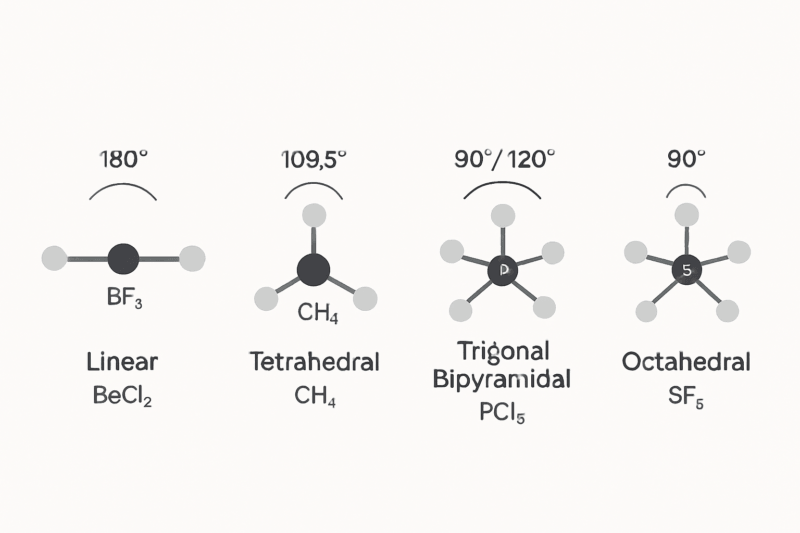
VSEPR theory predicts molecular geometry from electron-pair repulsion. This study note covers the core idea, steric number and electron geometry, all common molecular geometries (linear, bent, trigonal planar, tetrahedral, trigonal pyramidal, trigonal bipyramidal, octahedral, square planar), worked examples (water, ammonia), limitations of the model, and why molecular shape matters for reactivity, polarity, biology, and drug design.
Chemistry
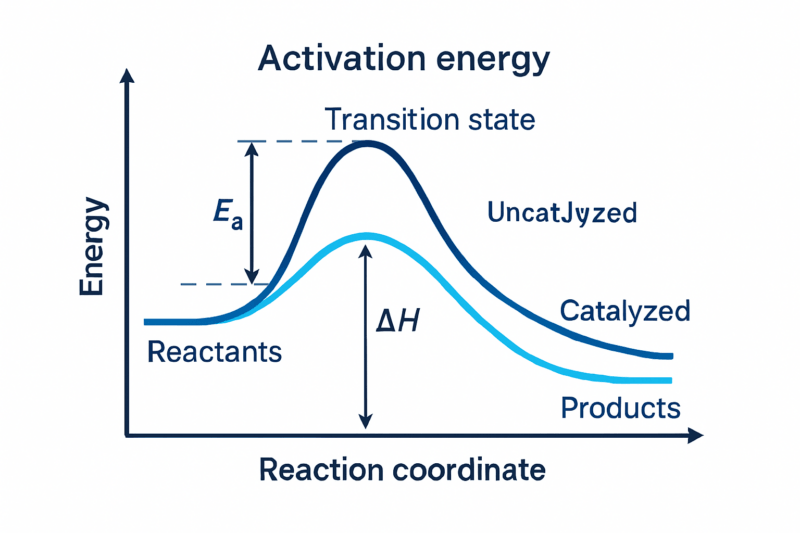
Activation energy is the minimum energy reactant molecules need to undergo a chemical reaction. This study note covers the energy barrier and transition state, the Arrhenius equation k = A·e^(-Ea/RT), how catalysts lower Ea, a worked example of rate doubling with a 10°C rise, why activation energy exists, and applications in industrial catalysis, enzymes, food preservation, and combustion.
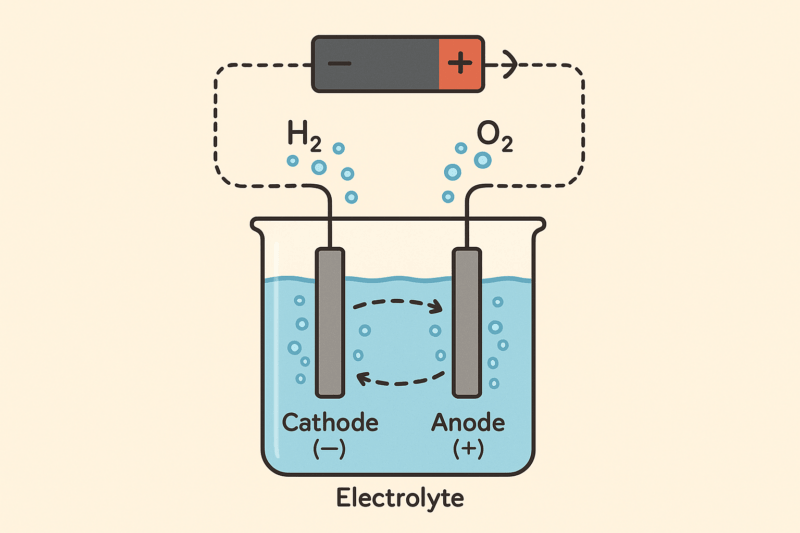
Electrolysis uses electrical energy to drive a non-spontaneous chemical reaction, with reduction at the cathode and oxidation at the anode. This study note covers the electrolytic cell, electrolysis of water and brine, Faraday’s laws of electrolysis, and industrial applications including aluminium smelting, the chlor-alkali process, electroplating, copper refining, and green hydrogen.
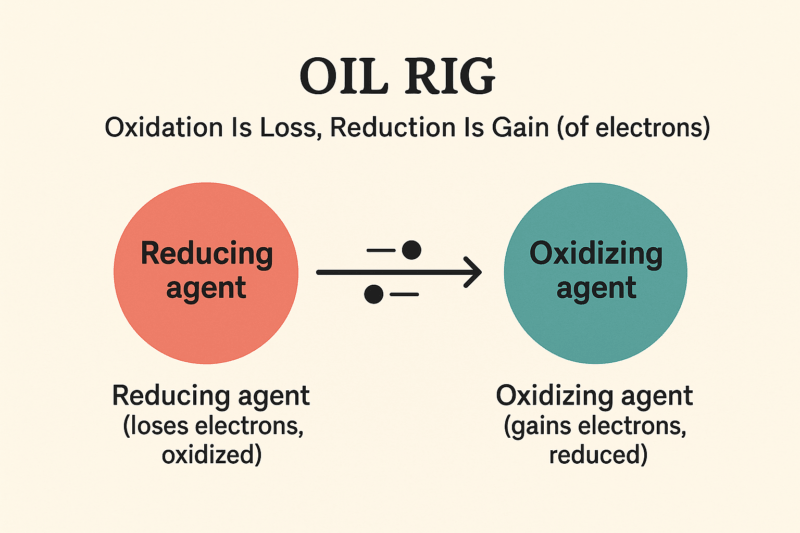
Redox reactions transfer electrons between species: one is oxidized (loses electrons), another is reduced (gains electrons). This study note covers oxidation and reduction (OIL RIG), oxidizing and reducing agents, oxidation states, balancing half-reactions, and examples including rusting, combustion, respiration, photosynthesis, and batteries.
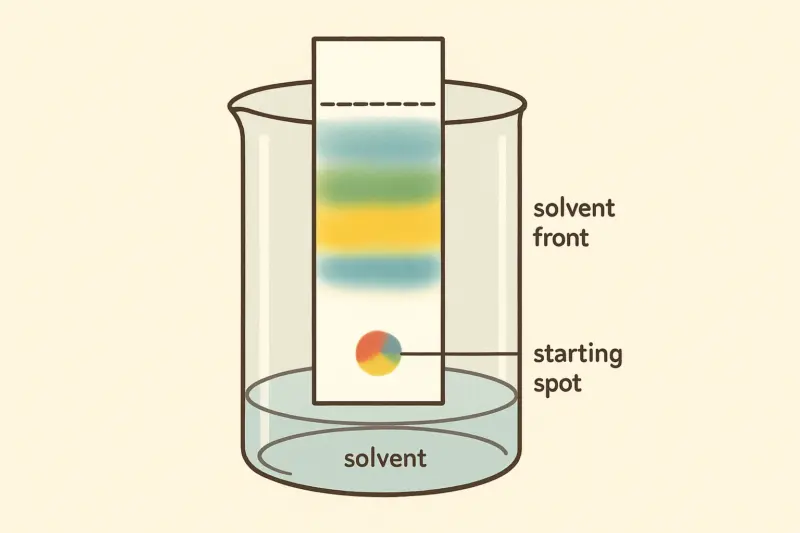
Chromatography is a family of techniques for separating mixtures using a stationary phase and a mobile phase. This study note covers how chromatography works, the major types (paper, TLC, column, GC, HPLC, ion-exchange), the retention factor (Rf), a worked example of separating ink, and applications across pharmaceuticals, forensics, environmental monitoring, biochemistry, and doping control.
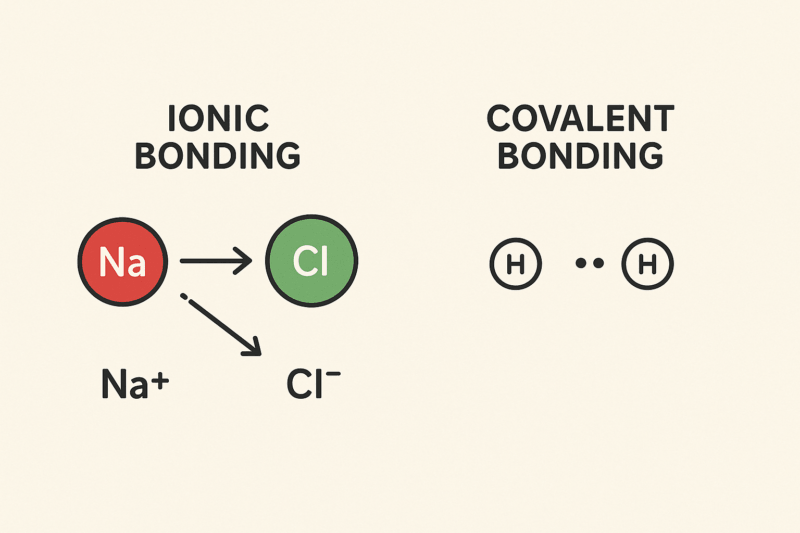
Ionic and covalent bonds are the two main types of chemical bonding. This study note covers ionic (electron transfer between metal + nonmetal), covalent (electron sharing between nonmetals), the polar vs nonpolar covalent distinction, predicting bond type from electronegativity difference, metallic bonding as a third type, and a side-by-side comparison of properties.
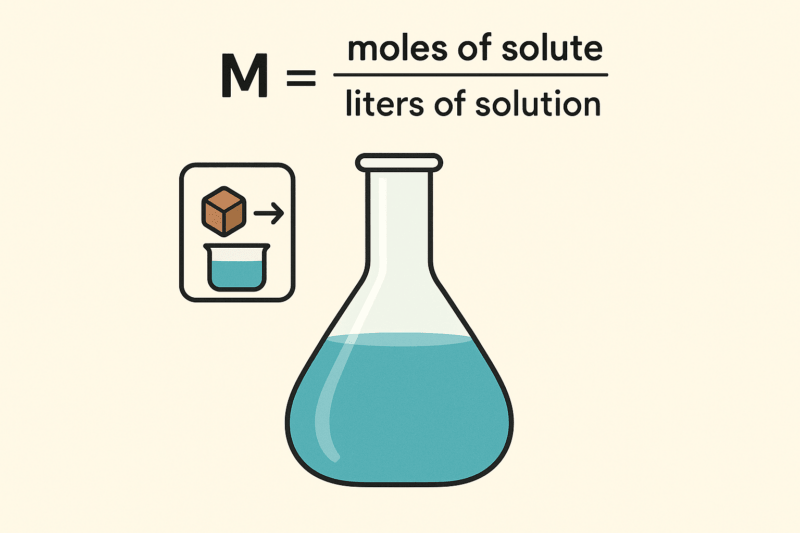
Molarity is the concentration of a solution expressed as moles of solute per liter of solution. This study note covers the formula M = n/V, worked examples, the dilution equation M1V1 = M2V2, comparison with molality and other concentration units, and how molarity is used in solution stoichiometry.
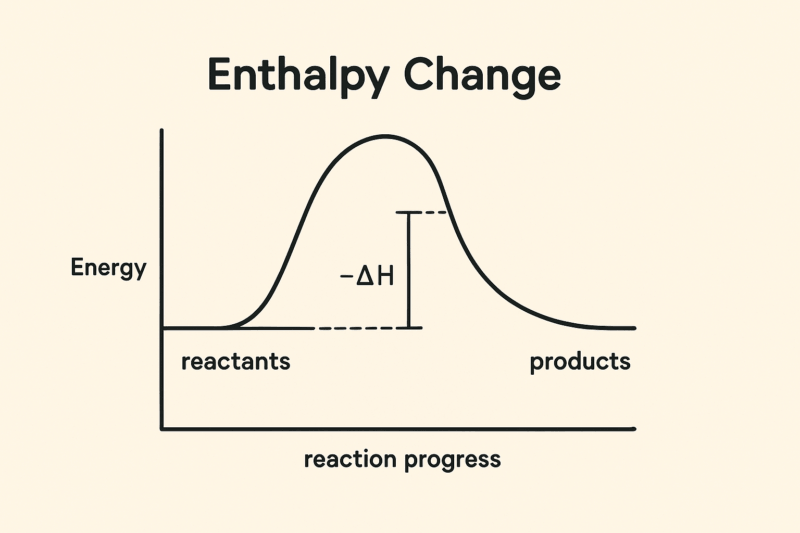
Enthalpy H measures heat content at constant pressure; ΔH tells you how much heat a reaction releases or absorbs. This study note covers the definition H = U + PV, sign convention (exothermic vs endothermic), Hess’s law, standard enthalpies of formation, bond enthalpies, and why exothermic doesn’t equal spontaneous.
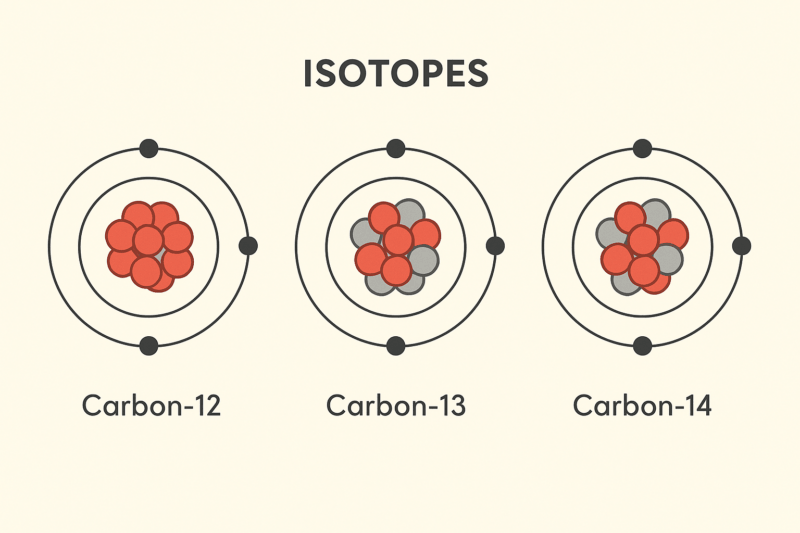
Isotopes are atoms of the same element with different neutron counts. This study note covers what isotopes are, how they differ (chemistry, mass, stability), stable vs radioactive isotopes, the three decay modes (alpha, beta, gamma), half-life and exponential decay, and real-world uses (radiocarbon dating, PET scans, nuclear power, tracers).
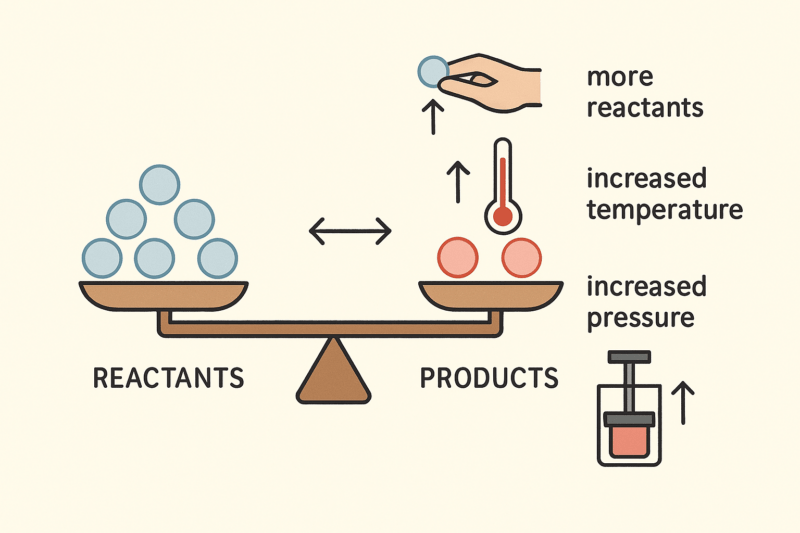
Le Chatelier’s principle predicts how a chemical equilibrium responds to disturbances. This study note covers the principle itself, the three disturbance types (concentration, temperature, pressure), why catalysts do NOT shift equilibria, the Haber-Bosch process as the textbook application, and the quantitative reaction-quotient Q vs equilibrium constant K approach.
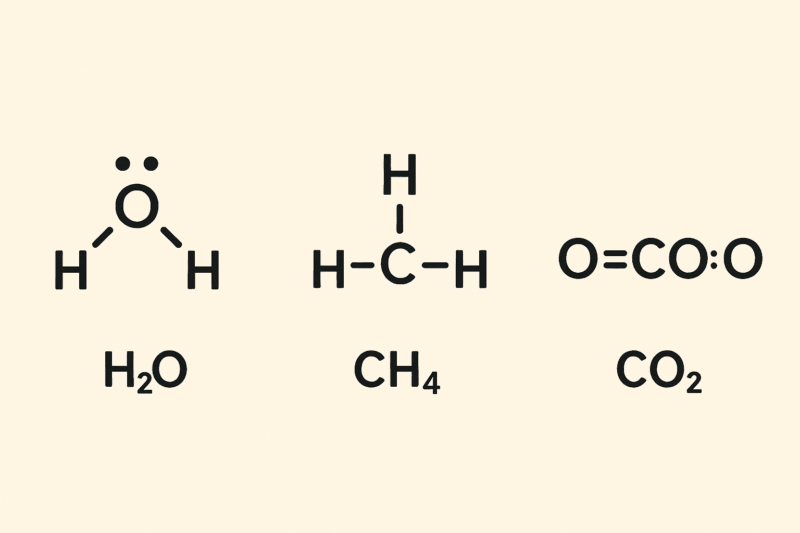
A Lewis structure (Lewis dot structure) shows the bonding electrons and lone pairs in a molecule. This study note covers the building blocks, the six-step procedure for drawing them, worked examples (H2O, CH4, CO2), formal charge calculation, resonance structures, and the three categories of octet-rule exceptions (incomplete, expanded, odd-electron).
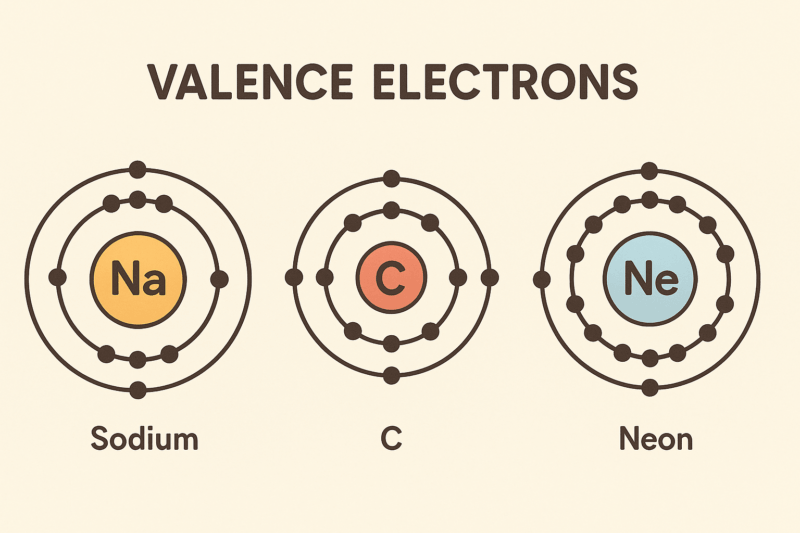
Valence electrons are the electrons in an atom’s outermost shell — the ones that do chemistry. This study note covers what valence electrons are, how to count them from the periodic table group number, the octet rule and the path to noble-gas configurations, periodic trends in reactivity, and how valence electrons drive ionic, covalent, and metallic bonding.