
Muriatic Acid
The word muriatic comes from the Latin muria, meaning “brine” or “salt.” That name stuck because concentrated salt water has long been a key reagent in the production of this acid. Muriatic acid is one of the most widely used industrial chemicals on the planet, and it’s been part of chemistry since the 8th century when Jabir ibn Hayyan first described its preparation.
Muriatic acid is a diluted, slightly impure form of hydrochloric acid (HCl). It typically sits at a pH of about 1 to 2, making it strongly acidic but milder than laboratory-grade HCl. You’ll often notice it has a yellowish tint rather than being colorless, and that color comes from trace impurities like dissolved iron. Despite this, muriatic acid remains the go-to choice for pool maintenance, concrete etching, and dozens of industrial processes.
Even though muriatic acid is less concentrated than pure hydrochloric acid, don’t let the word “diluted” fool you. It’s still highly corrosive and demands careful handling. You’ll find it sold at hardware stores for concrete cleaning, pool maintenance, and heavy-duty household jobs. It also plays a critical role in various types of chemical reactions, from neutralization to displacement. Let’s walk through how it’s made, how concentrated it is, what you can do with it, and how to stay safe.
Production of Muriatic Acid
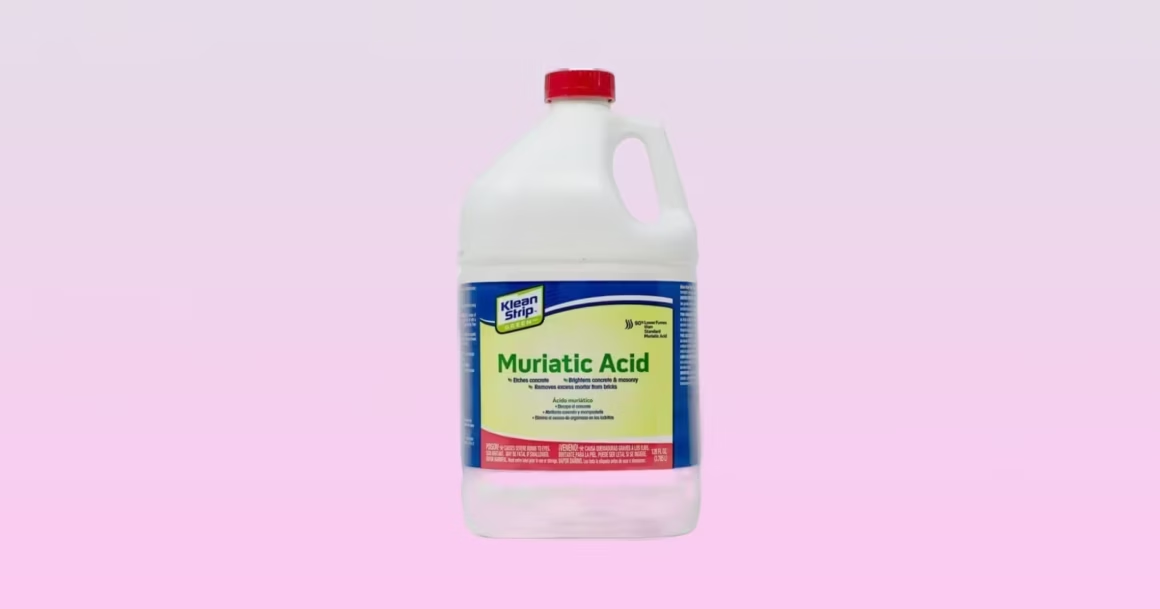
Hydrochloric acid is simply an aqueous solution of hydrogen chloride gas (HCl). To produce muriatic acid commercially, manufacturers burn hydrogen gas and chlorine gas together inside a synthesis chamber. The resulting hydrogen chloride gas is then dissolved in water and diluted to the target concentration.
The direct synthesis reaction looks like this:
H2(g) + Cl2(g) → 2HCl(g) → 2HCl(aq)
A second major industrial route is the Mannheim process. Here, sodium chloride (common table salt) reacts with sulfuric acid in a furnace. This method has been used for centuries and remains economically important because it also produces sodium sulfate as a useful byproduct.
2NaCl + H2SO4 → 2HCl + Na2SO4
There’s also a less common route that uses sodium chloride, sulfur dioxide, water vapor, and atmospheric oxygen. You’ll sometimes see this called the Hargreaves process:
4NaCl + 2SO2 + 2H2O + O2 → 2Na2SO4 + 4HCl
In all three methods, the final step is the same: dissolve the HCl gas in water and adjust the concentration downward until you reach what’s sold as muriatic acid.
Global production of hydrochloric acid (including muriatic acid) exceeds 20 million metric tons per year. The United States, China, and Germany are the largest producers. Most muriatic acid is generated as a byproduct of chlorination reactions in the organic chemicals industry rather than being manufactured directly.
Concentration
There is no single standard concentration for muriatic acid, so you should always check the product label before using it. Industrial-grade muriatic acid is typically about 31.5% HCl by mass, while consumer-grade formulas sold at hardware stores usually range from about 14.5% to 29%.
With a pH of 1 to 2, muriatic acid has acidity comparable to gastric juice (which is partly composed of HCl) and lemon juice. But pH alone doesn’t tell you the full story about corrosiveness. Lemon juice is only about 5-6% citric acid, a weak organic acid, while muriatic acid at 14-29% is a concentrated strong acid. That’s why muriatic acid can burn bare skin in seconds, while lemon juice just stings a paper cut.
If you’re using muriatic acid for pool maintenance, you’ll typically want the 14.5% or 20% formulation. For heavy-duty concrete etching or rust removal, the stronger 29-31.5% solutions are more effective. Either way, the concentration determines how carefully you need to handle it and how much you should dilute it before application.
Comparison of HCl Grades
Not all hydrochloric acid is created equal. The grade you choose depends entirely on your application, and using the wrong grade can ruin an experiment or waste money on unnecessary purity. Here’s how the major commercial grades of HCl compare.
| Grade | Concentration (HCl %) | Purity | Common Impurities | Typical Use |
|---|---|---|---|---|
| Reagent / ACS Grade | 36-38% | Very high (>99.5% pure HCl) | Trace metals below 1 ppm | Lab analysis, titrations, pharmaceutical synthesis |
| Food Grade | 31-36% | High (meets FDA standards) | Controlled heavy metals, arsenic | Food processing, gelatin production, corn syrup |
| Technical / Industrial Grade | 31-33% | Moderate | Iron, sulfates, organic residues | Steel pickling, ore processing, water treatment |
| Muriatic Acid (Commercial) | 14.5-31.5% | Low to moderate | Iron (causes yellow color), sulfates, organics | Pool maintenance, concrete cleaning, masonry |
| Inhibited Muriatic Acid | 14.5-20% | Low | Corrosion inhibitor additives, surfactants | Household cleaning, safer consumer applications |
The price difference between these grades is significant. Reagent-grade HCl costs roughly 10-20 times more per liter than commercial muriatic acid. That premium pays for rigorous purification steps, including distillation and filtration, that remove trace metals and organic contaminants down to parts-per-billion levels. For pool maintenance or concrete work, that level of purity isn’t just unnecessary, it’s wasteful.
One grade worth knowing about is inhibited muriatic acid, sometimes marketed as “safer” or “low-fume” muriatic acid. It contains corrosion inhibitors and surfactants that reduce fuming and slow the acid’s reaction rate. This makes it easier to handle for DIY projects, but the additives make it unsuitable for any application requiring chemical purity.
Uses of Muriatic Acid
Muriatic acid is one of the most versatile industrial chemicals you’ll encounter. Its uses span heavy industry, food processing, construction, and everyday household cleaning. The common thread is that most applications rely on its ability to dissolve minerals, oxides, and organic residues. Understanding the chemistry behind these reactions connects directly to broader topics in inclusion compounds and host-guest chemistry, where acid-base interactions govern molecular behavior.
- Leather tanning – Processing raw hides into finished leather
- Gelatin production – Extracting collagen from animal bones
- Pearl processing – Removing the outer layers of pearls to reveal luster
- PVC manufacturing – Commercial synthesis of vinyl chloride and polyvinyl chloride
- Descaling – Removing mineral scale from boilers, pipes, and equipment
- Brick and masonry cleaning – Removing mortar residue during construction
- Drain clearing – Dissolving organic blockages in clogged drains
- Ion exchange resin regeneration – Restoring water softeners and purification systems
- Inorganic chemical synthesis – Manufacturing metal chlorides and other compounds
- Steel pickling – Removing iron oxide (rust) and scale from steel before galvanizing or coating
- Salt purification – Refining common salt (NaCl) to food or pharmaceutical grade
- Oil well acidizing – Dissolving limestone and dolomite rock formations to improve crude oil flow
- pH control – Adjusting the pH of food products, pharmaceuticals, and drinking water
- Swimming pool maintenance – Lowering pool water pH to the ideal 7.2-7.6 range
- Household cleaning – Removing mineral stains from basements, toilets, and concrete surfaces
- Digestion – Your own stomach produces HCl (gastric acid) to break down food and kill bacteria
Industrial Applications of Muriatic Acid
While the list above covers the broad categories, it’s worth looking at specific industrial sectors where muriatic acid consumption is highest. The steel and petroleum industries alone account for over half of global HCl demand.
| Industry | Application | How Muriatic Acid Works | Typical Concentration |
|---|---|---|---|
| Steel manufacturing | Pickling and surface preparation | Dissolves iron oxide scale from hot-rolled steel before galvanizing or painting | 18-22% |
| Petroleum extraction | Well acidizing | Pumped into limestone/dolomite formations to dissolve rock and increase oil flow | 15-28% |
| Food processing | Corn syrup, gelatin, citric acid production | Hydrolyzes starch, demineralizes bone, adjusts pH during fermentation | Food grade, 31-36% |
| Water treatment | pH adjustment and regeneration | Neutralizes alkaline water supplies and regenerates ion-exchange resins | 14.5-22% |
| Mining and metallurgy | Ore processing | Leaches target metals from crushed ore, separates rare earth elements | 20-32% |
| Construction | Concrete etching and cleaning | Reacts with calcium carbonate in concrete to create a rough surface for coatings | 14.5-20% |
| Semiconductor manufacturing | Wafer cleaning | Removes metallic contaminants from silicon wafers (as part of RCA clean) | Reagent grade, 36-38% |
Steel pickling is the single largest industrial consumer of muriatic acid worldwide. During hot rolling, a layer of iron oxide (mill scale) forms on steel surfaces. Muriatic acid dissolves this scale efficiently through the reaction: Fe2O3 + 6HCl → 2FeCl3 + 3H2O. The spent pickling liquor is then either regenerated (recovering HCl via the Ruthner process) or treated as hazardous waste. Many of the byproducts from these industrial processes can cause environmental harm, including radioactive pollution in certain mining operations where acid leaching is used on uranium-bearing ores.
Safety Precautions for Handling Muriatic Acid
The same corrosive properties that make muriatic acid so useful also make it dangerous. Hydrochloric acid can cause severe chemical burns on contact with skin and serious, potentially permanent eye damage if splashed in your eyes. If swallowed, it corrodes the lining of the mouth, throat, esophagus, and stomach. Even though muriatic acid is a less concentrated form, it’s absolutely capable of causing all these injuries.
Beyond liquid contact, you also need to worry about the fumes. Muriatic acid releases hydrogen chloride gas, especially in warm conditions or when poured. Inhaling these fumes irritates the respiratory tract and can cause coughing, choking, and lung damage with prolonged exposure. Always work in a well-ventilated area or outdoors.
Muriatic acid fumes are heavier than air and collect in low-lying areas like basements, pits, and floor drains. If you’re working indoors, use a fan to push fumes away from your breathing zone and never work in a below-grade space without forced ventilation. Symptoms of HCl inhalation include burning throat, coughing, and chest tightness. If you experience any of these, move to fresh air immediately and seek medical attention.
Required Protective Equipment
Whenever you handle muriatic acid, you need the right gear. Here’s the minimum personal protective equipment (PPE) checklist:
- Gloves: Chemical-resistant neoprene or PVC gloves (not latex or nitrile, which degrade quickly in strong acids)
- Eye protection: Splash-proof chemical safety goggles or a full face shield
- Respiratory protection: Half-face respirator with acid gas cartridges (OV/AG type) for indoor work
- Clothing: Long sleeves, full-length pants, and closed-toe shoes (chemical-resistant apron for heavy use)
- Emergency supplies: Baking soda for neutralization and a garden hose or eyewash station nearby
Always Add Acid to Water for Dilution
If you need to dilute muriatic acid, always pour the acid into water, never the reverse. When you add water to concentrated acid, the heat generated by the exothermic reaction can be intense enough to cause the mixture to boil and splash violently. Chemistry students remember this rule with the mnemonic “do as you oughta, add acid to water.” Follow it every time.
Never Mix with Other Chemicals
Muriatic acid works perfectly well on its own as a cleaner. You should never mix it with bleach (sodium hypochlorite), potassium permanganate, or any other oxidizer. Mixing muriatic acid with bleach produces chlorine gas, which is extremely toxic and can be fatal even in small concentrations. This is one of the most common and dangerous household chemical accidents.
Proper Storage and Disposal
Store muriatic acid in its original, tightly sealed plastic container in a cool, dry, well-ventilated area away from metals and incompatible chemicals. To dispose of it, first neutralize the acid by slowly adding baking soda (sodium bicarbonate) until the fizzing stops, then dilute the resulting solution heavily with water (at least a 1:50 ratio). Never pour unneutralized acid down a drain because it corrodes plumbing and harms the environment. For larger quantities, your safest option is to take the acid to a hazardous waste disposal facility.
First Aid for Acid Exposure
Accidents happen even with proper precautions. If muriatic acid contacts your skin, flush the area immediately with large amounts of running water for at least 15-20 minutes. Remove contaminated clothing while flushing. For eye exposure, rinse continuously with clean water for 20 minutes and get to an emergency room. If someone swallows muriatic acid, don’t induce vomiting (it causes a second burn on the way back up). Have them rinse their mouth with water and call poison control or emergency services immediately.
Muriatic Acid vs. Hydrochloric Acid
You’ll sometimes see the terms muriatic acid and hydrochloric acid used interchangeably, but there is a practical difference. Laboratory-grade or reagent-grade hydrochloric acid is typically 36-38% HCl by mass and is produced to strict purity standards. Muriatic acid, on the other hand, is an industrial or commercial-grade product that’s less concentrated (usually 14.5-31.5%) and may contain impurities like dissolved iron, organic matter, or sulfate residues.
For scientific experiments, titrations, or pharmaceutical manufacturing, you need the purity of reagent-grade HCl. For cleaning your pool, etching concrete, or removing rust from tools, muriatic acid does the job at a fraction of the cost. Chemically, both contain the same active compound. The difference is concentration and purity. If you’re interested in learning more about chemistry concepts through video, check out the best chemistry YouTube channels for visual explanations of acid-base reactions and industrial chemistry.
Frequently Asked Questions
What is the difference between muriatic acid and hydrochloric acid?
Both contain the same active compound, hydrogen chloride (HCl), dissolved in water. The difference is practical: laboratory-grade hydrochloric acid is 36-38% HCl with high purity, while muriatic acid is a commercial-grade product at 14.5-31.5% concentration that may contain impurities like iron. They are chemically the same acid at different concentrations and purity levels.
Is muriatic acid safe to use at home?
Muriatic acid can be used at home for tasks like pool pH adjustment, concrete cleaning, and rust removal, but only with proper precautions. You must wear chemical-resistant gloves, safety goggles, and protective clothing. Always work in a well-ventilated area or outdoors, and never mix it with bleach or other chemicals. Follow the product label instructions carefully.
What happens if you mix muriatic acid with bleach?
Mixing muriatic acid (HCl) with bleach (sodium hypochlorite) produces chlorine gas (Cl2), which is extremely toxic. Even small amounts of chlorine gas can cause severe respiratory distress, and higher concentrations can be fatal. This is one of the most dangerous accidental chemical reactions in household settings. Never combine these two products.
How do you safely dispose of muriatic acid?
To dispose of muriatic acid safely, slowly add baking soda (sodium bicarbonate) to the acid until the fizzing stops, which neutralizes it. Then dilute the solution with water at a ratio of at least 1:50 before pouring it down a drain. For larger quantities, store the acid in a sealed plastic container and take it to a hazardous waste disposal facility.
Why should you add acid to water and not water to acid?
Adding water to concentrated acid causes a highly exothermic reaction. The heat generated can be so intense that the mixture boils instantly, sending hot, corrosive liquid splashing in all directions. When you add acid to water instead, the large volume of water absorbs the heat gradually, making the process much safer. Chemists remember this with the phrase “do as you oughta, add acid to water.”
What concentration of muriatic acid should you use for pool maintenance?
For swimming pool pH adjustment, a 14.5% or 20% muriatic acid solution is typically recommended. These lower concentrations are easier to handle safely and give you better control over pH changes. Always add the acid to the pool water slowly, pouring it near a return jet for better distribution, and retest the pH after 4-6 hours before making further adjustments.
Can muriatic acid damage metal surfaces?
Yes. Muriatic acid reacts aggressively with most metals, including steel, aluminum, and zinc. It dissolves protective oxide layers and attacks the base metal underneath, producing hydrogen gas and metal chloride salts. This is why it’s used intentionally for steel pickling, but it also means you should never let muriatic acid contact metal tools, fixtures, or surfaces you want to preserve. Stainless steel and certain high-nickel alloys resist HCl better, but they aren’t immune at higher concentrations.
What’s the shelf life of muriatic acid?
Muriatic acid doesn’t expire in the traditional sense, but it does lose potency over time. An opened container of muriatic acid slowly releases HCl gas, especially in warm storage conditions. Over months, the concentration drops noticeably. A sealed, properly stored container maintains its strength for about 1-2 years. Always store it in a cool, ventilated area with the cap tightly sealed. If the solution looks significantly lighter in color or seems weaker than expected, it’s likely lost concentration.
The FAQs are a nice touch. They addressed exactly the confusion I had about safety precautions.
Shared this with my lab partner. We both found it useful for understanding the theory behind our practical work.
This helped me understand muriatic acid for my NEET preparation. The explanations are thorough but not overwhelming.
The examples and applications section really helps connect muriatic acid to everyday life. My students found it very engaging.
The examples and applications section really helps connect muriatic acid to everyday life. My students found it very engaging.
Bookmarked for exam revision. The structure here is much clearer than my lecture notes on muriatic acid.
This is a well-organized study guide for muriatic acid. The classification system you use makes it easy to remember.
I love how you break down complex muriatic acid concepts into digestible sections. Makes self-study so much more effective.
Bookmarked for exam revision. The structure here is much clearer than my lecture notes on muriatic acid.
The FAQs are a nice touch. They addressed exactly the confusion I had about safety precautions.
This is a well-organized study guide for muriatic acid. The classification system you use makes it easy to remember.
I’m preparing for my chemistry exam and this article on muriatic acid is incredibly helpful. Clear and to the point.
This article on muriatic acid covers everything my textbook does but in a much more readable format. Saved me hours of study time.