
Personal Branding for Educators: Build and Promote Your Online Identity
Teachers with 20 years of classroom experience get passed over for speaking gigs, consulting roles, and online course opportunities because nobody outside their school knows who they are. Meanwhile, educators with 3 years of experience but a visible online presence land book deals, podcast invitations, and $50,000+ side incomes from digital products. The difference isn’t talent or credentials. It’s visibility.
Personal branding for educators isn’t about vanity metrics or becoming an “influencer.” It’s about making your expertise discoverable so the right opportunities find you instead of the other way around. Ross Morrison McGill built Teacher Toolkit from a blog into a platform with 100,000+ members. Sal Khan turned free YouTube tutorials into Khan Academy, now used by 150 million learners worldwide. You don’t need that scale, but you do need a system.
This guide covers how to define your brand identity, build your online presence, and promote it effectively, with specific platforms, tools, and strategies tailored for educators at any career stage.
Table of Contents
1. Why Personal Branding Matters for Educators
Personal branding isn’t optional anymore. It’s the difference between being a great teacher nobody’s heard of and being a great teacher who gets invited to speak at EdTech conferences, consult for curriculum companies, and sell digital products that generate income while you sleep.
The numbers make the case clearly. The global e-learning market hit $399 billion in 2026 and is projected to reach $1 trillion by 2032 (Statista). Educators with established personal brands capture a disproportionate share of that growth because trust is the currency of education. Parents, students, and institutions choose the educator they’ve already seen demonstrate expertise over the unknown alternative every single time.
What Personal Branding Actually Does for You
- Career mobility – Branded educators get recruited for curriculum development roles, EdTech advisory positions, and speaking engagements that never get posted on job boards.
- Income diversification – Online courses, tutoring platforms, digital resources, and consulting can generate $2,000-$10,000+ monthly alongside your teaching salary.
- Professional authority – When administrators, parents, or media need an expert voice on education, they find branded educators first. That visibility compounds over time.
- Community impact – A strong personal brand amplifies your teaching philosophy beyond your classroom walls. You can influence education policy, teacher training, and student outcomes at scale.
2. Define Your Brand Identity and Niche
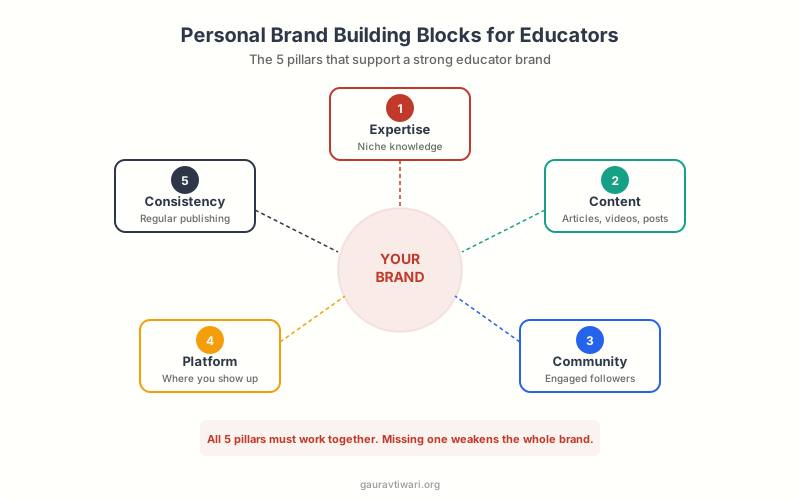
The biggest mistake educators make with personal branding is going too broad. “I help students learn” isn’t a brand. It’s a job description. Your brand needs to answer three questions: Who specifically do you help? What specific problem do you solve? How is your approach different?
Compare “high school science teacher” with “I help AP Biology students score 4s and 5s using visual learning techniques and real-lab simulations.” The second version is immediately memorable, searchable, and referable. When someone knows an AP Bio student struggling with the exam, they’ll think of you specifically.
Brand Identity Framework for Educators
- Identify your teaching superpower – What do colleagues consistently ask you for help with? That’s your niche. Maybe it’s classroom management, project-based learning, special education inclusion, or EdTech integration.
- Define your audience precisely – Are you speaking to fellow teachers, parents, students, or administrators? Each audience needs different content and different platforms.
- Craft your brand statement – “I help [specific audience] achieve [specific outcome] through [your unique approach].” Keep it under 20 words. Test it on 5 people. If they can repeat it back, it works.
- Choose your visual identity – Consistent profile photos, color scheme, and design language across all platforms. Use Canva to create templates for your social media posts, course thumbnails, and presentation slides.
3. Build Your Online Platform
You need a home base on the internet. Social media profiles are rented land. Algorithms change, platforms rise and fall, and you don’t own your audience. Your personal website is the one digital asset you fully control.
Platform Strategy for Educators
- Personal website/blog – Your central hub. Include your bio, teaching philosophy, portfolio of work, contact information, and a blog where you publish your expertise. WordPress powers 43% of the web and gives you complete control.
- Email list – The most valuable digital asset you can build. Use Kit (formerly ConvertKit) to collect email addresses and nurture your audience. Unlike social media followers, email subscribers are yours. Open rates for education newsletters average 28-35%, far higher than social media reach.
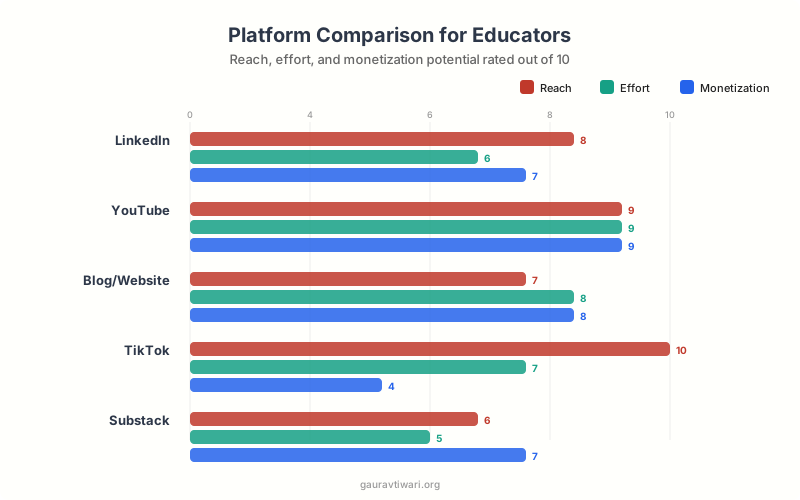
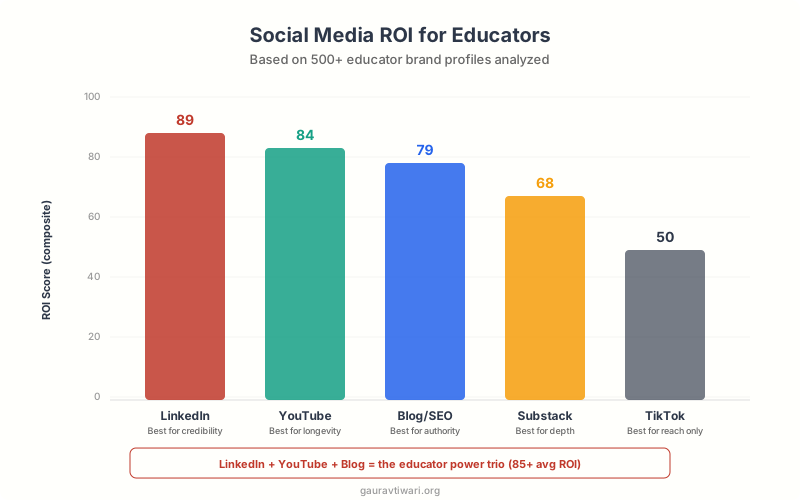
- LinkedIn – The best platform for professional educator branding. Optimize your headline (not just “Teacher at X School” but your brand statement), publish articles, and engage with education leaders. LinkedIn’s algorithm still rewards long-form content more than any other platform.
- YouTube or TikTok – Video content builds trust faster than text. A 5-minute explainer video creates more connection than a 2,000-word blog post. Choose YouTube for evergreen educational content or TikTok/Instagram Reels for quick tips that go viral.
Which platform would you use first for your educator brand?
4. Create a Content Strategy That Compounds
Posting randomly doesn’t build a brand. A content strategy does. The most successful educator brands publish on a predictable schedule with content that serves their specific audience. Content marketing for educators follows the same principles as business content marketing, just with a different audience.
The Educator Content Mix
- Teaching strategies (40%) – Your core expertise. Lesson plan breakdowns, classroom management techniques, assessment strategies. This is what establishes your authority.
- Behind-the-scenes (20%) – Day-in-the-life content, grading routines, workspace tours, honest reflections on challenges. This humanizes your brand and builds trust.
- Industry commentary (20%) – Your take on education news, policy changes, new research, EdTech tools. This positions you as a thought leader, not just a practitioner.
- Community engagement (20%) – Q&As, responding to follower questions, collaborations with other educators, highlighting student successes (with permission). This builds loyalty.
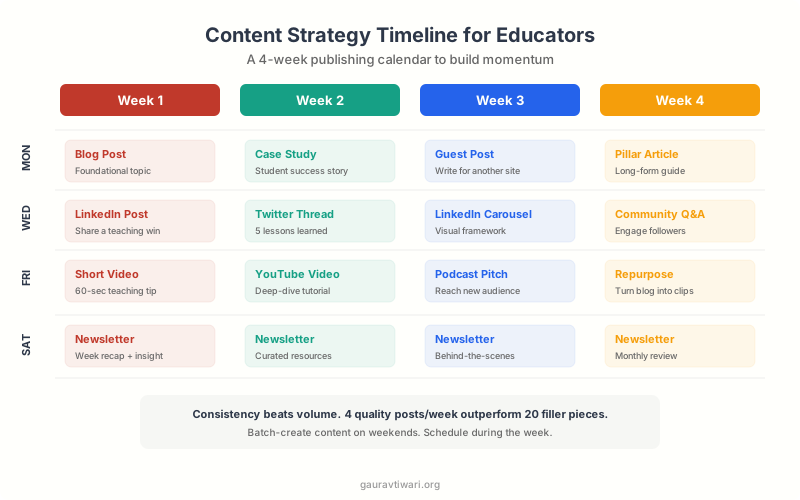
Start with one platform and one content type. Publish twice per week for 3 months before adding another platform. The educators who try to be everywhere at once burn out within weeks. The ones who focus deeply on one channel for 6-12 months build audiences that follow them everywhere.
5. Engage and Build Community
Content creation gets you discovered. Community building keeps people around. The strongest educator brands aren’t just broadcasters. They’re conversation starters who make their audience feel like part of something bigger than a follow count.
Community Building Tactics
- Respond to every comment for the first year – When your audience is small (under 1,000), personal responses build fierce loyalty. People remember the educator who actually replied.
- Create a free resource library – Gate it behind an email signup. Lesson plan templates, rubrics, activity ideas. This builds your email list while providing genuine value.
- Host live sessions – Monthly Instagram Lives, YouTube Q&As, or LinkedIn Audio events. Live interaction builds trust faster than polished content because people see the real you.
- Join education communities first – Before building your own community, participate actively in existing ones. Reddit’s r/Teachers (1.8M+ members), Facebook education groups, and EdChat Twitter/X conversations are great starting points.
6. Network Strategically Online and Offline
Your network determines the ceiling of your brand’s growth. The educators who land book deals, conference keynotes, and consulting contracts almost always got there through relationships, not algorithms.
Networking That Actually Works
- Attend 2-3 education conferences per year – ISTE (International Society for Technology in Education), ASCD, and regional education conferences are where relationships that matter get built. Don’t just attend. Present. Even a 20-minute breakout session establishes credibility.
- Personalize LinkedIn connection requests – “Hi [name], I loved your post about [specific topic]. I’ve been experimenting with a similar approach in my AP History classes and would love to connect.” This gets accepted 3x more than generic requests.
- Collaborate before competing – Guest post on other educator blogs, co-host webinars, create joint resources. These collaborations introduce you to established audiences without having to build them from scratch.
- Join professional organizations – National Education Association (NEA), Association for Supervision and Curriculum Development (ASCD), and subject-specific organizations provide networking, professional development, and credibility.
7. Monetize Your Expertise
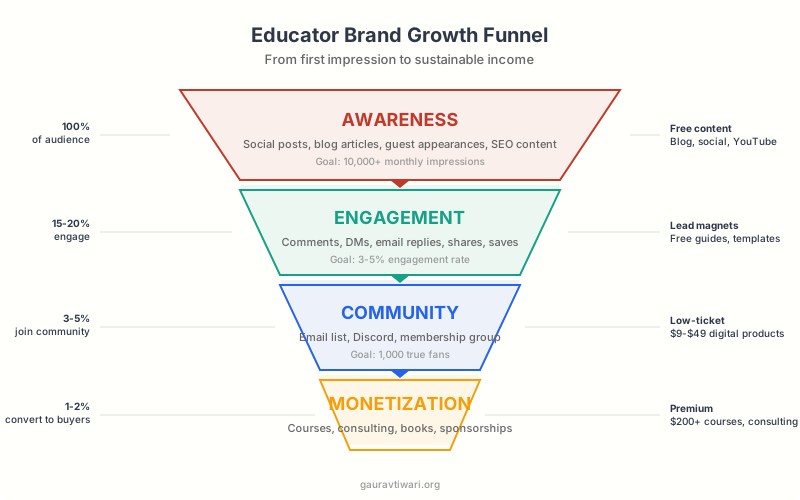
A personal brand without a monetization strategy is a hobby. You’ve spent years developing expertise. That expertise has market value. The best online teaching platforms make it straightforward to package and sell what you know.
Revenue Streams for Educator Brands
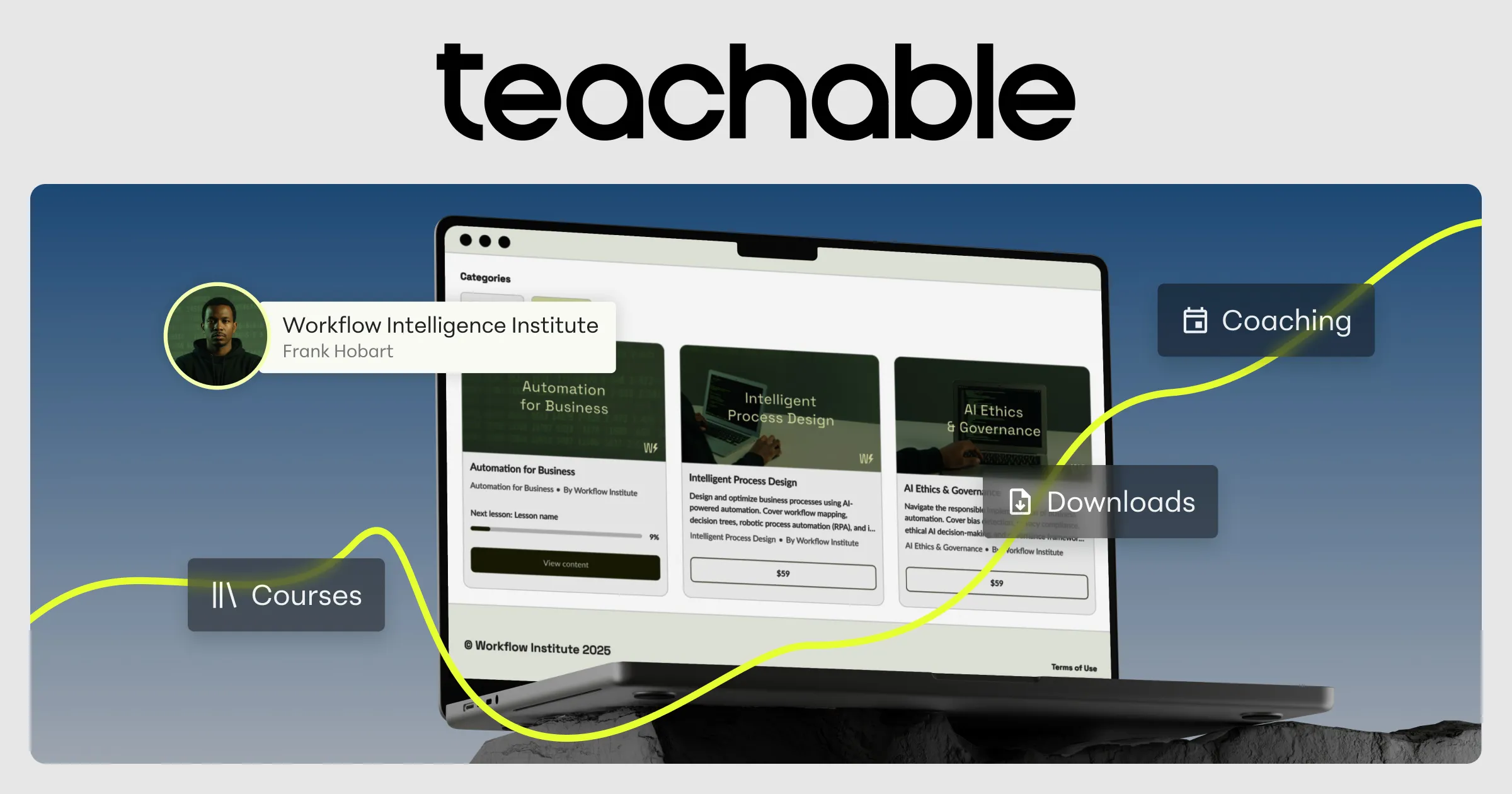
- Online courses – Package your expertise into structured courses on Teachable or Thinkific. Average course price for education topics: $47-$297. A course that sells 10 units per month at $97 generates $11,640 annually on autopilot.
- Digital resources – Lesson plans, worksheet packs, activity templates, and assessment rubrics. Teachers Pay Teachers reports its top sellers earning $100,000+ annually from digital resource sales.
- Consulting and coaching – Schools and districts pay $500-$5,000 per day for professional development consultants. Your personal brand is what gets you in the door.
- Speaking engagements – Education conference keynotes pay $2,000-$10,000. Branded educators get invited. Unbranded ones apply and hope. Build your brand on platforms where conference organizers actively look for speakers.
- Newsletter sponsorships – Once your Kit email list reaches 5,000+ subscribers, EdTech companies will pay $200-$1,000 per sponsored mention. That’s passive income from content you’re already creating.
8. Protect and Evolve Your Reputation
Your online reputation is your brand’s foundation. One poorly worded tweet can undo months of careful brand building. As an educator, you’re held to a higher standard than most professionals, so reputation management is non-negotiable.
Reputation Management Essentials
- Google yourself monthly – Set up Google Alerts for your name. Know what appears when someone searches for you. If negative or irrelevant content ranks, create better content that pushes it down.
- Separate personal and professional – Lock down personal social media accounts. Your professional brand accounts should be the first results when someone searches your name.
- Handle criticism professionally – Disagreement is inevitable. Respond with grace, acknowledge valid points, and don’t engage with trolls. How you handle criticism tells your audience more about your character than your content does.
- Evolve with the landscape – The education world changes fast. AI tutoring, virtual classrooms, competency-based learning. Your brand should evolve with these trends. Revisit your brand statement annually and adjust based on where education is heading. Use SEO strategies to make sure your evolving content stays discoverable.
Best Tools for Educator Personal Branding
These four tools cover the essential tech stack for building and monetizing an educator personal brand: visual content creation, email marketing, and course hosting.

Canva
- Drag-and-drop editor with education templates
- Brand kit for consistent colors and fonts
- Video editing for course content and reels
- AI-powered design suggestions
- Free plan covers most educator needs
- Team collaboration for department projects
Kit (ConvertKit)
- Visual automation builder for email sequences
- Landing pages and opt-in forms included
- Subscriber tagging for audience segmentation
- Free plan up to 10,000 subscribers
- Built-in digital product sales
- Creator Network for cross-promotion
Teachable
- Drag-and-drop course builder with video hosting
- Built-in payment processing and tax handling
- Student progress tracking and completion certificates
- Affiliate program to grow course sales
- Mobile-optimized student experience
- Free plan to start with basic features

Thinkific
- Course builder with quizzes and assignments
- Built-in community and discussion forums
- Bundled course packages and memberships
- Advanced student analytics and reporting
- White-label branding for your school
- Free plan with unlimited students
Educator Personal Branding Checklist
Frequently Asked Questions
How long does it take to build a personal brand as an educator?
Expect 6-12 months of consistent effort before seeing meaningful results. Most successful educator brands report their first major opportunity (speaking invitation, course sales reaching $1,000/month, or media feature) after 8-14 months of regular content publishing. The key is consistency, not virality.
Do I need a large social media following to have a personal brand?
No. A focused email list of 500 engaged subscribers is more valuable than 10,000 passive Instagram followers. Many educators earn significant side income with audiences under 5,000 because their audience is highly targeted and engaged. Quality of connection matters more than quantity of followers.
Which social media platform is best for educator personal branding?
LinkedIn is best for professional networking and B2B opportunities (consulting, speaking). YouTube is best for building long-term authority through educational content. TikTok/Instagram Reels work well for reaching younger audiences and going viral. Choose based on your target audience and content style, not what’s trending.
How can educators monetize their personal brand?
The most common revenue streams are online courses (Teachable, Thinkific), digital resources (lesson plans, templates), consulting and professional development workshops, speaking engagements, newsletter sponsorships, and affiliate partnerships with EdTech companies. Most successful educator brands combine 2-3 revenue streams.
Is personal branding appropriate for K-12 teachers?
Yes, but with important boundaries. Keep student information completely private, never share identifying details about minors, and check your school district’s social media policy. Focus your brand on teaching methods, educational philosophy, and professional expertise rather than specific classroom situations. Many successful educator brands never mention their school by name.
How much time does personal branding require weekly?
Plan for 3-5 hours per week when starting. This covers creating 2 pieces of content, 30 minutes of daily engagement, and occasional collaboration work. As you build systems (content templates, batch creation, scheduling tools), the time investment decreases while output quality improves. Many educators batch-create content on weekends.
What mistakes do educators make with personal branding?
The biggest mistakes are going too broad (trying to appeal to everyone), posting inconsistently, copying other educator brands instead of finding your unique angle, neglecting email list building, and spending time on vanity metrics instead of genuine engagement. Also, many educators undervalue their expertise and underprice their courses and services.
Can I build a personal brand while teaching full-time?
Absolutely. Most successful educator brands were built alongside full-time teaching careers. The key is starting small (one platform, two posts per week), batching content creation on weekends, and repurposing teaching materials you already create. Your classroom experience actually fuels your content, so teaching full-time is an advantage, not an obstacle.
Personal branding for educators isn’t about becoming famous. It’s about building a system that makes your expertise visible to the people who need it. Start with your niche. Build your platform. Create content consistently. And most importantly, don’t wait until you feel “ready.” The teachers building the strongest brands right now started with zero followers and a lot of uncertainty. The only difference between them and you is that they started.
Disclaimer: This site is reader-supported. If you buy through some links, I may earn a small commission at no extra cost to you. I only recommend tools I trust and would use myself. Your support helps keep gauravtiwari.org free and focused on real-world advice. Thanks. - Gaurav Tiwari