
Buy YouTube Views and Watch Your Growth: All You Need to Know
Growing a YouTube channel from zero feels impossible when you’re staring at single-digit view counts. I get it. You’re putting in hours of work on every video, and it seems like nobody’s watching. But here’s what most creators miss: YouTube growth isn’t about one viral video. It’s about building systems that compound over time. The creators who win are the ones who master the algorithm, understand their audience, and consistently deliver value.
This guide covers everything I’ve learned about growing YouTube views organically. No shortcuts, no tricks. Just proven strategies that work whether you have 10 subscribers or 10,000.
How YouTube Views Actually Work
Before diving into strategies, you need to understand how YouTube counts and values views. A view is counted when someone watches your video for at least 30 seconds. But not all views carry equal weight in the algorithm.
YouTube cares about watch time more than raw view counts. A video with 1,000 views and 80% average retention is far more valuable to the algorithm than one with 10,000 views and 15% retention. This is why clickbait titles and misleading thumbnails backfire. They might generate clicks, but viewers bounce quickly, which tanks your algorithmic performance.
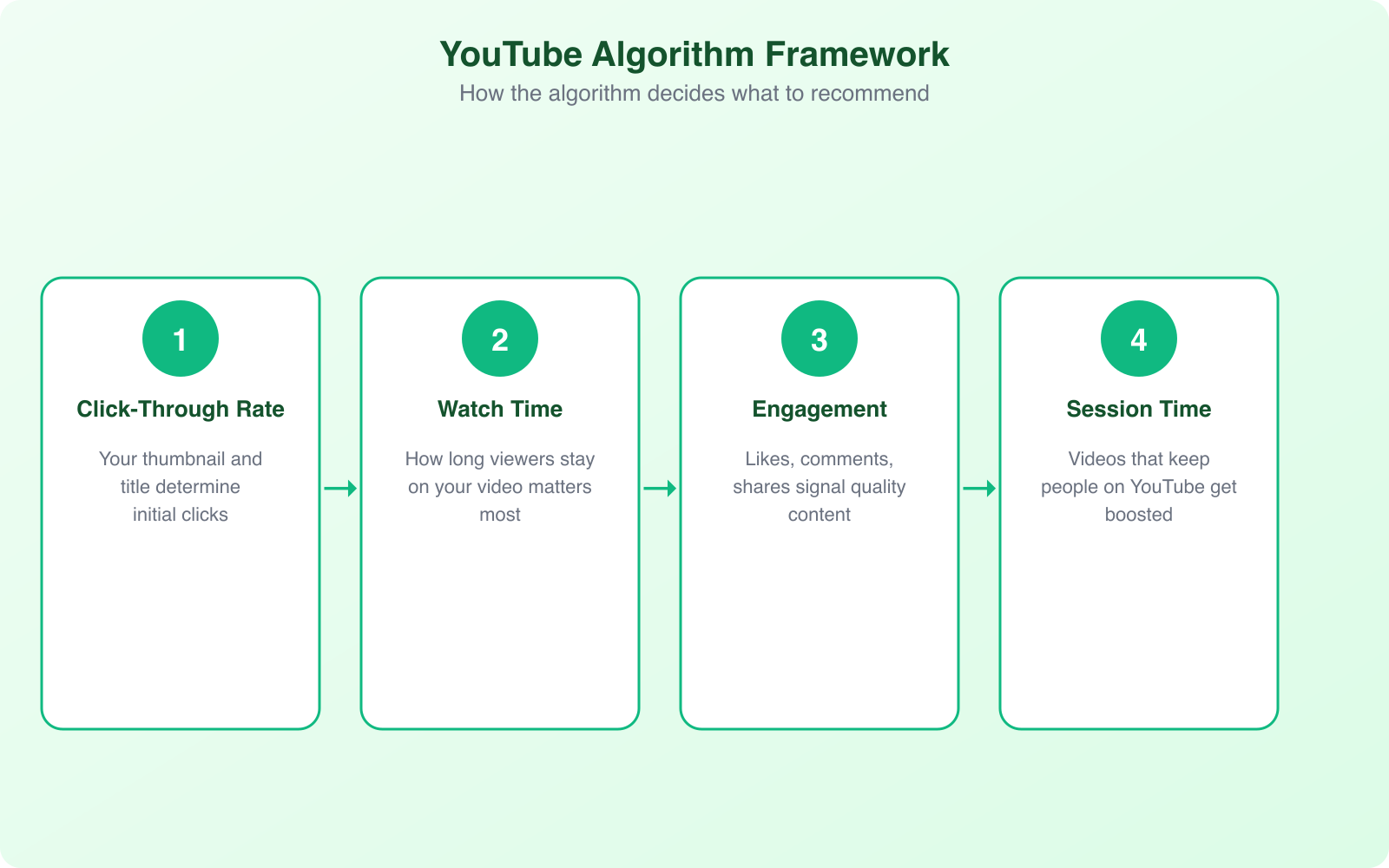
The key metrics that drive view growth:
- Click-through rate (CTR). The percentage of people who click your video after seeing the thumbnail. Higher CTR means YouTube shows your video to more people.
- Average view duration. How long viewers actually watch. YouTube promotes videos that keep people on the platform longer.
- Session watch time. Does your video lead viewers to watch more YouTube content? If viewers binge your playlist after watching one video, YouTube rewards that heavily.
- Engagement rate. Likes, comments, shares, and subscriptions triggered by your video all signal quality to the algorithm.
Understanding the YouTube Algorithm
YouTube’s algorithm isn’t a mysterious black box. It’s a recommendation engine designed to keep people watching. If you understand what it rewards, you can work with it instead of against it.
YouTube serves content through several discovery channels:
- YouTube Search. When people actively search for content. This is where YouTube SEO matters most. Optimize your titles, descriptions, and tags for the keywords your audience is searching.
- Suggested Videos. The sidebar recommendations that appear next to the video you’re watching. YouTube suggests videos that are topically related and likely to keep the viewer watching.
- Browse Features. The home page and subscription feed. YouTube personalizes this based on each viewer’s watch history and preferences.
- Shorts Feed. A dedicated discovery channel for vertical short-form content. Shorts have their own algorithm and can drive massive subscriber growth.
The algorithm’s job is simple: match the right content with the right viewer. Your job is to create content so good that YouTube’s algorithm confidently recommends it.
Don’t optimize for the algorithm. Optimize for your viewers. YouTube’s algorithm is designed to identify and promote content that viewers genuinely enjoy. If you make great content for real people, the algorithm will follow.
Content Strategy for Maximum Views
The most important factor in getting more views is creating content people actually want to watch. That sounds obvious, but most creators skip the research and just create whatever they feel like. Strategic content creation starts with understanding demand.
Find Proven Topics
Don’t guess what your audience wants. Research it. Look at what’s working for competitors in your niche. Sort their channels by “Most Popular” to see which topics drive the most views. Use YouTube’s autocomplete suggestions to find what people are searching for. Check trending topics in your niche using Google Trends.
Create Content Buckets
Organize your content into 3 to 4 content buckets (recurring themes or categories). This helps viewers know what to expect and makes your channel easier for the algorithm to categorize. A cooking channel might have buckets like “Quick Weeknight Meals,” “Baking Tutorials,” and “Kitchen Equipment Reviews.”
The 80/20 Content Rule
Spend 80% of your effort on proven, searchable topics and 20% on experimental or trending content. The proven content builds a reliable base of views and subscribers. The experimental content has the potential to break out and attract a much larger audience.
Content Scheduling and Consistency
Consistency is the secret weapon of every successful YouTube channel. The algorithm rewards channels that upload on a predictable schedule because it can reliably recommend your content to subscribers.
Here’s how to build a sustainable upload schedule:
- Start with what you can maintain. One video per week is better than three videos one week and then nothing for a month. Be honest about your capacity and commit to a schedule you won’t burn out on.
- Batch your production. Film 3 to 4 videos in one session, then edit and schedule them throughout the month. This is far more efficient than producing one video at a time.
- Use YouTube’s scheduling feature. Upload your video, set it to private, and schedule it to go live at the optimal time. This way, you can prepare content days in advance.
- Post at peak times. Check YouTube Analytics to see when your audience is most active. Generally, Tuesday through Thursday between 2 PM and 4 PM (your audience’s time zone) works well for most niches.
YouTube Analytics: The Numbers That Matter
YouTube Studio gives you access to incredibly detailed analytics. But most creators either ignore analytics entirely or get overwhelmed by the number of metrics available. Focus on these key numbers:
Impressions and CTR
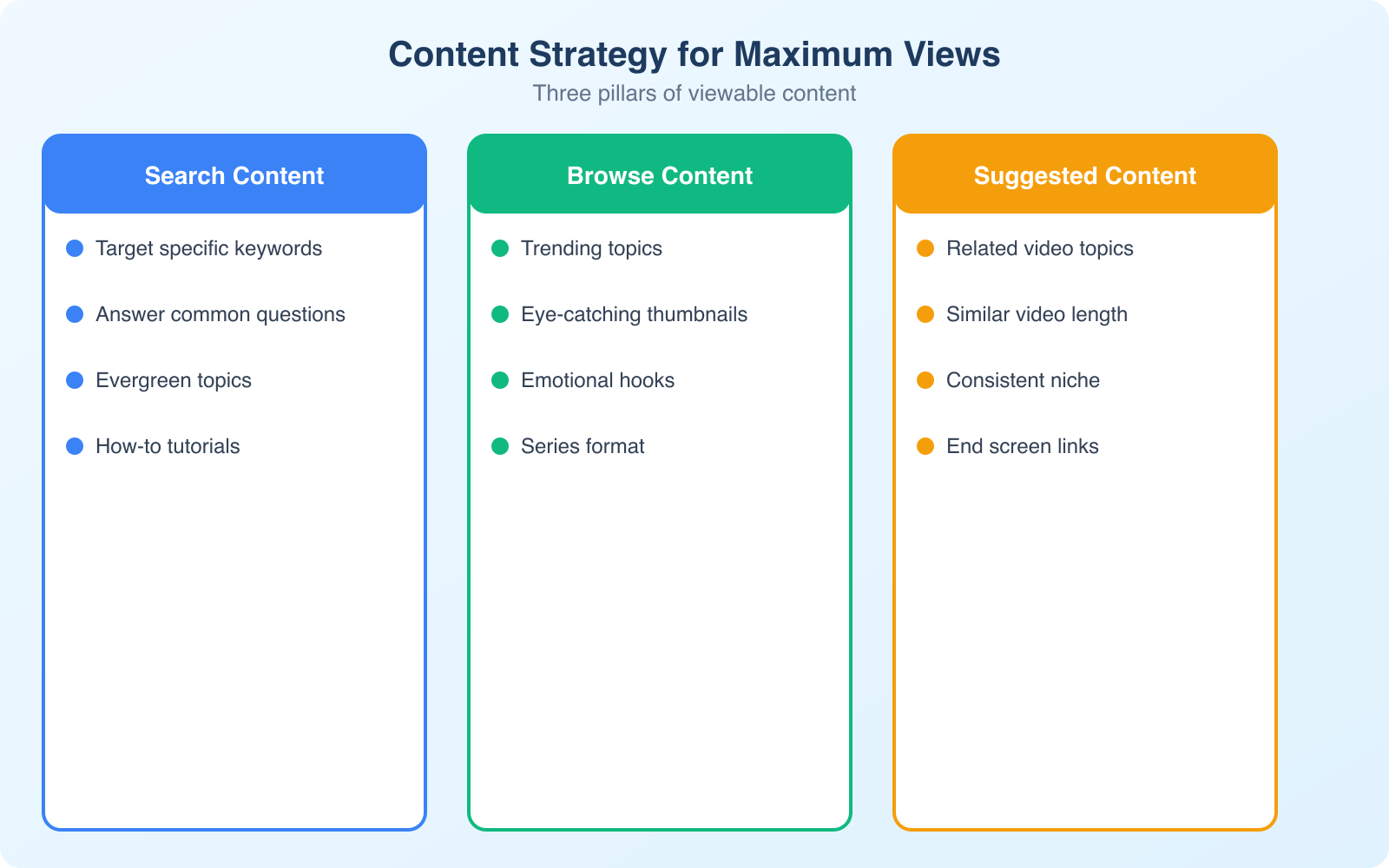
Impressions tell you how many times YouTube showed your thumbnail to potential viewers. CTR tells you what percentage clicked. If your impressions are high but CTR is low (below 4%), your thumbnail or title needs work. If your CTR is high but impressions are low, YouTube hasn’t found your audience yet, meaning you need better SEO.
Audience Retention
The retention graph is your most powerful tool for improving content quality. It shows exactly where viewers drop off. If you see a big dip at the 30-second mark, your intro is too long. If retention drops steadily, your content might be too slow. If it drops sharply at a specific point, something at that moment lost the viewer.
Traffic Sources
Understanding where your views come from helps you prioritize your optimization efforts. If most views come from search, double down on SEO. If they come from suggested videos, focus on creating related content that chains viewers from one video to the next.
Leveraging YouTube Shorts for Growth
YouTube Shorts have become one of the most effective growth tools on the platform. They’re short vertical videos (under 60 seconds) that get distributed through YouTube’s Shorts feed, which operates similarly to TikTok’s For You page.
Why Shorts are powerful for growth:
- Massive reach. Shorts can reach audiences far beyond your subscriber base. A single Short can generate hundreds of thousands of views even on a small channel.
- Subscriber conversion. Viewers who enjoy your Shorts often subscribe and then discover your long-form content. This creates a flywheel effect.
- Low production barrier. Shorts don’t need the same production quality as long-form videos. A phone camera and good lighting are enough to get started.
- Algorithm experimentation. Shorts let you test topics and formats quickly. If a topic works as a Short, expand it into a full-length video.
The best strategy combines both long-form and short-form content. Use Shorts to attract new viewers and long-form videos to build deeper engagement and watch time.
Building Social Proof and Channel Authority
Social proof matters on YouTube. When a new viewer lands on your channel and sees consistent uploads, strong engagement, and quality content, they’re more likely to subscribe and engage. Here’s how to build that credibility organically:
- Create a strong channel trailer. A 60 to 90 second video that tells new visitors exactly what your channel is about and why they should subscribe.
- Organize playlists. Group your best content into themed playlists. This makes your channel look organized and encourages binge-watching.
- Pin your best comment. On every video, pin a comment that adds value, asks a question, or directs viewers to related content. This encourages more comments from others.
- Optimize your channel page. Write a clear channel description with relevant keywords. Choose a professional banner and profile photo. These details matter more than you think.
Your first 50 videos are your training period. Don’t expect viral success during this phase. Focus on improving your craft, understanding your audience, and developing your unique style. Most successful YouTubers didn’t hit their stride until video 50 to 100.
Collaborations and Cross-Promotion
Collaborating with other creators is one of the fastest organic growth strategies on YouTube. When you appear on another creator’s channel, you get exposed to their entire audience. If those viewers enjoy your content, they’ll subscribe to your channel too.
How to find and approach collaborators:
- Target channels with similar subscriber counts. Channels your size are more likely to collaborate because you offer mutual value. Don’t cold-email channels with 1 million subscribers when you have 500.
- Engage genuinely first. Watch their videos, leave thoughtful comments, and share their content before reaching out. Building a relationship first dramatically increases your chances of getting a yes.
- Pitch a specific idea. Don’t send a vague “let’s collab” message. Propose a specific video concept that benefits both channels and their audiences.
- Cross-promote effectively. Each creator should publish their own version of the collaborative content, linking to the other’s channel. This maximizes exposure for both parties.
Monetization and Brand Partnerships
As your views and subscribers grow, monetization opportunities follow. Here’s the path most creators take:
- YouTube Partner Program. Requires 1,000 subscribers and 4,000 watch hours (or 10 million Shorts views) in the past 12 months. This enables ad revenue, channel memberships, and Super Chat.
- Affiliate marketing. Promote products you genuinely use in your video descriptions. This can generate income even with a smaller audience. Check this beginner’s guide to affiliate marketing for more details.
- Brand sponsorships. Once you have consistent engagement (even with smaller subscriber counts), brands will reach out for sponsored content. Channels with 5,000 to 10,000 engaged subscribers can earn $200 to $1,000 per sponsored video.
- Digital products. Courses, templates, presets, or consulting services related to your niche. This is often the most profitable path because you keep 100% of the revenue.
The key to sustainable YouTube income is diversification. Don’t rely on ad revenue alone. Build multiple income streams around your channel and audience. Effective YouTube marketing strategies combine content quality with smart monetization.
Frequently Asked Questions
How long does it take to grow a YouTube channel from zero?
Most channels take 6 to 12 months of consistent uploading before seeing meaningful growth. The first 1,000 subscribers are typically the hardest to get. After that, growth tends to accelerate because YouTube’s algorithm starts recommending your content more aggressively. Focus on improving with every video and stay consistent for at least a year before evaluating results.
What’s the best time to upload a YouTube video?
The best upload time varies by audience, but generally Tuesday through Thursday between 2 PM and 4 PM in your audience’s primary time zone works well. This gives your video time to accumulate initial engagement before peak evening viewing hours. Check YouTube Analytics > Audience > When your viewers are on YouTube for data specific to your channel.
Do YouTube Shorts help grow long-form video views?
Yes. YouTube Shorts are one of the most effective ways to attract new subscribers who then discover your long-form content. Many creators report 30 to 50% of their new subscribers coming from Shorts. The key is making Shorts that represent your channel’s content accurately so the subscribers you attract are genuinely interested in your long-form videos.
How many videos should I upload per week?
For most creators, 1 to 2 long-form videos per week plus 3 to 5 Shorts is a sustainable and effective schedule. Quality always beats quantity. One exceptional video per week will outperform five mediocre ones. Choose a schedule you can maintain for at least 6 months without burning out, then adjust based on your results and capacity.
How important is video equipment for YouTube growth?
Content quality matters more than production quality, especially when starting out. Many successful channels started with a smartphone camera. That said, audio quality is the one area where you shouldn’t cut corners. Viewers will tolerate average video quality but won’t stick around for bad audio. Invest in a decent microphone ($50-100) before spending on a better camera.