
Best Webcams for Streaming in 2026: Top Picks That Actually Deliver
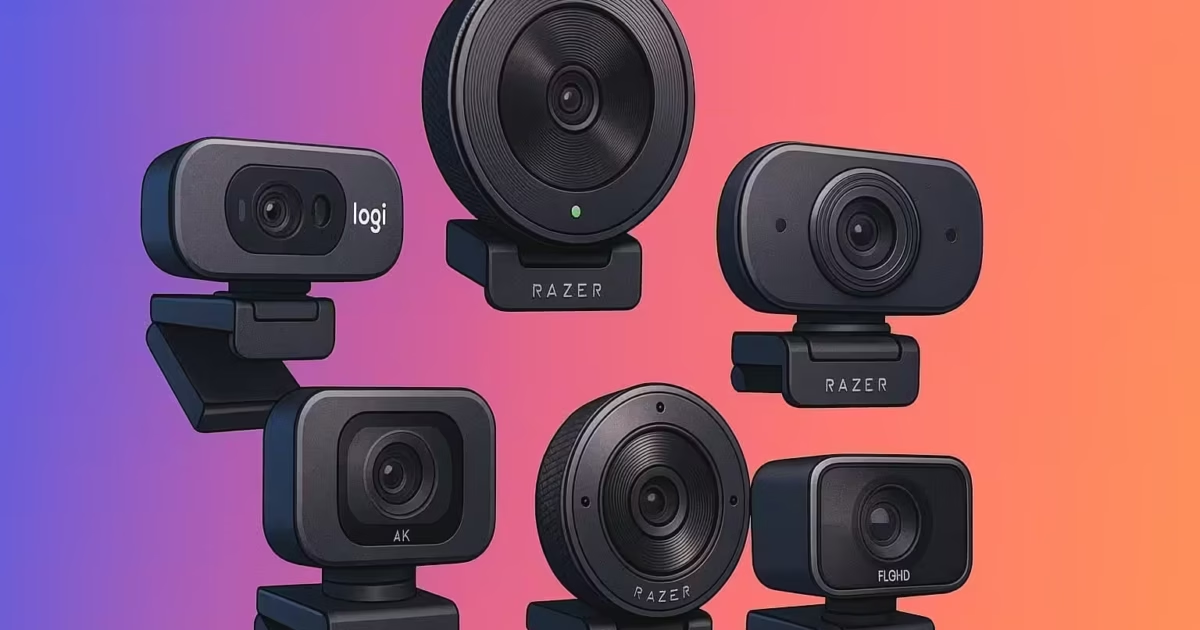
I’ve tested more webcams than I care to admit. From $30 budget cams that made me look like a blurry ghost to $300 prosumer options that rivals a mirrorless camera, the gap between a good webcam and a bad one is massive. If you’re streaming on Twitch, recording YouTube videos, or just want to stop looking like a pixelated mess on Zoom, the right webcam changes everything.
Built-in laptop webcams won’t cut it. They’re grainy, the exposure is all over the place, and somehow they always catch your worst angle. I’ve been building content setups for clients and myself for over 16 years, and a dedicated webcam is consistently the single best upgrade you can make for your on-camera presence. The difference is instant and obvious.
I’ve narrowed it down to 5 webcams that actually deliver in 2026. Each one serves a different type of creator, so whether you’re streaming gameplay at 60fps or recording tutorials in a dimly lit room, there’s a pick here for you. I’ve also included 10 more options if these don’t fit your budget or use case.
What to Look for in a Streaming Webcam
Before you pull out your wallet, here’s what actually matters when picking a webcam for streaming. I’ve seen creators obsess over 4K when their internet can barely handle 1080p. Don’t be that person.
- Resolution and frame rate: 1080p at 60fps is the sweet spot for most streamers. 4K looks incredible but eats system resources and most platforms compress it down anyway. Prioritize frame rate over resolution if you have to choose.
- Low-light performance: This is where cheap webcams fall apart. If you don’t have a ring light or key light, you need a webcam with a large sensor that handles dim rooms well. RGB gaming setups are notoriously tricky for webcams.
- Autofocus speed: You move around while streaming. Your webcam should keep up. Slow autofocus means a blurry face every time you lean forward or reach for your drink.
- Field of view (FOV): Wider angles capture more of your room, which is great for setup tours but terrible for close-up face cams. Look for adjustable FOV if you switch between styles.
- Microphone quality: Built-in mics are fine for casual video calls, but if you’re serious about streaming, use a dedicated mic. Some premium webcams skip the mic entirely, and that’s actually a good thing.
- Software compatibility: Make sure the webcam works with OBS, Streamlabs, or whatever you use. Most do, but check for companion apps that let you tweak exposure, white balance, and zoom.
If you also need a webcam for video calls and meetings, the priorities shift a bit, so check that guide too.
Logitech StreamCam
The Logitech StreamCam has been my default recommendation for content creators who want something reliable without spending hours tweaking settings. It shoots 1080p at 60fps, connects over USB-C, and the AI-powered face tracking keeps you perfectly centered even when you shift around in your chair.
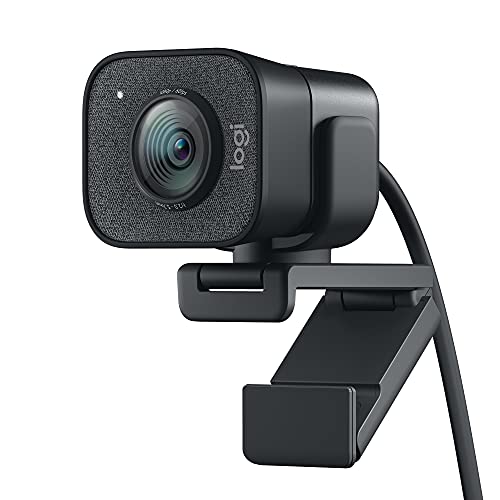
- Full HD 1080p at 60fps for sharp, smooth video with natural motion
- Premium glass lens with smart auto-focus and AI face tracking
- USB-C connection with portrait and landscape mode support
What I appreciate about the StreamCam is how little setup it requires. You plug it in, open OBS or your streaming app, and the image just looks good. Colors are accurate out of the box, autofocus is fast without hunting, and the smart exposure adjusts without turning your face into a washed-out blob. The dual front-facing mics are decent enough for casual streams, though you’ll still want a proper mic for anything professional.
The one catch: it’s USB-C only. If your PC doesn’t have a USB-C port, you’ll need an adapter or hub. It’s also capped at 1080p, so if you’re chasing 4K for YouTube recordings, look further down this list. But for pure streaming? This is the best balance of price, quality, and ease of use you’ll find in 2026.
I recommend the StreamCam for streamers who want a plug-and-play experience without sacrificing video quality. If you’re just starting out or upgrading from a laptop webcam, start here.
Elgato Facecam MK.2
Elgato built the Facecam MK.2 for streamers who want control over every aspect of their image. This isn’t a webcam you plug in and forget. It’s one you dial in, tweak, and get exactly the look you want. The Sony STARVIS sensor delivers DSLR-like clarity at 1080p 60fps, and since it outputs an uncompressed video feed, your OBS scenes look noticeably cleaner.

Elgato Facecam MK.2, Premium Full HD Webcam with PTZ Control, Sony STARVIS Sensor, 1080p60
- Professional-grade 1080p60 with Sony STARVIS sensor for lifelike visuals
- HDR-enabled for stunning clarity in high-contrast lighting setups
- Uncompressed video feed with no artifacts, perfect for OBS and streaming apps
The Elgato Camera Hub software is where this webcam shines. You can manually adjust ISO, shutter speed, white balance, saturation, and contrast. Once you nail your settings, they’re saved to the camera itself, not the software. So if you move to a different PC, your look stays consistent. That’s a detail most webcam makers overlook.
There’s no built-in mic, and that’s intentional. Elgato assumes you’re using a dedicated mic, and if you’re streaming seriously, you should be. The HDR mode handles tricky lighting situations well, especially when you’ve got a bright window behind you or strong backlighting from an LED panel.
The tradeoff? It’s pricier than the StreamCam and requires more hands-on tweaking. If you want a set-it-and-forget-it webcam, this isn’t it. But if you care about having the cleanest possible feed in OBS, the Facecam MK.2 is hard to beat at this price. This bundle includes the Stream Deck Mini, which is a nice bonus if you don’t already have one.
Razer Kiyo Pro Ultra 4K
The Razer Kiyo Pro Ultra is the webcam I’d pick if I streamed in a room with terrible lighting and didn’t want to buy a separate light setup. The 1/1.2-inch Sony STARVIS 2 sensor is massive for a webcam, and it pulls in enough light to make dim rooms look decent without cranking up ISO and introducing noise.

- DSLR-like 4K quality with 1/1.2" Sony STARVIS 2 sensor and 2.9um pixel size
- Custom F/1.7 aperture lens for clarity in any lighting condition
- Built-in physical privacy shutter and noise-reducing microphone
This is a true 4K webcam. Not the “4K upscaled” kind you see from budget brands, but genuine 4K output with a sensor that can actually support it. The F/1.7 aperture is wider than what most webcams offer, which means more light hits the sensor and your face doesn’t turn into a dark silhouette when the overhead light goes out. HDR mode balances highlights and shadows well, especially if you have a window behind you.
It also has a physical privacy shutter, which I appreciate. No tape-over-the-lens nonsense. The built-in mic is surprisingly usable for a webcam at this level, though I’d still pair it with a dedicated mic for streaming. The Razer Synapse software lets you tweak brightness, contrast, saturation, and white balance manually.
At $299.99, it’s the most expensive webcam on this list. But if you stream in challenging lighting or want 4K recording for YouTube content alongside your streams, the Kiyo Pro Ultra justifies the price. Just make sure your PC can handle 4K capture without dropping frames.
Logitech MX Brio
The MX Brio is Logitech’s answer for creators who want 4K but also need a webcam that works flawlessly for video calls, presentations, and screen recordings. It’s a hybrid webcam, equally at home on a Twitch stream and a Teams meeting. If you work from home and stream on the side, this is probably the most versatile option here.

Logitech MX Brio Ultra HD 4K Webcam, 1080p at 60fps, Dual Noise Reducing Mics, Show Mode, USB-C
- Ultra HD 4K at 30fps or 1080p at 60fps with 70% larger sensor for better light
- AI-enhanced image quality with RightLight 3 for 2x better face visibility in difficult light
- Dual noise-reducing microphones with Show Mode for overhead desk view
Logitech’s RightLight 3 technology does an impressive job of balancing your face exposure against whatever is happening in the background. I’ve used it in rooms with a bright window directly behind me and it handled the contrast without washing out my skin. The 70% larger sensor compared to their previous models means noticeably better low-light performance too.
The Show Mode feature is particularly useful if you do unboxing streams, art creation, or any content where you need to show what’s on your desk. You tilt the camera down and it automatically adjusts focus and exposure for a top-down view. The dual noise-reducing mics are above average for a webcam, good enough for quick recordings but not a replacement for a proper streaming mic.
At $199.99, it sits right between the StreamCam and the Razer Kiyo Pro Ultra. The tradeoff is that 4K at 30fps isn’t as smooth as 1080p at 60fps for streaming. If your audience mostly watches on mobile or in a small face-cam overlay, 1080p60 will look better. But if you record standalone YouTube videos too, the 4K option is a nice bonus. It also supports Windows Hello for face unlock, which is a small perk that adds up over time.
Insta360 Link 2
The Insta360 Link 2 is the most impressive webcam I’ve seen from a pure technology standpoint. It sits on a 3-axis gimbal that physically tracks your face and follows you as you move around the room. This isn’t software-based digital cropping. The camera itself rotates. If you’re the type of streamer who stands up, moves to a whiteboard, or walks around during streams, nothing else on this list can keep up with you.

- 1/2" sensor with true-to-life 4K HDR visuals and balanced color reproduction
- AI noise-canceling microphone that filters background noise in real time
- 3-axis gimbal with AI tracking, gesture control, whiteboard and desk modes
The 1/2-inch sensor produces clean 4K HDR footage with balanced colors. Gesture control is a neat trick: you can raise your palm to zoom in or use a peace sign to trigger specific actions. It sounds gimmicky until you actually use it during a live stream and realize you didn’t have to touch your mouse or keyboard to reframe the shot.
Whiteboard mode is excellent for educators and tutorial creators. Point it at your whiteboard and it automatically corrects the perspective and enhances readability. Desk mode does the same for overhead shots. The AI noise-canceling mic filters out keyboard clicks and background chatter better than most webcam mics I’ve tested.
At $197.99, it’s actually competitive with the MX Brio while offering significantly more functionality. If you want a budget-friendly alternative with the same 1/2-inch sensor but without the gimbal, the Insta360 Link 2C is available at $149.99 and uses software-based auto-framing instead.

Insta360 Link 2C, 4K Webcam, 1/2" Sensor, Auto Framing, HDR, AI Noise-Canceling Mic, Gesture Control
- Same 1/2" sensor as the Link 2 with 4K HDR and balanced color output
- Software-based auto framing instead of gimbal, still accurate and smooth
- AI noise-canceling mic with gesture control and desk view mode
10 More Webcams Worth Considering
The five webcams above are my top picks, but they’re not the only options. Here are 10 more that I think are solid choices depending on your budget and what you need.
| Webcam | Best For | Notable Feature |
|---|---|---|
| AnkerWork C300 | Remote workers who also stream | Crystal-clear autofocus with dual mics |
| Nexigo N930AF | Budget streamers under $50 | Reliable autofocus at an unbeatable price |
| AVerMedia PW513 | 4K content creators | True 4K with wide field of view |
| Logitech C920s | Beginners and casual streamers | The industry standard that still holds up |
| Microsoft LifeCam Studio | Teams and casual use | Solid performer for basic streaming needs |
| Razer Kiyo | Streamers who need built-in lighting | Ring light built into the webcam body |
| Dell UltraSharp 4K | Professional video calls with streaming | Excellent noise reduction and clarity |
| Obsbot Tiny 4K | Budget AI tracking alternative | Gimbal tracking similar to Insta360 Link |
| EMEET SmartCam C960 | Entry-level streaming | Surprisingly good for under $40 |
| Spedal AF962 | Absolute budget pick | Solid performer under $30 |
Every webcam on this list is stream-ready. They won’t match the top 5 in image quality or features, but if you’re starting out or streaming on a tight budget, any of these will be a massive upgrade over your laptop’s built-in camera. The Logitech C920s and EMEET C960 are particularly good value picks that I’ve recommended to dozens of clients building their first content creation setup.
Which Webcam Should You Actually Buy?
I’ve recommended webcams to streamers, YouTubers, remote workers, and educators. Here’s how I’d break it down based on what you actually need.
- Best overall for streaming: Logitech StreamCam. It’s the safest choice. 1080p60, plug-and-play, reliable color and focus. Hard to go wrong.
- Best for pro streamers: Elgato Facecam MK.2. If you want full manual control and the cleanest uncompressed feed possible, this is it.
- Best for low-light setups: Razer Kiyo Pro Ultra. That massive sensor handles dim rooms better than anything else at this price.
- Best for hybrid creators: Logitech MX Brio. Works great for both streaming and professional video calls, with 4K recording for YouTube.
- Best for movement-heavy streams: Insta360 Link 2. The gimbal tracking is genuinely impressive and nothing else matches it.
- Best budget pick: Insta360 Link 2C or Nexigo N930AF. The Link 2C gives you 4K and a great sensor for $149.99. The Nexigo is unbeatable under $50.
If you’re not sure, start with the StreamCam. It handles 90% of streaming scenarios well and you can always upgrade later when you know exactly what you need. A good monitor and proper lighting will make more of a difference than jumping from a $140 webcam to a $300 one.
Tips to Improve Your Webcam Quality
The webcam is only part of the equation. I’ve seen $300 webcams look terrible because the lighting and positioning were wrong. Here’s what actually moves the needle.
- Invest in lighting first. A $30 key light will improve your video quality more than spending an extra $100 on a better webcam. Soft, front-facing light is the single biggest upgrade you can make. This applies to any home office setup too.
- Position the webcam at eye level. Mount it on top of your monitor, not below it. Nobody looks good when the camera is pointing up at their chin and nostrils.
- Use OBS or your webcam’s companion app to tweak settings. Don’t rely on auto settings. Manually set your white balance, exposure, and saturation. Spend 10 minutes getting it right, and every stream after that looks professional.
- Use a dedicated mic. Even the best webcam mics can’t compete with a proper USB or XLR microphone. If you’re streaming, your audio quality matters more than your video quality. People will watch a slightly grainy stream with great audio. Nobody sticks around for crystal-clear video with terrible sound.
- Run test recordings. Before every stream, record a 30-second clip and watch it back. Check your framing, lighting, and audio levels. It takes less than a minute and prevents that awful moment when someone in chat tells you your webcam looks washed out.
- Mind your background. A cluttered background is distracting. You don’t need a fancy setup, just a clean wall or a simple bookshelf. If you can’t clean up the space, use a slight blur effect in OBS.
Audio Gear to Match Your Webcam Quality
I’ve seen streamers spend $300 on a webcam and use their laptop’s built-in mic. That’s like buying a Ferrari and putting bicycle tires on it. Your audio quality matters more than your video quality for viewer retention.
The Logitech G Pro X SE headset at $69 gives you studio-quality mic audio with Blue VO!CE technology. If you want something visible on camera (many viewers like seeing the headset), the Logitech G335 is lightweight enough for 6-hour streams. For the full streaming setup, check my guide on starting a gaming blog.

- PC gaming headset with detachable 6mm microphone featuring real time Blue Voice technology, including noise reducer, compressor, and more for cleaner, pro-grade sounding voice comms*
- USB gaming headset with 7.1 and object-based surround sound for greater in-game positional, distance, and object awareness during gameplay*
- Built to last with a durable aluminum fork and steel headband and soft memory foam ear-pads with leatherette for all-day comfort
- PRO-G 50 mm drivers deliver clear and precise sound imaging with improved bass response; Hear footsteps and environmental cues with clarity to give you the competitive advantage in games
- USB external sound card with EQ profile storage delivers tournament-level game sound and voice comms; Save EQ settings to onboard memory with Logitech G HUB*
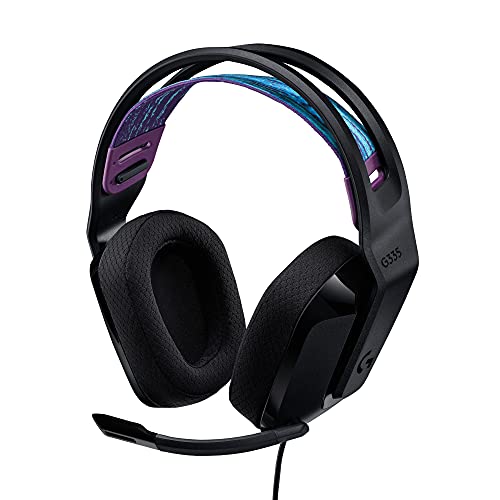
- Lightweight Design: Weighing in at only 8.5 oz (240 g), G335 is smaller and lighter than the G733, features a suspension headband to help distribute weight and is adjustable for a customized fit.
- All-day Comfort: Soft memory foam ear pads and sports mesh material are comfortable for extended use so you can take your gaming to the next level in style and comfort.
- Plug and Play: Quickly jump into your game and simply connect with the 3.5 mm audio jack; these colorful headphones are compatible with PC, laptop, gaming consoles, and select mobile devices.
- Headset Controls: The volume roller is located directly on the ear cup to quickly turn up your game or music, while the mic can be easily flipped up to mute and move it out of the way.
- Impressive Sound: With 40 mm neodymium drivers, the G335 computer gaming headset delivers crisp, clear stereo sound that makes your game come alive.
Frequently Asked Questions
What’s the best webcam for Twitch streaming in 2026?
The Logitech StreamCam is the best all-around webcam for Twitch streaming. It delivers 1080p at 60fps with accurate colors and fast autofocus. If you want more manual control, the Elgato Facecam MK.2 is the better choice for experienced streamers who fine-tune their settings.
Is a 4K webcam worth it for streaming?
For streaming alone, not really. Most platforms compress video to 1080p anyway, and 4K at 30fps looks less smooth than 1080p at 60fps. However, if you also record YouTube videos or want to future-proof your setup, a 4K webcam like the Logitech MX Brio or Razer Kiyo Pro Ultra gives you flexibility.
Do I need a separate microphone if my webcam has one built in?
Yes, if you’re serious about streaming. Built-in webcam mics pick up keyboard noise, room echo, and background sounds that a dedicated USB or XLR mic handles much better. Your audio quality matters more than video quality to viewers. The Elgato Facecam MK.2 skips the built-in mic entirely for this reason.
What webcam works best in low-light conditions?
The Razer Kiyo Pro Ultra has the best low-light performance thanks to its large 1/1.2-inch Sony STARVIS 2 sensor and F/1.7 aperture. It captures more light than any other webcam on this list. The Insta360 Link 2 with its 1/2-inch sensor is a close second.
What’s the difference between 30fps and 60fps for streaming?
30fps looks fine for talking-head content, but 60fps is noticeably smoother when you move your hands, shift in your chair, or react to gameplay. Most Twitch streamers prefer 60fps because it feels more natural and fluid. If your webcam supports both, always choose 1080p60 over 4K30 for live streaming.
Can I use my phone as a webcam instead?
You can, and modern phones actually have excellent cameras. Apps like Camo and EpocCam let you use your phone as a webcam. The quality can rival or even beat dedicated webcams. The downside is your phone is tied up during the stream, it can overheat during long sessions, and mounting it properly takes some effort.
How much should I spend on a streaming webcam?
$100 to $200 gets you a great webcam for streaming. The Logitech StreamCam at $139.99 and the Insta360 Link 2C at $149.99 are both excellent in this range. Going above $200 makes sense only if you need 4K recording, advanced low-light performance, or AI tracking features. Anything under $50 will still be a big upgrade from a laptop cam.
Does lighting matter more than the webcam itself?
Absolutely. A $50 webcam with proper lighting will outperform a $300 webcam in a dark room every time. Soft, front-facing light (a ring light or key light) eliminates shadows and gives your webcam the best possible image to work with. Fix your lighting first, then invest in a better webcam.
Final Take
A good webcam is the fastest way to look more professional on camera. Whether you’re streaming to 5 viewers or 5,000, the difference between a built-in laptop cam and a proper streaming webcam is immediately obvious. Your viewers notice. Your content looks better. And you feel more confident going live.
If I had to pick just one, it’s the Logitech StreamCam. It does everything well, costs less than $140, and requires zero tinkering. For most streamers, that’s all you need. If you want more control, go Elgato. If you want the best low-light performance, go Razer. And if you want the camera to literally follow you around the room, the Insta360 Link 2 is in a category of its own.
Whatever you choose, pair it with decent lighting and a proper mic. Those three things together, a webcam, a light, and a microphone, are the foundation of every good streaming setup. Get those right and you’re ahead of 90% of streamers out there.