
The Best Books on Cryptography
Most lists of cryptography books are lazy. They dump a few famous titles, add Amazon links, and leave you to figure out whether the book is meant for a curious beginner, a math student, or someone building real systems.
That is a good way to waste money. A lot of cryptography books are excellent, but many are also dense, dated, or aimed at a reader who is not you. If you pick the wrong one first, you will think the subject is harder than it needs to be.
I got pulled into cryptography around 2011 while reading a number theory textbook. A small chapter on ciphers and modular arithmetic was enough to send me down the rabbit hole. Since then, I have kept coming back to the subject from two angles: the math behind it, and the practical question of how people actually use it in software, security, and networks.
So this is the list I wish I had earlier. Not just famous cryptography books, but what each one is actually good for, how much math it expects from you, and where it starts to get painful.

If you are brand new, do not start with the heaviest book on this list just because it is famous. Start with the book that matches your current level. You can always work upward.
Never implement your own cryptographic algorithm in production. Use established libraries like OpenSSL or libsodium. These books are here to help you understand the subject and make better decisions, not to turn you into someone who writes a homegrown cipher over a weekend.
The Best Books on Cryptography
If you are in a hurry, start here. These are the books I would actually sort into different reader types instead of pretending one title fits everybody.
- Understanding Cryptography for your first serious textbook without getting buried in theory.
- Cryptography Engineering for developers and security engineers who want practical judgment.
- Introduction to Modern Cryptography for a proper modern theory foundation.
- An Introduction to Mathematical Cryptography for math students who want the algebra and number theory side.
- Applied Cryptography for historical perspective and protocol intuition, with the caveat that parts of it are dated.
- Handbook of Applied Cryptography for a free reference you keep returning to.
- Real-World Cryptography for modern applied systems and why crypto fails in production.
- A Graduate Course in Applied Cryptography for a free advanced course-level text.
- The Mathematics of Secrets for readers who want intuition and history without a wall of formalism.
- The Code Book for the history and story of cryptography.
- Cryptography: The Key to Digital Security for a broad non-mathy overview of why crypto matters now.
- Cryptography and Network Security for exam prep and classic network-security coverage.
How to Pick the Right Cryptography Book
The right cryptography book depends less on the subject and more on your entry point. Some books are written for mathematicians. Some are written for computer science students. Some are written for engineers who need to stop making dangerous design choices. And some are written for curious readers who want the story before the proofs.
| Book | Best for | Math load | Reading style | Main caveat |
|---|---|---|---|---|
| Understanding Cryptography | Beginners and undergraduate CS students | Low to medium | Textbook with clear examples | Less proof-heavy than theory texts |
| Cryptography Engineering | Developers and practitioners | Low to medium | Practical and direct | Not a full theory course |
| Introduction to Modern Cryptography | Serious theory students | High | Formal and rigorous | Not beginner-friendly |
| An Introduction to Mathematical Cryptography | Math majors | High | Algebra and number theory heavy | Can feel abstract early |
| Applied Cryptography | Readers who want the classic | Medium | Wide-ranging reference style | Parts are dated |
| The Code Book | General readers | Low | Narrative and historical | Not a technical course |
My simple rule is this: if you are still learning what a block cipher, hash, digital signature, and public key system are, start with an accessible textbook. If you already know the vocabulary and want modern security thinking, move toward engineering and formal texts. If you love proofs, number theory, and algebra, take the mathematical route and enjoy it. That is the fun part.
Detailed Notes on Each Cryptography Book
This is where the list gets useful. I am not just naming the books. I am telling you what each one actually gives you, where it feels strong, and where it can frustrate you.
1. Understanding Cryptography by Christof Paar and Jan Pelzl
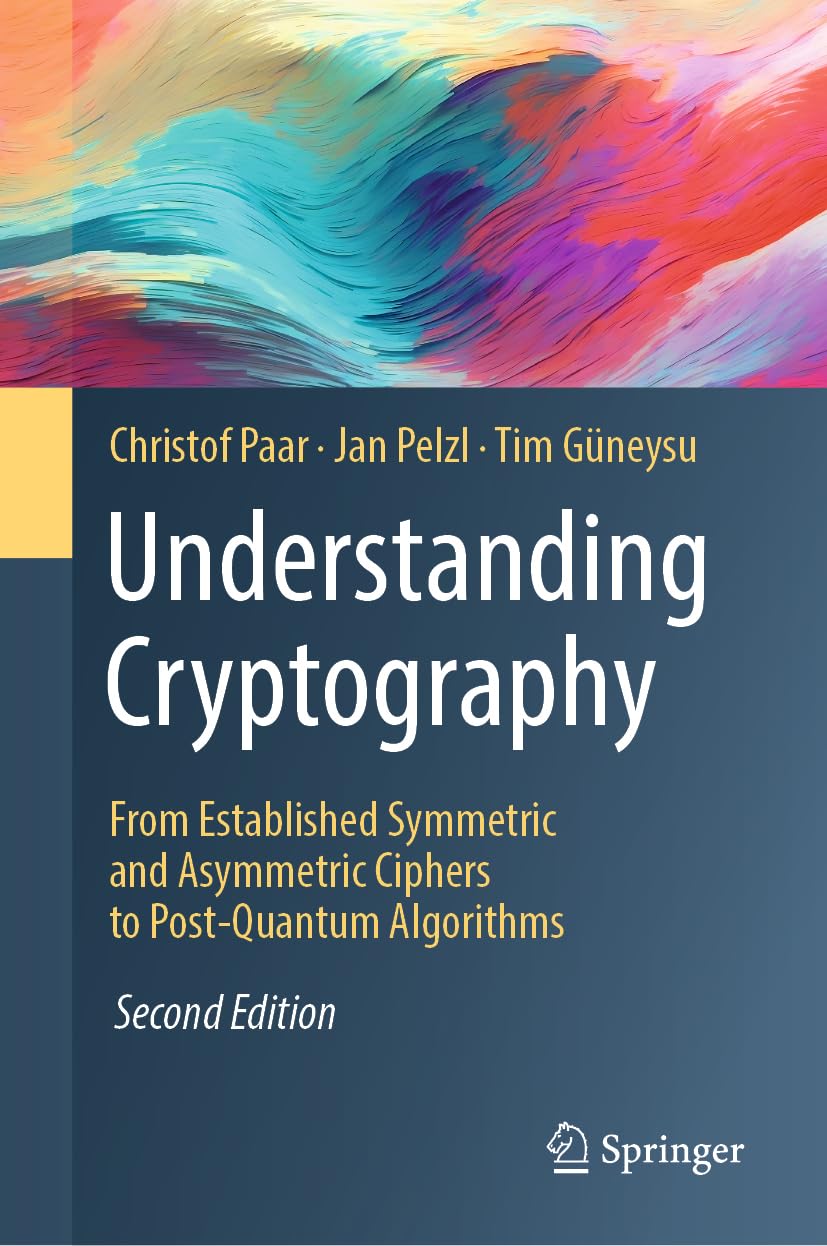
- By Christof Paar and Jan Pelzl, textbook for students
- Companion video lectures freely available online
- Covers stream ciphers, block ciphers, and public key crypto
- Best for undergraduates and self-study practitioners
- Clear explanations with worked examples and exercises
- Balanced between mathematical rigor and practical application
Best for: beginners, undergraduate computer science students, and anyone who wants a first real textbook that does not feel hostile.
This is the book I would hand to most people first. It explains the core ideas well, keeps the examples grounded, and does a better job than many older books at making the subject feel teachable. You get symmetric cryptography, asymmetric cryptography, block ciphers, hash functions, authentication, and real-world design ideas without getting smashed by formal proofs on page one.
What I like is the pacing. The authors do not assume you are already comfortable with abstract algebra or provable security language. They build intuition first. That matters because cryptography gets weird fast. If your first book cannot keep the basic mental model clear, you start memorizing words without actually understanding what is happening.
The limitation is that it is still a textbook. You will not get the same depth of formal treatment you get from Katz and Lindell, and you will not get the same practitioner warnings you get from Cryptography Engineering. But as a first serious book, it is hard to beat. If you buy only one starter text, this is my pick. The official publisher page is on Springer. The older math book lists I have written follow the same rule: start with the clearest teacher, not the most famous author.
2. Cryptography Engineering by Niels Ferguson, Bruce Schneier, and Tadayoshi Kohno
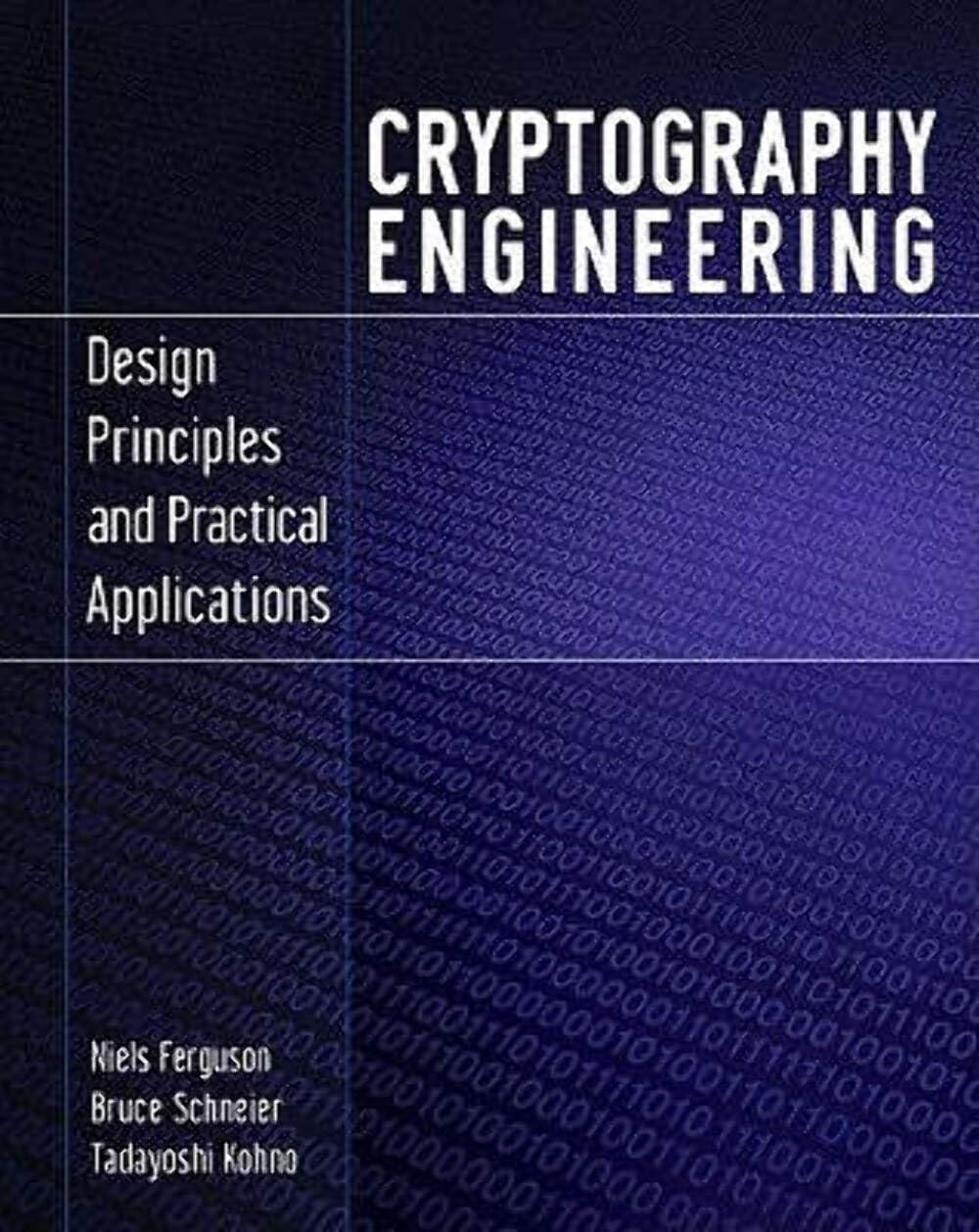
- By Ferguson, Schneier, and Kohno, practical engineering focus
- Schneier's recommended successor to Applied Cryptography
- Covers designing and implementing cryptographic systems
- Best for software developers building secure applications
- Real-world implementation pitfalls and how to avoid them
- Covers block ciphers, hash functions, and key management
Best for: software engineers, security engineers, and developers who need good judgment more than formal theorem-proving.
This is one of the most useful practical books in the field. It is not trying to make you a cryptographer in the academic sense. It is trying to stop you from building something unsafe because you misunderstood what crypto can and cannot do. That is a big difference.
The book covers primitives, protocols, implementation choices, randomness, key management, and the ugly production details that break otherwise elegant systems. That is why I rate it so highly. A lot of crypto failures are not caused by weak mathematics. They are caused by bad integration, bad assumptions, bad entropy, or developers trying to invent a protocol because the standard one looked boring.
If you already write code, this book will probably teach you more useful caution than a purely mathematical text. Its main weakness is that it is not the place to learn provable security from scratch. It is a practical book, not a theory-first course. But that is fine. Most people who touch cryptography in real projects need exactly this kind of restraint. The official book page is on Schneier’s site.
3. Introduction to Modern Cryptography by Jonathan Katz and Yehuda Lindell
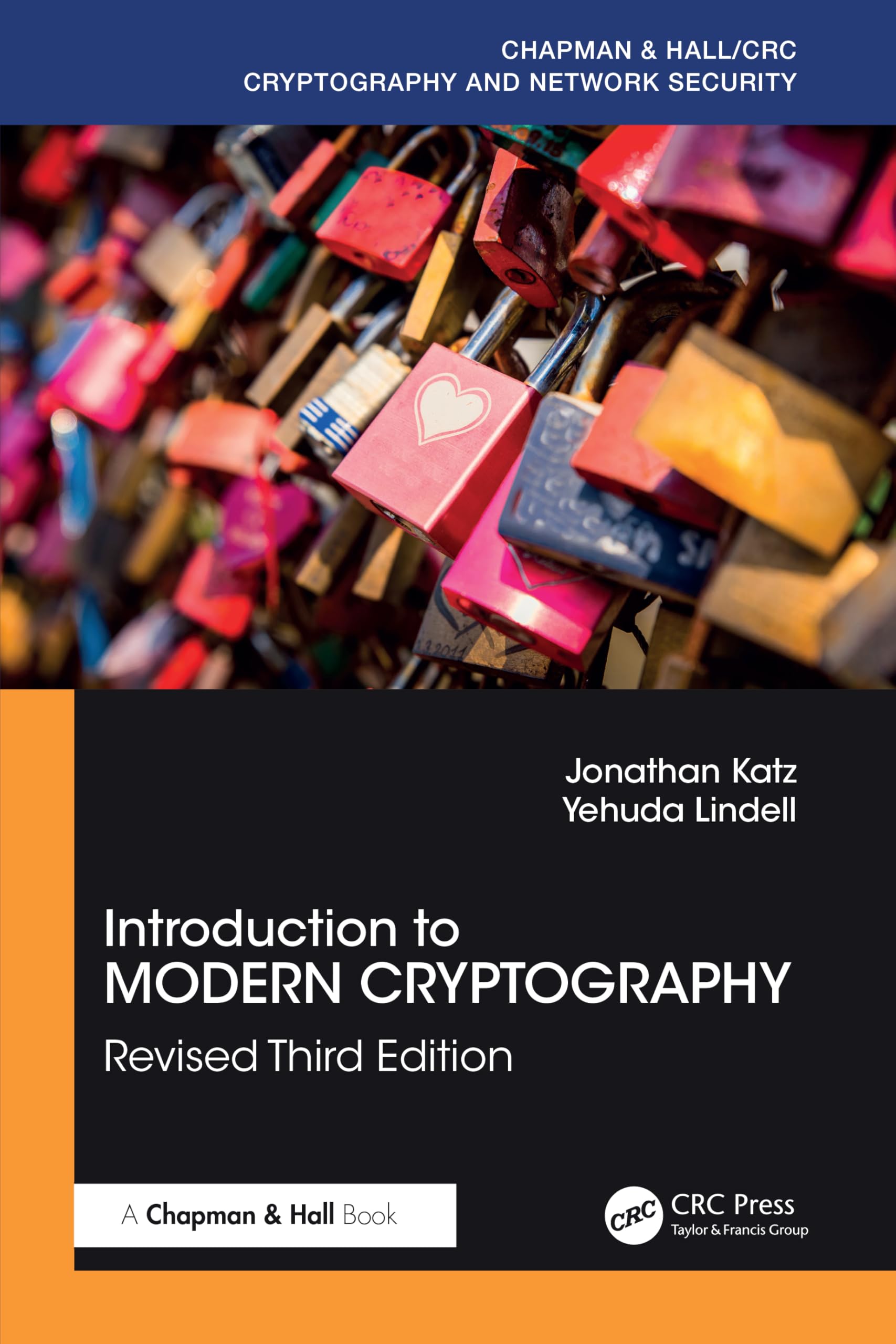
Introduction to Modern Cryptography
- By J. Katz and Y. Lindell, rigorous theoretical approach
- Free PDF available alongside latest paid edition on Amazon
- Covers provable security and formal definitions
- Best for CS graduate students studying theoretical cryptography
- Bridges gap between theory and practice with formal proofs
- Updated edition covers modern post-quantum considerations
Best for: readers who want the modern theoretical foundation and are ready to work for it.
If you want the book that moves from “cryptography is a bag of techniques” to “cryptography is a mathematically defined security discipline,” this is it. Katz and Lindell are serious about definitions, models, assumptions, and proofs. That is exactly why the book has such a strong reputation in university courses.
The big benefit here is rigor. You stop thinking about encryption as a vague tool and start understanding security notions precisely. Semantic security, chosen-plaintext attacks, chosen-ciphertext attacks, pseudorandomness, zero-knowledge, and protocol design start fitting into a formal map. Once you see that map, many loose internet explanations start looking sloppy.
The catch is obvious. This is not where I would send a total beginner. If you have never worked seriously with proofs, probability, and discrete structures, the book can feel cold. Still, if you want the right kind of intellectual discipline, it is one of the best texts available. The latest editions are published by Routledge.
4. An Introduction to Mathematical Cryptography by Jeffrey Hoffstein, Jill Pipher, and Joseph H. Silverman
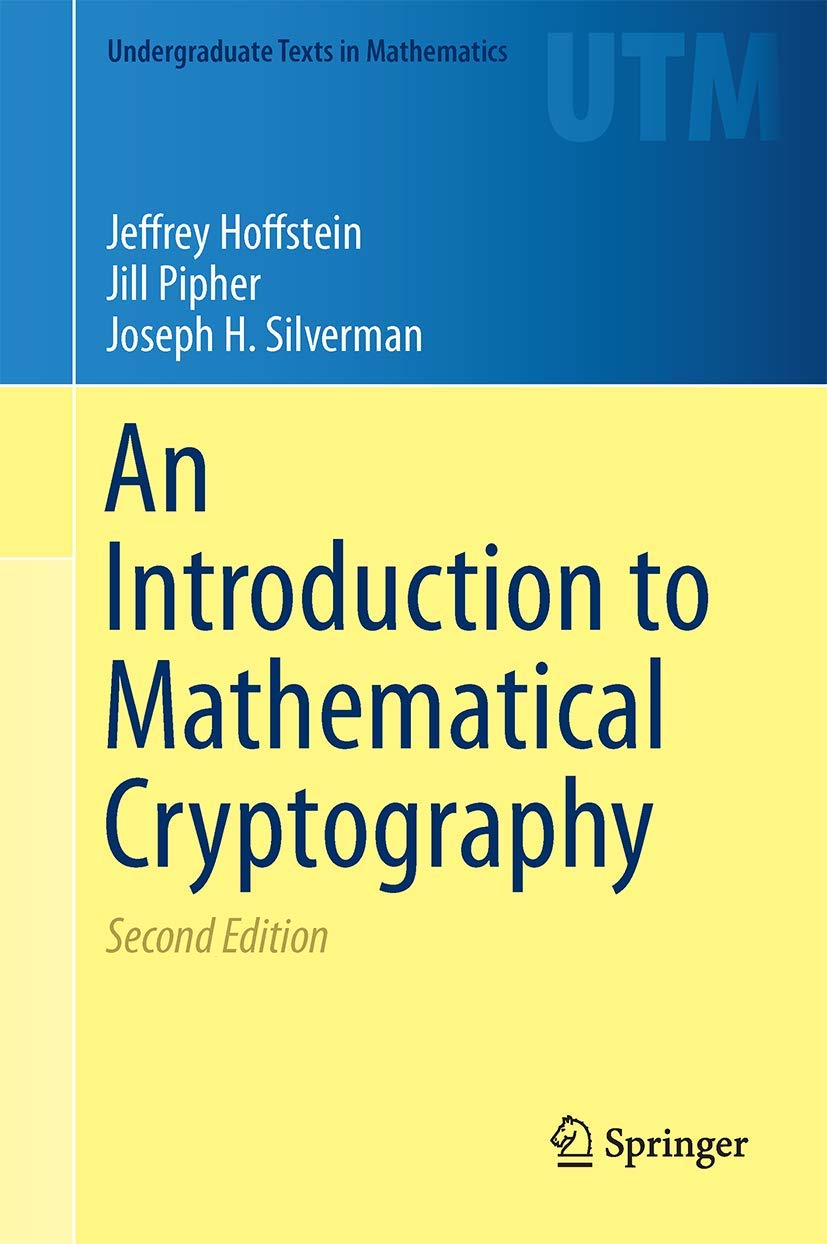
An Introduction to Mathematical Cryptography
- By Hoffstein, Pipher, and Silverman
- Strong mathematical foundation with number theory focus
- Covers elliptic curves, lattices, and algebraic structures
- Best for math students interested in cryptographic applications
- Includes exercises bridging abstract math to real protocols
- Covers both classical and modern cryptographic techniques
Best for: math majors and readers who enjoy number theory, algebra, and the structure behind modern systems.
This is where the mathematical side becomes the point, not just background material. If you like modular arithmetic, finite fields, elliptic curves, lattices, and the kind of reasoning that makes abstract mathematics feel useful, this book is a joy. It shows how the machinery underneath cryptography actually works.
What makes it valuable is that it does not treat the math as decoration. It treats the math as the engine. That is exactly why I like it. You see how ideas from number theory and algebra feed directly into public-key systems, signatures, and computational hardness assumptions. If you already enjoy subjects like the ones behind my post on numbers in mathematics, this book feels like a natural next step.
The downside is also obvious. Readers who want a gentle practical guide may bounce off it. It asks more from you. But if your brain lights up when the math finally matters, it is one of the most satisfying books on this list. Springer publishes it here: An Introduction to Mathematical Cryptography.
5. Applied Cryptography by Bruce Schneier
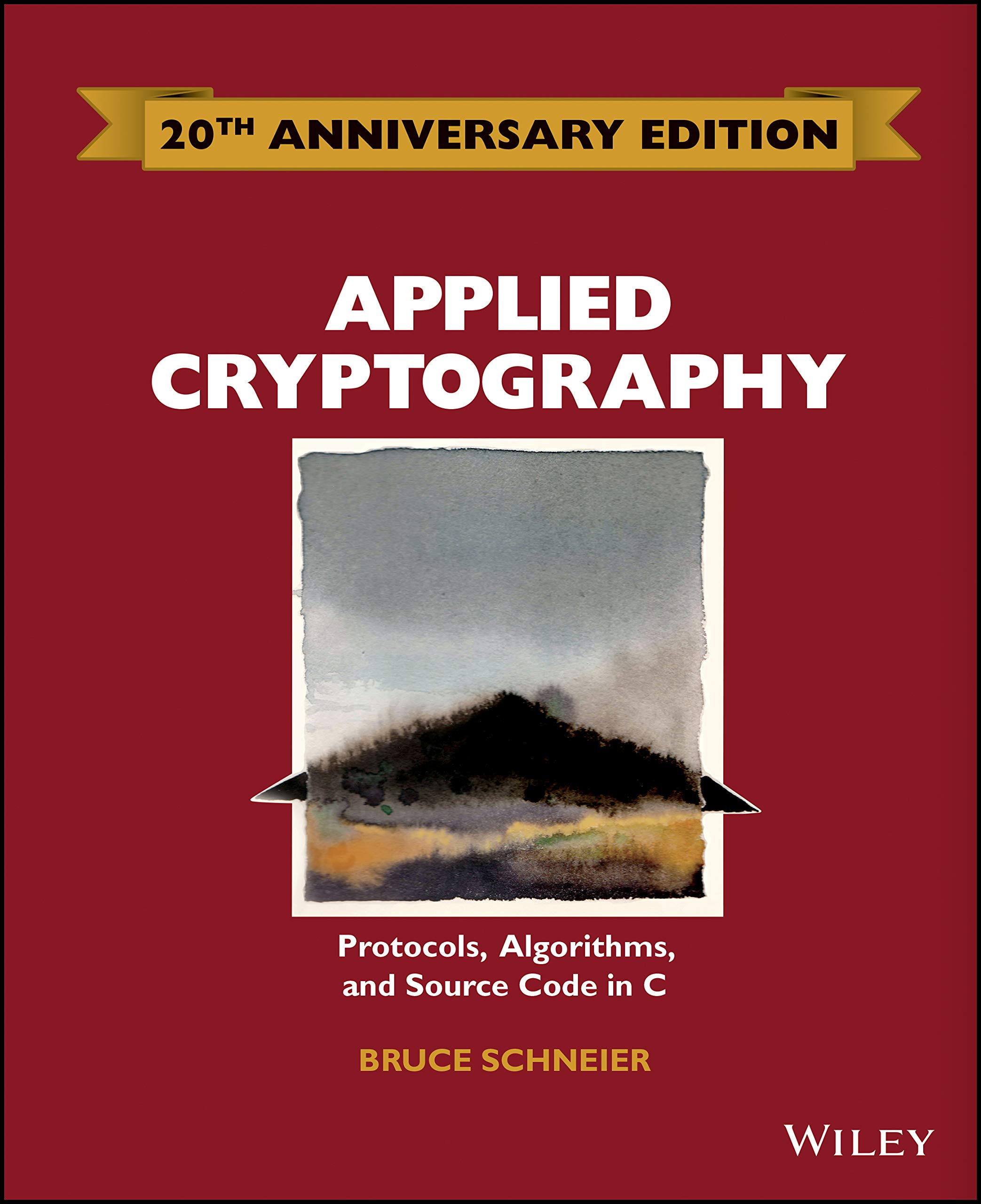
- By Bruce Schneier, 2nd Edition, 784 pages
- Covers protocols, algorithms, and source code in C
- Comprehensive reference spanning symmetric and asymmetric crypto
- Best for developers needing practical implementation knowledge
- Widely considered the definitive applied cryptography textbook
- Includes detailed protocol analysis and real-world applications
Best for: readers who want the classic, plus a broad view of protocols and historical crypto thinking.
This book is still famous for a reason. It helped shape how many developers and security people first encountered the field. It is broad, ambitious, and packed with protocols, algorithms, and implementation-era perspective. If you want to understand why Schneier became such an important voice in applied security, reading this book helps.
But I would not pretend it is the best first buy for everybody in 2026. Parts of it are dated. That does not make it useless. It means you should read it as a classic and a reference, not as your only modern guide to secure design. Some algorithms and recommendations belong to a different era of practice.
I still like it because it teaches range. You see how large the cryptographic toolbox is, how protocol design evolved, and why implementation details matter. Read it with a modern companion, not in isolation. The official book page is on Schneier’s site.
If you are choosing between Applied Cryptography and Cryptography Engineering, pick the second one first unless you specifically want the classic historical text.
6. Handbook of Applied Cryptography by Alfred Menezes, Paul van Oorschot, and Scott Vanstone
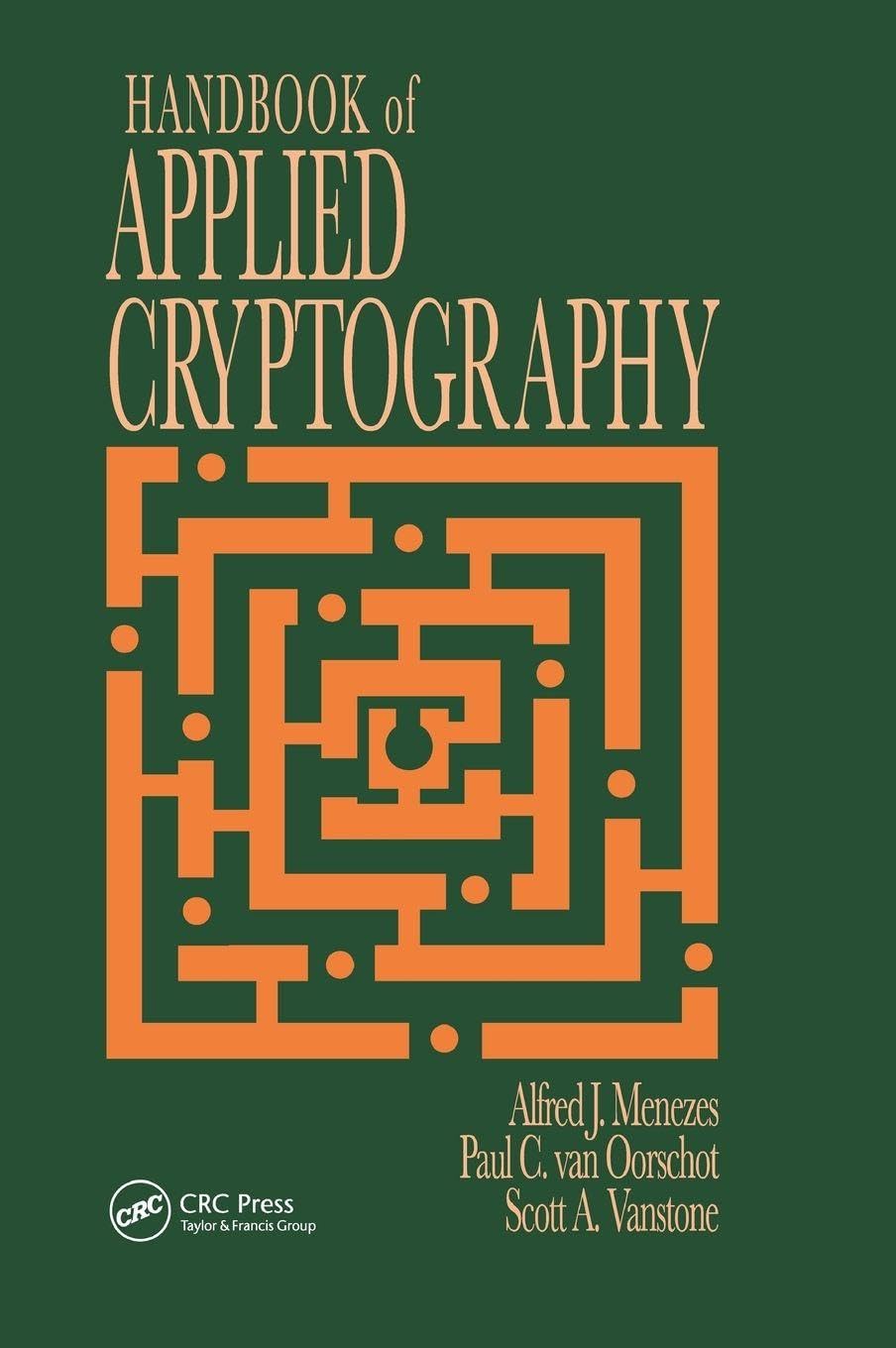
Handbook of Applied Cryptography
- By Menezes, van Oorschot, and Vanstone
- Free ebook available from University of Waterloo
- Comprehensive mathematical treatment of cryptographic algorithms
- Covers number theory, public key, and hash function foundations
- Best for graduate students and academic researchers
- Standard reference used in university cryptography courses
Best for: students and practitioners who want a free reference they can keep nearby for years.
This book is not a casual read. It is a serious reference, and that is why it is so valuable. The University of Waterloo hosts it freely, which already makes it one of the best resources on the list if budget matters. It covers a huge amount of ground, from number-theoretic basics to protocols and implementation concerns.
What I like most is its staying power. You do not necessarily read it front to back with pleasure. You return to it when you need details, structure, and authoritative exposition. For students, that makes it a strong companion even if another book is your main textbook. For self-learners, it works well once you have a basic map of the subject.
The only real drawback is readability. It is a handbook first. If you are still learning the vocabulary, start with something friendlier and then come here. The free official edition is available at the University of Waterloo site.
7. Real-World Cryptography by David Wong
Best for: engineers who want a modern bridge between cryptographic theory and production systems.
This is one of the newer books I would add to the old article without hesitation. David Wong writes from the angle I wish more security books used: what actually happens when cryptography meets APIs, protocols, mobile apps, browsers, certificate systems, and modern engineering constraints. It feels current in a way many classics do not.
The strength of this book is practical relevance. It explains primitives, but it does not stop there. It spends time on protocols, TLS, key exchange, signatures, implementation mistakes, and the way entire systems fail when developers treat crypto as a magic box. That makes it valuable for people who build real software and need modern context, not just classroom knowledge.
I would not use it as my only foundational textbook if I were starting from zero. It lands better once you already know the language. But as a modern applied book, it earns a place on this list fast. Manning publishes it here: Real-World Cryptography.
8. A Graduate Course in Applied Cryptography by Dan Boneh and Victor Shoup
Best for: advanced learners who want a free graduate-level text with serious depth.
If you are ready for graduate-level material and want something modern, free, and substantial, this is one of the best resources available. Boneh and Shoup cover a large amount of contemporary material with a level of clarity that is impressive given the difficulty of the subject.
What makes it useful is the combination of scope and authority. You get modern public-key cryptography, signatures, advanced protocols, zero-knowledge ideas, and more, all from authors who know the area deeply. It is the kind of book you can study seriously over time rather than skim once and shelve.
The catch is simple. This is not a beginner text. If you jump here too early, you will confuse pain with progress. Build some base first. Then use this book when you want to climb. The official free version is at Stanford’s cryptography book page.
9. The Mathematics of Secrets by Joshua Holden
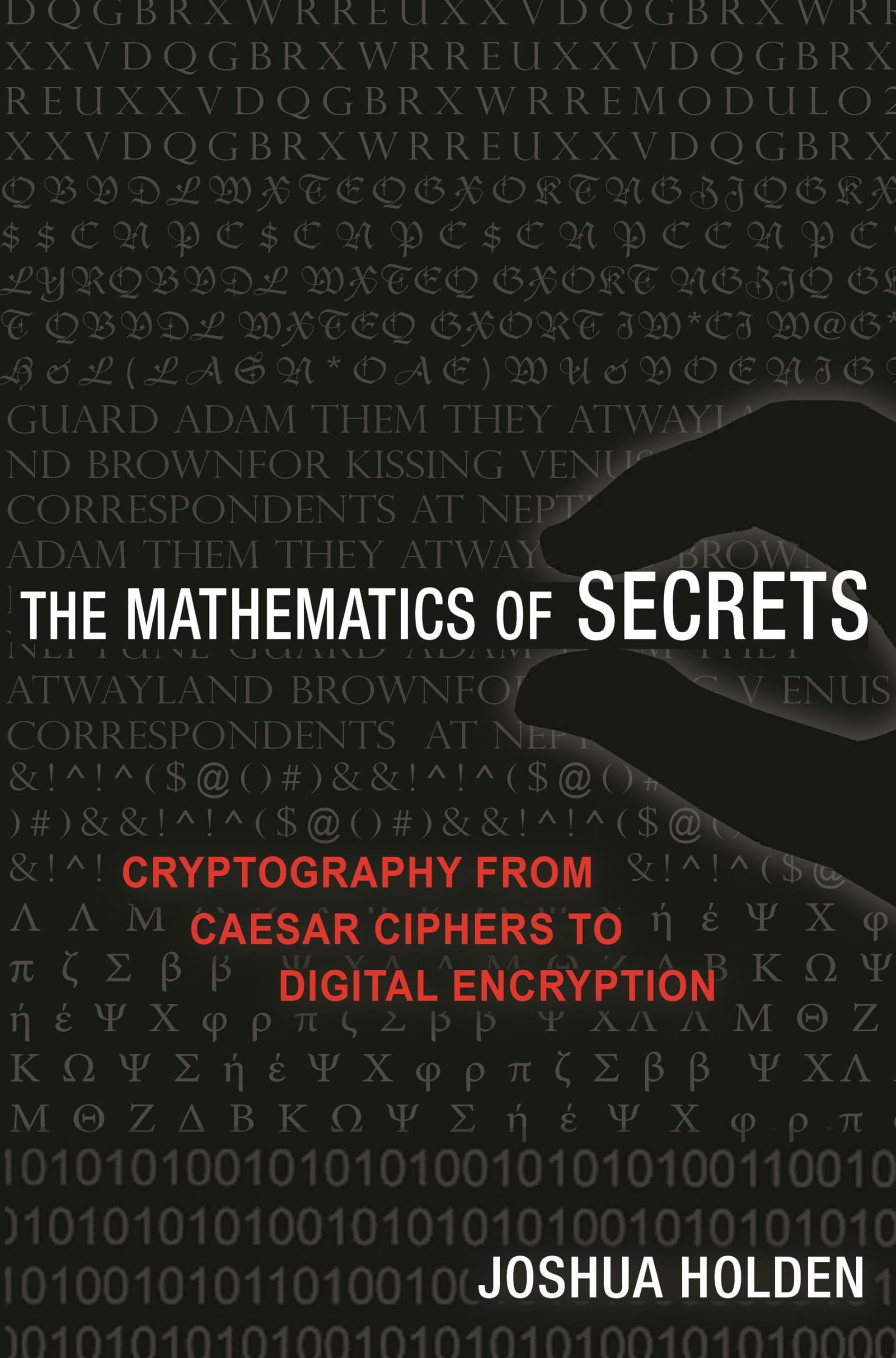
- By Joshua Holden, math-centric historical approach
- Traces cryptography from Caesar ciphers to digital encryption
- Covers the mathematical foundations behind each crypto era
- Best for math enthusiasts wanting historical crypto context
- Engaging narrative connecting math concepts to spy craft
- Accessible to readers with basic algebra knowledge
Best for: readers who want mathematical intuition, history, and accessible explanation in one place.
This is a friendly book. Not childish, not shallow, just well pitched. It connects classical and modern cryptography through mathematical ideas without reading like a dry lecture note. That makes it one of the best crossover books for readers who enjoy math but are not ready to disappear into a dense graduate text.
I like it because it makes the transition from old ciphers to modern digital encryption feel natural. You can see continuity instead of isolated tricks. The mathematical explanations are there, but they are not trying to show off. They are trying to teach. That matters more than many authors seem to realize.
If you already want hardcore proofs, this will feel too gentle. But if you want a book that keeps your curiosity alive while still respecting the mathematics, it deserves a spot on your shelf. Princeton distributes it through Princeton University Press.
10. The Code Book by Simon Singh
Best for: general readers who want to fall in love with the history and human story of cryptography.
This is not a technical textbook. That is exactly why it works. Simon Singh explains the history of secret writing, code-breaking, wartime intelligence, and modern cryptographic turning points in a way that keeps you reading. If your problem is not “I need more rigor” but “I need a reason to care,” this book fixes that.
I would never use it as my only serious book on the subject. But I would happily recommend it as the book that gets you emotionally invested first. There is real value in that. Once you care about the characters, the historical stakes, and the evolution of codes into modern encryption, the harder textbooks feel less abstract.
So think of this one as ignition. It starts the engine. Then you move to Paar, Katz, Wong, or whoever matches your level next. Simon Singh’s official page is here: The Code Book.
11. Cryptography: The Key to Digital Security by Keith Martin
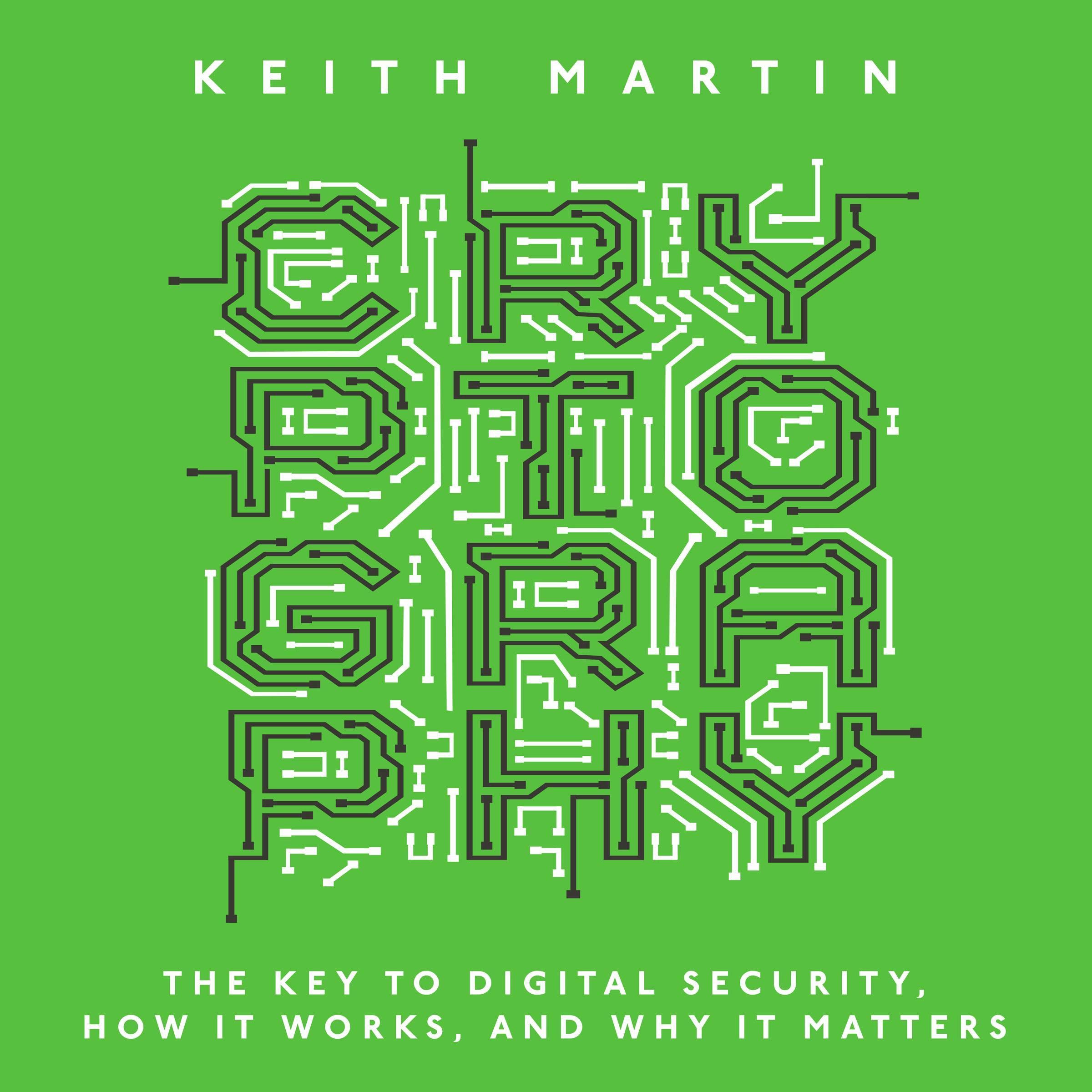
Cryptography: The Key to Digital Security
- By Keith Martin, accessible non-technical introduction
- Explains how cryptography works and why it matters
- Covers digital security concepts without heavy math
- Best for non-technical readers and business professionals
- Clear real-world examples of cryptography in daily life
- Covers encryption, authentication, and digital signatures
Best for: readers who want a broad modern overview without committing to a highly technical text.
Keith Martin does a good job of explaining why cryptography matters in modern life, not just how individual algorithms work. That makes the book useful for readers who care about digital security, privacy, trust, and the role crypto plays in the systems they use every day.
The tone is more explanatory than textbook-heavy. You can hand it to someone who is curious about the field and not scare them away. That makes it a solid bridge book between pop-history titles like The Code Book and more technical works like Understanding Cryptography.
The limitation is depth. If you want to study for exams, design systems, or understand proofs, you will outgrow it. But as a broad orientation to the subject, it is useful and readable. W. W. Norton publishes it here: Cryptography: The Key to Digital Security.
12. Cryptography and Network Security by William Stallings
Cryptography and Network Security: Principles and Practice
- By William Stallings, widely used university textbook
- Covers cryptographic algorithms and network security protocols
- Includes firewalls, VPNs, and web security chapters
- Best for IT and networking students needing security foundations
- Updated editions track current standards and vulnerabilities
- Comprehensive coverage of both theory and practice
Best for: university students, exam preparation, and readers who want cryptography taught inside the larger network-security context.
Stallings is a standard academic name for a reason. This book has taught generations of students the basics of cryptography alongside protocols, authentication, key management, network security models, and systems context. If your course uses it, you are not being cheated. It is a legitimate workhorse text.
I would rank it lower for self-learners who want the most elegant path into cryptography itself. It can feel broad in a classroom way, which is helpful for coverage but not always ideal for inspiration. Still, if your goal is to understand how cryptography fits inside a larger security syllabus, it does the job well.
So I see it as the dependable course book, not the book I would use to hook a curious reader. Pearson carries it here: Cryptography and Network Security. If you want the mathematical side to feel less dry, pair it with my post on functional analysis or other math reading that keeps your proof muscles active.
If You Only Buy Three Books
If you want the shortest buying advice I can give, here it is.
- Buy Understanding Cryptography if you need the best first serious textbook.
- Buy Cryptography Engineering if you build software and want practical judgment.
- Buy Introduction to Modern Cryptography if you want the rigorous theory path.
Then add a fourth book based on your bias. Choose An Introduction to Mathematical Cryptography if you are math-heavy. Choose Real-World Cryptography if you are engineering-heavy. Choose The Code Book if you need the history and the spark first.
Books I Would Treat More Carefully
Some books on the old list still deserve respect, but not blind trust.
Applied Cryptography is still worth reading, but I would not call it the best modern starting point anymore. It is a classic, not a complete present-day guide. Cryptography and Network Security is useful in courses, but for independent learners it can feel like an obligation instead of a pull. Top Secret: A Handbook of Codes, Ciphers and Secret Writing is fine for younger readers and hobbyists, but it is not the book I would use for a serious university-level path.
Top Secret: A Handbook of Codes, Ciphers and Secret Writing
- By Paul B. Janeczko, beginner and young reader friendly
- Hands-on introduction to codes, ciphers, and secret writing
- Covers historical ciphers with DIY activities and puzzles
- Best for absolute beginners and younger readers
- Fun, engaging approach to learning cryptography basics
- Great starting point before tackling technical textbooks
That is the basic pattern with older cryptography books. You do not have to throw them away. You just need to know what role they still play.
My Recommendation
If you are new, start with Understanding Cryptography. If you are already technical, start with Cryptography Engineering. If you want the strongest theory book on the list, buy Introduction to Modern Cryptography.
That is my honest ranking logic. Do not buy the most famous title by default. Buy the title that matches the way you learn. That alone will save you money and a lot of frustration.
Bottom line: the best cryptography book is not the biggest one or the oldest one. It is the one you will actually finish, understand, and use as a bridge to the next level.
FAQs on Cryptography Books
What is the best cryptography book for beginners?
Understanding Cryptography is my top beginner pick. It explains the main ideas clearly, does not drown you in formality too early, and still gives you a proper textbook foundation.
Is Applied Cryptography still worth reading?
Yes, but read it as a classic, not as your only modern guide. It is still useful for historical perspective and protocol intuition, but parts of it are dated and should be balanced with newer books.
Which cryptography book is best for software engineers?
Cryptography Engineering is the best practical choice for most software engineers. Real-World Cryptography is also excellent once you already know the basics and want more modern systems context.
Which book should math students read first?
If you already enjoy number theory and abstract mathematics, start with An Introduction to Mathematical Cryptography. If you want a gentler warm-up first, begin with Understanding Cryptography and then move into the math-heavy text.
Are there any free cryptography books worth reading?
Yes. Handbook of Applied Cryptography is freely available from the University of Waterloo, and A Graduate Course in Applied Cryptography is freely available from Stanford. Both are excellent once you are past the beginner stage.
Should I read The Code Book before technical cryptography textbooks?
Yes, if you need motivation and context first. The Code Book is not a technical textbook, but it is a great way to understand why the subject matters before you move into harder material.